
Birds, Wildlife, Nature, and Photography
The Birds of Spring — Part II
Many new bird species arrived in April. Here are a few to enjoy.
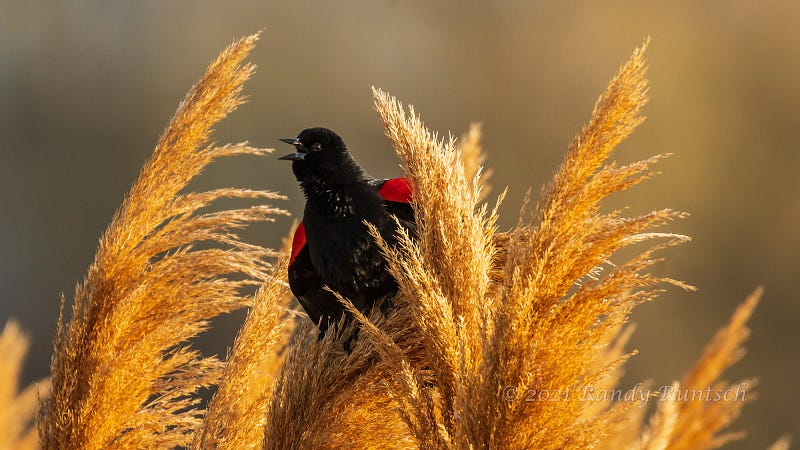
Springtime is my favorite season in the north country. Crocus blossoms pierce the snow before it melts away. Grass transforms to green. Trees develop buds that grow into leaves. Best of all, migratory birds arrive from the south.
Some birds come and go as months pass by. The Birds of Spring — Part I shared images and descriptions of birds photographed in March. This story features birds seen in April. I captured most of the photos in Southeastern Minnesota. I took a few photos in Trempealeau National Wildlife Refuge across the Mississippi River in Western Wisconsin.
Green Heron
To me, green herons look like creatures from another time and place. They can almost double their length from a crouched posture by extending their neck and crest.
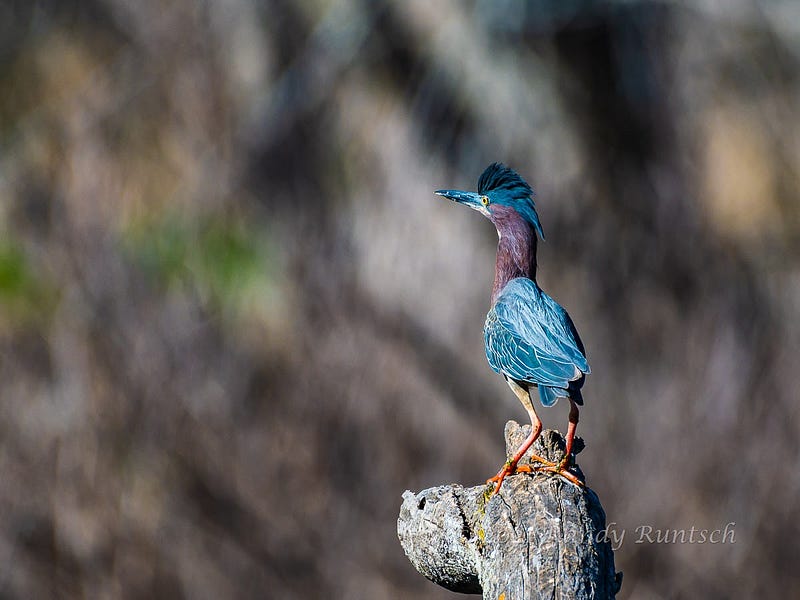
I have never seen more than one green heron at a time. But they are monogamous during the breeding season. Males attract females with a fanciful display. Then, they build a nest and mate.
Red-winged Blackbird
Raucous red-winged blackbirds seem to be everywhere from spring through fall. By some counts, they are the second-most common birds in North America. In peak years, their population numbers up to 250 million birds. Migrating flocks can exceed one million members.
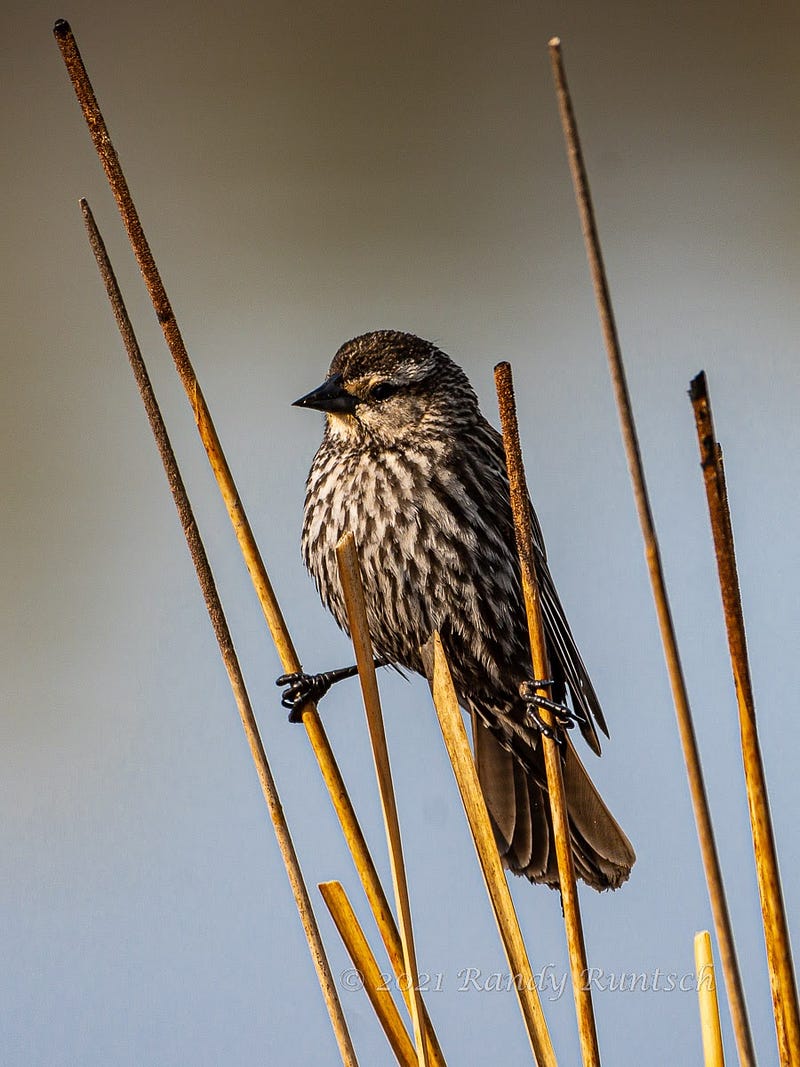
Red-winged blackbirds often harass bicyclists and pedestrians who invade their territory. Sometimes, when I ride my bike on country roads lined with cattail-filled ditches, the birds attack from above. Even though they dislike my presence, I value them and enjoy their beauty.
Tree Swallow
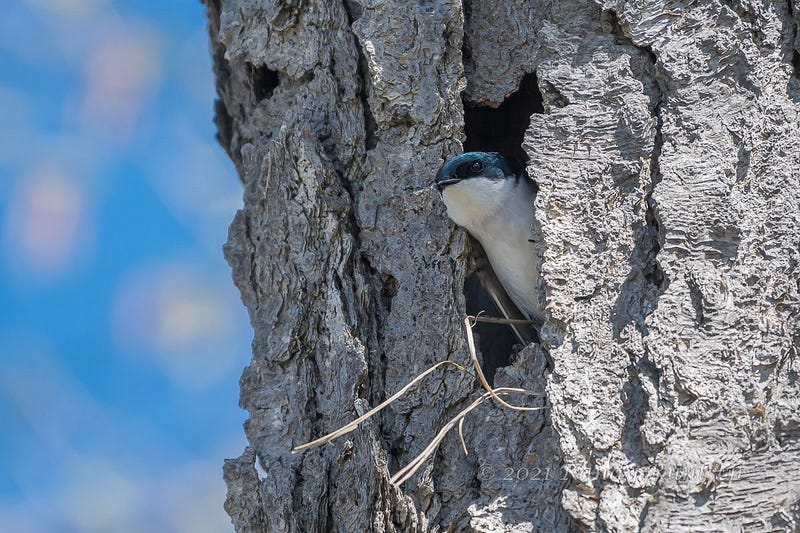
Tree swallows are lively and fast-moving birds. They appear to be talking when they perch in pairs and sing to each other.
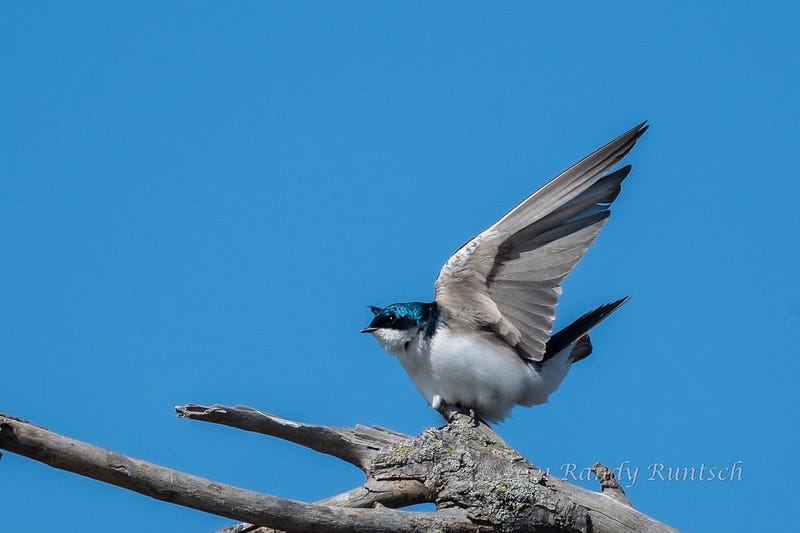
Recently, I watched tree swallows build a nest in a hole high in a tree. They seemed to play with me as they gathered thatch on the ground almost at my feet.
Sandhill Crane
Sandhill cranes inhabit North America and extreme northeastern Siberia. These tall birds inherited their name from the sandhill area of Nebraska. Many birds stop along the Platte River there each spring to feed before they continue their trek north to nest.
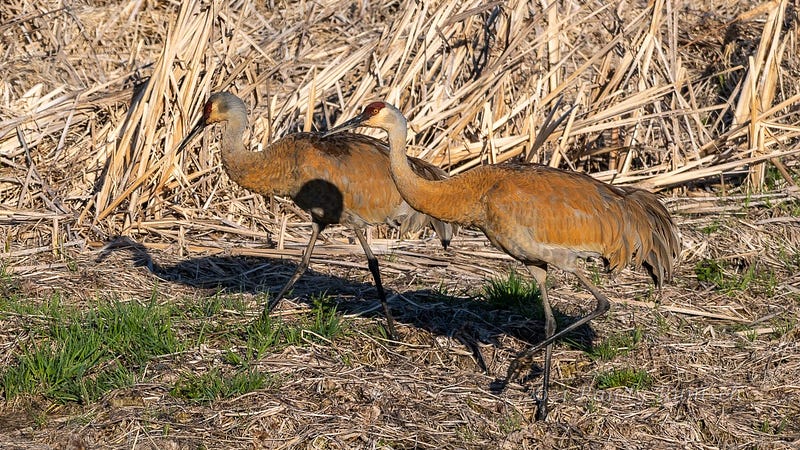
Sometimes, sandhill cranes can be difficult to approach. At other times, I can photograph them from ten paces for minutes at a time.
I have watched and photographed sandhills for many years. But this year I was rewarded with the sight of a chick. Its parents protected it well. I also watched parents trade places as they incubated eggs in their large nest on the ground in a marsh.
American Robin
With a population of up to 370 million members, the American robin is North America’s most common bird. I see them daily in meadows and woods as well as in my front yard and backyard. They hunt for earthworms on lawns. They also eat seeds, caterpillars, and grubs.
I recently learned that robins congregate at night. — The author
Most robins migrate in spring and fall. But I see a few birds year round here in the northland.
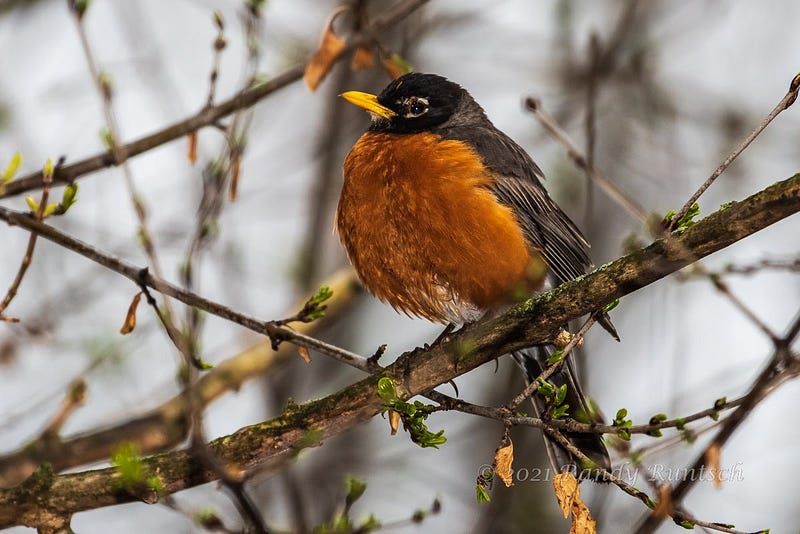
Even though robins are common, they are always a delight to see. Today, as I wrote this story, I watched a nearly full-grown robin chick follow its parent around the backyard as they searched for food.
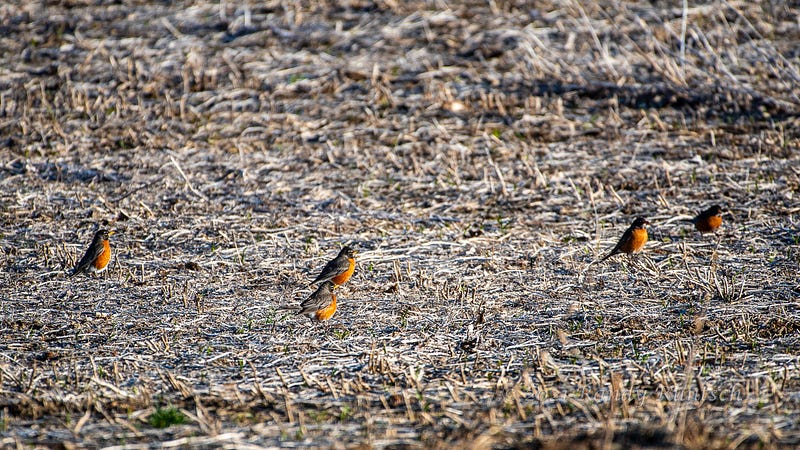
In the daytime, American robins usually appear to be solitary individuals. But I recently learned that robins congregate at night.
Redhead
Redheads are medium-sized diving ducks. The redhead has many nicknames, including the red-headed duck and the red-headed pochard.
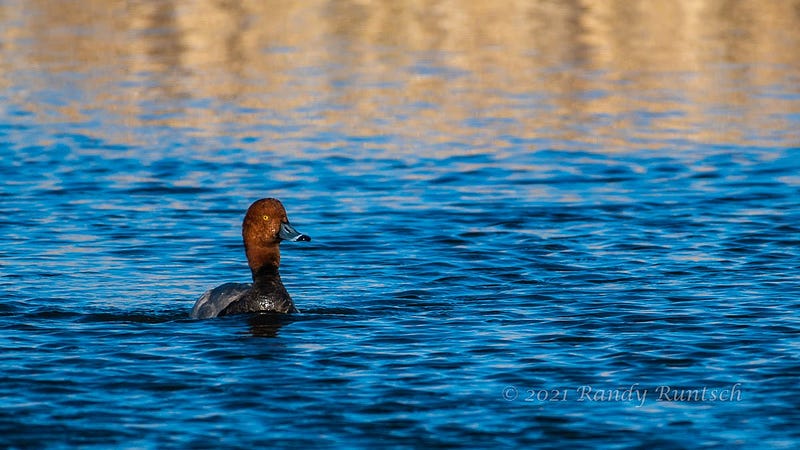
Redheads are well-adapted to foraging underwater for food. Their legs are set further back than on most ducks. They also have large webbed feet and large bills.
Ring-necked Duck
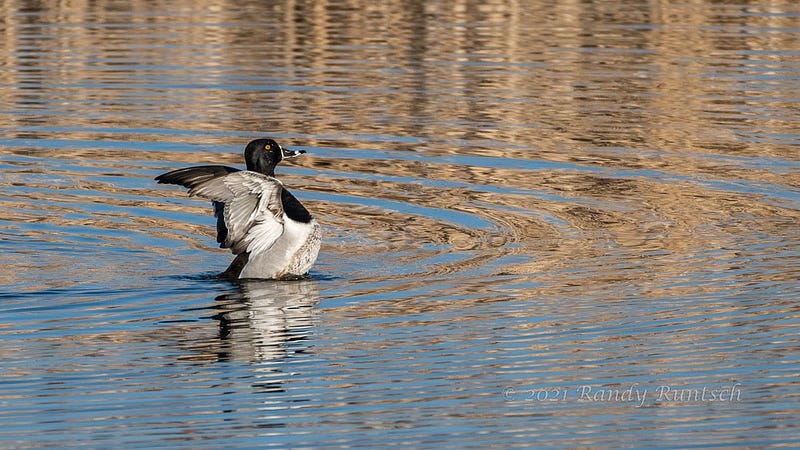
The ring-necked duck is a medium-sized North American diving duck. They breed in freshwater ponds and lakes in the northern United States and Canada. These ducks were named for their cinnamon-colored neck ring, which is often difficult to see.
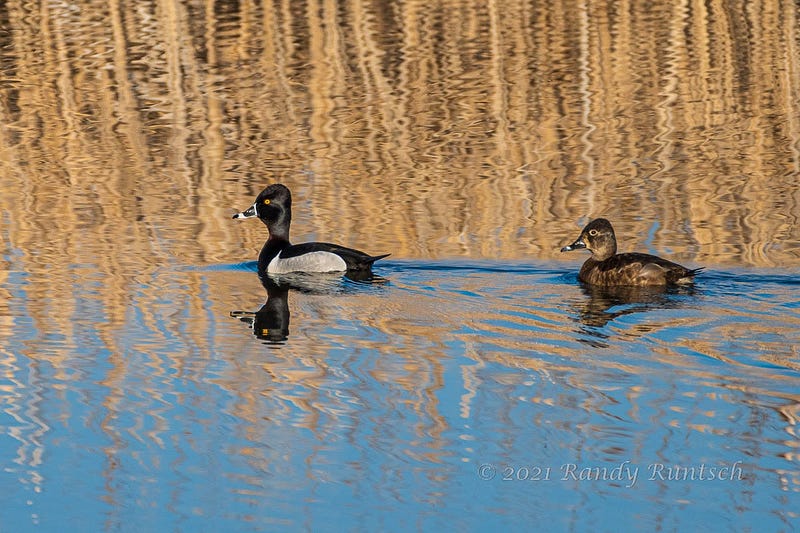
In April, I watched many pairs of ring-necked ducks swim on ponds in Southeastern Minnesota. I regularly saw solo male ring-necked ducks swimming alongside solo male redheads as well.
Great Egret
Subspecies of the great egret live in North America, South America, Africa, southern Europe, and Asia. Great egrets are large herons with all-white plumage.
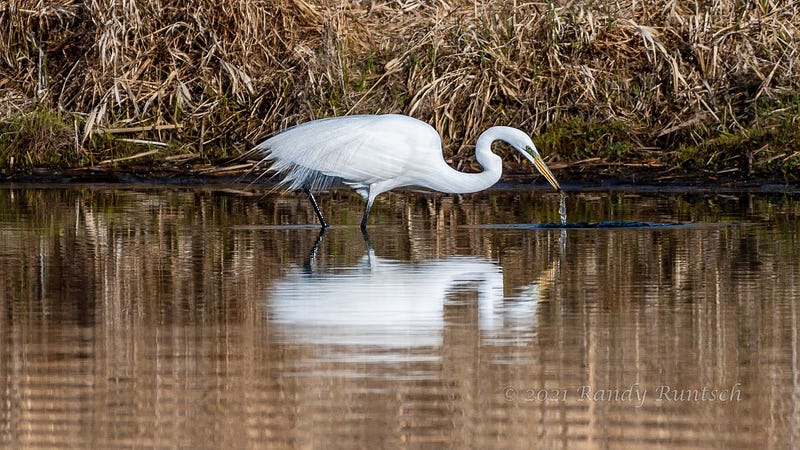
These graceful birds are skittish and often bolt at the sight of a human. To ensure success, I took the photo above from about fifty yards away while hidden behind a stand of reeds.
Bald Eagle
Majestic bald eagle pairs return to the same nest each year. Nests are constructed of sticks and can weigh up to 500 pounds (227 kilograms).
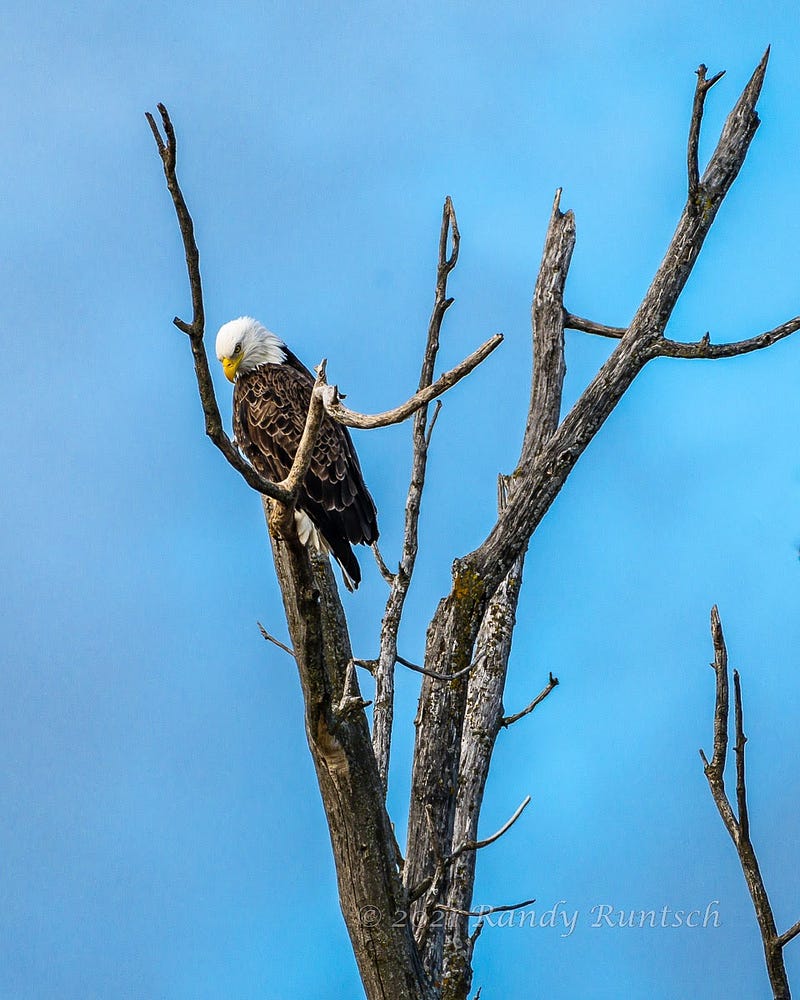
Since eagles prefer to eat fish, their nests often overlook ponds, lakes, or rivers. They swoop down to the water’s surface and snatch fish in their talons.
As a boy growing up in Southeastern Minnesota, I never saw an eagle, wild turkey, or turkey vulture. Today, long-since the pesticide DDT was banned, I am fortunate to see specimens of all three species every week.
Wild Turkey
Wild turkeys are large upland game birds. Toms (males) can weigh up to 24 pounds (11 kilograms), while females can reach 12 pounds (5.4 kilograms).
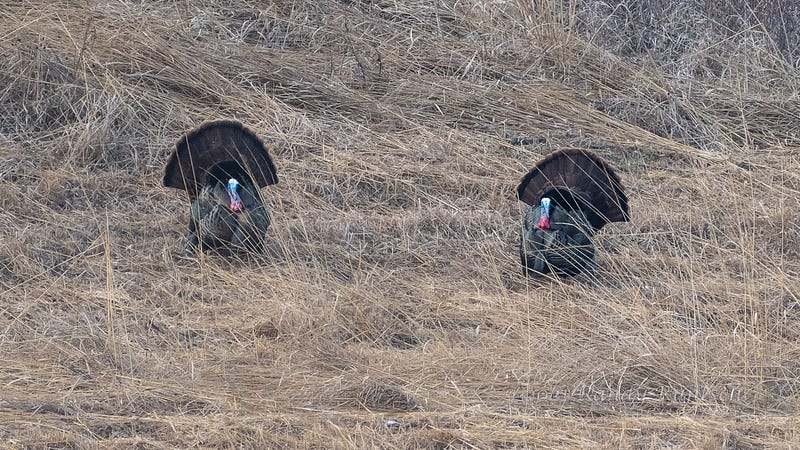
Despite their bulk, turkeys are fast fliers. They normally fly close to the ground for up to a quarter mile (400 meters).
Turkey Vulture
Turkey vultures are known in some areas of North America as turkey buzzards or simply buzzards. Their year-round range extends from the southern tip of South America to the southern United States. From spring through fall, their range spreads northwards to southern Canada.
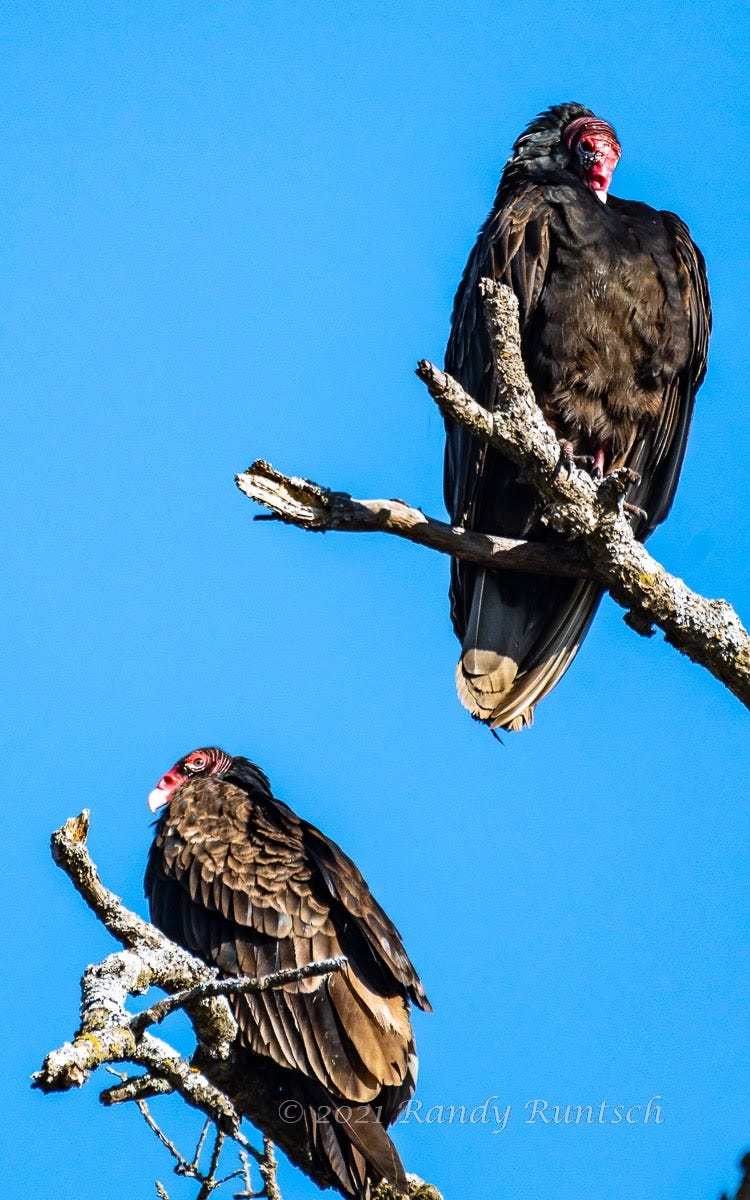
As scavengers, turkey vultures feed mostly on carrion. It’s not uncommon to see several vultures feeding on roadkill. They fly off as cars approach and return to their food after the cars pass.
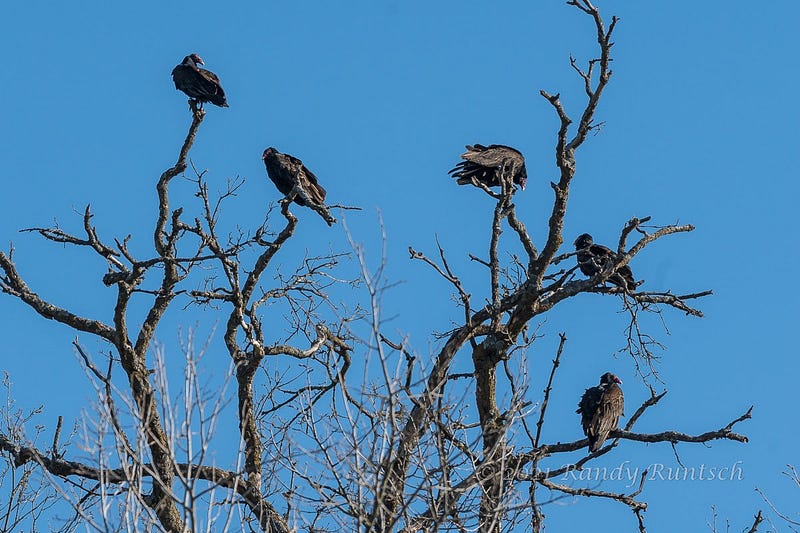
Sometimes, I dozens of vultures circling over the same hill in a small valley in the southwestern part of my city. The shape of the valley must promote the development of thermals, which reduce the amount of energy the birds expend when they flap their wings.
We are blessed to share the natural world with beautiful and dynamic birds. This photo essay shared a fraction of the birds I photographed in April. I hope to share more of the birds of spring with you soon.
References — Wikipedia