
GLOBETROTTERS MONTHLY CHALLENGE
The Ultimate Desert Survivors
The kind of wildlife that lives in the harsh environments on Earth

There was this silence surrounding me. I didn’t hear anything. No cars. No birds. Not even the wind was blowing making rustling sounds in the trees. There weren’t any trees. And yes, this silence will always come up in my memory when I think of deserts. It might appear as if life doesn’t exist out here but this place is filled with wildlife.
Yes, while most people think those harsh environments have no life to show for, deserts might be the kind of places on Earth where wildlife is still to be found in abundance. Simply because humans struggle to survive in such remote and dry landscapes.
But what is a desert?
Any place on Earth receiving less than 10 inches of rain per year is considered a desert. Such barren landscapes have therefore a lack of vegetation making it a challenge for animals to live in. However, there are animals living in these harsh environments and they have adapted to the conditions with different skills and body features.
Living for almost five years in Namibia, a country in southern Africa home to the oldest desert on Earth, the Namib, I have traveled around a fair bit exploring this harsh but beautiful landscape in all seasons and colors.
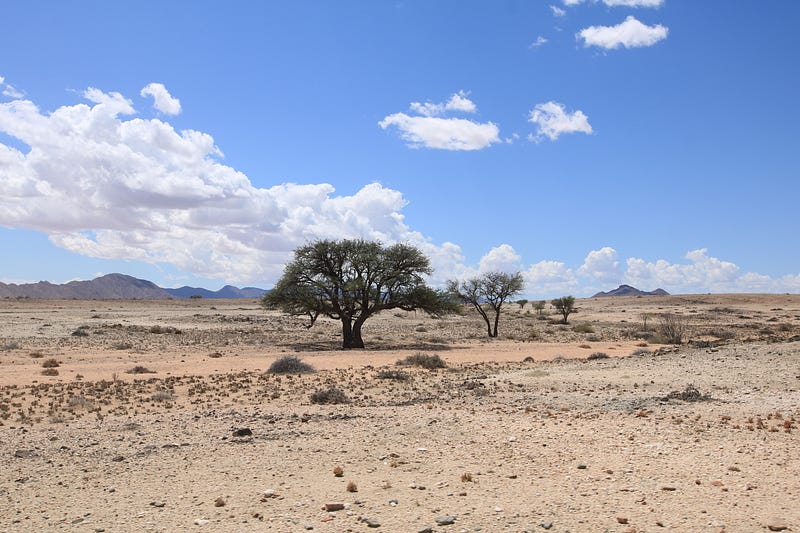
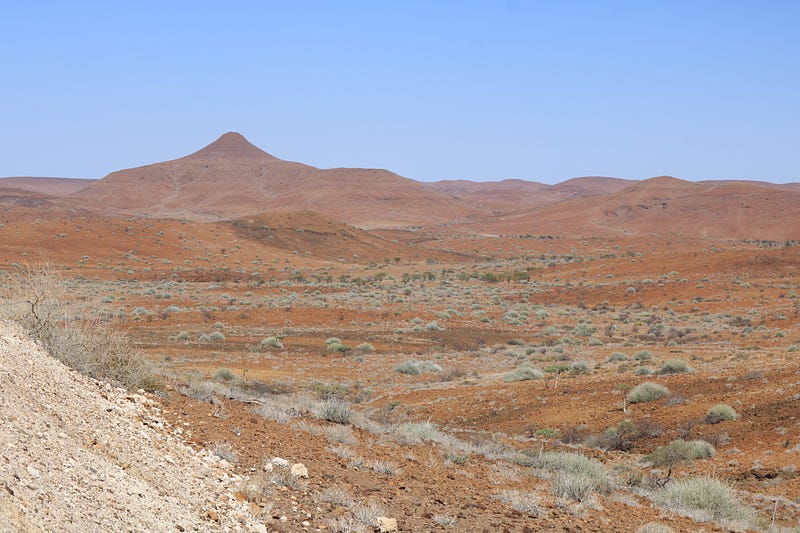
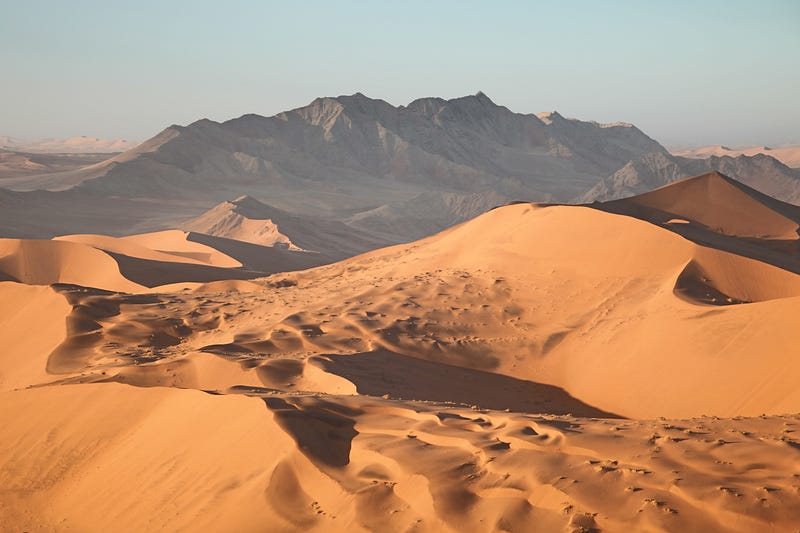
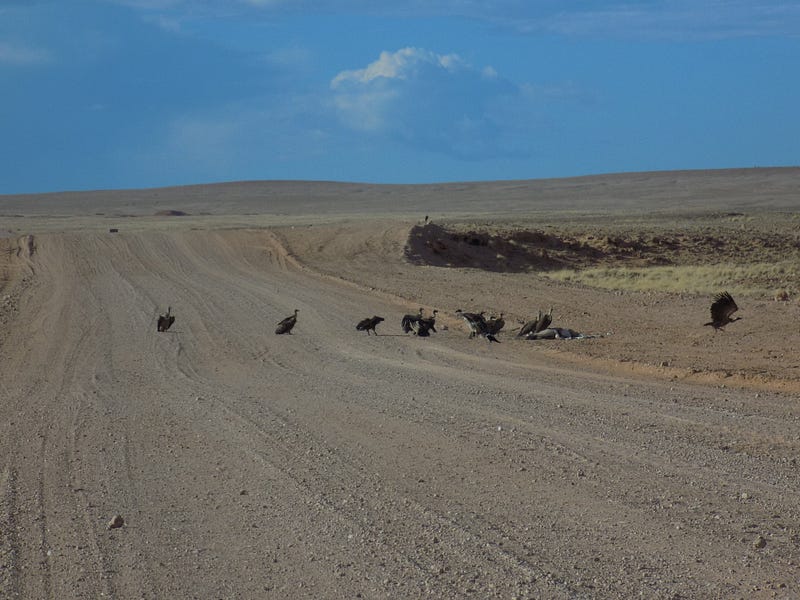
In such harsh environments, only the fittest will survive. Any mistakes can lead to the death of an animal. If it is due to hunger, thirst or the strength of a predator. No deed goes unpunished. And an old or sick animal won’t last long. Scavengers are never far and will rip off everything up to the bones.
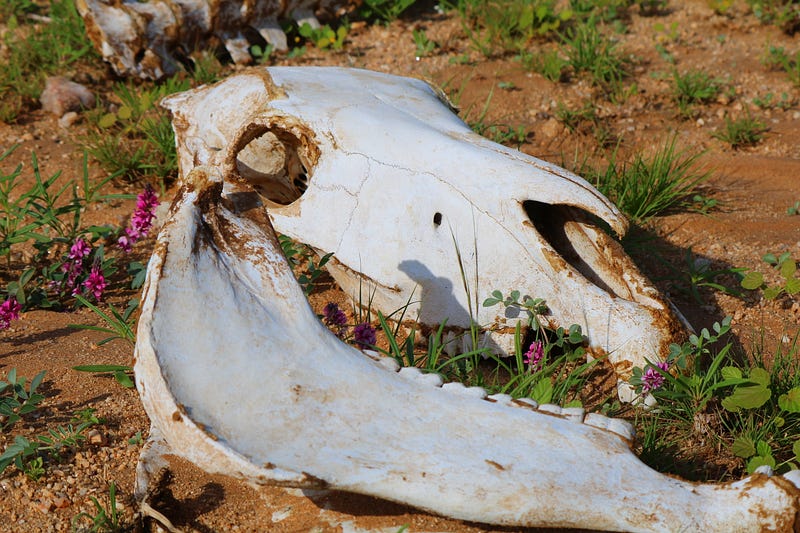
The smallest animals
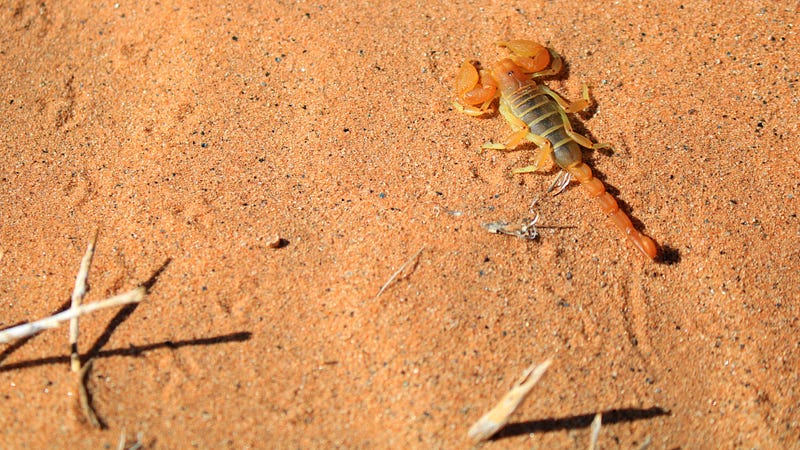
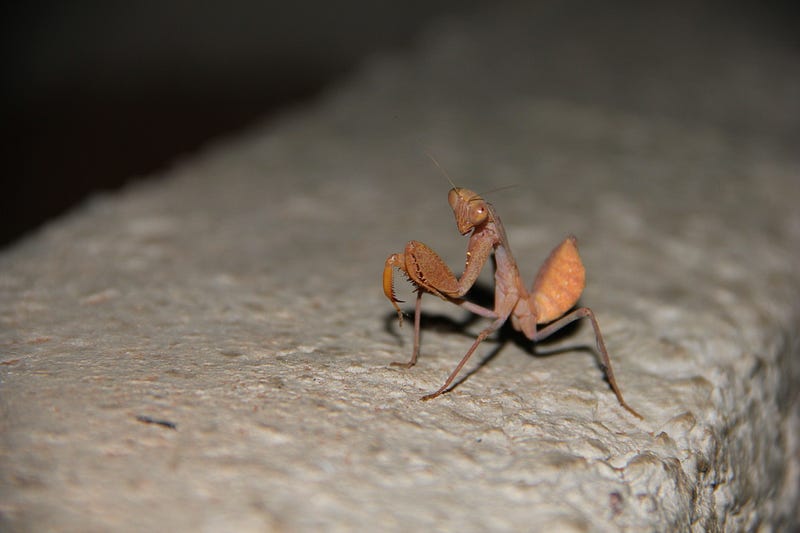
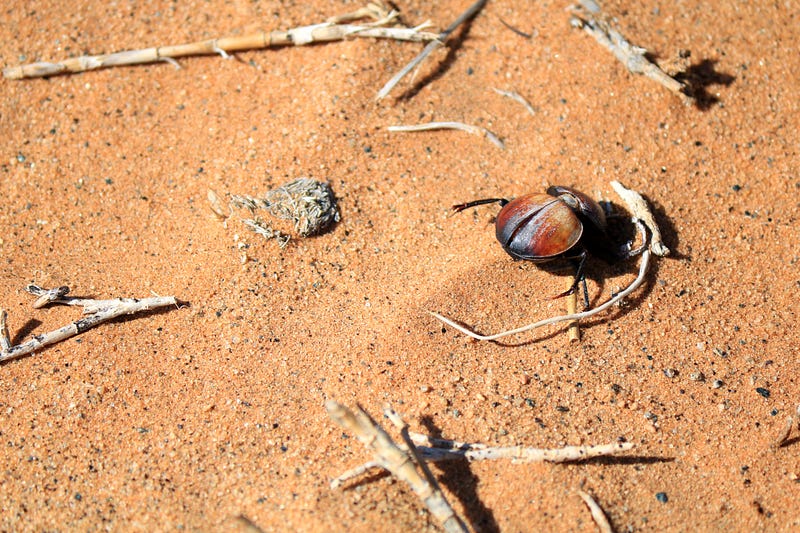
When talking about wildlife most people think of mammals but there is a lot more life out there that is smaller than our hands. Critters such as insects, spiders, bugs and even scorpions are often invisible but always around.
While traveling around in Namibia I soon learned to always check my shoes or clothes before putting them on. Mostly scorpions love to hide in there overnight.
While there aren’t deadly scorpions in the country, a sting from the scorpion below would force one to seek the nearest hospital which could be hours away.
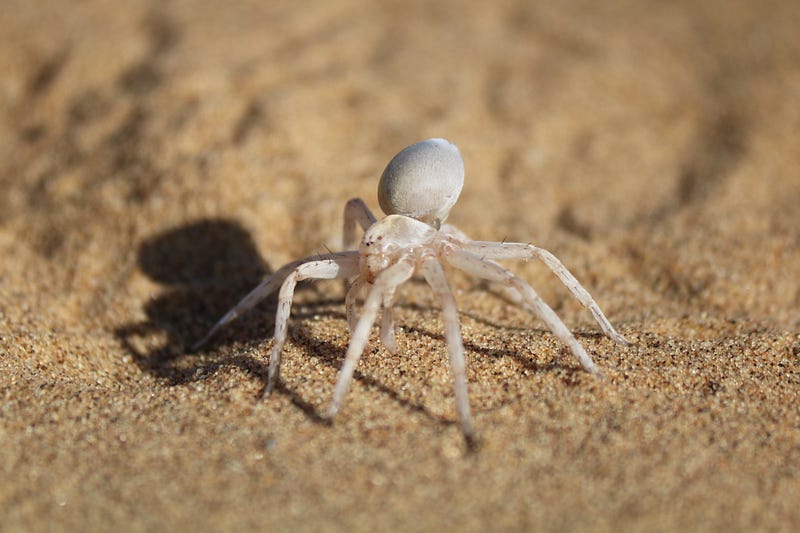
While mosquitoes aren’t a danger in the arid areas of the country, spiders can give you nasty bites. One of the spiders I learned to identify in the dunes is the white lady spider which does have a poisonous sting.
Namibian lizards
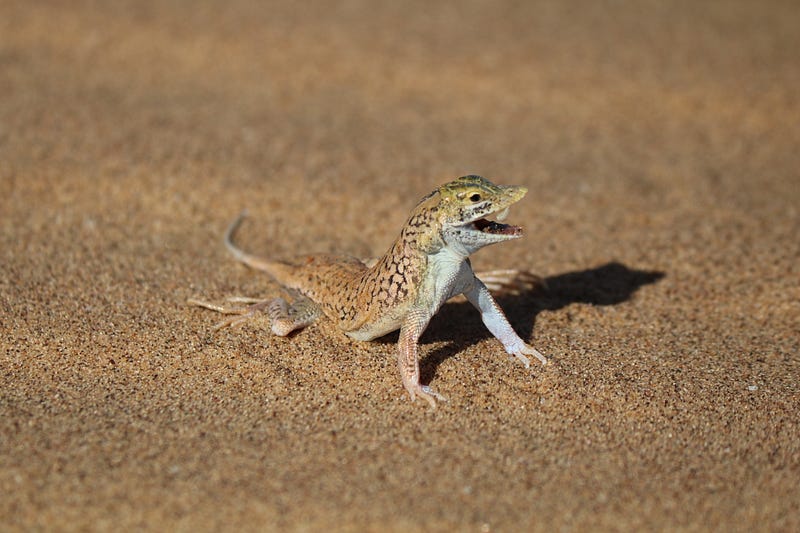
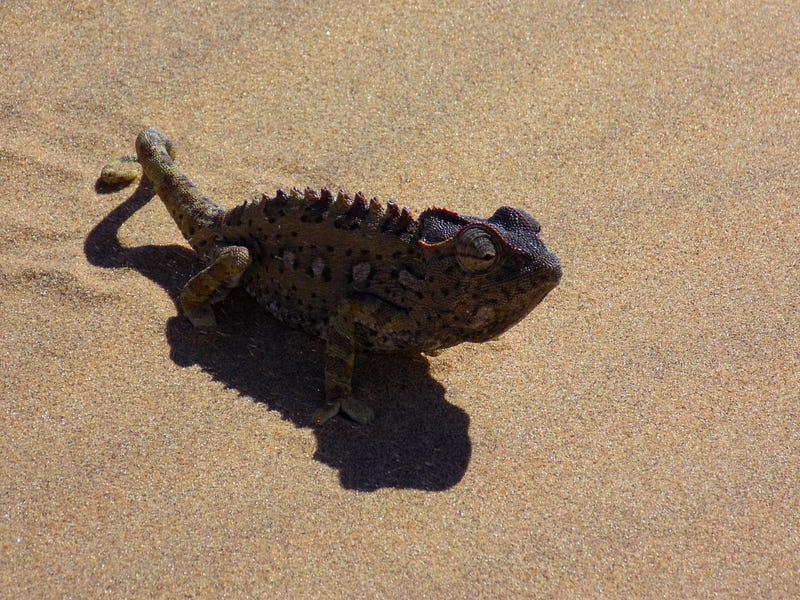
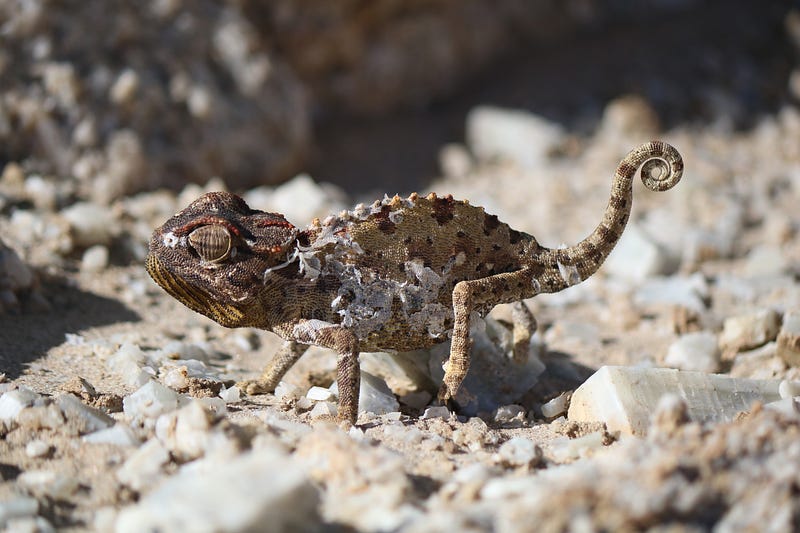
More cute and less dangerous animals one can find in the dunes are lizards. They mostly hide deep in the sand or in burrows during the hottest time of the day and only come out in the evening or early morning hours.
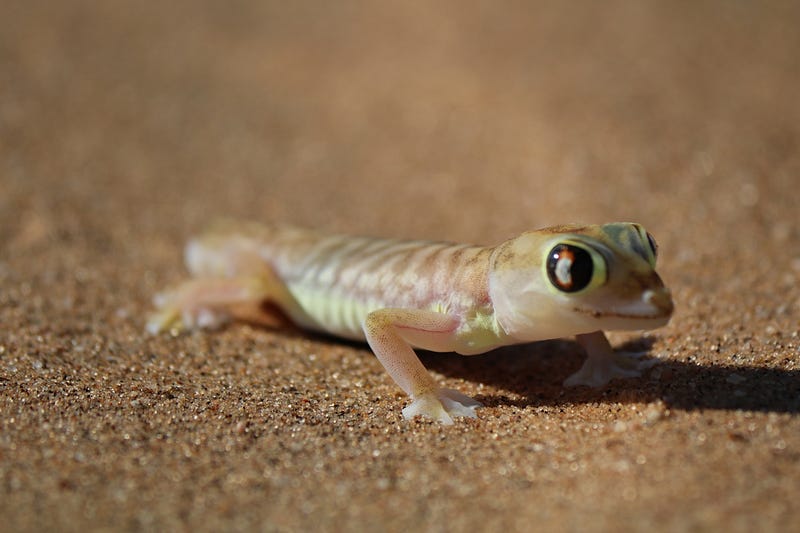
Geckos and chameleon are both part of the lizard family. One of the most common ones found in Namibia is the Namib sand gecko. With its large and dark-colored eyes it sees clear in the night and thanks to thin but broad feet it can run across loose sand.
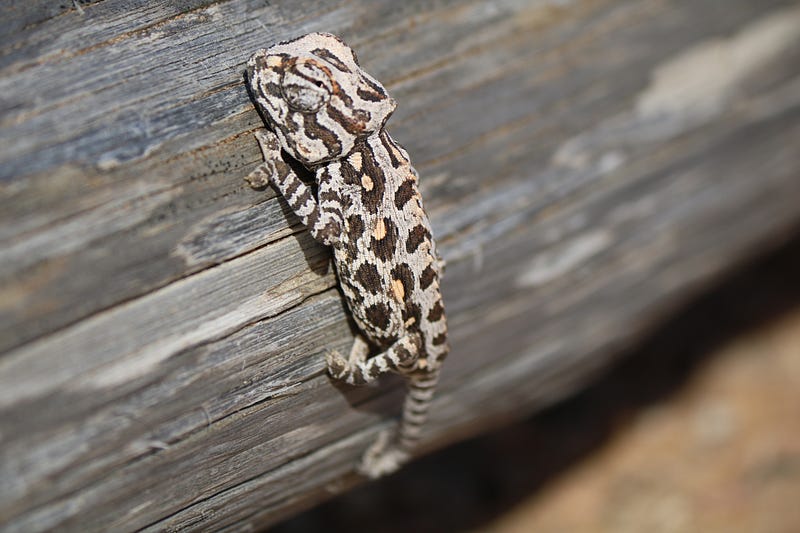
The Namaqua chameleon is one of the largest chameleon species found in southern Africa reaching up to 25 centimeters in length. It is a ground-living lizard and can drink moisture in contact with its scales through capillary action.
“Individuals in the wild are usually found gorged to the limit; an adult has an average of 12 meals a day, each meal usually consisting of about 19–23 large darkling beetles. This is a reflection of food in the Namib Desert being highly abundant and constantly available.” — Wikipedia
Snakes
One of the animals I can pass on encountering in the wild is a snake. I’ve had my fair share of encounters with snakes in the wild and could happily live on without ever seeing one again.
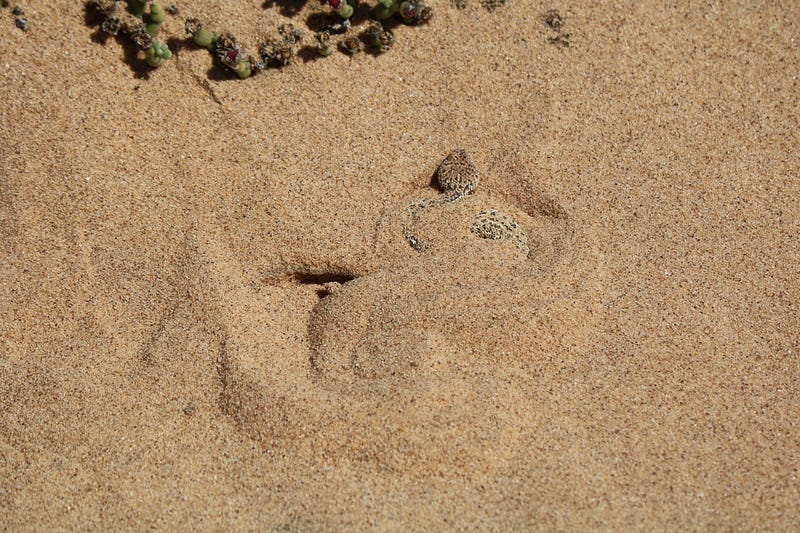
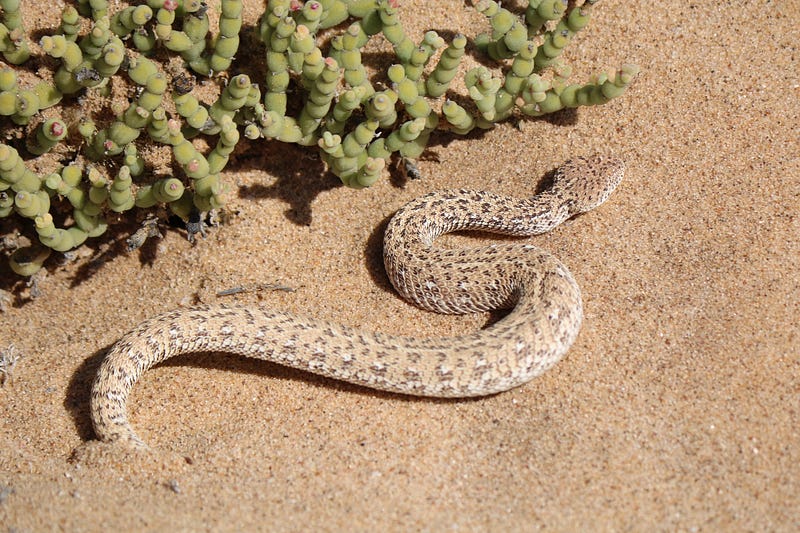
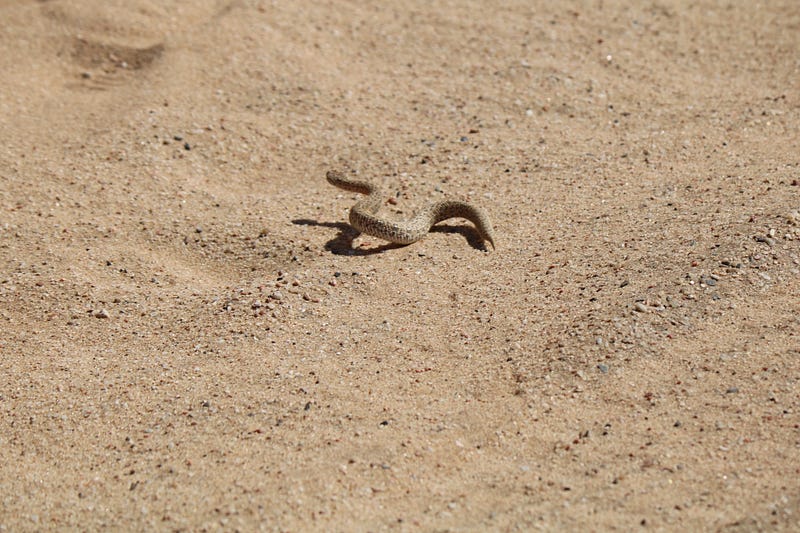
However, this isn’t very likely to happen as much as I move around and so I met this venomous viper while on a ‘living desert tour’. The guide was pointing his stick at the desert sidewinding adder but I didn’t see the snake until it began to move out of the sand. They can certainly be well hidden in the dunes.
Locally known as the ‘sidewinder’, this snake moves sideways when out and about.
Birds
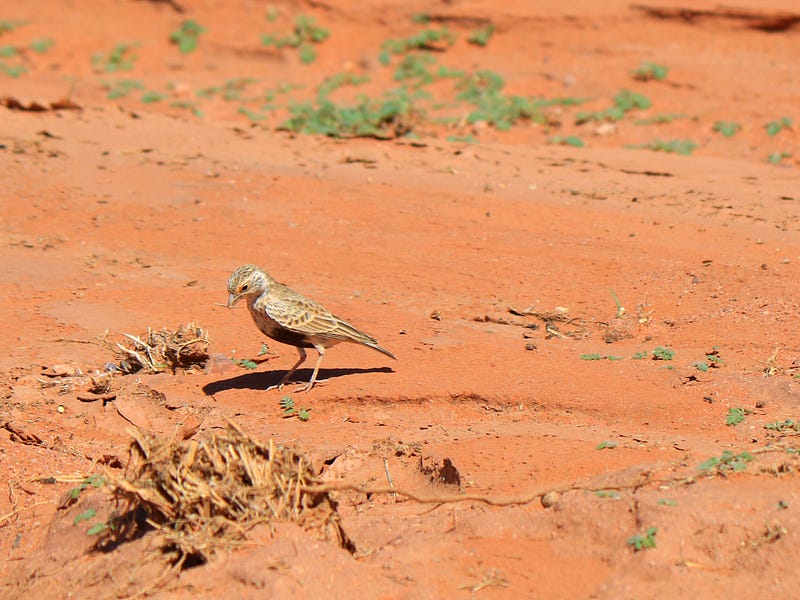
While I have seen countless birds on my visits and road trips through Namibia, I am not going to list them all here as I have written an entire article about birds in the country before.
Ostriches
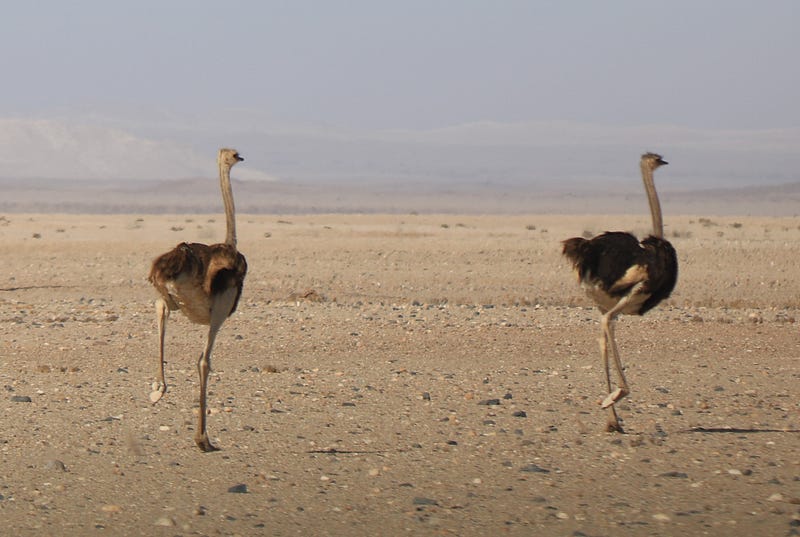
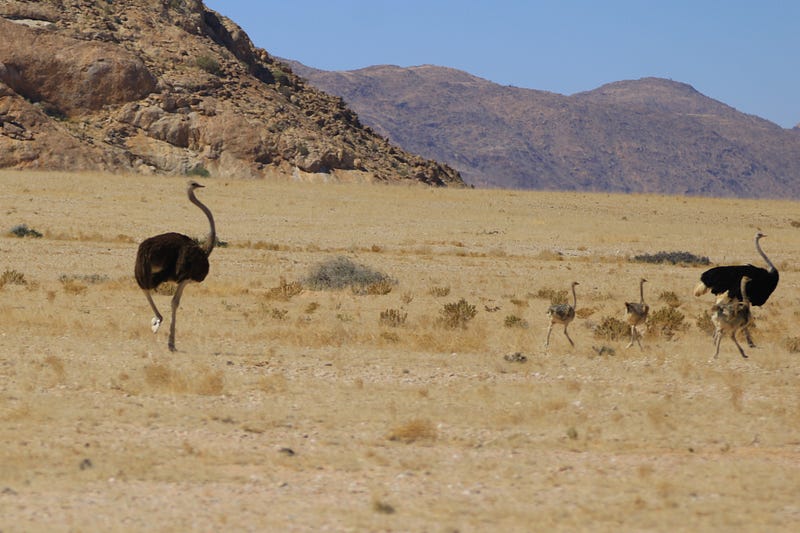
Larger flightless birds are one of my favorite encounters in the desert. Especially during lunchtime when most animals hide in the shade, I often see these majestic birds running across the desert as they have no home and live as nomads.
“They are the heaviest living birds, and lay the largest eggs of any living land animal. With the ability to run at 70 km/h (43.5 mph), they are the fastest birds on land.” — Wikipedia
Ostriches have adapted in many ways to the harsh conditions of desert life. They have a long neck and good eyesight which enables them to spot predators from afar, even at night and while they can’t fly despite their large wings, these have a different duty as the wings act as a coat to protect them from sunlight and from the cold.
Ostriches can go days without water as they manage to reduce water loss by sending urine back into the body and often take their daily water intake through their food as they are feeding on plants.
Jackals
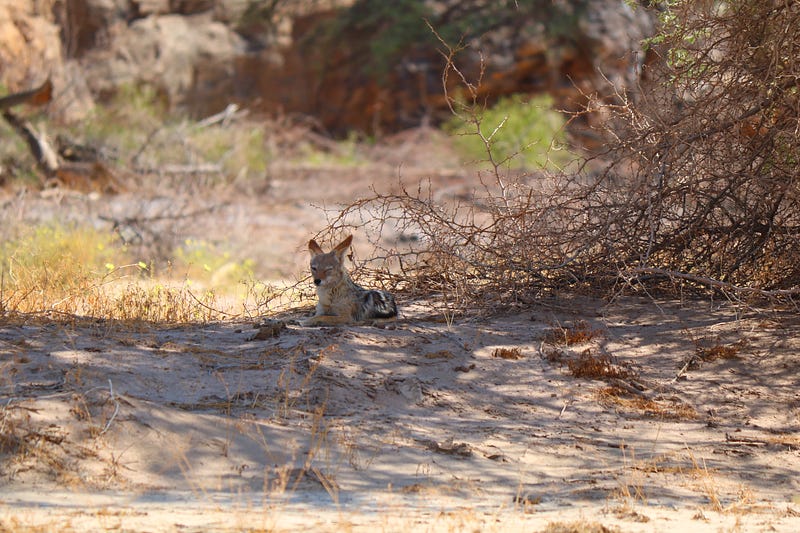
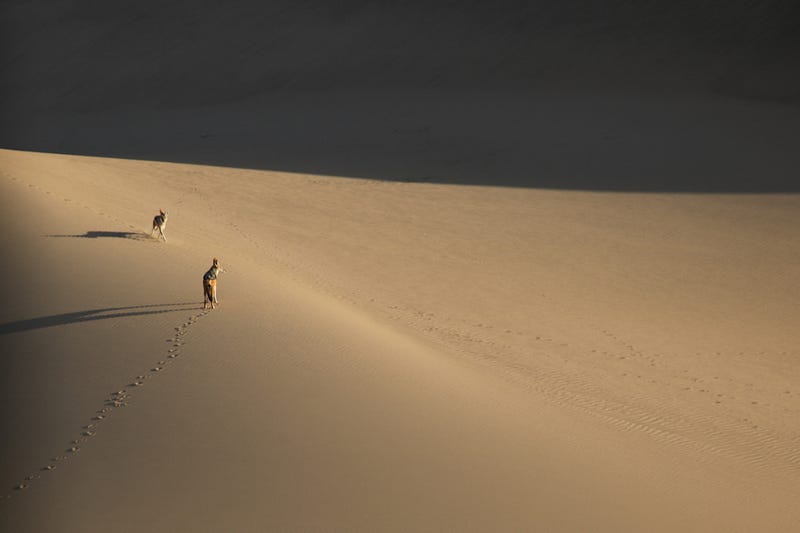
The brown hyena and the black-backed jackal are the most common scavengers in the Namib desert. While hyenas are rare to see, I have often spotted jackals on our road trips through the country.
This medium-sized canine native to eastern and southern Africa is a very ancient species and has changed little since the Ice Age. Its best adaptation to desert life is not being picky on what to eat as this jackal feeds on small to medium-sized animals, as well as plant matter and human refuse.
The Namib Desert Horse
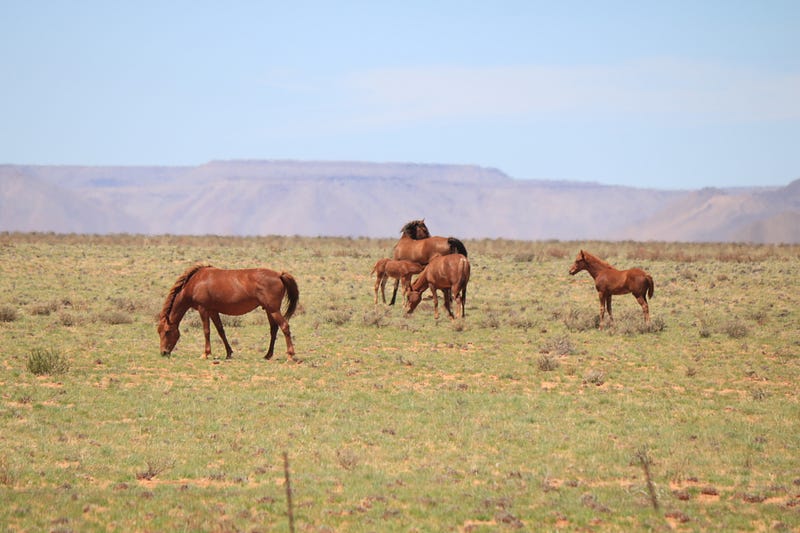
While the arid landscapes of southern Africa aren’t made for wild horses, there is a small population that lives in the Namib desert surviving wars and droughts.
“The Namib Desert horse is a feral horse found in the Namib Desert of Namibia. It is the only feral herd of horses residing in Africa, with a population ranging between 90 and 150. Despite the harsh environment in which they live, the horses are generally in good condition, except during times of extreme drought.” — Wikipedia
I never thought I’d see them and was so happy when we spotted a healthy herd of wild horses after a decent rainy season. They looked so healthy and strong.
Mountain and plains zebras
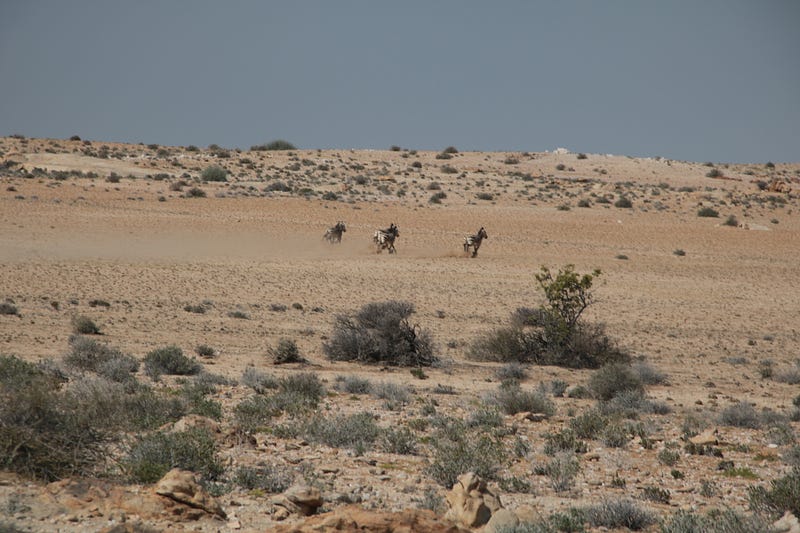
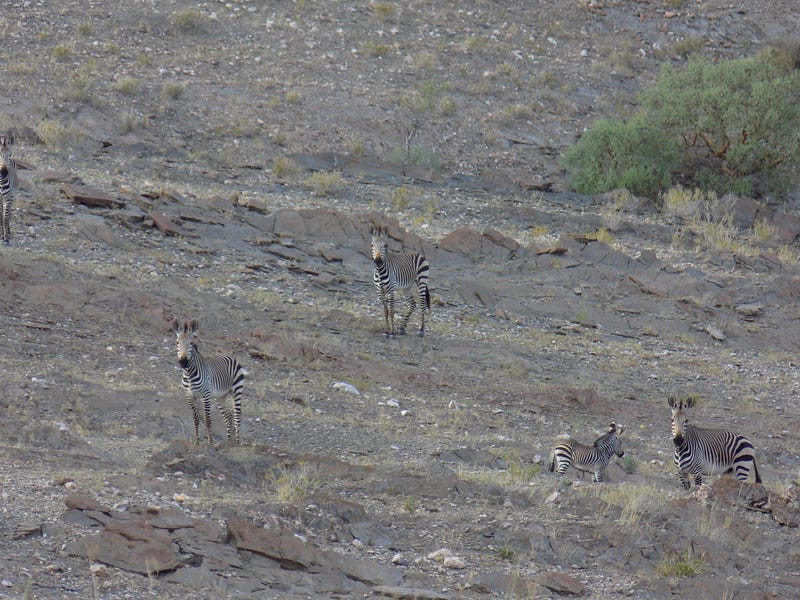
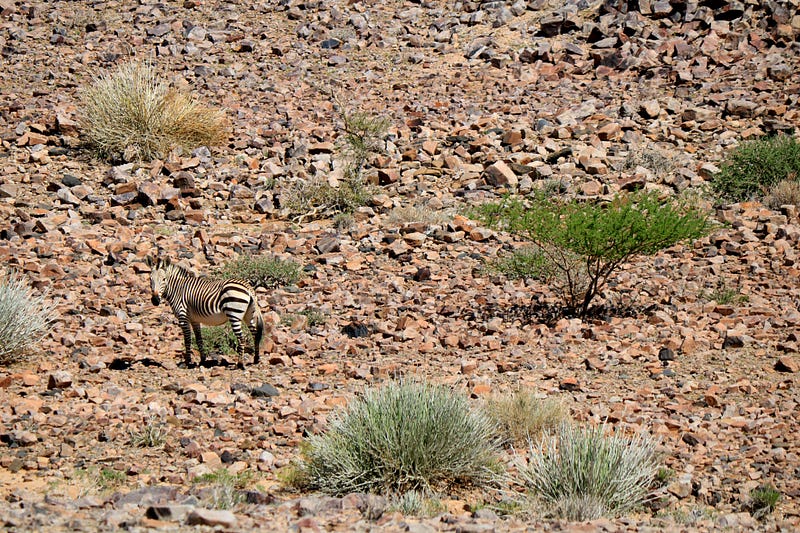
One of the other animals I often spot in the vast landscapes of the flatlands or mountainous hills in the Namib desert is the zebra.
There are two species to be found in the country, one being the larger one, the Hartmann’s zebra which is adapted to mountainsides with strong and fast-growing hoves and the other one being the Burchell’s Zebra or plains zebra mostly to be seen on open grasslands.
“Recent observations have revealed that Namibia’s wild zebras are in fact the world record holders when it comes to annual migrations. While the Serengeti remains the largest and most dramatic migration on earth and covers a longer, more meandering route; Namibia’s zebras, in fact, cover more distance than the Serengeti herds from end point to end point in their 500km trek across Namibia and Botswana.” — Arebbusch
Springbok antelope
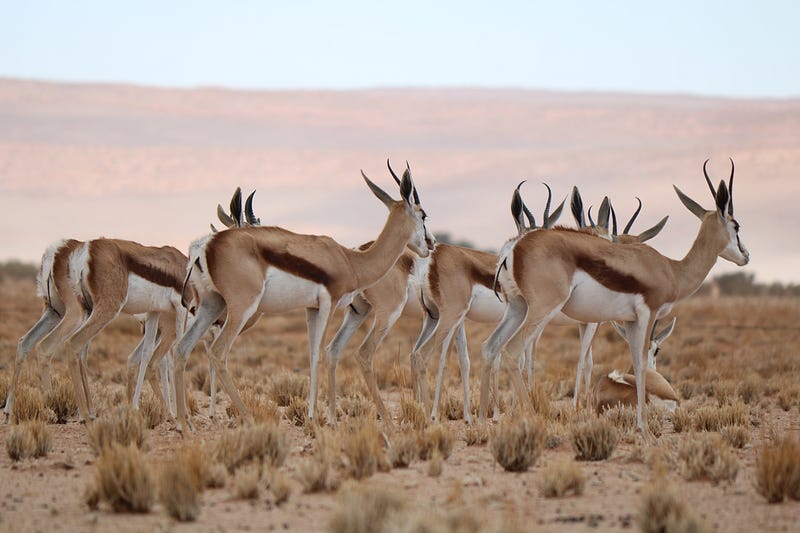
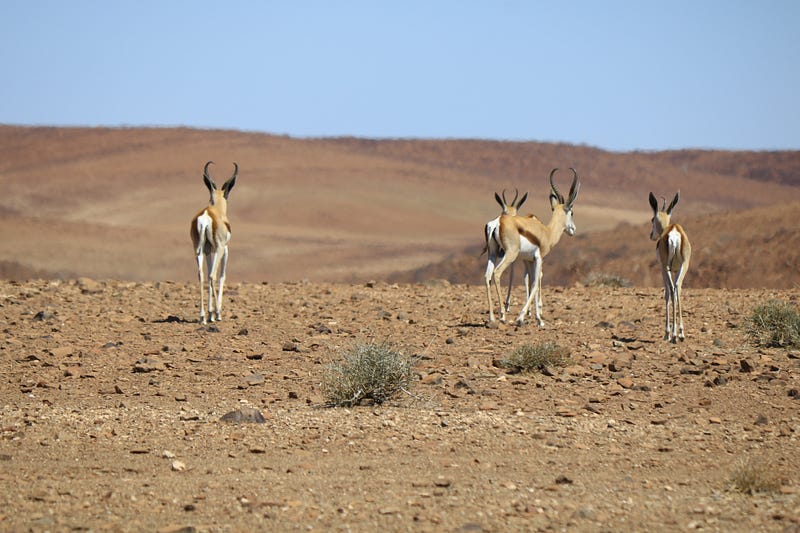
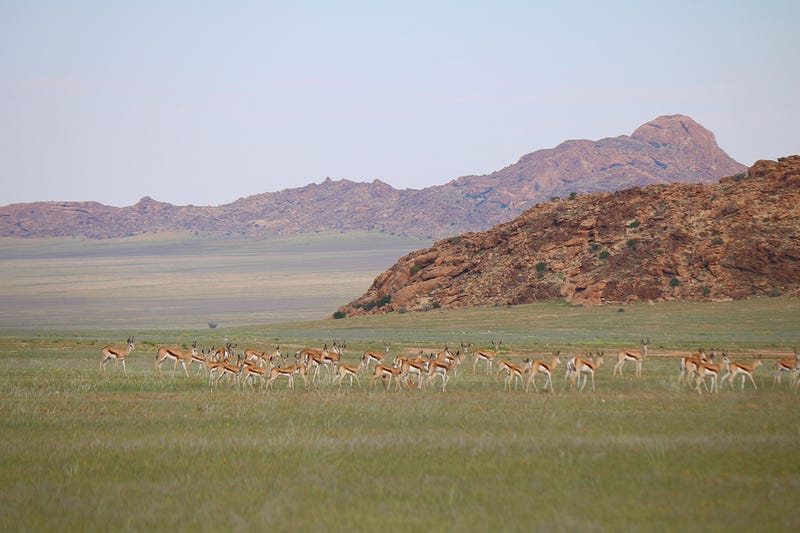
Namibia’s Kaokoveld springbok is the largest of its species and always makes me smile when jumping around in the wilderness. This unique movement is called ‘pronking’.
While many tourists visiting Namibia soon stop looking at these animals as they appear to be the most common ones, I never tire of seeing these elegant antelopes.
“Primarily a browser, the springbok feeds on shrubs and succulents; this antelope can live without drinking water for years, meeting its requirements through eating succulent vegetation.” — Wikipedia
The greater kudu
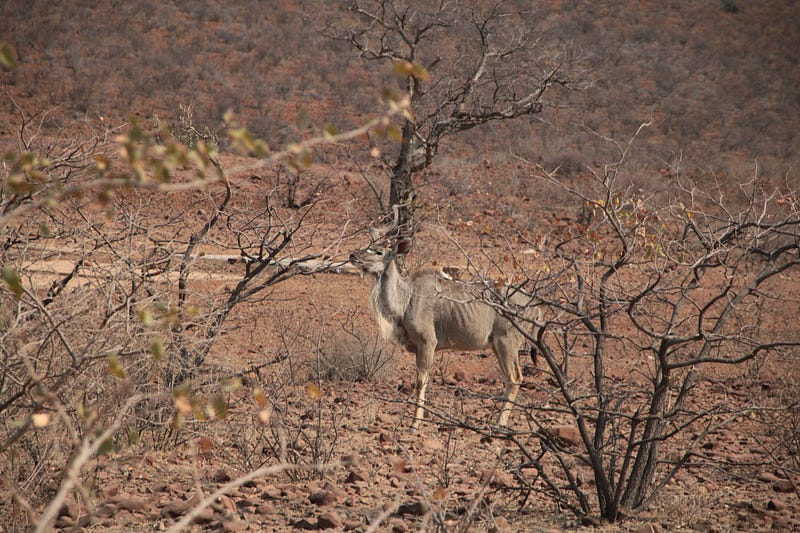
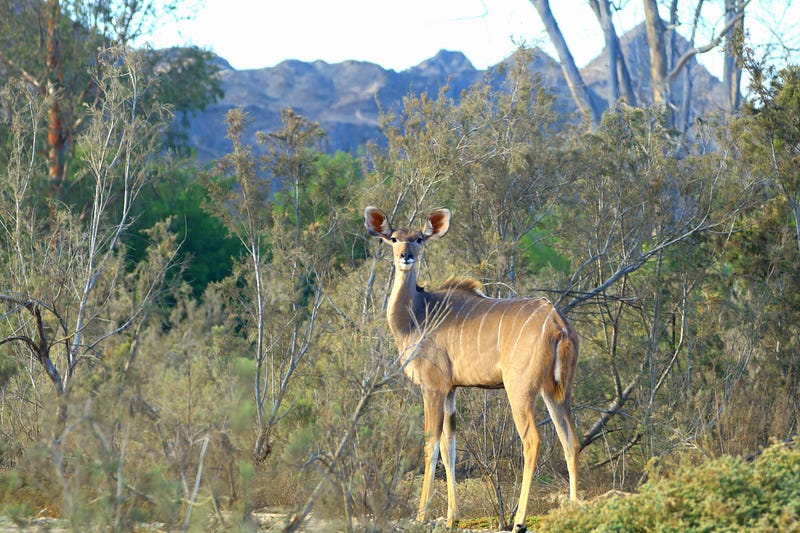
While the springbok is better adapted to desert life than some of the other antelope species, I have seen kudus on different occasions in the country and not only in their preferred habitat, the woodlands.
The first picture shows an old male with only one curled horn left and the ribs standing out. It was during one of the driest years in the past decade and I doubt that animal lived much longer.
The female in the next picture looks much healthier and is part of a group of female kudus living in the Swakop riverbed often to be seen on short day trips from the city.
The Oryx
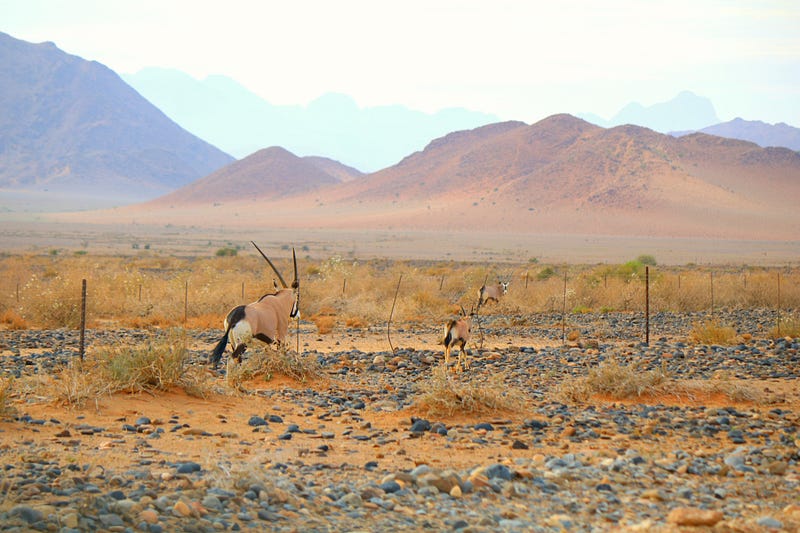
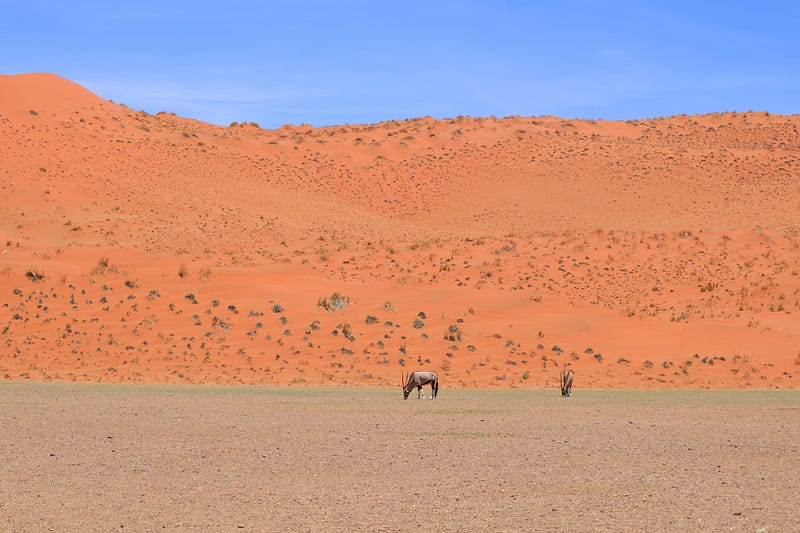
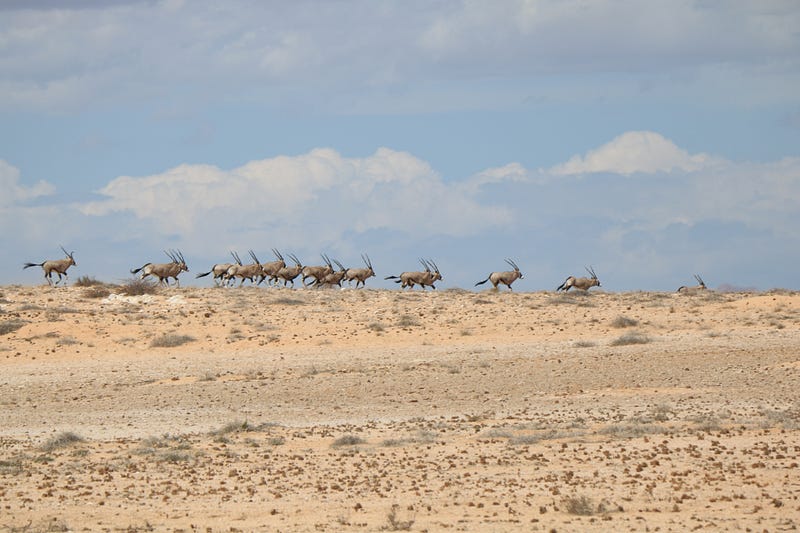
Also known as the gemsbok in southern Africa, this antelope is by far my favorite one. It isn’t just particularly pretty looking but also very smart and elegant.
Being highly adapted to the harsh desert terrain, the oryx can live in environments where most other antelopes wouldn’t survive. I’ve seen them on many occasions on the dunes in the depths of the Namib desert.
“The Oryx can conserve water and withstand extreme heat (as well as a body temperature that can climb to 40 degrees) which would ordinarily kill any other animal, by cooling the blood that flows to its brain” — Southern Destinations
Klipspringer
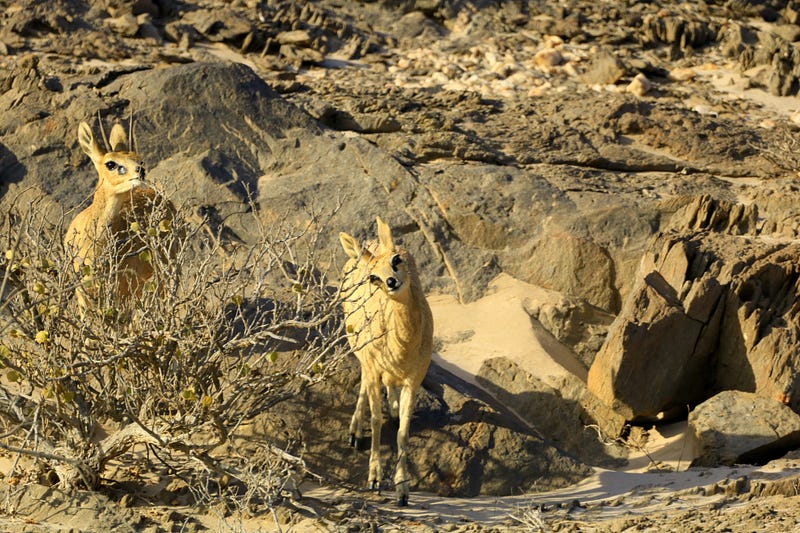
One of the smallest antelopes I have seen is the Klipspringer. Often around in pairs, I have seen these tiny antelopes mostly on the mountain slopes of dried-out riverbeds.
Desert elephants
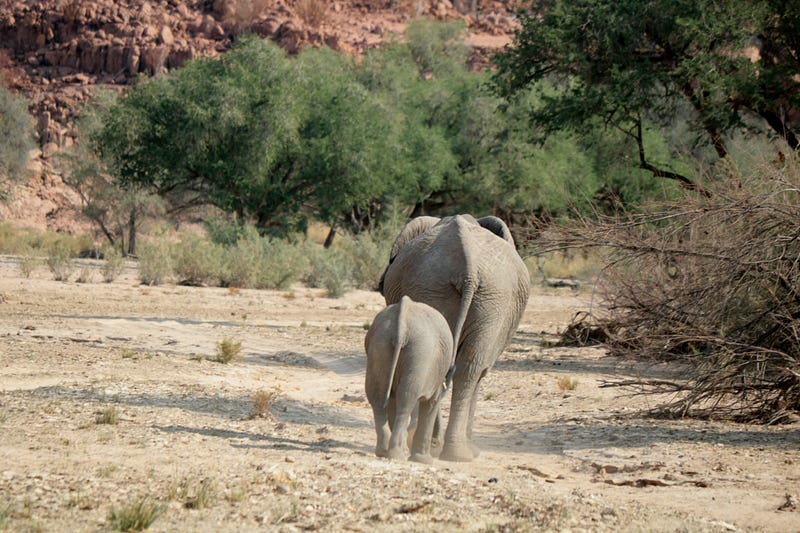
Only a few of them are left and I was in awe when we drove into a herd of desert-adapted elephants on our road trip through the country. These gentle giants may walk past you during the night and you won’t even notice.
Giraffes
These tall and beautiful animals always make me smile when I spot them in the distance but they are never easier to be seen than in the arid habitats of the central Namib Desert. They just seem too tall for the environment and yet, they manage to survive even if they have to bend down to feed on tiny trees and bushes.
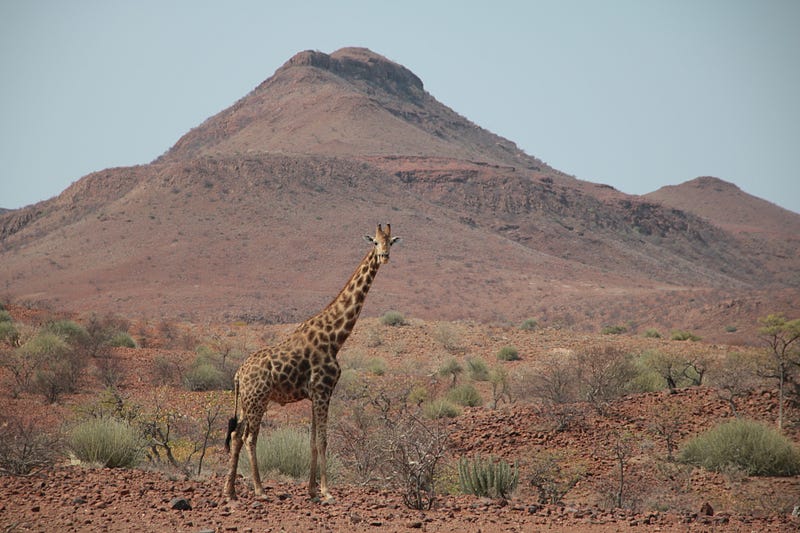
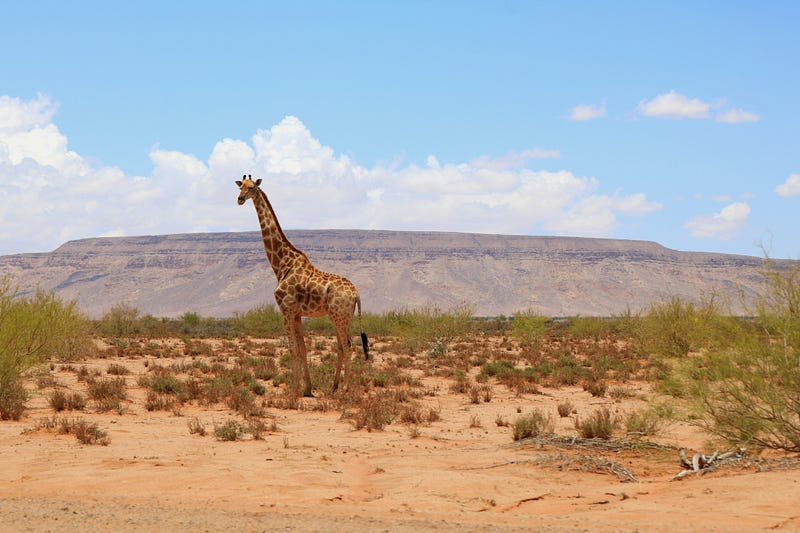
As you can see, I have seen a decent amount of wildlife not only living but thriving in the arid landscapes of the Namib desert. While it is great to see wildlife in national parks and game reserves, spotting wild animals in the harsh environments of Namibia’s wilderness is always a highlight for me.
This is a writing prompt response to this month’s challenge at Globetrotters. I invite you to submit your own prompt response:
September Monthly Challenge — Wildlife
What animals have you encountered on your travels?
medium.com
And here are the latest challenge submissions:
Jillian Amatt - Artistic Voyages with "We Laughed Hysterically When the Stork Stole Their Lunch"
Roberta Patellaro with "To All the Camels I Rode"
Join my email list here if you would like to read more photo essays.
Shutterstock | Instagram | YouTube | Mailchimp | Amazon | Redbubble


