avatarAnne Bonfert

Free AI web copilot to create summaries, insights and extended knowledge, download it at here

6458

Abstract

. Taking as many different pictures of birds as possible. Capturing various birds. That kept me occupied for a while.</p><figure id="1058"><img src="https://cdn-images-1.readmedium.com/v2/resize:fit:800/1*l1Qc4aFtfB30-fsL0-iJ4Q.jpeg"><figcaption>Credit: <a href="https://medium.com/@anne.bonfert">Anne Bonfert</a></figcaption></figure><p id="6562">Being in and on the water, we obviously saw lots of herons. Living in the reeds, they are often to be seen when swimming in the river.</p><p id="9f2b">The Grey Heron has his nest inside the reeds. Protecting its young ones from predators. Well hidden it’s a safe place for birds.</p><p id="6473">While kayaking down the Orange River I saw lots of them. Grey Herons. Flying across borders because land borders don’t exist for birds. Gently taking off and flying just above the water. Just to sit down in the next section of reeds again.</p><figure id="9d7a"><img src="https://cdn-images-1.readmedium.com/v2/resize:fit:800/1*Rk-DUoahL4WxxP_7MW0GFw.jpeg"><figcaption>Credit: <a href="https://medium.com/@anne.bonfert">Anne Bonfert</a></figcaption></figure><p id="ab84">Well and then there are these shots. This is me trying to get a shot of a bird that is unphotogenic. Sometimes you try as hard as you can. But this one bird always looked away. And turned away.</p><p id="15e9">And all I get on camera is his butt. How lovely. At least the setting sun is brightening up the shot. And or the butt.</p><figure id="7225"><img src="https://cdn-images-1.readmedium.com/v2/resize:fit:800/1*egXYHp9crWKQ2LHZEvsfHA.jpeg"><figcaption>Credit: <a href="https://medium.com/@anne.bonfert">Anne Bonfert</a></figcaption></figure><p id="c2ac">Sparrows. Everywhere. Of course. Just like in Europe too. They do live in southern Namibia as well. They always appear in numbers. And are the tamest birds you can see. And the easiest ones to capture.</p><p id="b53b">Yet they are still part of it. Of the chorus singing in the morning. And the community of birds visiting us during lunchtime.</p><figure id="73f7"><img src="https://cdn-images-1.readmedium.com/v2/resize:fit:800/1*0tRIll_24YQUvlA2LHOsbA.jpeg"><figcaption>Credit: <a href="https://medium.com/@anne.bonfert">Anne Bonfert</a></figcaption></figure><p id="a579">This is another one. Maybe a Cape Wagtail. Not sure about it. It’s definitely a very self-confident bird. Walking across the ground. Lifting its head. Telling everyone this is his or her territory.</p><figure id="2acb"><img src="https://cdn-images-1.readmedium.com/v2/resize:fit:800/1*oVlc5hhivePVNo5C9IV_2Q.jpeg"><figcaption>Credit: <a href="https://medium.com/@anne.bonfert">Anne Bonfert</a></figcaption></figure><p id="37f3">We just arrived at a new campsite. One where I get 4G on my phone. Despite us being far from any big cities. Did I get 4G? I don’t think I ever had such fast internet in the entire country.</p><p id="9caf">But I’m not complaining. Time to do some work. Publish articles that have been lined up. Posts I’ve written and completed while being cut-off from the internet connection.</p><p id="0ef8">And while I’m sitting here. Under a Camelthorn tree. A big one. I get lots of visitors. Including my favorite one again. The Southern Masked Weaver. Checking out the braai pit. Where we will be preparing food tonight.</p><figure id="0629"><img src="https://cdn-images-1.readmedium.com/v2/resize:fit:800/1*dCoC17eSUFrC7XAUlSQf7g.jpeg"><figcaption>Credit: <a href="https://medium.com/@anne.bonfert">Anne Bonfert</a></figcaption></figure><p id="982c">First I thought it’s a sparrow. Mainly because they are the only birds I know by name. And it’s brown. Like a sparrow. But then I saw it does look different. Maybe worth capturing.</p><p id="ea60">This bird is a little shy. I got one whole shot of him during a few hours of work in this area. The Great Reed Warbler doesn’t seem to appear in numbers at all. Or I ignored all his family members.</p><p id="11df">If so I’m sorry. I simply didn’t recognize you.</p><figure id="36b7"><img src="https://cdn-images-1.readmedium.com/v2/resize:fit:800/1*IrPHo3E3tknOB54Z9oWOsw.jpeg"><figcaption>Credit: <a href="https://medium.com/@anne.bonfert">Anne Bonfert</a></figcaption></figure><p id="8ac4">At first, it looked like a weaver. But then I decided it’s not a weaver. But it’s yellow too. So, I’m happy. It’s a small bird. It also only visited me once.</p><p id="fe06">Is it a Yellow Canary? Who knows. It could be. But it also could be something else. I don’t really care what his name is. I just like the way he tilts his head while listening to other birds talking. Or chirping.</p><figure id="2b3a"><img src="https://cdn-images-1.readmedium.com/v2/resize:fit:800/1*GA79XGdk_6lGCJb5FBtLvg.jpeg"><figcaption>Credit: <a href="https://medium.com/@anne.bonfert">Anne Bonfert</a></figcaption></figure><p id="44d8">This is my absolute favorite shot of this day. This little lively creature was more than a challenge to capture. As he jumped on the floor next to me to pick on some seeds I leaned forward to grab my camera from the table. I hadn’t even touched my camera yet and he was gone.</p><p id="a6e8">Flew off. Into disappearance. Disappointing me. Of not getting a shot of this different bird. A bird I hadn’t seen yet. And captured. I definitely needed him on my collection. Of photographs.</p><p id="df17">Waiting. Patiently waiting with my camera now on the armchair. I started to type again. Having a glimpse now and then on the soil next to me. Watching the birds arriving and leaving.</p><p id="feb9">There he is back. Trying not to move too fast this time I slowly grab my camera and lift it to my eye. But before being able to press the shutter there is nothing left in my shot. Just grass. And some thorns.</p><p id="566b">Damn it. This turns out to be a real challenge. I see him sitting on the roof of the chalet next to us. I’m zooming in on him. But I can’t see anything. The light is bad. He’s in between shadow and light. And I can’t see more than his back.</p><p id="df4d">Eventually, I give up on my article. I turn around. With my camera in my hand. The eye on the viewfinder. Stopping to breathe as the Cape White-eye comes back and sits down on the grass.</p><p id="6f43">Starting to click and click and click. Until I am convinced I got him. In focus. And in the right light. He stayed now for a few minutes. Allowing me to watch him after putting the camera down.</p><p id="362f">It’s a cute little bird. Very awake. And

Options

my mom’s favorite one of all these birds I sent her. Well, I’m glad she appreciates it. Since it was such a mission getting him. On camera.</p><figure id="9f8d"><img src="https://cdn-images-1.readmedium.com/v2/resize:fit:800/1*Ck2AgwJlmlWdHVBnK5p2hw.jpeg"><figcaption>Credit: <a href="https://medium.com/@anne.bonfert">Anne Bonfert</a></figcaption></figure><p id="98d8">While I was trying to capture this beauty lots of doves came in and flew off again. They are everywhere. Everywhere where you can see trees. And some water. Not so much in the depths of the desert.</p><p id="ee33">But at this camp, they appear in numbers.</p><p id="d4d0">There was a baby dove. We saw him in the evening. Walking around. Never taking off. The next morning as I get down from the rooftop tent I see the little one sleeping next to the car. Under the tree.</p><p id="0630">I guess there are no predators whatsoever in this camp. Otherwise, this lone bird would not have survived. I wonder what happened to him. Did he fall out of the nest?</p><p id="764d">Later that day I saw him flying off. I guess he survived the crucial time of not being able to fly and living on the camp floor. Now he’s free to go. And free to live.</p><figure id="90d6"><img src="https://cdn-images-1.readmedium.com/v2/resize:fit:800/1*kKV1o_803-umG0GOMlwFIA.jpeg"><figcaption>Credit: <a href="https://medium.com/@anne.bonfert">Anne Bonfert</a></figcaption></figure><p id="4a14">This bird from the title image was my favorite bird that day. With such a beautiful hairstyle the African Hoopoe got all my attention. Walking around under the neighbor’s tree I had to get up to catch him on camera.</p><p id="6b24">But he isn’t shy. Stayed on the ground for as long as I took photographs. Only when I came too close he flew off. Onto the first branch. Just to come down again as soon as I turned my back to him.</p><figure id="fcb3"><img src="https://cdn-images-1.readmedium.com/v2/resize:fit:800/1*U4-mlxOFu7SY5KtfU_zx1Q.jpeg"><figcaption>Credit: <a href="https://medium.com/@anne.bonfert">Anne Bonfert</a></figcaption></figure><p id="582b">I know. These are different birds. They can’t fly. And they are quite big. And super fast. They can chase you in your car. But they are birds too. Birds of southern Namibia.</p><p id="d48a">And I love seeing them. Everyday. All-day long. I am always excited when spotting one. Or two. They usually appear together. As a couple. Except for now. Now I got the whole family.</p><p id="51cc">Just next to the road. What a great ostrich sighting! In the green landscape of the semi-desert. What rain does to this country. It’s simply stunning.</p><figure id="9677"><img src="https://cdn-images-1.readmedium.com/v2/resize:fit:800/1*AamHUzFufsvB5Nl4Xccmfw.jpeg"><figcaption>Credit: <a href="https://medium.com/@anne.bonfert">Anne Bonfert</a></figcaption></figure><p id="bfd9">These two were accompanying us in our second last camp. One of my favorite campsites of the whole trip. Far from anyone. Or any building. In a biosphere reserve.</p><p id="06cc">The Karoo Korhaan make a quaking sound while talking to each other. They walked all afternoon around in our camp. Looking for insects or other food in the soil.</p><p id="41db">They don’t sing as beautiful as all the other birds. Yet they were still lovely to have around. I won’t forget their call. Some would call it noise. But it isn’t. It is their type of melody.</p><figure id="13d6"><img src="https://cdn-images-1.readmedium.com/v2/resize:fit:800/1*xFvVlnu_JJ1HA5FB86p8NA.jpeg"><figcaption>Credit: <a href="https://medium.com/@anne.bonfert">Anne Bonfert</a></figcaption></figure><p id="5bef">I guess I came to an end. The end of my bird selection. No more photographs of birds I took on this trip. But this is enough. I think. For someone who’s not a bird watcher. And someone who didn’t go on a birding safari.</p><p id="1a0a">I just captured these during my stays in various campsites. In southern Namibia. A country that just started to turn green. A country worth visiting. Right now. In the pandemic. Since it is made for social distancing.</p><p id="63a8">The second least populated country in the world has lots of space for you to be by yourself. And among birds. And other wildlife.</p><p id="9899">I enjoyed this trip a lot. A trip in nature. And with nature surrounding me.</p><blockquote id="e5e6"><p>Read more about my stories on birds…</p></blockquote><div id="af18" class="link-block"> <a href="https://readmedium.com/flamingos-walking-along-the-beach-2cbb13a0ea4a"> <div> <div> <h2>Flamingos Walking along the Beach</h2> <div><h3>The beach is packed — by birds</h3></div> <div><p>medium.com</p></div> </div> <div> <div style="background-image: url(https://miro.readmedium.com/v2/resize:fit:320/1*weBiibK4O2ebCQvJ1Oy1Sg.jpeg)"></div> </div> </div> </a> </div><div id="5187" class="link-block"> <a href="https://readmedium.com/the-sparrows-family-e87cff31a422"> <div> <div> <h2>The Sparrow’s Family</h2> <div><h3>A story from a bird feeder</h3></div> <div><p>medium.com</p></div> </div> <div> <div style="background-image: url(https://miro.readmedium.com/v2/resize:fit:320/1*wyEV5HVSQbPJLhDwJ143VA.jpeg)"></div> </div> </div> </a> </div><div id="c6e5" class="link-block"> <a href="https://readmedium.com/what-we-can-learn-from-bird-watchers-4dc8b2b7397e"> <div> <div> <h2>What We Can Learn From Bird Watchers</h2> <div><h3>It’s not all just boring about watching birds</h3></div> <div><p>medium.com</p></div> </div> <div> <div style="background-image: url(https://miro.readmedium.com/v2/resize:fit:320/1*6s13l0g9dyMxDDWKwiCk0w.jpeg)"></div> </div> </div> </a> </div><p id="5b03">Join my email-list <a href="https://mailchi.mp/9dd74c10ac6b/signup-mydreamofafrica">here</a>.</p><p id="0168"><i>Anne Bonfert is a traveler. Photographer. Writer. Teacher. Skydiving instructor. Adventure enthusiast. Nature lover. And fell in love with the African continent.</i></p></article></body>

Birds of Southern Namibia

My photographic collection of the feathered wildlife
Credit: Anne Bonfert

It’s been one amazing road trip. Our excursion through southern Namibia. Looking for water and signs of life. We’ve experienced so much. We’ve seen a lot.

But there was one thing that followed us through. From one camp to another. No matter where we were. Amid the desert or on the riverbank of a rapidly flowing river.

The sound of the birds. Their songs were gently swinging me into a goodnight’s sleep. Their melodies were slowly waking me up in the mornings. Their chirping was my background music while typing under the trees.

They were always there. And I loved it. I am not a bird watcher. Yet it was lovely to have these feathered friends accompanying me on this trip. They share somewhat happiness. While picking seeds or looking for a partner.

I’ve started capturing them. For my mom. Back home. She loves birds. She’s a real bird fanatic. I would send her a picture of a bird now and then. Minutes later I would get the name back of it. In German, English, and Latin. Because she can’t look at a photograph of a bird without knowing what it is.

To write this article I’ve sent all the photographs to her. She looked up the birds in a book. And if she couldn’t find them, then she used the internet. I am proud of her. Of finally making use of the world wide web.

She says she’s not sure of all of them. But the categories should be right. If someone knows better please let me know. These are the birds of southern Namibia. The birds I saw. And managed to capture.

This one is for you, mom!
Credit: Anne Bonfert

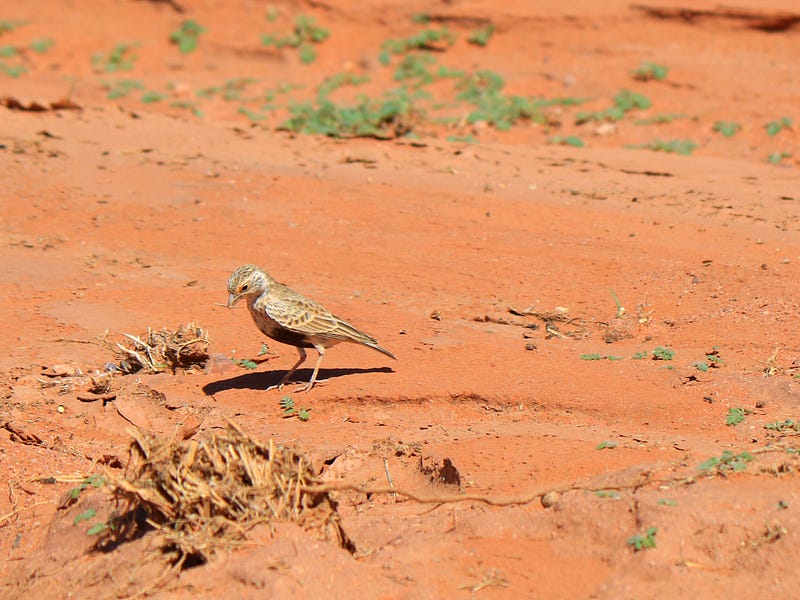
Driving through barren land we had to stop seeing a small pond next to the road. Seeing water in the desert is always worth stopping. And it’s always worth capturing.

And while I was busy leaning over the fence, I heard this little beauty. Chirping in the tree. Then I saw it. Flying onto the ground. Jumping around. Picking for insects. Or seeds. Who knows. It didn’t get distracted by my visit.

A lark. Not sure which one though. This one doesn’t look like anyone in the books. I guess birds are unique too. Just like humans. Not two of them look the same. So it’s sometimes difficult to identify them.
Credit: Anne Bonfert

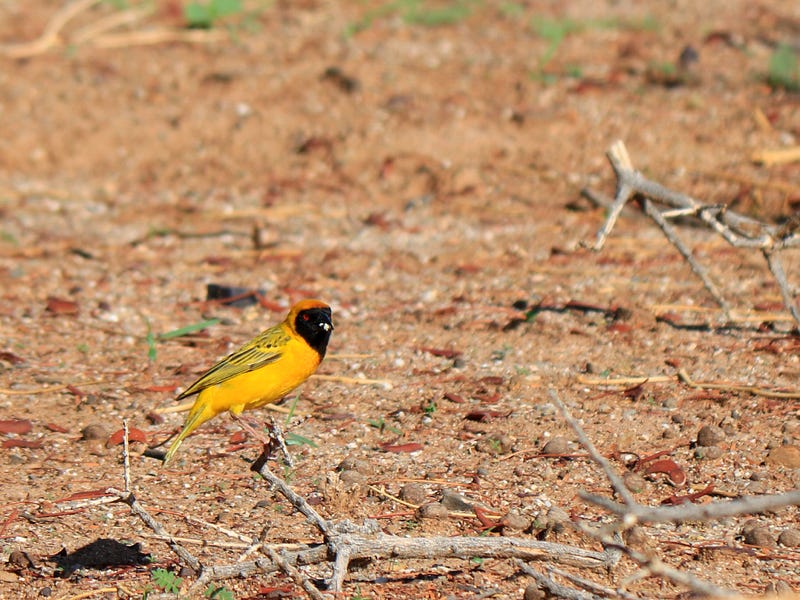
This is one of my favorite birds. Obviously. Because it’s yellow. And anyone following my blog for longer than a day knows that yellow is my favorite color. I mainly wear yellow. Almost exclusively.

And I love anything and everything yellow. Also birds. Like this weaver.

I don’t get to see such colorful birds in Germany. Or such bright colored ones. Therefore I even love them more. To see them here. In my second home. In Namibia. I do know the weavers. Because of their famous nests, they build.

They build such big nests in the tree that eventually the whole branch will collapse under the weight. It’s like they build an entire colony in there. But I guess in areas where trees are scarce you gotta do the best out of it.

The Southern Masked Weaver is a stunning beauty. Also worth a photograph.
Credit: Anne Bonfert

We stayed two nights at the Canyon Roadhouse. The camp was basically inside the small dried-out riverbed. The water was probably flowing just a few days before we came.

Talking about riverbeds you know it includes trees. And bushes. Lots of them. This where they get all year around enough water. Even though the water isn’t seen. It’s there. Somewhere underground.

And where trees are to be found, there are lots of birds too.

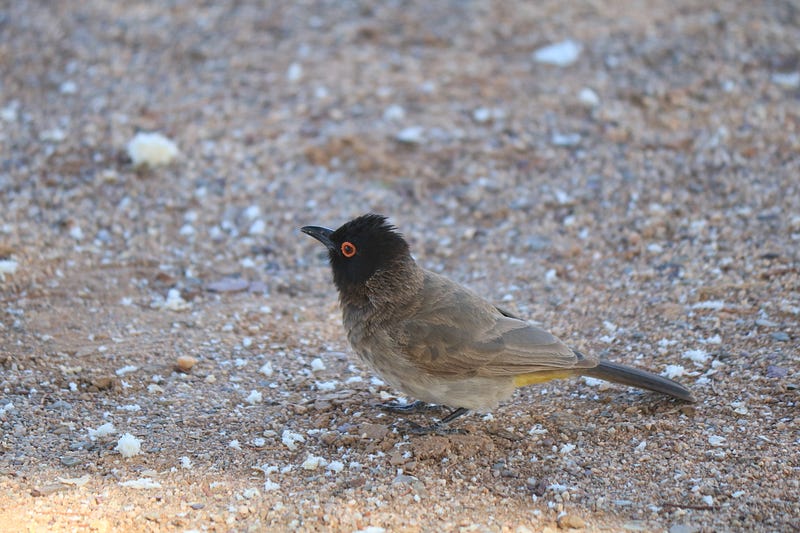
Living in nature I always throw food left-overs and bread crumbs right next to our camp. Attracting birds and other animals at night. The birds come while we’re there as well.

Giving me a chance to watch them. Listen to them chatting to each other. And capturing them of course. The African Red-eyed Bulbul came in a team. Probably a couple. Living together in paradise.
Credit: Anne Bonfert

Our next drive brought us all the way south. To the South African border. The border is a natural landmark. The Orange River. A river that carries all year around water. Sometimes more. Sometimes less. But it never runs dry.

What a perfect place for birds. It’s a bird’s paradise. Living on the river banks. In the bushes. The trees. Or inside the reeds.

Sometimes it got very loud. When the birds were fighting. Or calling each other. But it was always beautiful. Listening to their sounds. And watching them fly. And walk through our camp.

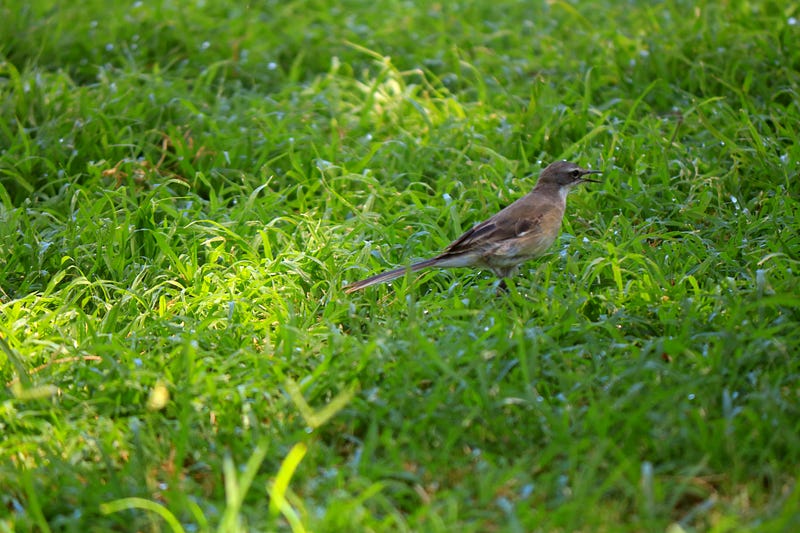
This Cape Wagtail had a very high voice. Walking through the grass, looking for insects I wouldn’t mind if he would pick some mosquitoes.
Credit: Anne Bonfert

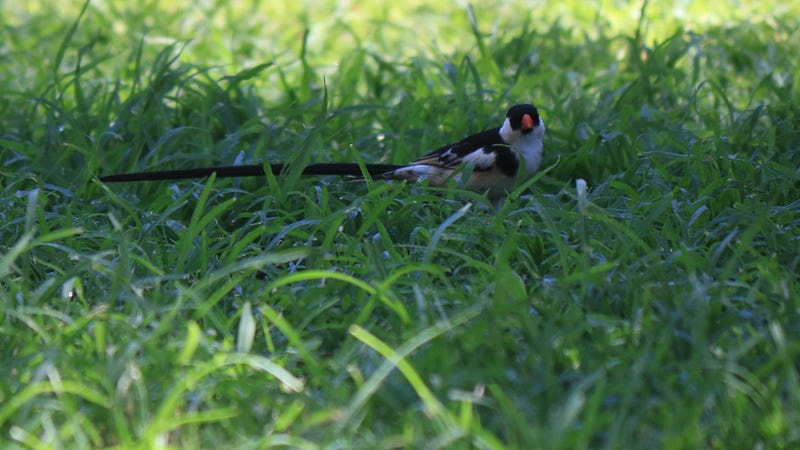
The Pin Tailed Whydah came just a few minutes later. With his long tail, he got all my attention. While sitting on my chair under the gazebo I had a whole film running in front of me.

Most of the film, I watched through my lens. Taking as many different pictures of birds as possible. Capturing various birds. That kept me occupied for a while.
Credit: Anne Bonfert

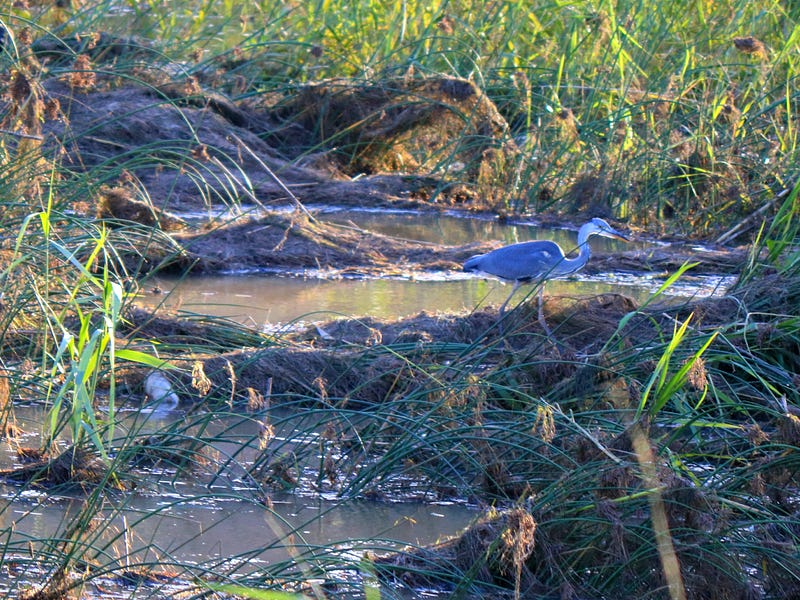
Being in and on the water, we obviously saw lots of herons. Living in the reeds, they are often to be seen when swimming in the river.

The Grey Heron has his nest inside the reeds. Protecting its young ones from predators. Well hidden it’s a safe place for birds.

While kayaking down the Orange River I saw lots of them. Grey Herons. Flying across borders because land borders don’t exist for birds. Gently taking off and flying just above the water. Just to sit down in the next section of reeds again.
Credit: Anne Bonfert

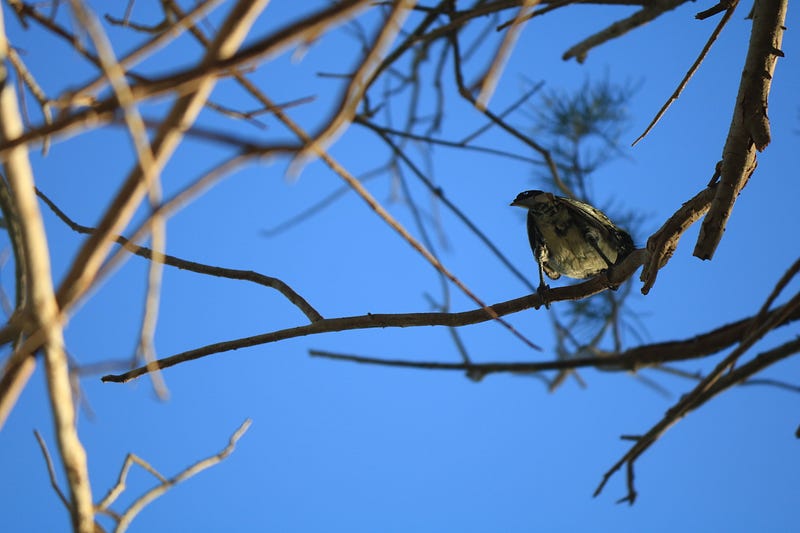
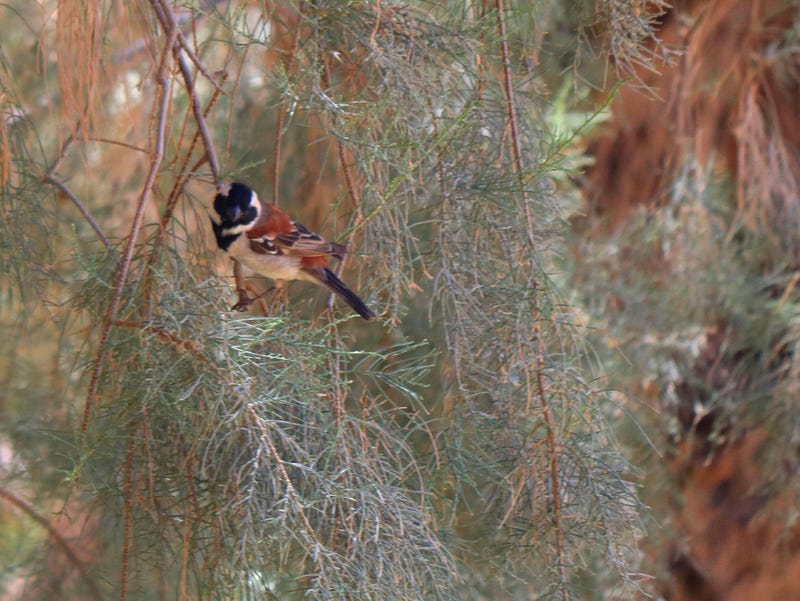
Well and then there are these shots. This is me trying to get a shot of a bird that is unphotogenic. Sometimes you try as hard as you can. But this one bird always looked away. And turned away.

And all I get on camera is his butt. How lovely. At least the setting sun is brightening up the shot. And or the butt.
Credit: Anne Bonfert

Sparrows. Everywhere. Of course. Just like in Europe too. They do live in southern Namibia as well. They always appear in numbers. And are the tamest birds you can see. And the easiest ones to capture.

Yet they are still part of it. Of the chorus singing in the morning. And the community of birds visiting us during lunchtime.
Credit: Anne Bonfert

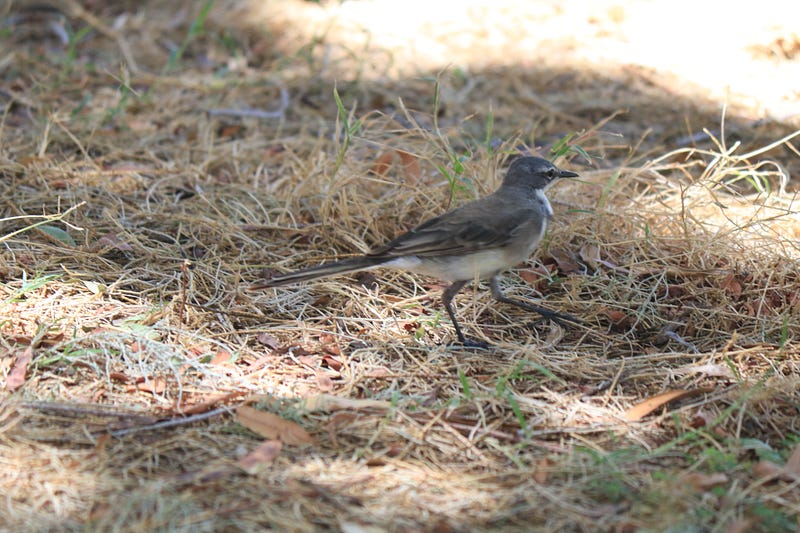
This is another one. Maybe a Cape Wagtail. Not sure about it. It’s definitely a very self-confident bird. Walking across the ground. Lifting its head. Telling everyone this is his or her territory.
Credit: Anne Bonfert

We just arrived at a new campsite. One where I get 4G on my phone. Despite us being far from any big cities. Did I get 4G? I don’t think I ever had such fast internet in the entire country.

But I’m not complaining. Time to do some work. Publish articles that have been lined up. Posts I’ve written and completed while being cut-off from the internet connection.

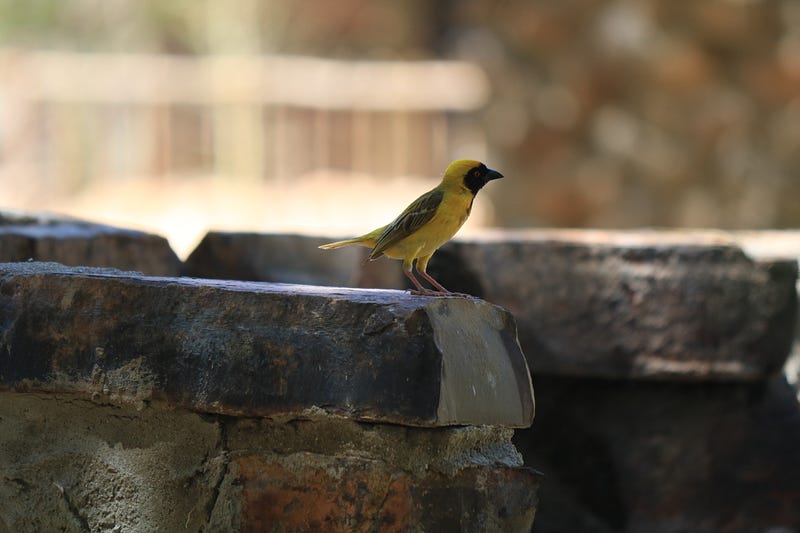
And while I’m sitting here. Under a Camelthorn tree. A big one. I get lots of visitors. Including my favorite one again. The Southern Masked Weaver. Checking out the braai pit. Where we will be preparing food tonight.
Credit: Anne Bonfert

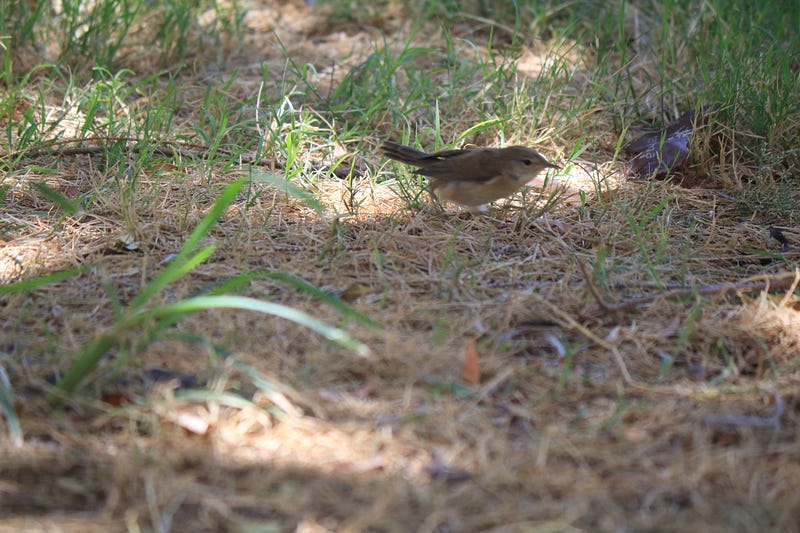
First I thought it’s a sparrow. Mainly because they are the only birds I know by name. And it’s brown. Like a sparrow. But then I saw it does look different. Maybe worth capturing.

This bird is a little shy. I got one whole shot of him during a few hours of work in this area. The Great Reed Warbler doesn’t seem to appear in numbers at all. Or I ignored all his family members.

If so I’m sorry. I simply didn’t recognize you.
Credit: Anne Bonfert

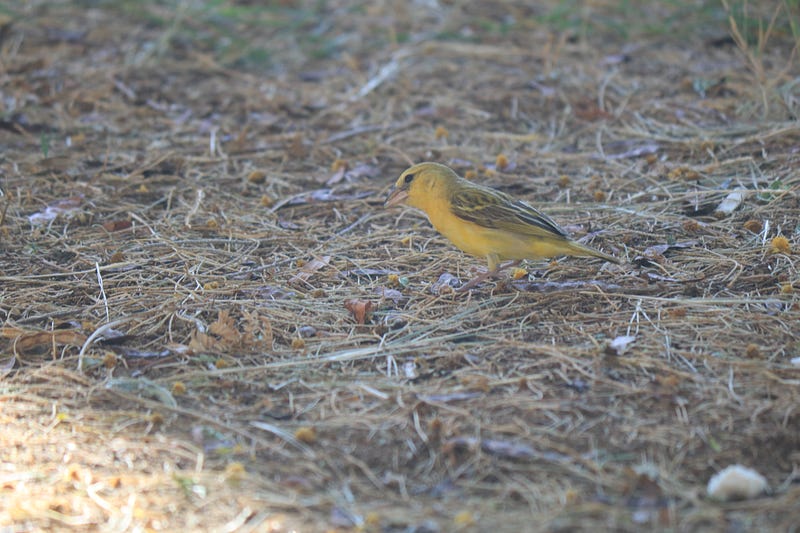
At first, it looked like a weaver. But then I decided it’s not a weaver. But it’s yellow too. So, I’m happy. It’s a small bird. It also only visited me once.

Is it a Yellow Canary? Who knows. It could be. But it also could be something else. I don’t really care what his name is. I just like the way he tilts his head while listening to other birds talking. Or chirping.
Credit: Anne Bonfert

This is my absolute favorite shot of this day. This little lively creature was more than a challenge to capture. As he jumped on the floor next to me to pick on some seeds I leaned forward to grab my camera from the table. I hadn’t even touched my camera yet and he was gone.

Flew off. Into disappearance. Disappointing me. Of not getting a shot of this different bird. A bird I hadn’t seen yet. And captured. I definitely needed him on my collection. Of photographs.

Waiting. Patiently waiting with my camera now on the armchair. I started to type again. Having a glimpse now and then on the soil next to me. Watching the birds arriving and leaving.

There he is back. Trying not to move too fast this time I slowly grab my camera and lift it to my eye. But before being able to press the shutter there is nothing left in my shot. Just grass. And some thorns.

Damn it. This turns out to be a real challenge. I see him sitting on the roof of the chalet next to us. I’m zooming in on him. But I can’t see anything. The light is bad. He’s in between shadow and light. And I can’t see more than his back.

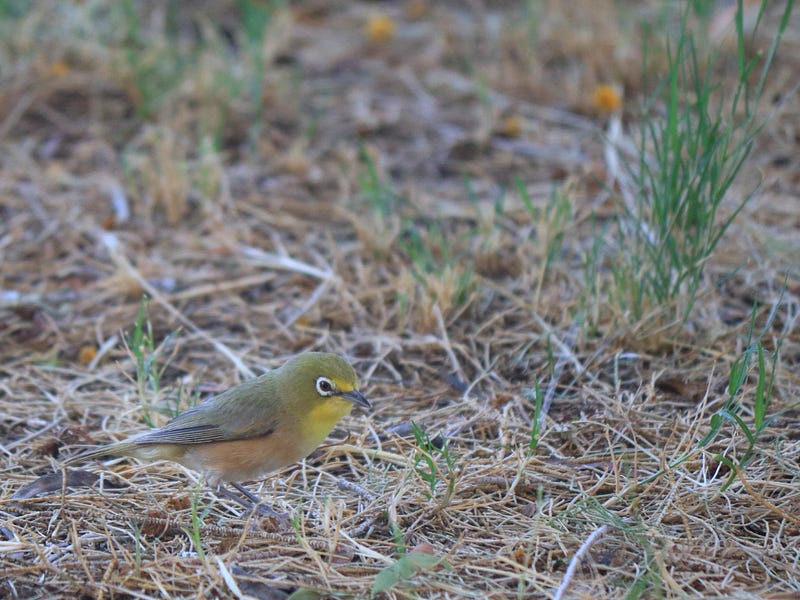
Eventually, I give up on my article. I turn around. With my camera in my hand. The eye on the viewfinder. Stopping to breathe as the Cape White-eye comes back and sits down on the grass.

Starting to click and click and click. Until I am convinced I got him. In focus. And in the right light. He stayed now for a few minutes. Allowing me to watch him after putting the camera down.

It’s a cute little bird. Very awake. And my mom’s favorite one of all these birds I sent her. Well, I’m glad she appreciates it. Since it was such a mission getting him. On camera.
Credit: Anne Bonfert

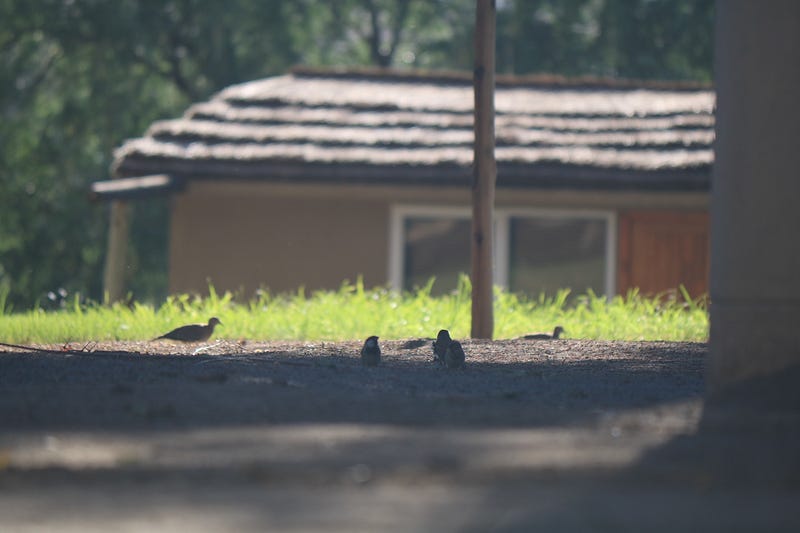
While I was trying to capture this beauty lots of doves came in and flew off again. They are everywhere. Everywhere where you can see trees. And some water. Not so much in the depths of the desert.

But at this camp, they appear in numbers.

There was a baby dove. We saw him in the evening. Walking around. Never taking off. The next morning as I get down from the rooftop tent I see the little one sleeping next to the car. Under the tree.

I guess there are no predators whatsoever in this camp. Otherwise, this lone bird would not have survived. I wonder what happened to him. Did he fall out of the nest?

Later that day I saw him flying off. I guess he survived the crucial time of not being able to fly and living on the camp floor. Now he’s free to go. And free to live.
Credit: Anne Bonfert

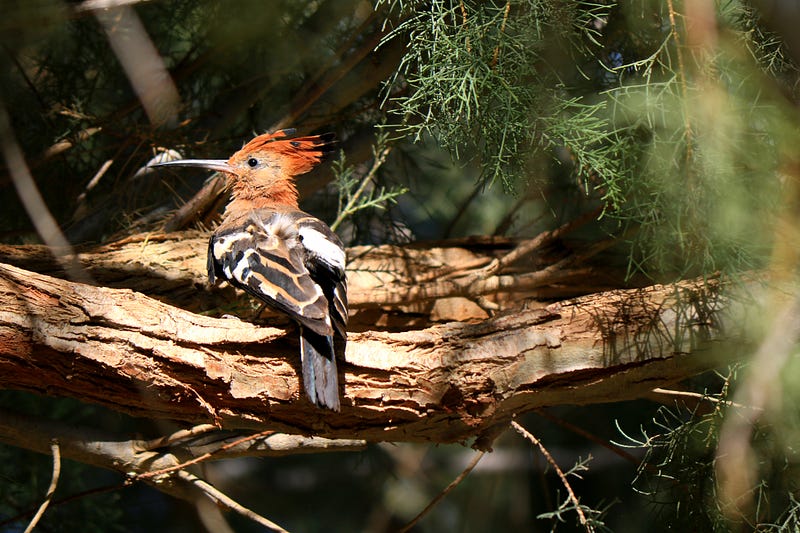
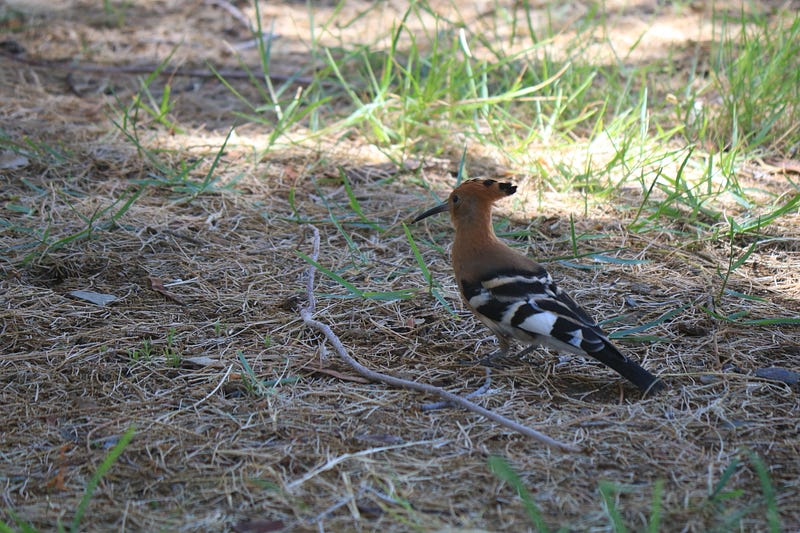
This bird from the title image was my favorite bird that day. With such a beautiful hairstyle the African Hoopoe got all my attention. Walking around under the neighbor’s tree I had to get up to catch him on camera.

But he isn’t shy. Stayed on the ground for as long as I took photographs. Only when I came too close he flew off. Onto the first branch. Just to come down again as soon as I turned my back to him.
Credit: Anne Bonfert

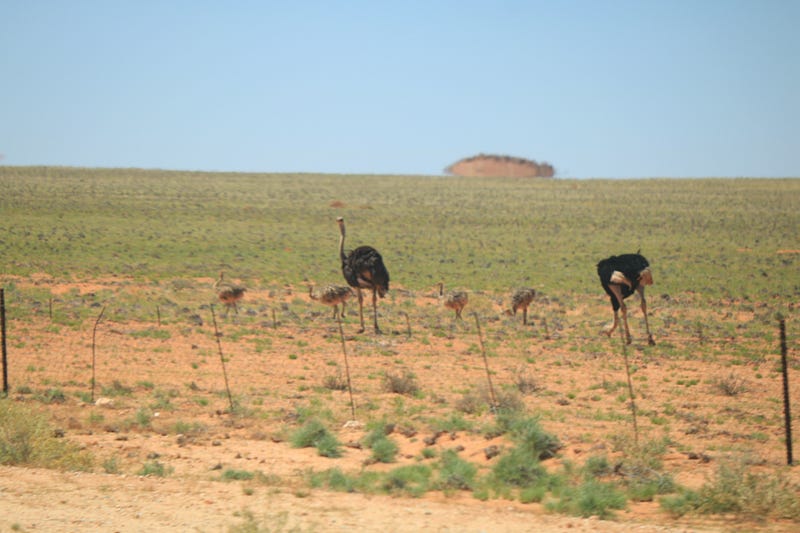
I know. These are different birds. They can’t fly. And they are quite big. And super fast. They can chase you in your car. But they are birds too. Birds of southern Namibia.

And I love seeing them. Everyday. All-day long. I am always excited when spotting one. Or two. They usually appear together. As a couple. Except for now. Now I got the whole family.

Just next to the road. What a great ostrich sighting! In the green landscape of the semi-desert. What rain does to this country. It’s simply stunning.
Credit: Anne Bonfert

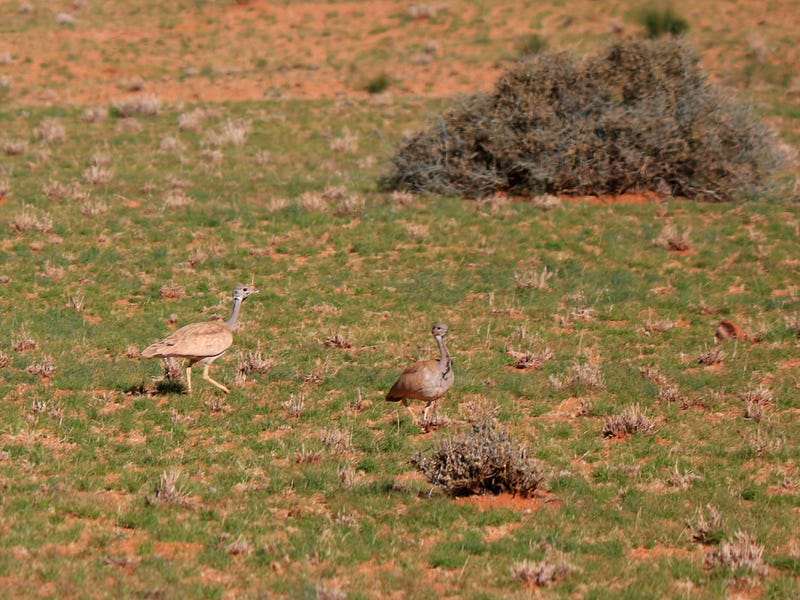
These two were accompanying us in our second last camp. One of my favorite campsites of the whole trip. Far from anyone. Or any building. In a biosphere reserve.

The Karoo Korhaan make a quaking sound while talking to each other. They walked all afternoon around in our camp. Looking for insects or other food in the soil.

They don’t sing as beautiful as all the other birds. Yet they were still lovely to have around. I won’t forget their call. Some would call it noise. But it isn’t. It is their type of melody.
Credit: Anne Bonfert

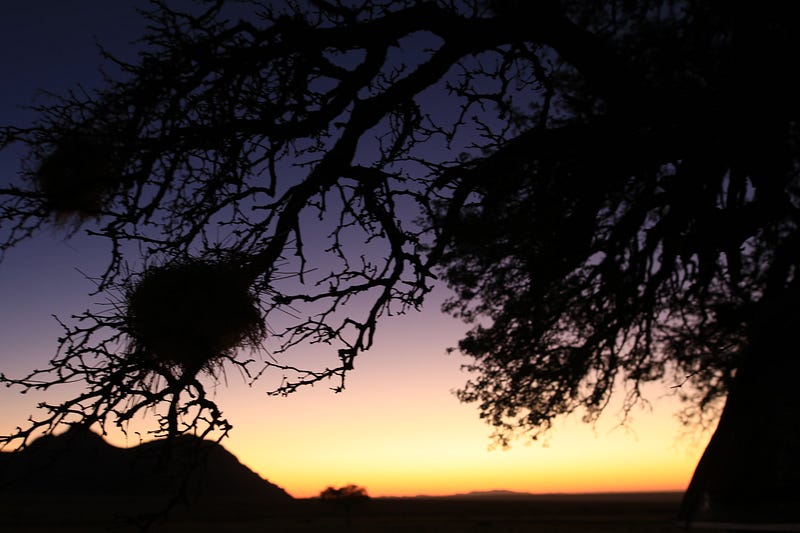
I guess I came to an end. The end of my bird selection. No more photographs of birds I took on this trip. But this is enough. I think. For someone who’s not a bird watcher. And someone who didn’t go on a birding safari.

I just captured these during my stays in various campsites. In southern Namibia. A country that just started to turn green. A country worth visiting. Right now. In the pandemic. Since it is made for social distancing.

The second least populated country in the world has lots of space for you to be by yourself. And among birds. And other wildlife.

I enjoyed this trip a lot. A trip in nature. And with nature surrounding me.

Read more about my stories on birds…

Join my email-list here.

Anne Bonfert is a traveler. Photographer. Writer. Teacher. Skydiving instructor. Adventure enthusiast. Nature lover. And fell in love with the African continent.

Birds
Namibia
Nature
Travel
Africa
Recommended from ReadMedium