
GLOBETROTTERS MONTHLY CHALLENGE
The Day We Drove Into a Herd of Rare Desert Elephants
And those gentle giants were feeding in the riverbed
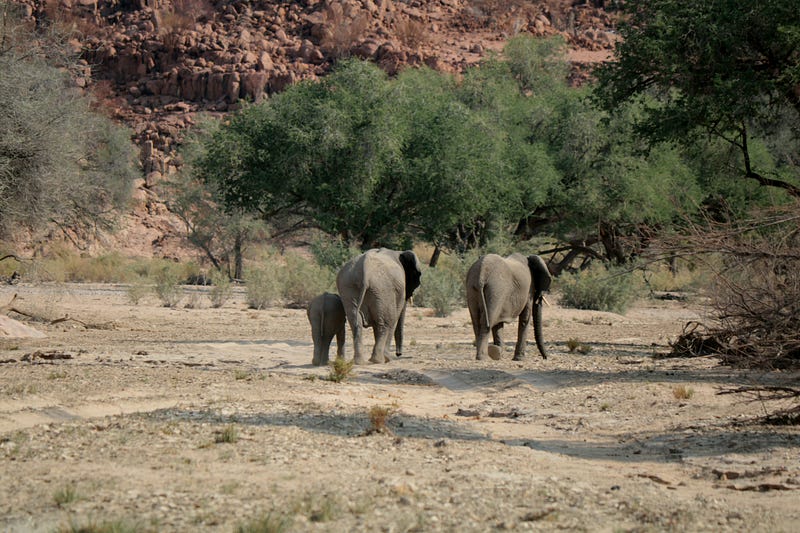
All of a sudden there were elephants everywhere. Ahead of us, behind us and on both sides of the car. We held our breath watching these gentle giants walking through the riverbed. They acted as if we weren’t there.
It was in 2016 when four friends decided to head on a road trip through Namibia. While all of us lived in the country by that time, none of us owned a car or much camping equipment but the way things work down there, we soon had a vehicle, tents, sleeping bags and whatever else we needed for our adventure.
That’s what friends are for. Someone gave us his vehicle for the trip, someone else had a cooler box and a third person had the tips on where we should go. We loaded the car and off we went.
Who was we? Two German girls, a guy from the Netherlands and one local. My now husband. The four of us were split into two couples who had just entered a relationship, if official or not, who knows but we knew each other for a year by this time and were in for a fun week ahead.
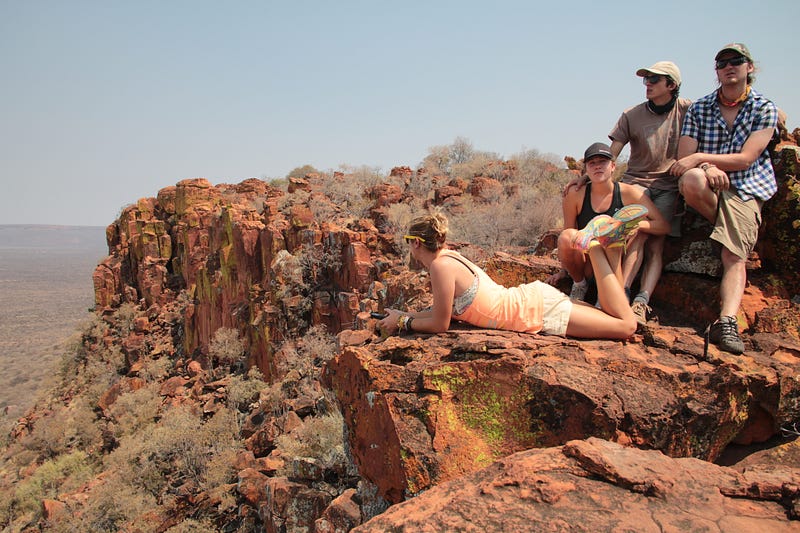
While I could write an article about each day of this road trip as so much happened at every stop along the way, this post isn’t about driving through the country, sleeping in caves as we did or stopping someone’s bleeding every single day.
This is about the day we left the gravel road heading into the dry riverbed of the Ugab to find those rare desert elephants.
While the African elephant is the largest of its kind, these desert-adapted elephants are slightly smaller than the African bush elephants. Nonetheless, they are a very impressive species surviving in the toughest surroundings.
“Desert elephants or desert-adapted elephants are not a distinct species of elephant but are African bush elephants that have made their homes in the Namib and Sahara deserts in Africa. Previously they were classified as a subspecies of the African bush elephant, but this is no longer the case. Desert-dwelling elephants were once more widespread in Africa than they are at present; they are currently found only in Namibia and Mali. They tend to migrate from one waterhole to another following traditional routes which depend on the seasonal availability of food and water. They face being threatened by poaching and from changes in land use by humans.” — Wikipedia
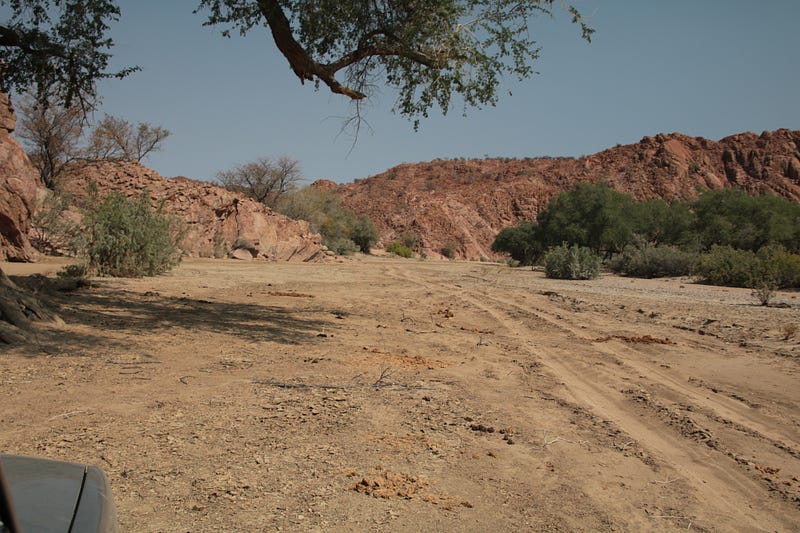
I don’t think anyone else was driving during the entire trip than David, who had previously been a local tour guide for two years in a national park in the North. And so, heading into the soft and thick sand of the riverbed, David was behind the steering wheel while the rest of us were chatting about life.
All but two rivers in the country are ephemeral rivers that only flow after heavy rainfalls. While these dry riverbeds might not have signs of water for us, most wildlife found in the desert retrieves to these spots to feed on the trees and bushes and drink in a few waterholes well hidden.
Now you might think it is easy to spot such a large animal as an elephant but these riverbeds are sometimes several hundred meters wide with thick undergrowth, bushes and trees not allowing you to see further than a few meters.
We all had our eyes on the landscape as we were bouncing around in the car driving through the thick sand but only saw a few birds flying off as we came around the corner before entering the canyon with cliffs reaching high above the ground.
Then he hit the brakes. While David easily spotted the elephant hidden behind the trees thanks to his trained eyes, he was immediately on alert. The three Europeans in the car freaked out and couldn’t believe they saw one of those rare desert elephants but the local amongst us was worried.
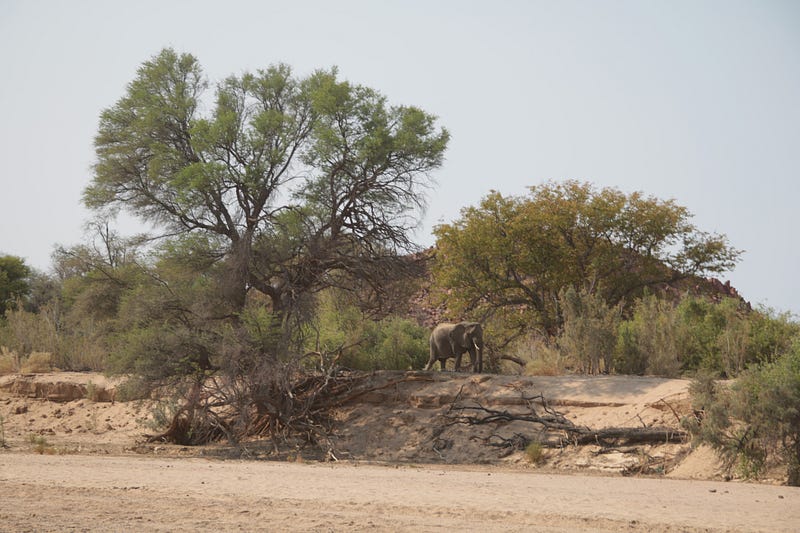
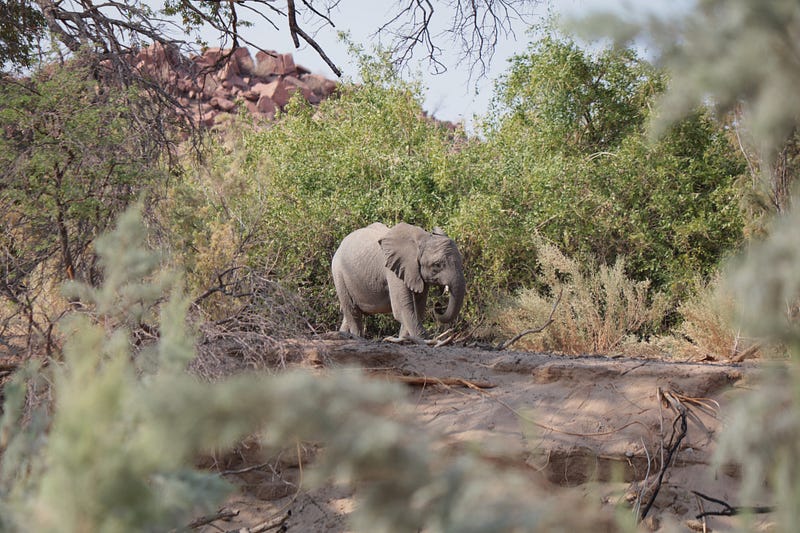
It was a young elephant we were looking at and David did not see its mother. Not knowing where she was, we might as well have been standing between her and the young elephant which could end up fatal for all four of us when noticed by the mother.
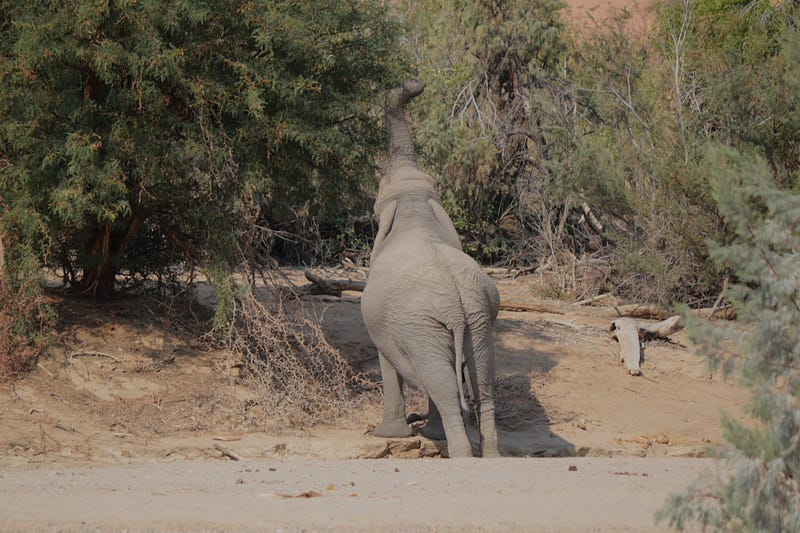
The mother soon appeared next to the young one but the question now was where the rest of the herd was. On the same side or not? These desert elephants live in large herds and mothers won’t be around on their own.
While David was searching all around us for more elephants, the rest of us were clicking photos of the cute boy and stopped talking. The moment was just too unreal.
We were alone. There was no line of cars, no crowds of people and yet no fence separated us from these wild animals. They glanced at us now and then but were feeding on the bushes just meters from us acting as if we weren’t there.
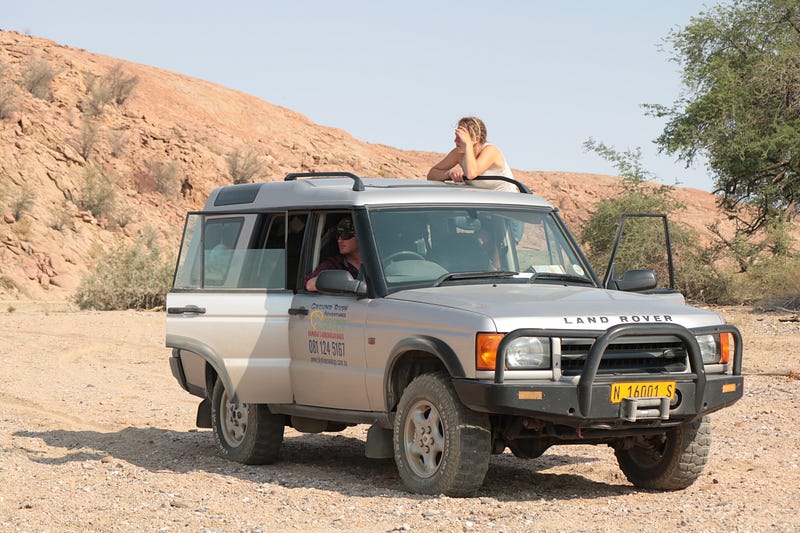
I do remember hearing David shouting at me when I got out of the car to take a picture of our vehicle in this serene location. I said I knew I was safe as no elephant was nearby but what did I know? Certainly nothing. Stupid things you do when you’re young and naive.
David had switched off the car once he realized the elephants were all around us. There was no point in driving ahead or turning around as this might have upset them even more and startled potentially a threat.
He opted for standing still and once he got me back into the car, we sat there for long. Watching desert elephants walking past us listening to them snorting. We could hear them breathing that was as close as they got.
A shrieking sound appeared out of the bushes and we all got a fright but David quickly explained those were baboons chasing away the young elephant. Those monkeys do not care about the size of these animals. They are a mischievous bunch.
The mother of the young elephant stopped feeding, turned around and made a trumpet sound toward the bushes. Yes, we did hold our breath for a full minute until she turned back around and began to walk downriver.
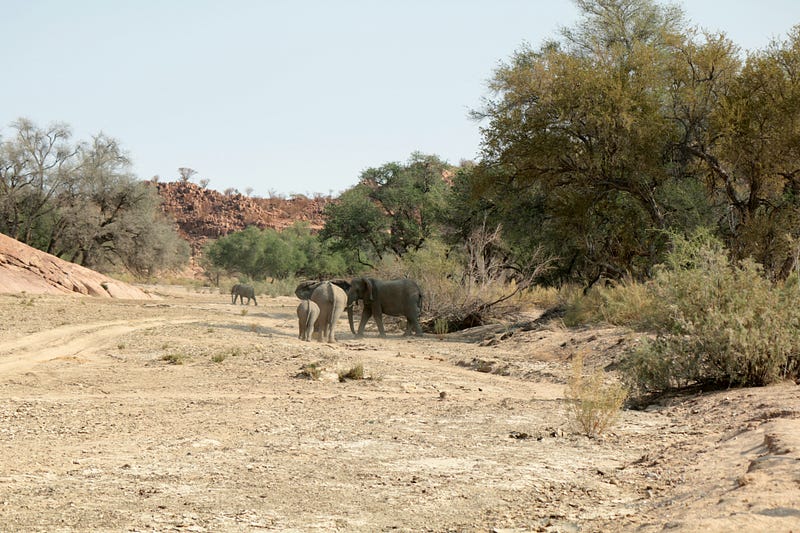
The scene quickly calmed down again with the baboons either moving back to the mountains or keeping quiet in the bushes and the elephants continuing to feed on the trees in the riverbed.
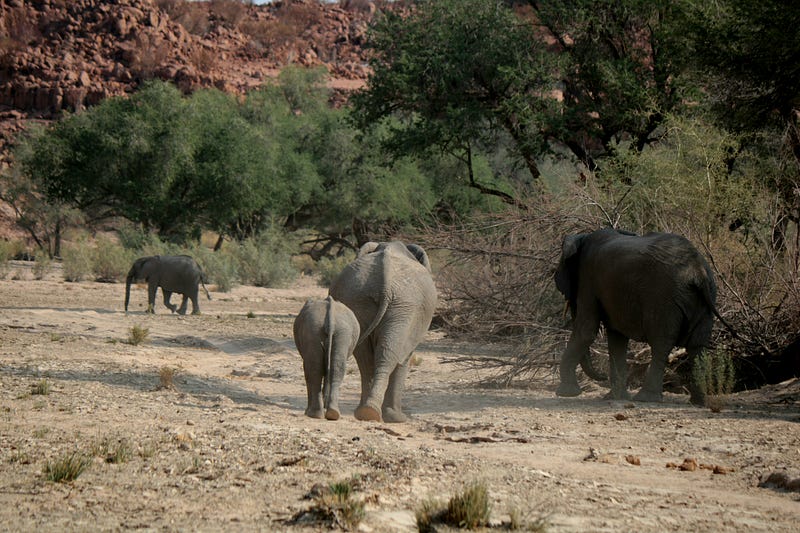
As we didn’t know the size of the herd, we couldn’t just drive as more and more elephants kept on appearing out of the bushes. Also, the herd was now moving in the riverbed in the direction we had to go as well, so we did what you do when in Africa.
You sit back and wait.
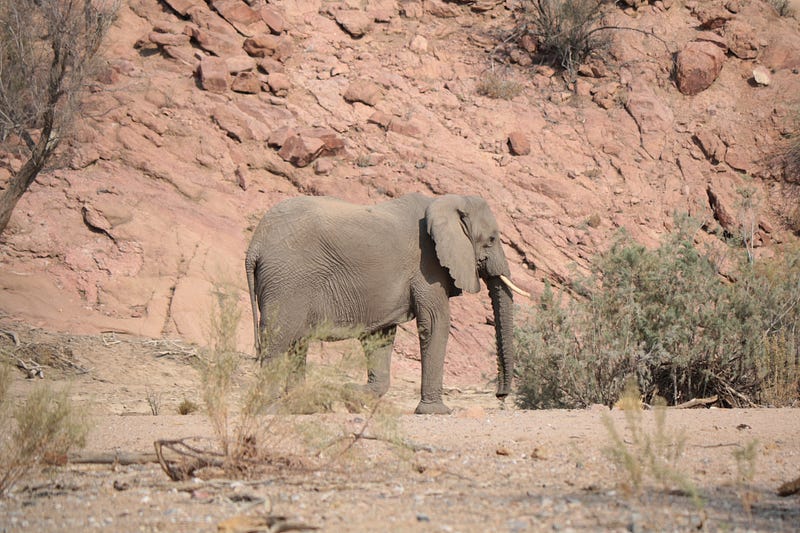
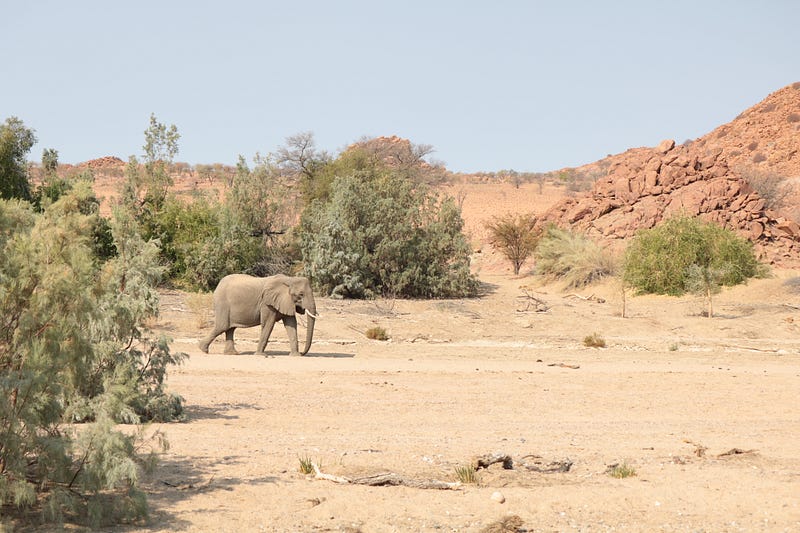
“The elephant population in the Namib region was estimated to be between 2,500–3,500 in the 18th century. It is assumed that elephant herds moved from the wetter areas of northern central Namibia into the drier north-western regions, to take advantage of seasonal and annual resource abundance. Unfortunately, a large part of this elephant population perished in the latter half of the 19th century. This was mainly due to an increase in hunting and illegal poaching, which saw the elephant population decline to 600–800. By 1983, war, drought and poaching reduced these numbers to roughly 360 elephants. Increasing human population and settlements interrupted the elephants’ traditional migratory routes, which sparked human-wildlife conflict, and therefore further threatened the growth of the species. In the 1970–1980s desert elephants were overhunted and vanished from the Ugab River, an area where they had previously lived, due to the ongoing Namibian War of Independence. A low calving rate was recorded for all groups, which was attributed to poaching and human disturbance (Pinnock, Bell and William, 2019). We now estimate the populations within the main riverbeds; Ugab, Huab, Hoarusib, Hoanib, and Uniab to be approximately 150 desert-dwelling elephants.” — EHRA Namibia
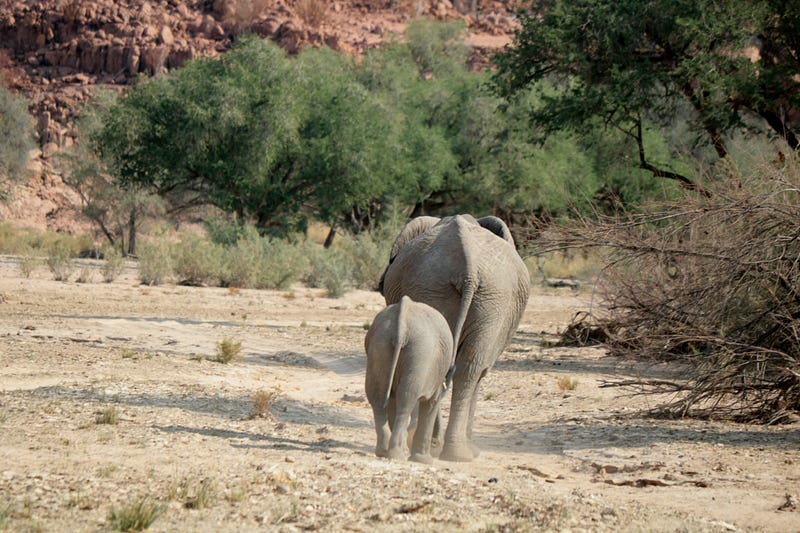
And this was the one and only time I have seen desert elephants in Namibia during five years of permanently living there and exploring the country on countless road trips.
This encounter with the elephants was so special and unique, the memories are still bright in my memory despite years that have gone past.
This is a writing prompt response to this month’s challenge at Globetrotters. I invite you to submit your own prompt response:
September Monthly Challenge — Wildlife
What animals have you encountered on your travels?
medium.com
These are the latest challenge submissions:
Dan Carlson with “From Iron Curtain to Wildlife Haven: Cycling Germany’s Green Belt”
Carol Labuzzetta, with “Wildlife At Home and Away”
Мaria Kriskovich with “Rottnest Island. Warning: Wild Quokkas Ahead”
Ronald Smit with “Creatures Great and Small”
Join my email list here if you would like to read more photo essays.
Shutterstock | Instagram | YouTube | Mailchimp | Amazon | Redbubble


