
Travel & Photography
From Iron Curtain to Wildlife Haven: Cycling Germany’s Green Belt
Escape the big city and enjoy unexpected wildlife encounters on bike trails in northern Germany
I heard them before I saw them. Their bellowing stopped me in my tracks. I found myself in a staring contest with three large red deer (Rothirsch in German). I had obviously disturbed a fierce competition for female affection. Shocked by their overall size and impressive antlers, I decided that a speedy exit was in order.
It was a warm, sunny Sunday afternoon in northern Germany and I was in the mood for adventure. Having explored most of the bike trails in the general vicinity of the little town of Schwarzenbek and after reading stories by fellow writers in Germany (KL Simmons posted about her local tierpark and Anne Bonfert posted about paddling through canals in Spreewald), I needed to try something new.
After consulting a colleague who also lives in the area, I decided to cycle along a section of Germany’s Green Belt. After all, the weather had finally reached the Goldilocks zone for cycling — not too hot, but not too cold. Just right to explore Germany’s trouble past while enjoying its green transformation.
Researching My Route
Chats with locals and a bit of online sleuthing spurred my interest in an area of the Green Belt that straddles the modern border between the German Federal States of Schleswig-Holstein and Mecklenburg-Vorpommern. This specific portion of the Green Belt attracted my attention because it contains a rather extensive forest, a heath, a historical monument, and an open air museum. As an added bonus, the heath should be blooming, promising sweeping purple vistas.
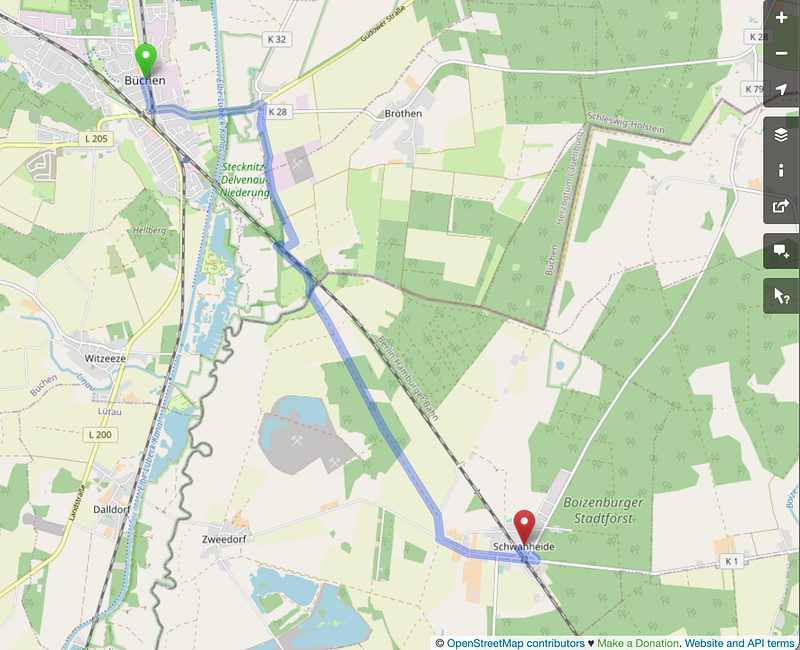
Consulting a map, I could see that my destination is nestled between the villages of Büchen and Schwanheide. Both villages are accessible by train and, whenever possible, I try to make use of my Deutschland-Ticket. For 49 euros per month the Deutschland-Ticket allows me unlimited use of light rail, metro, and regional trains, as well as buses. Taking my bike on the train, however, would require purchasing an additional ticket. The bike ticket is cheap, but scarred by previous experiences attempting to use Deutsche Bahn’s outdated ticket kiosks, I opted to cycle the entire route.
Following more advice from local residents, I used the Mapy app to plan my route. The Mapy app provides more detailed maps of cycling paths and dirt roads than other, more popular navigation apps, making off road adventures a breeze. I made sure to download offline maps as mobile internet access can be spotty and slow outside of populated areas in Germany.
Mapy found the optimal cycling route to the farthest point of my destination, a distance of 22.2 km (13.8 miles). The app estimated that the ride should take me about 1.5 hours to complete, so I planned to be out for about 4 hours in total. With my route decided, I loaded up my rucksack, ensuring that I had plenty of water and snacks, as well as my toolkit and a spare inner tube.
Time to Ride!
The first part of my journey took me northeast to the village of Büchen.
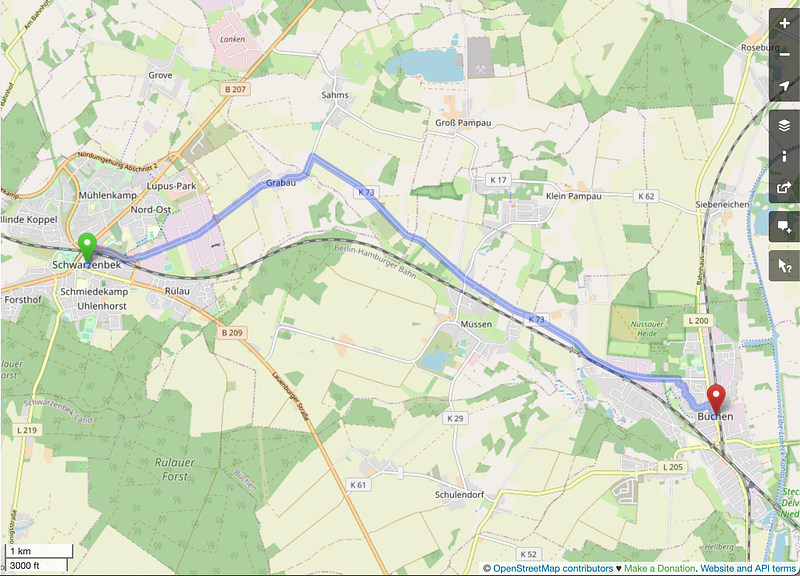
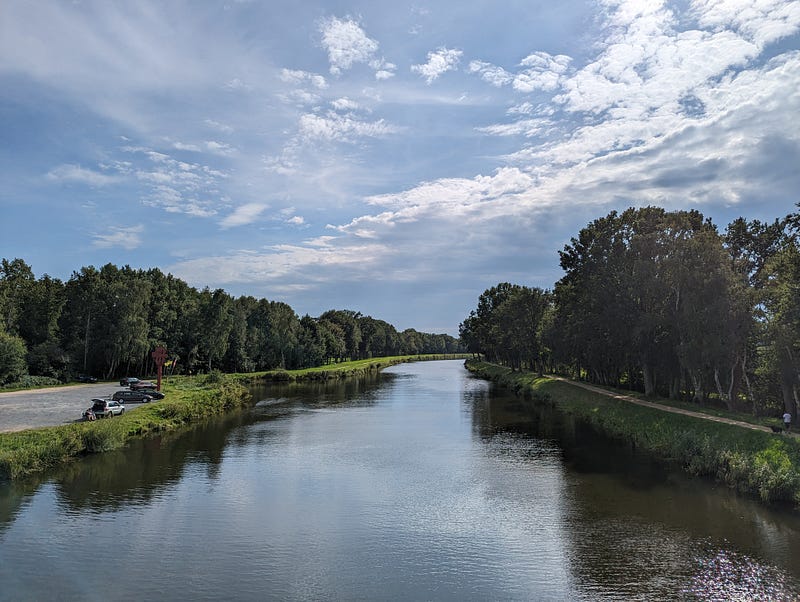
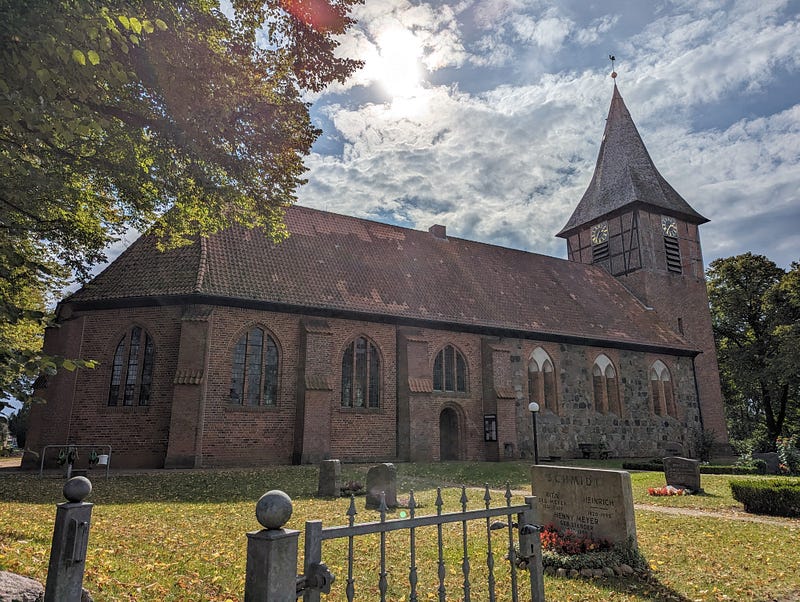
It was a Sunday afternoon, with perfect weather, so the bike paths were more crowded than usual. After reaching Büchen, I crossed the Elbe-Lübeck Canal, passed the old church, and then turned south, towards Schwanheide.
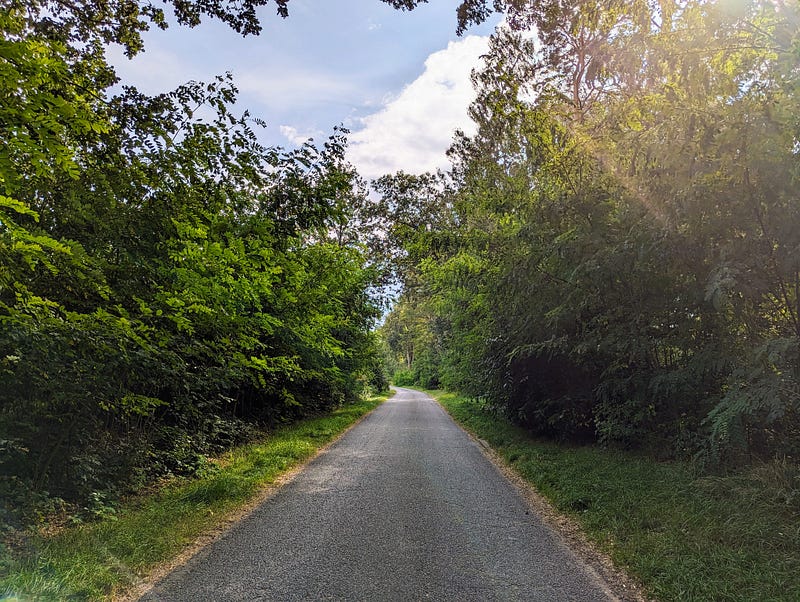
Something interesting happened when I left Büchen. The traffic sounds faded away, as did the cyclists and joggers. In a matter of minutes I found myself completely alone. It was like stepping through a portal of sorts.
I rode through a beautiful landscape, past rows of old oak trees and through fields and pastures. Even the air felt lighter, intensifying the aromas. Except for the occasional train in the distance, the only sounds came from the surrounding nature. The absence of people made the experience feel intimate, as if these beautiful sights and sounds existed for me alone.
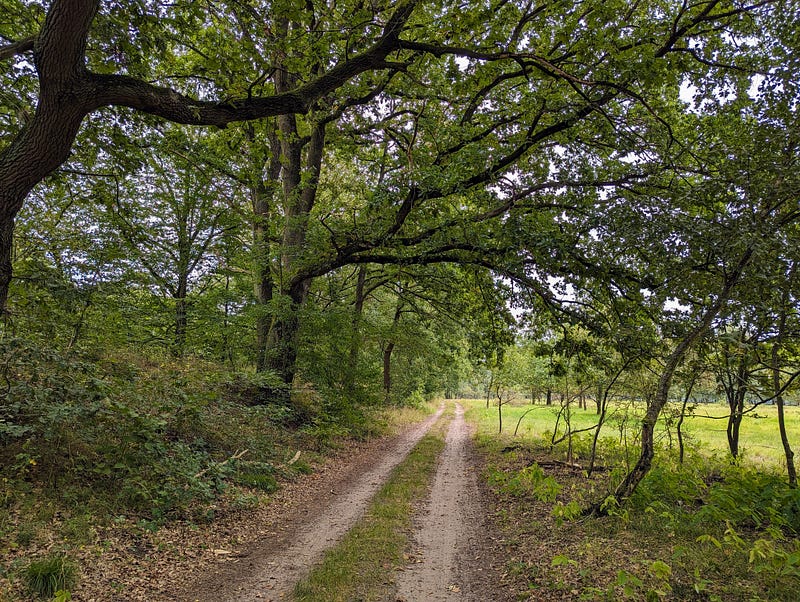
My solitude lasted for the entire 40 minute ride to Schwanheide. Even then, I only saw a handful of people on the outskirts of the village. I turned north, reaching the Green Belt in only a few minutes.
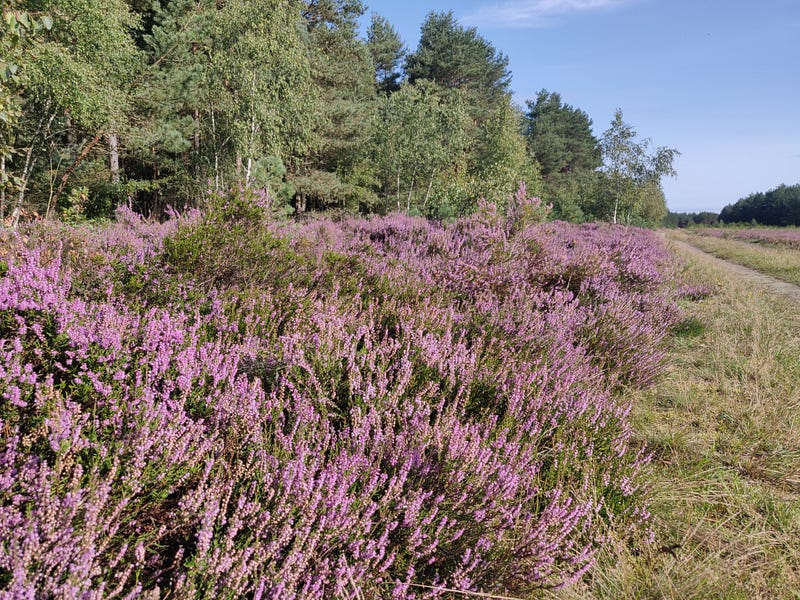
Iron Curtain to Wildlife Haven
The Green Belt extends along the Iron Curtain — the former border between East and West Germany. Access to the border region was highly restricted and illegal entry often had fatal consequences. 42 years of human exclusion, however, allowed wildlife to thrive.
Following the fall of the Soviet Union in 1989, and as part of the healing process of German re-unification, the de facto nature preserve around the Iron Curtain was converted to the Green Belt. The conversion sought to continue the protection of nature while helping to erase unwanted reminders of Germany’s painful past.
Leaving the heath behind, I followed the trail north until I reached a monument commemorating the life, and death, of the activist Michael Gartenschläger.
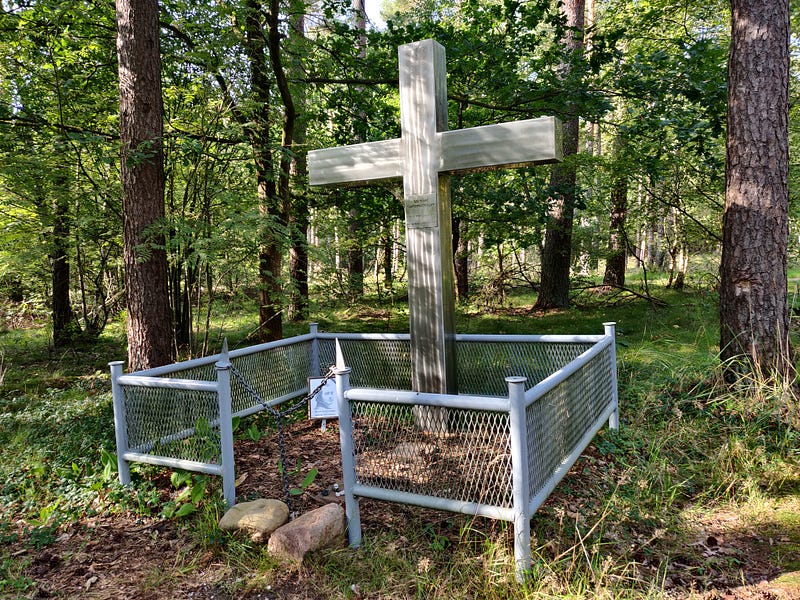
Michael Gartenschläger dismantled and removed several self-firing guns that were fixed to the border by the East German police, a lethal deterrent for those considering defection. The Stasi responded by murdering Gartenschläger when they caught him near the border.
It was not easy to envision a murder taking place in what is currently such a serene location. The incongruity between the picturesque natural environment and the facts that I learned about Gartenschläger left me more than a little overwhelmed.
With much to ponder, I started cycling through the pines to my next destination. About 15 minutes later, I arrived at an open air museum that recreated key elements of the Iron Curtain.
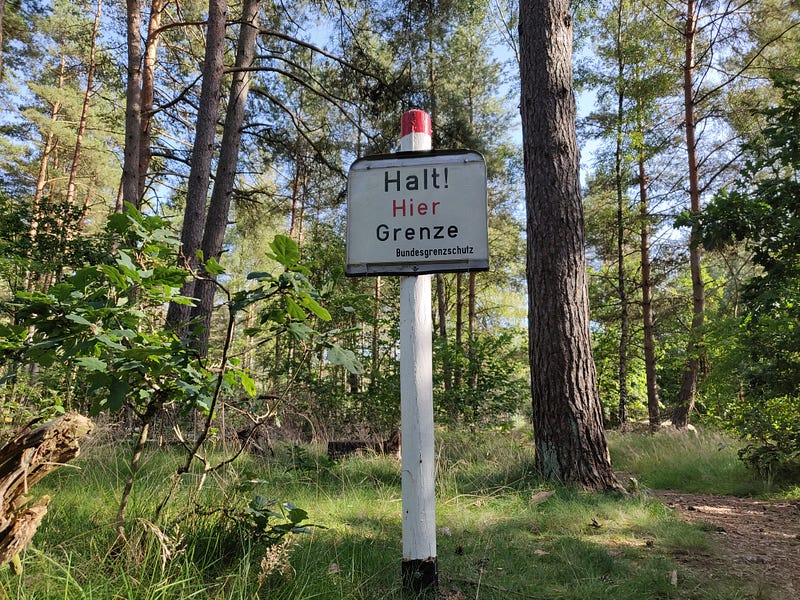
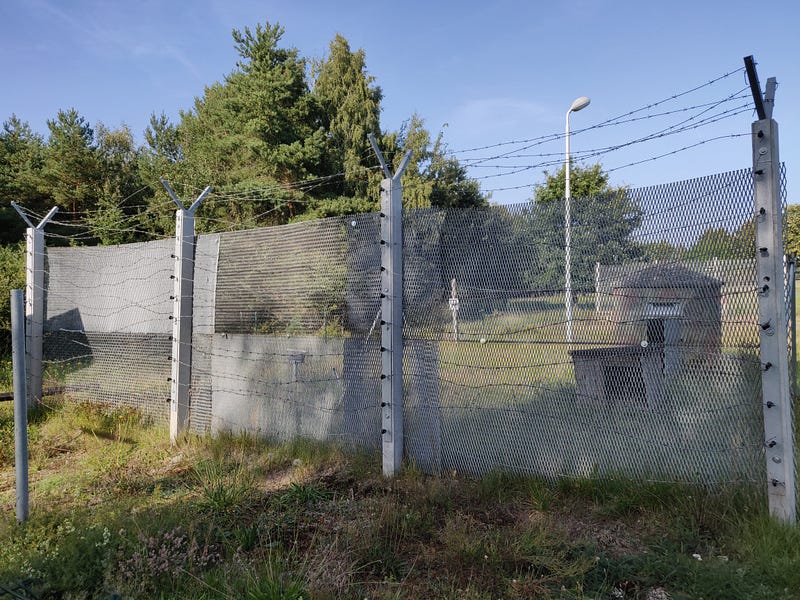
The museum displayed sections of the border fence, including the self-firing guns whose existence Gartenschläger attempted to make public at the time of his death. The extent to which the Soviet-occupied German Democratic Republic was willing to go to control its citizenry made me stop and think about the freedom of movement that I, and my fellow travelers, often take for granted.
Wildlife Encounters
Like much of recent German history, I like to arm myself with facts, but in limited doses. Too much, too fast and I will get depressed. If I don’t stop myself, I will be consumed by impossible questions, like “Why?”
To boost my spirits, I opted to linger in the forest nearby before returning home. I stopped to marvel at large spider webs that were perfectly positioned to catch the long rays of the evening sun.
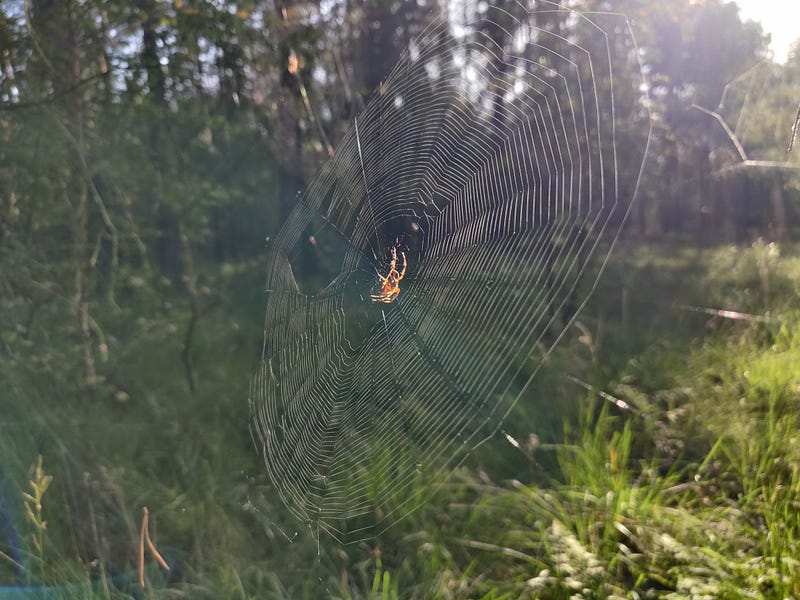
Back on my bike, I left the forest and entered a clearing when a loud animal noise stopped me in my tracks. I had never heard an animal make this sound before. Whatever it was, my instincts told me that it was big.
I scanned the area where I thought the noise originated from. Seconds later, I spotted three mature male red deer on the other side of the clearing. They were bellowing loudly and their movements were aggressive. They were large to begin with and their size was amplified by their impressive antlers. They were only about 100 m away.
Looking back, I should have made my exit sooner. I was dangerously close to wild animals that weighed over 200 kg and could cover the distance between us in a little over 5 seconds. But I wanted, no I needed, to take a picture.
I fumbled with my camera. My clumsy movements alerted the red deer to my presence. A sphincter-tightening moment ensued where we locked eyes and everything stopped.
Luckily, the deer closest to me turned and gracefully bounded out of the clearing, disappearing into the pines. His competitors followed. I quickly lost sight of them, but their bellowing continued.
I didn’t get a picture but I escaped from that amazing encounter unscathed with an incredible story to tell.


