
The Two Questions I Wish People Would Stop Asking Me Regarding Motherhood and Parenting
A different perspective
Content Warning: This story contains mentions of physical and emotional abuse.
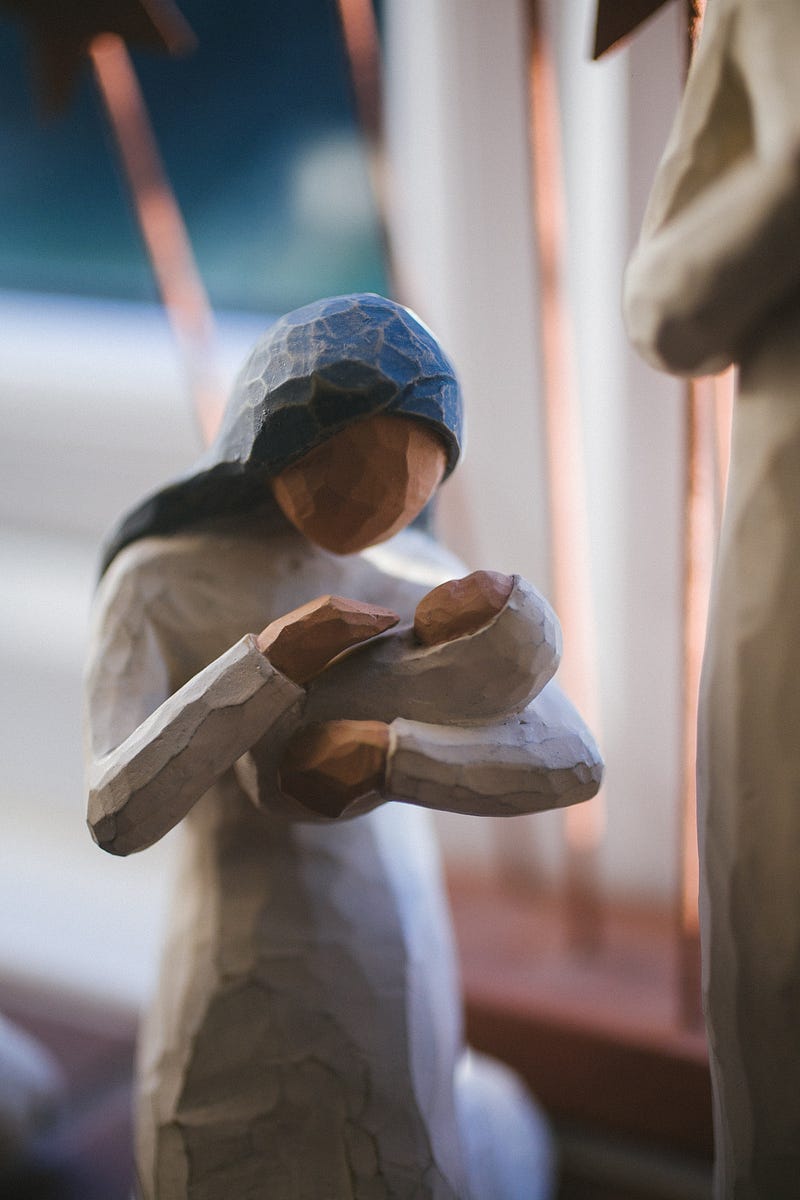
My mom was* abusive.
I want to say that mothers are rarely abusive, but I actually don’t know. I’d often wondered if people were just more likely to hide their narrative if their mother was the abusive one. Abusive fathers? Apparently, society can believe that.
But abusive mothers? That’s a different story. I hid my story often because two questions constantly came up:
But have you considered how hard it was for her? Can you be less selfish and consider her perspective?
Do you know how hard and stressful motherhood and parenting is before you label things as “abusive”?
Important Disclaimers
I think this question comes up because I’m battling two assumptions.
The first assumption comes from the stereotype that mothers are kind, warm, and supportive. Even when they’re annoying sometimes or imperfect sometimes, they do things out of the goodness of their heart. In fact, maybe stereotype isn’t the right word — it’s the truth for most people. Just not all.
My story bothers people because they see parts of themselves (but not all) in my story, and they see that they’ve chosen to see interpret things a different way based on the differences between our context.
I get comments telling me that if I stopped and actually considered what she was thinking, then I wouldn’t have seen what she did as hurt, because she was likely hurting more. When I see hate comments from people who label me as selfish, I see people who are triggered about the choices they made being different from mine. I am not. You may continue to take your stance; I’m not asking you to change your choice, but rather to respect that mine was different.
The second assumption comes from the assumption that I see my mother’s actions as abuse simply because I’ve never been a parent, and don’t how hard it is. That’s true. As of date, I have no children. Even in the short bursts of time I’ve spent with children of all ages, I know they can be a handful. I’ve learned that sometimes children, adult or not, just haven’t considered the full picture and misunderstand their parents.
Parenting is hard. Motherhood is doubly hard when you consider the weight of gendered expectations pitted against all the other things women are expected to do without breaking a sweat. It’s a lot. My story doesn’t take away from that.
Scenario 1: When considering someone else’s perspective helps your relationship improve
Being able to take someone else’s perspective is important, especially in resolving disputes.
Let’s say that as a preteen, you bit your nails when you were stressed. Your mother nagged constantly about it. Sometimes she even burst into your room to nag you about it when you were just casually trying to read.
As a preteen, privacy is starting to become important to you. You just don’t understand why your mother is so angry about biting nails when you’re the one dealing with it. It’s annoying and you just want some time to yourself without her barging in, and the fact that she does adds to your anxiety when she does this, which in turn makes the nail-biting worse.
As an adult, you understand what your preteen self didn’t know, by considering your mother’s perspective. As typical of a preteen, you might have thought about your emotions and thoughts first before understanding your mom’s. Sure, she might have been annoying and may have gone overboard once or twice to call you names, but now that you’re an adult you also realize that she is human, was overworked for your sake, and snapped once or twice.
This is when asking “well how did she feel and what was she going through in the moment?” really helps you reframe the story.
This may be your story.
This is not my story.
Scenario 2: When understanding someone else’s perspective perpetuates the cycle of abuse
Now imagine you are me. You are a preteen who bites your nails because you’re anxious. Your mom also has every intention to stop this habit.
Except, she does so by taking a knife and pointing it at you. As she screams, she waves that knife around, threatening to chop off every single finger that she sees evidence of nail-biting. You’re terrified.
Her intentions are still the same — that she wants to stamp out this terrible habit.
Her actions are obviously overboard. Anyone reading this scenario can quite obviously see that the harm that nail-biting had on me would be severalfold less than the effect of being held knifepoint to stop nail-biting.
Yet, people I sought help from kept asking that question:
Did you consider her intentions?
This covers people who come with the first assumption, that I hadn’t thought about her perspective and had solely focussed on how unpleasant it was for me.
First, I want to acknowledge that she did have good intentions and that she likely felt guilty afterward. These good intentions and post-abuse guilt were used to justify the behaviour. Worst of all, when justified, it meant that the abusive behaviour was there to stay. It meant that her good intentions and guilt were enough to outweigh anything she did.
Instead, the burden of change fell on me. Insidiously, when her intentions and guilt were centered, the narrative turned to ask me to just “be a good kid” or “be obedient” to not trigger her punishments. It meant that as long as there were good intentions, she could go as far and as often as she wanted and still have it be justified as “mother’s love” or “mother’s concern”.
And my requests for help be seen as “disobedience” and “ungratefulness”. If I refused to change or didn’t know how to change, I was told that I deserved the punishment. Instead of asking for help, that I should change who I am instead of questioning her intentions.
It also enforced the dangerous status quo was there to stay because it was my choice on whether she would stop. It placed the responsibility of finding safety on me.
I was eight. The ‘guilty’ charge was biting my nails. The punishment was getting threatened by a knife.
Of course I considered her intentions! In fact, for years later, I would continue to need to consider her intentions, even ones unspoken, just to “control” whether my environment would be safe. I did everything to keep her in a good mood and understood her every blink, facial expression, quiet ‘tut’. Her intentions were placed on a pedestal and my every survival depended on it.
Did you consider how much stress she was under?
Sometimes people tell me I’m blowing my own perspective out of proportion to what she was encountering. Maybe the focus on intention was incorrect, and I need to consider that she is a human being and has basic human emotions.
Parenting is hard. Motherhood is especially hard, given gendered expectations. I may not know first hand, but I hope to at least acknowledge that and have it hold weight. This is not a criticism of that.
I know that sometimes, as humans, under stress, we snap. I’ve read personal essay after personal essay of this perspective from mothers who recount snapping their children and then feel guilty for the next 42 years. Those stories are real and heartfelt too and speak about the weight that society has on these women.
There’s a difference between snapping once or twice of stress and making it your child’s responsibility to take care of your emotional needs. This knife incident was one of many.
Instead of intentions, let’s frame it as worry. Parents worry about their kid's safety all the time. In fact, there’s a Chinese saying that parents will worry about their kids until their kids are at least 99 years old. This is true for many, and for my mom too.
The difference is that she had very specific ways on how that worry needed to be soothed and not agreeing to those ways meant aggression and anger to knife proportions. It wasn’t once or twice, but a pattern.
I did consider how much stress and worry she was under. She was probably extremely worried about nail-biting if she thought a proportionate response to it was to threaten to cut off my fingers. To an eight-year-old! I don’t believe stress justified her actions. Or, I believe that if this was the level of stress she was enduring, that the solution wasn’t to ask your child to fix things for you, but to seek professional help.
The aftermath
It’s honestly rare that someone will share this level of detail with you. I could be your coworker, your friend and you would never see below the surface of the iceberg.
But there are several outcomes you might observe from others, particularly in “overreacting” and “underreacting”.
“Over-reacting”
Ironically, kids who grow up reacting proportionately to the danger they lived with are sometimes labeled “anxious for no reason other than biological heritability, I guess”. It’s because often those narratives of growing up in danger are silenced “for the good of the family” or swept under the rug by centering parent intention and guilt over a child’s experience.
Observers, without the true context of danger, label it as oversensitivity.
These people are labeled as “over-sensitive over neutral, safe objects like ‘bowls of rice’. But when you consider that I spent two decades living with someone ready to wield a knife at a child, you need to consider that a hot bowl of rice in porcelain, if fractured and piping hot enough, has just the same effect.
To others, for good reason, a rice bowl is an innocent and safe object.
To some of us, we are reacting proportionately to the sound of a rice bowl dropping or being raised too high, given what events usually followed those signs.
But also underreacting with fawning?
Despite being labeled oversensitive, there’s the contrasting balance of learning to underreact to survive.
After being told that you’re overreacting to genuine danger for enough time, you’ll start underreacting to danger.
Fawning is the fourth “f” of the fight, flight, freeze response to survival. We know that when faced with a threat, some people fight back [fight] and others shut down and try to numb themselves [flight/freeze]. Yet we don’t talk about fawning as much because it seems counterintuitive to seek out and soothe your threat source.
It occurs when survivors recognize danger signals and stay safe by complying and minimizing confrontation. Therapists Uncensored
Especially when the narrative is “someone else’s abusive behaviour isn’t their responsibility because they have good intentions, it’s your responsibility to obey these good intentions to avoid negative consequences”, adopting that it’s your responsibility to fawn to smooth things over for the other person becomes second nature.
In fact, you can see it in the structure of this article. Before I dive into my story, I smooth over assumptions that readers commonly have to assure that I’m not attacking you, dear reader, for who you are. I realize I do this to prematurely fend off any knee-jerk comments I get about “being self-centered” and “attacking motherhood”.
When gaslit enough time, you learn to minimize your needs to meet someone else’s needs first, to stay safe. You learn to smooth over their distress and ensure that they’re regulated before you ever entertain your own mental health needs.
People call you a doormat and tell you to just “speak up”, thinking that it’s a personal flaw solved by a simple act of “saying things out loud”. This is said without the consideration that fawning is shaped out of decades of living in a certain set of circumstances, and it’s going to take a thousand, maybe ten thousand, maybe a million times of speaking up before moderately counteracting what I’ve learned repeatedly.
Despite that number, I try, and perhaps despite trying, people without this experience are often disappointed at how someone else can’t perform such a basic thing that they personally can.
My mom may have wielded a knife at me, but I knew from a young age something was terribly wrong and I escaped as soon as I could.
What I can’t escape is a society that consistently labels me as oversensitive for things that are or were genuinely dangerous.
I can’t escape a society that consistently requires me to fawn to survive.
When I’ve shared my story with others, others have then centered their own stories of how hard parenting is and what I don’t understand yet far before I heard the words “a knife? 8 years old? that’s f***ing sh*tty!?!?!?!?!?”. Sometimes I’m placed in the situation to soothe their parenting woes when I had literally reached out for support in the first place.
In encountering racist microaggressions, I am constantly placed in a situation to soothe someone else’s guilt over hurting me in absence of support after being hurt. In these situations, I am still expected to fawn as they are the ones in tears and I am not, despite the fact that I am on the receiving end of the microaggression.
What you can do instead
Stop imposing your story on someone else’s
When Mother’s Day rolls around and everyone posts about their mothers and how lovely they are, despite imperfect times, I don’t hop on these conversations and trash them. In fact, for the most part, I congratulate you because it’s great that you genuinely have a great connection with your mom and my own relationship with mine has nothing to do with it.
So please don’t jump on my story to say “once a mom, always a mom, you need to forgive her.” It doesn’t matter if you think you’ve had the same experiences or know how I feel. You don’t get to dictate how someone deals with their trauma.
Also, it’s not just the statements that hurt. It’s the questions, too. Though seemingly open-ended, these questions might form a common theme of imposing these beliefs that kept that abuse in place.
Well-meaning beliefs like “a child always needs her mother” which are 99% of the time true are the reason that the 1% of the time it isn’t true that this poor kid is stuck without support.
Start listening first.
Stop making the assumption that everyone has a mom
This benefits a far bigger circle than (circle of people who have been abused by their mom). There are many reasons why someone doesn’t have a mom, from losing them to growing up in a single-family household. Or, maybe they have two dads. It’s not always a story of loss, but one that challenges what a family unit looks like.
That means that there are more small talk questions than to ask how someone’s mother is, especially you don’t know them or their family.
That means that if they don’t want to talk about their mother, that you don’t press on and force them to talk about it.
That means we make adaptations to classroom activities for Mother’s day (and Father’s day) for another equally important figure in a child’s life.
Imagine how that Mother’s Day was after she threatened to cut off all my fingers, and how I still had to draw a little heart on a card and tell her I was grateful for her existence. Think about what it means for that little body to have held all that distress just so adults could continue on their beliefs about family.
Be reciprocal in support
The final one involves being aware of how often in a relationship or friendship that you ask for and give support. Sure, there will be periods where one has to lean on a friendship and you can’t necessarily do a 1:1.
But be conscious of what you do when someone else comes to you for support. Do you immediately launch into your own stressors before you even hear someone else’s story? Are you requiring someone else to fawn, to burn themselves up to keep you warm?
Needing support isn’t a “race” or a comparison game, but be cognizant of overall patterns. Start listening actively to someone else’s story and provide them the support they need. Build a relationship where you can lean into their support as much as they can yours.
*She’s still alive, but no longer in my life. I use past tense not to signify death, but an end to a relationship. It’s easy for us to say, “he was my husband” or “he was my boyfriend”. Save for the most conservative of voices, no one ever interrupts you to impose: “once a spouse, forever a spouse.” It’s not the same for mothers. Well-meaning folks, even ones with similar experiences, often repeat the mantra “once a mother, always a mother” without noting ways that this phrase can be twisted like knives into the flesh of someone whose mother never took responsibility, or worse, took responsibility to impose harm.
Hop down the rabbit hole? 🐰🕳