
Travel, Archaeology, Photography
The Sinaguan Cliff Dwellings and Ancient Pictographs and Petroglyphs of the World Heritage Site of Palatki National Monument near Sedona, Arizona
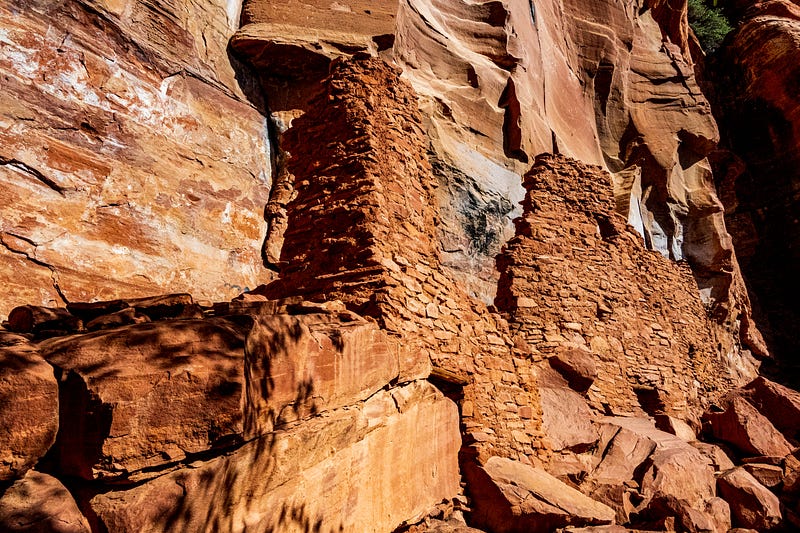
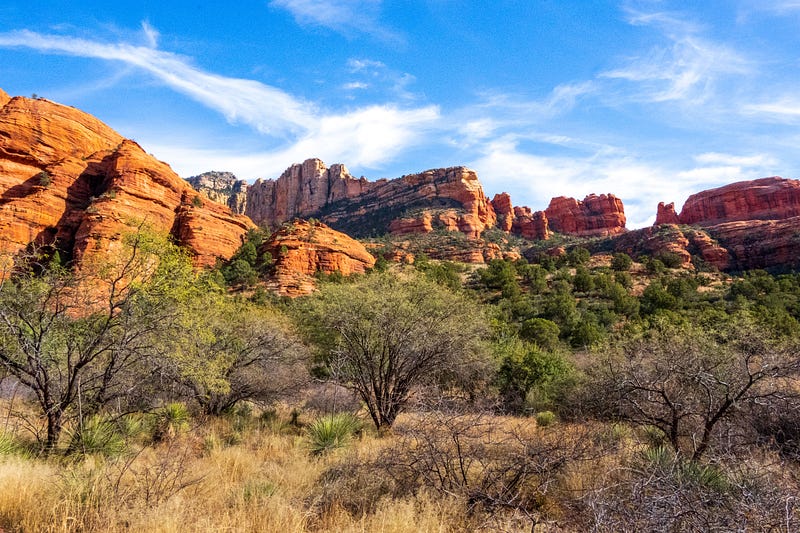
Just a short drive from Sedona, Arizona, the ruins of ancient dwellings and rock art, as old as 6,000 years, adorn the red rock cliffs
It’s the quiet that catches my attention. The six miles we bumped along down a rutted dirt road to Palatki National Monument have carried us into a distant and ancient world filled with the gentle whisper of wind through the pinyon pines, the screech of blue jays and the utter absence of traffic noise.
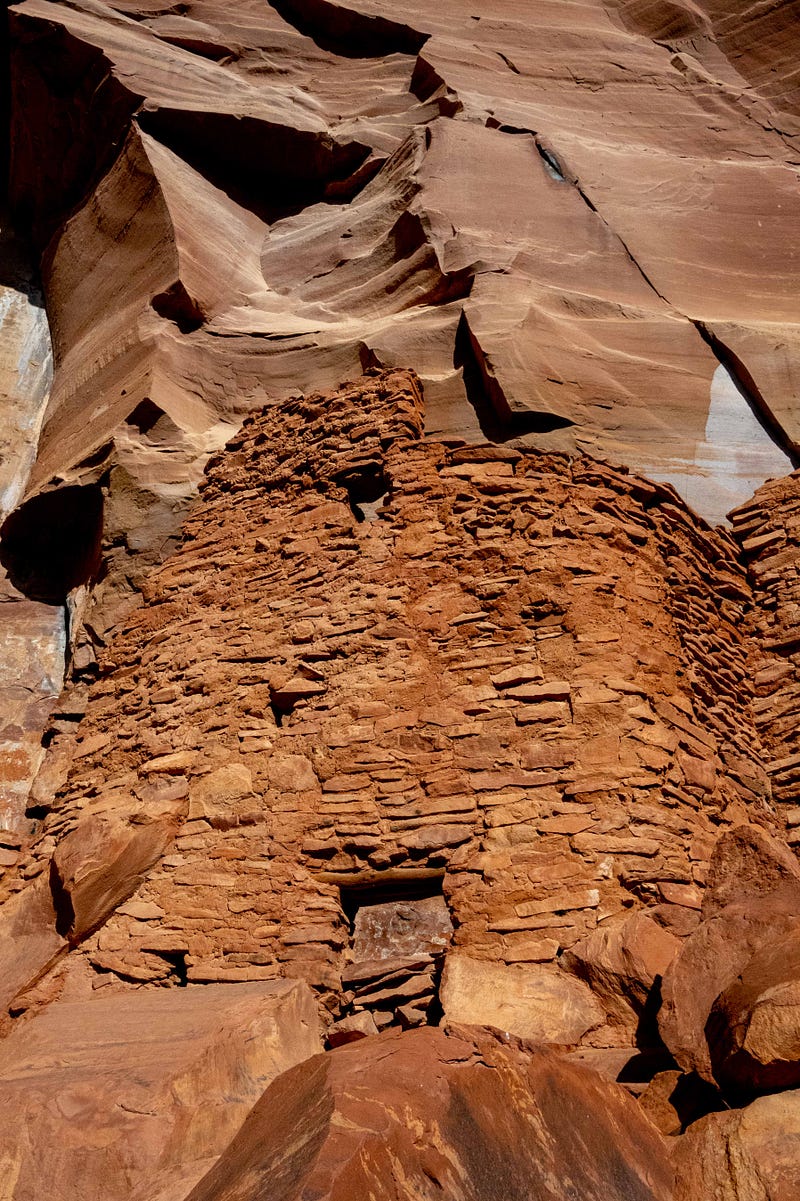
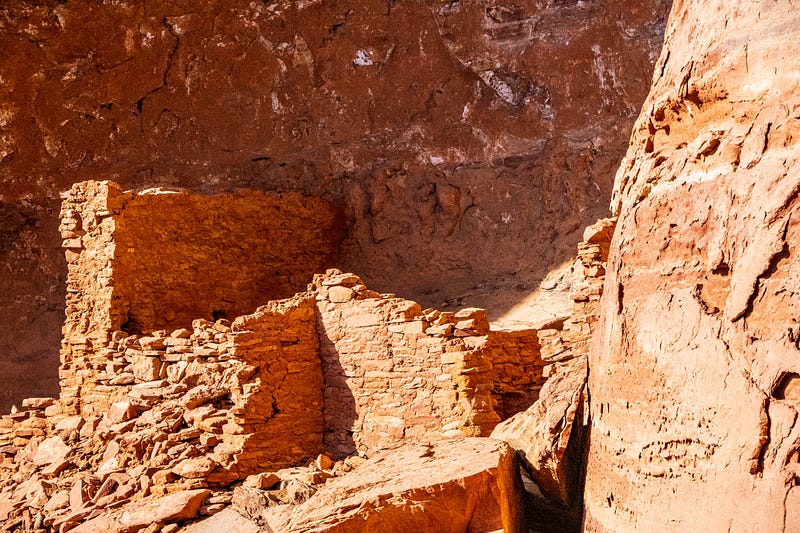
I can only imagine what it must have been like to scramble up over a tumble of boulders to reach your two-story apartment building at the base of a red rock cliff. From up here, the view out across the flatlands would have offered great protection from unexpected visitors. At certain times of the year, water would have flowed in a torrent from up overhead, but you would have been tucked away under a rock shelf. And at other times of the year, you would have been dreaming about those wetter days, wishing for the dry season to end.
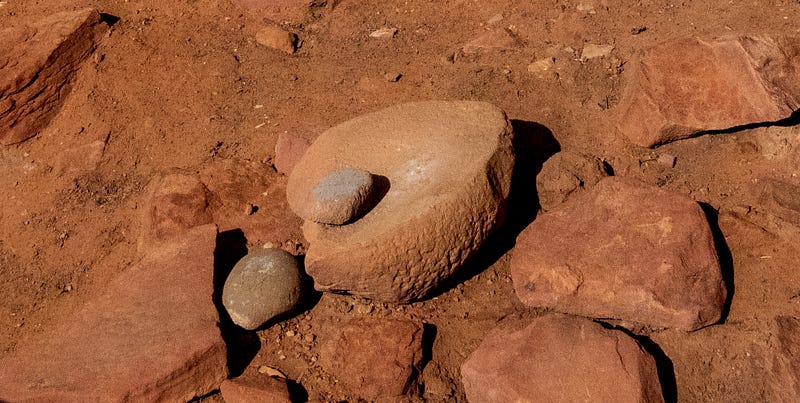
Family and neighbors might have gathered in sunny spots to grind corn, seeds and nuts in manos and metates. The Sinaguan people who lived here had begun to grow corn (much smaller cobs though than we are familiar with now) here in 800 A.D. and eventually added squash and beans to their crops. Amaranth, ricegrass, cactus fruit, beeweed flowers, and cattails (for flour) as well as sunflowers, hackberry fruit, yucca, wild grapes, walnuts, pine nuts, and acorns were also important sources of nourishment.
From approximately 500 to 1425 A.D., the Southern Sinaguans (“Sin” is Spanish for without and “agua” means water) inhabited the area of the Verde Valley. Their northern relatives lived above the Mogollon Rim in areas around Flagstaff and the Grand Canyon.
But the southern group sprawled across the lower elevations across the Verde Valley of central Arizona. Traces of their lives can be seen at Montezuma Castle National Monument, Montezuma Well, Tuzigoot National Monument, Palatki and Honanki Archaeological Sites, and the V Bar V Heritage Site. They were related to the modern-day Puebloans.
However, the Sinaguans, who built these cliffside dwellings, were not the first people to occupy these lands. Before them, archaic groups of people roamed these lands and built pit houses to live in as long ago as 10,000 years. At the nearby site of Honanki, we were told by one of the local archaeologists that a mastodon kill site from 8,000 years ago had been found at the base of the cliff.
Palatki is the Hopi word for “Red House,” and it is a fitting description for these two-storied dwellings. But, about half a mile away, down a winding dirt trail lies the site of one of the densest areas of pictographs (pictures painted on stone) and petroglyphs (carvings etched into the rock) in this area.
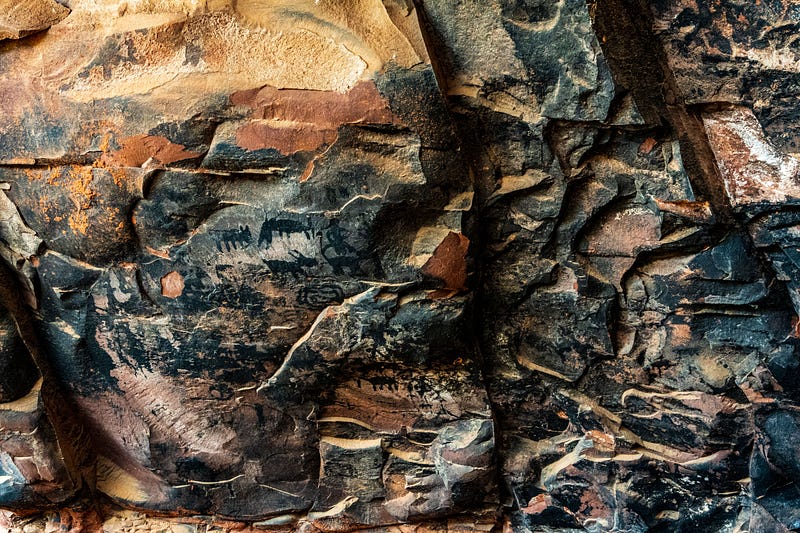
These drawings were actually once white, made from animal fat and natural pigments, but the smoke from centuries of fires darkened many of them to black.
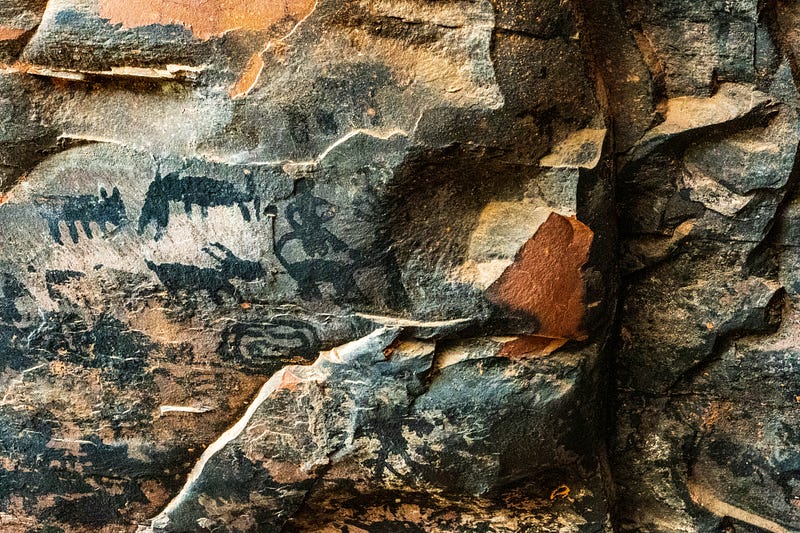
The scene above is one of my favorites. In the center, you can see a woman giving birth. She’s surrounded by animals. Were they animal totems protecting her? Or were they wild creatures to be feared? We’ll never know.
Here it is, in a little more detail:
There is also the “Squash Blossom Girl,” named for her hairdo, which is reminiscent of the “squash blossom swirls” that the Hopi women wear today.
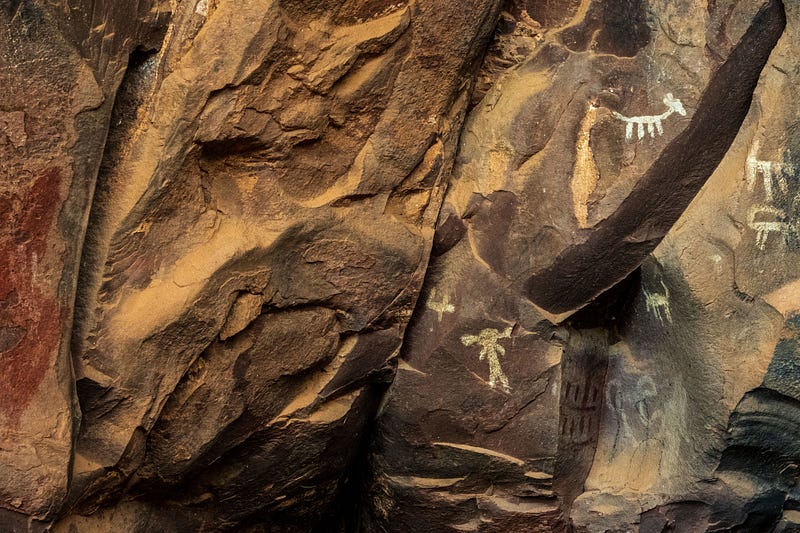
Another intriguing pictograph is this calendar scene, in which the sun is seen coming up over the mountains which you can see from the opening of the cave mouth. It is thought that this was to tell the people to plant when the sun reached a certain spot over the ridgeline.
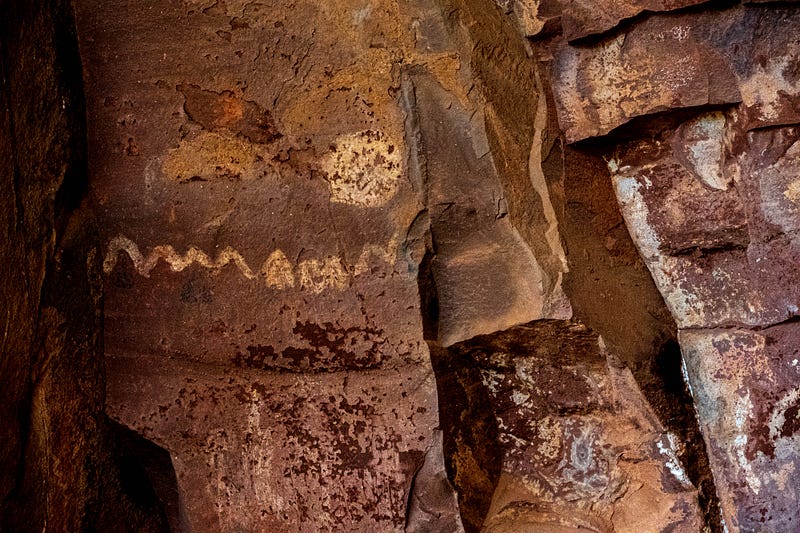
This is the view if you turn around and look in the other direction.
And here is “Kokopelli,” the famous hump-backed flute player of the Southwest. According to Hope tradition, he is a fertility deity and he carries unborn children on his back to give to women. He’s also associated with agriculture and with being a trickster.
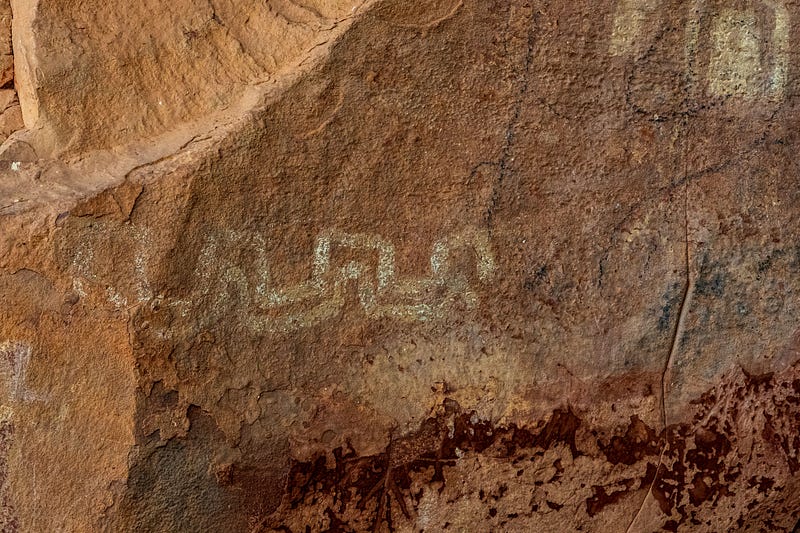
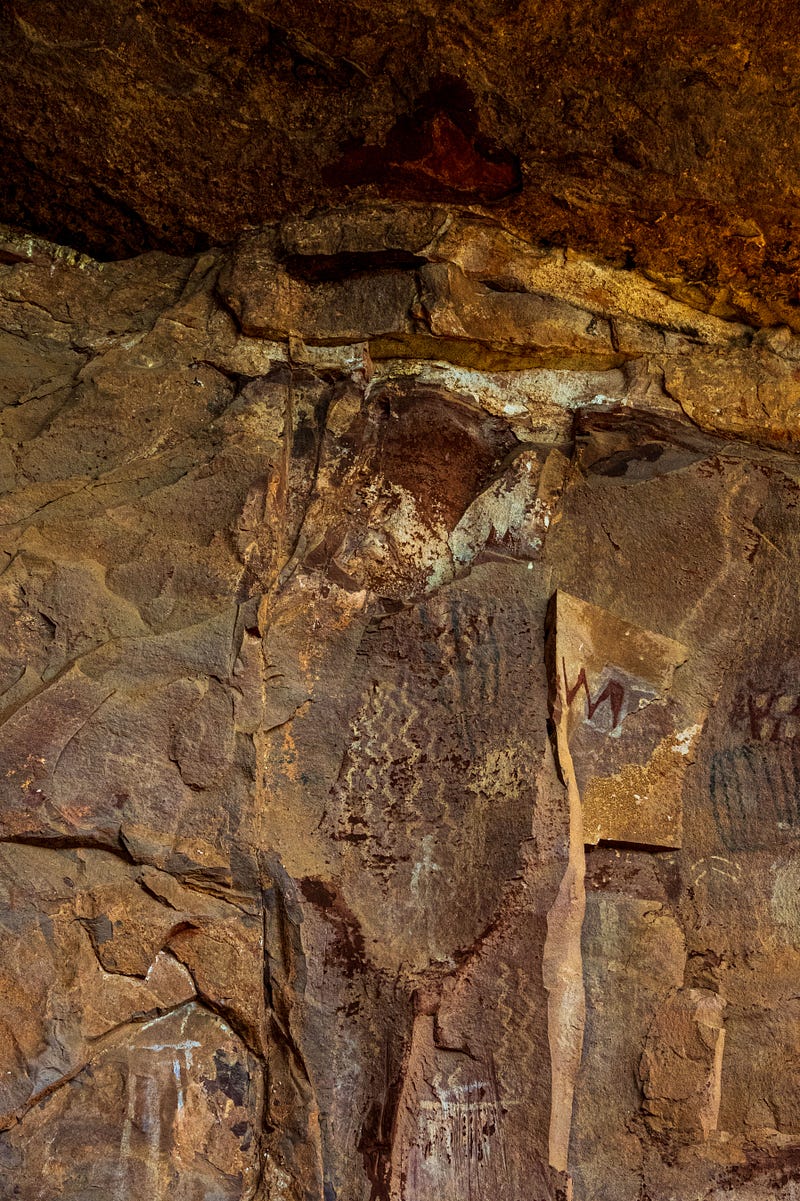
Some of the pictographs are much older, perhaps as old as 6,000 years. Although some of them look like animals or water, the meanings of others have been lost to time. This one looks, to me, like a river.
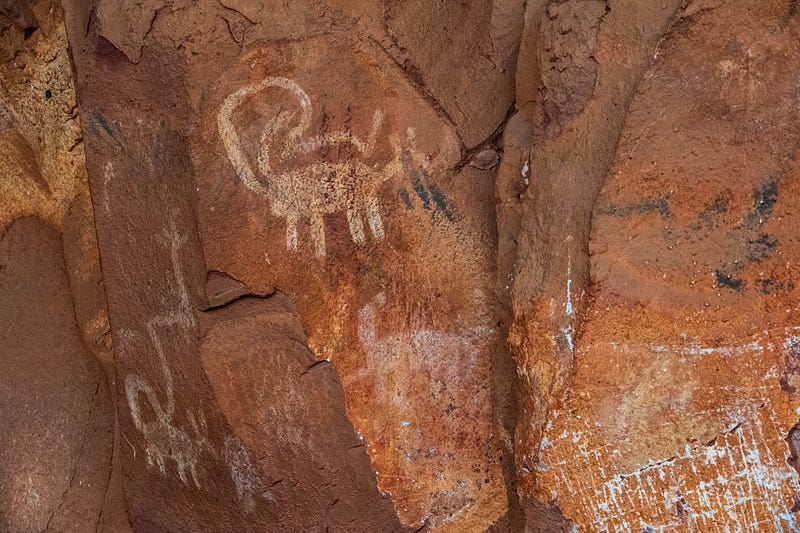
These look like a skunk, maybe a rabbit, and some other sort of animal with a long tail.
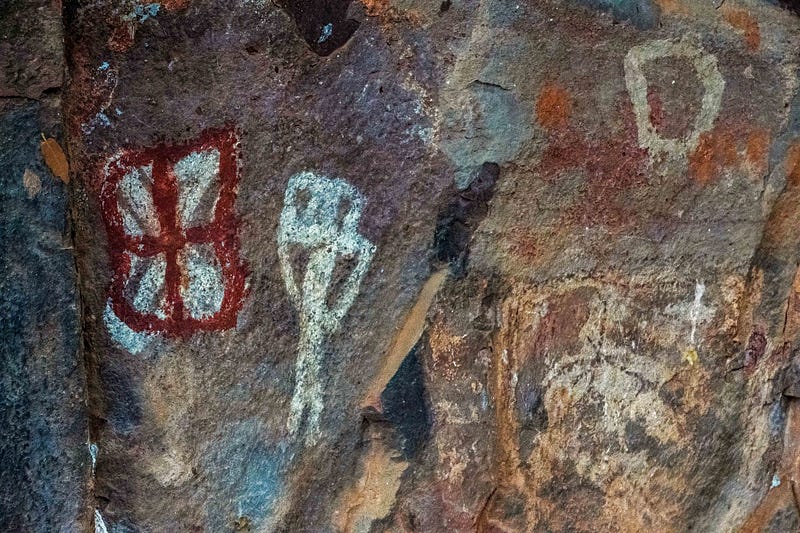
This, we were told by our guide, was, perhaps a family “shield” to indicate who lived here. Or it could have been rain.
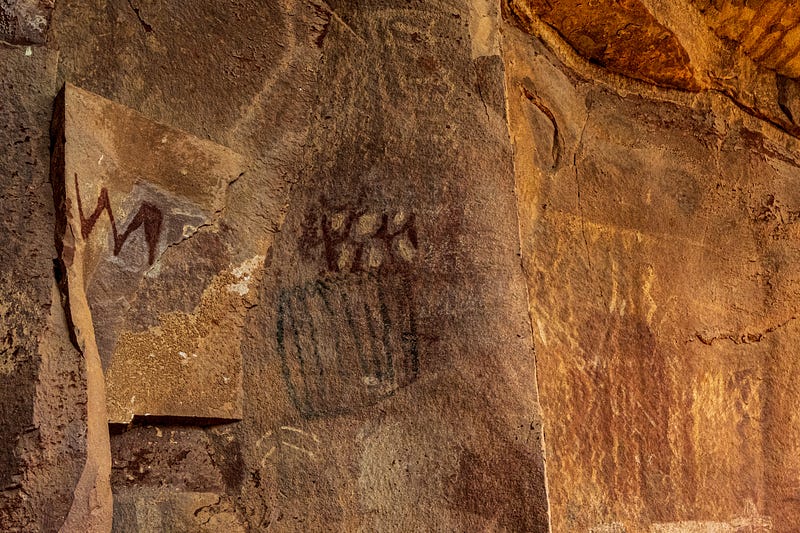
This looks very much like water streaming over the lip of the ridgeline above the dwellings.
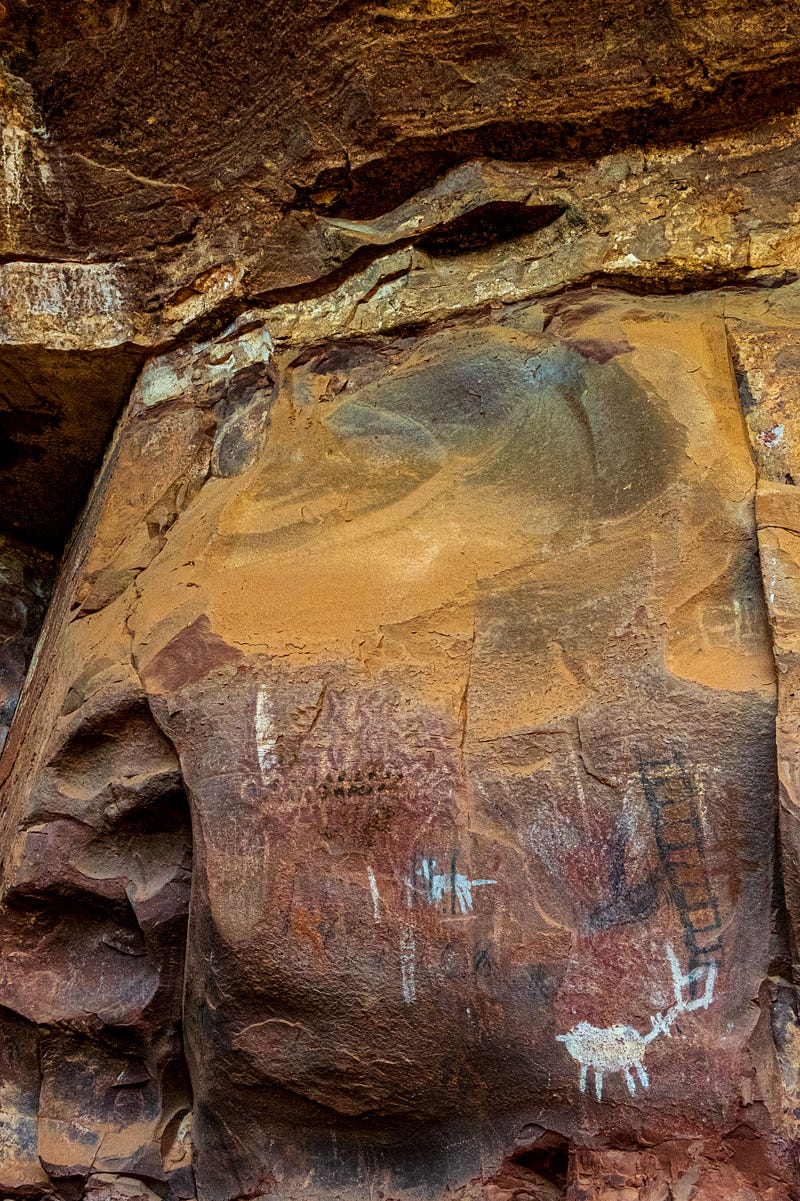
This is, undoubtedly, a deer or an elk, and a ladder of the type used to gain access to the cave dwellings, and several other, fainter symbols.
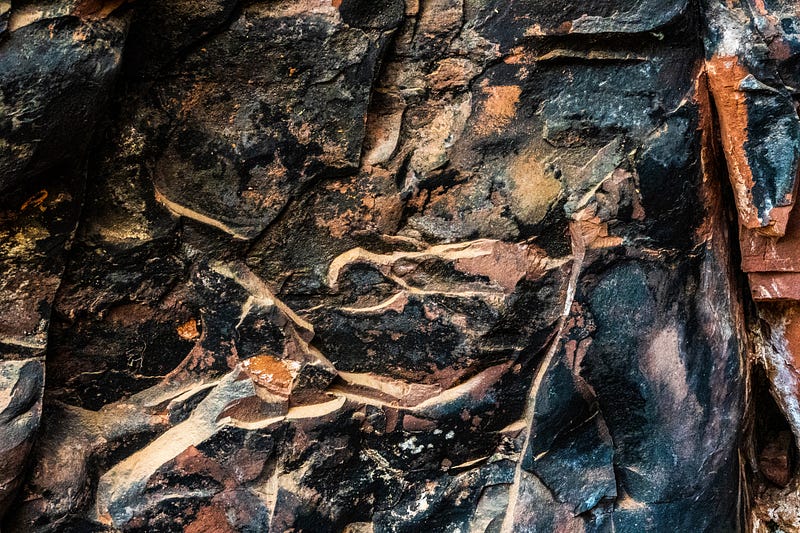
Can you see the screaming eagle here? It is actually a natural rock formation.
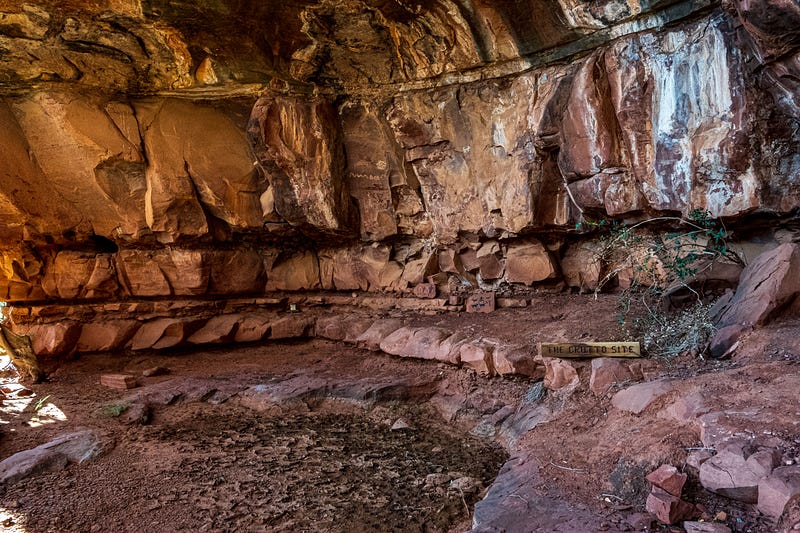
While water was, indeed, scarce at certain times of the year, during the rainy season this basin held a pool of water, which would last for seven to ten days after a good downpour. Can you just imagine the reflections from it flickering across the walls of this grotto?
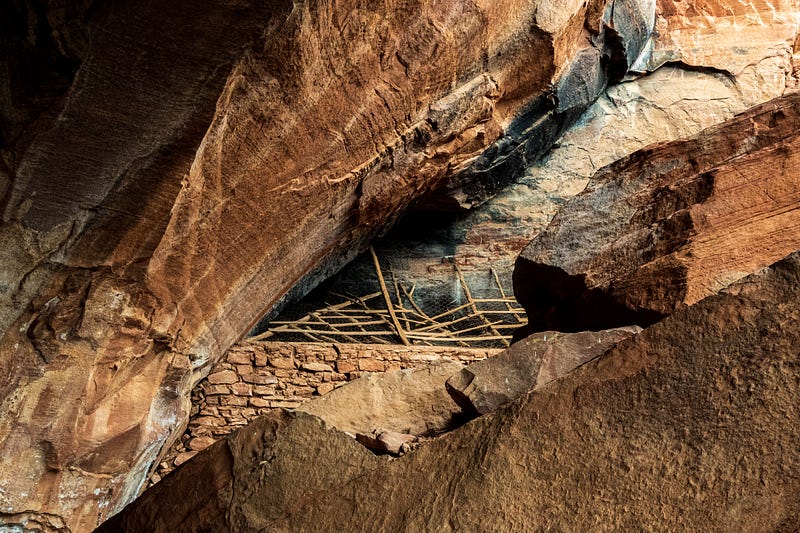
During later times, settlers occupied the valley. Charles Willard built this structure in 1924 and grew fruit trees on the flat desert floor.
My husband and I lived in Sedona many years ago and we remember the days when we used to be able to four-wheel out to these ruins and scramble all around them. Tourism is more controlled these days, which is a good thing for protecting these ancient pieces of art.
To access Palatki National Monument, you’ll need to make a reservation with the Forest Service (928–282–8354) and will also need a Red Rock Pass, which you can buy on site ($5).
Listening again to the wind, I hugged my arms a little more tightly across my chest, feeling the chill of the evening approaching. The shadows fall early across the valley. Once again, my mind wandered to what it would have been like to live here so long ago, in a time when cars and electricity and all of the modern conveniences did not exist. Life was surely tough. But the beauty of the sunrise over that ridge line each morning, the stars at night, and the simplicity of existence, when long days were spent creating pottery or preparing food with loved ones, had to have provided for soul-nourishing lifetimes.
Thank you to the editors at Globetrotters (JoAnn Ryan, Anne Bonfert, Jillian Amatt — Artistic Voyages, Adrienne Beaumont, Michele Maize) for this month’s challenge on “ruins of the world.”
I have quite enjoyed reading some of the other stories from this challenge:
Michele Maize writes about some more Puebloan ruins in Colorado:
Barb Dalton writes about Irish and Roman ruins:
Erika Burkhalter is a yogi, neurophilosopher, cat-mom, photographer, and lover of travel and nature, spreading her love and amazement for Mother Earth’s glories, one photo, poem or story at a time. (MS Neuropsychology, MA Yoga Studies).
You might also enjoy another of my stories about ancient ruins, but this time in the remote cave temples of Ajanta, India:
If you enjoyed this piece, you might consider subscribing to my stories. You’ll get an alert whenever a story gets published. While I do normally post my stories with free “friends” links on social media, if you enjoy reading on medium, you can help the many talented writers here by joining. It helps to support the arts and to keep us writing! And if you’re ever interested in purchasing a photo, just leave me a note.
Photos and story ©Erika Burkhalter. All rights reserved.


