
Medium Writing Tips
How to Become a Medium Top Writer
The secret to becoming a top writer on Medium
The unlisted post contained in this article is probably the most valuable post released by Medium and yet it remains largely overlooked as it is unpublished.
It is worth noting that Medium authors who are already Top Writers may be aware of these techniques. This article is geared toward those who haven’t achieved top writer status or are confused about how they did so.
Brief Back Story
I write in Blogging Guide about succeeding on Medium. So when I started to get cryptic notes, comments, and emails about my posts with large volumes of traffic, I was confused.
Why were all these Medium writers so curious about my externally generated Medium traffic? I wasn’t making a fraction of what these other authors were, and external traffic/SEO seemed of little importance to many of the top earning writers.
It took me a while to figure out the exact relationship — but I ultimately realized that there was an overlap between authors with broadly tagged articles, minimal traffic, yet a plethora of Top Writer icons at the top of their profiles.
I began to re-examine a question I figured was pretty straightforward:
How do you Become a “Top Writer” on Medium?
I assumed it was simply a broad algorithmic mix which included reader engagement, frequency of publication, and consistent focus on specific topics. And all this is true, with one slight exception:
Medium’s Algorithm does not take into account the vast majority of tags when deciding who is a “Top Writer.”
In fact, as I explain further in this post, there are only 73 tags/topics eligible for top writer status, and you must use these EXACT tags to become a top writer. There are literally thousands of other tags to pick from, some with tons of high quality articles, which will never play a role in achieving Top Writer status.
As an example, if I write an article on the effect of social media marketing on rates of depression, there are a two important points:
- I can never be a top writer in social media marketing or depression because although they are popular topics, they are not one of the 73 topics Medium has chosen to make eligible for the Top Writer list.
- If you look at the tags I have put together in my list, you might suspect that a viral post on social media marketing and depression could make me a top writer in several related categories, such as Social Media, Technology, Mental Health, Psychology, Health, Science, and other topics (all of which are on the approved 73 topic list). However, this will never happen unless your article tags match these topics exactly.
So, using the hypothetical article above, we would need the five tags (added by the author before an article is published) to reflect those categories.
So pick 5 tags, which correspond to 5 potential topics you want to be considered for, by Medium, as a Top Writer.
Let’s say you want to be a Top Writer in:
- Social Media
- Psychology
- Mental Health
- Science
- Technology
To be considered for Top Writer status in these categories you must use these exact tags in your article.
You don’t have to pick all 5 of your tags from this list of 73, but be aware that this is the only way to become a top writer on a topic.
It doesn’t matter if my article receives millions of views, is featured on Medium’s homepage, or is republished in The New York Times.
All that matters, for people concerned with Medium Top Writer status, is strategically picking tags corresponding to eligible topics.
If you are already a top writer — you may have realized this through trial and error or through the unlisted post (many may not have even realized it was unlisted).
For those who question the accuracy of my assertions, let’s take a look at the Unlisted Medium Post. This is a post that is featured in an email that Top Writers receive, notifying them of their new status as a top writer.
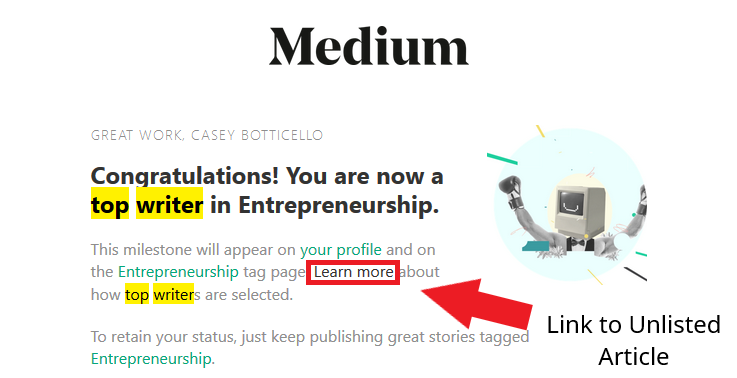
The Unlisted Article
Article Screenshots:
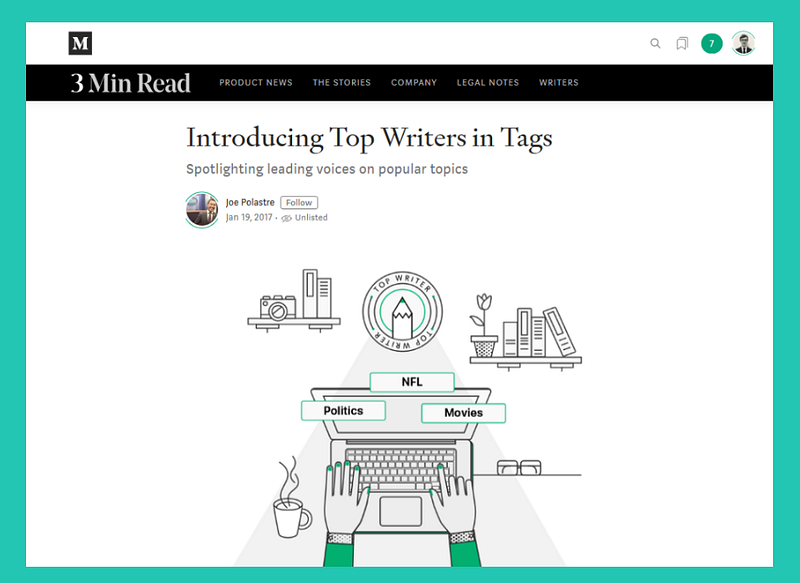
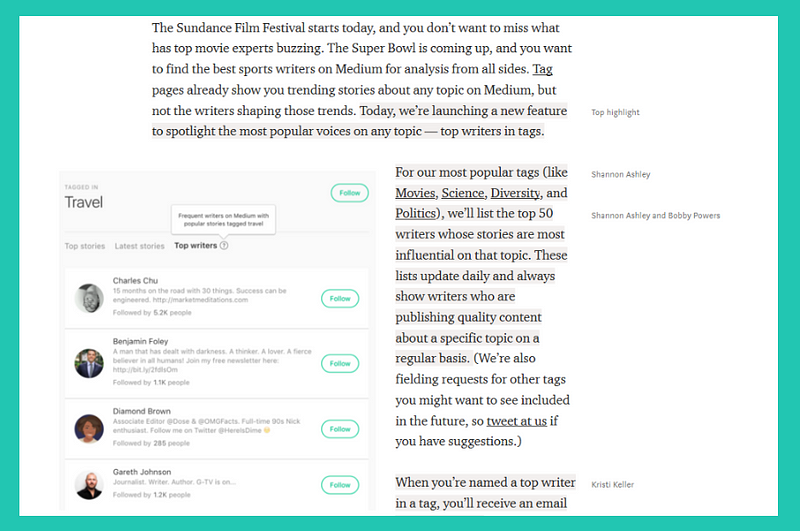
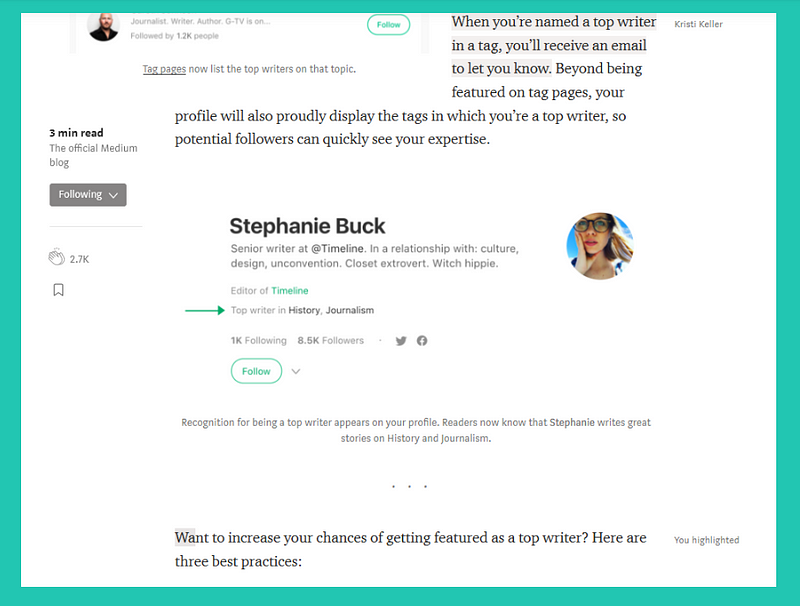
Note the unlisted article status:
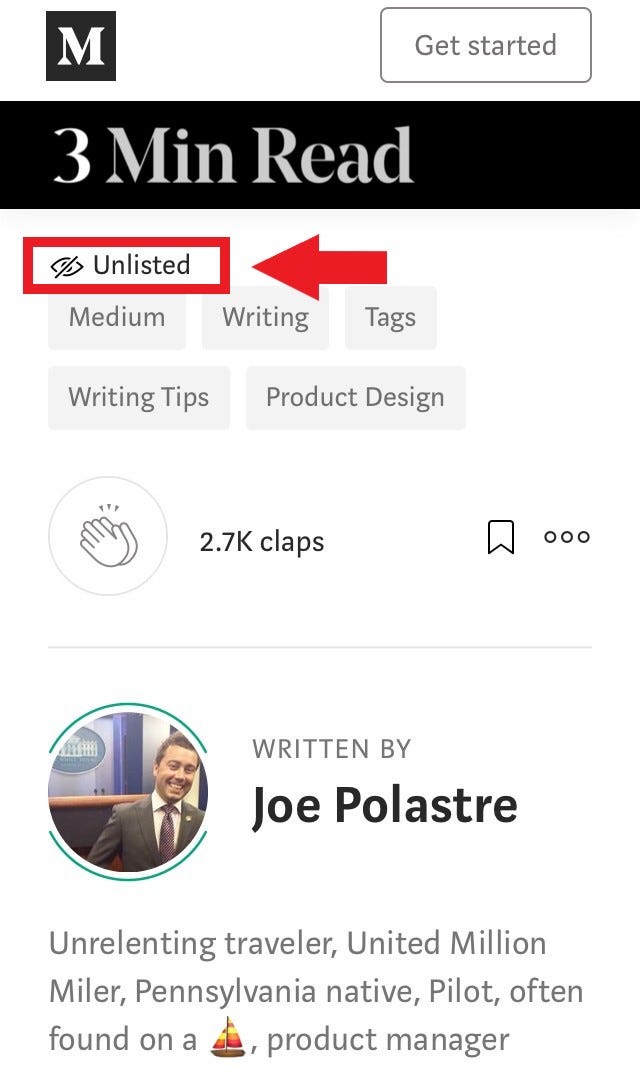
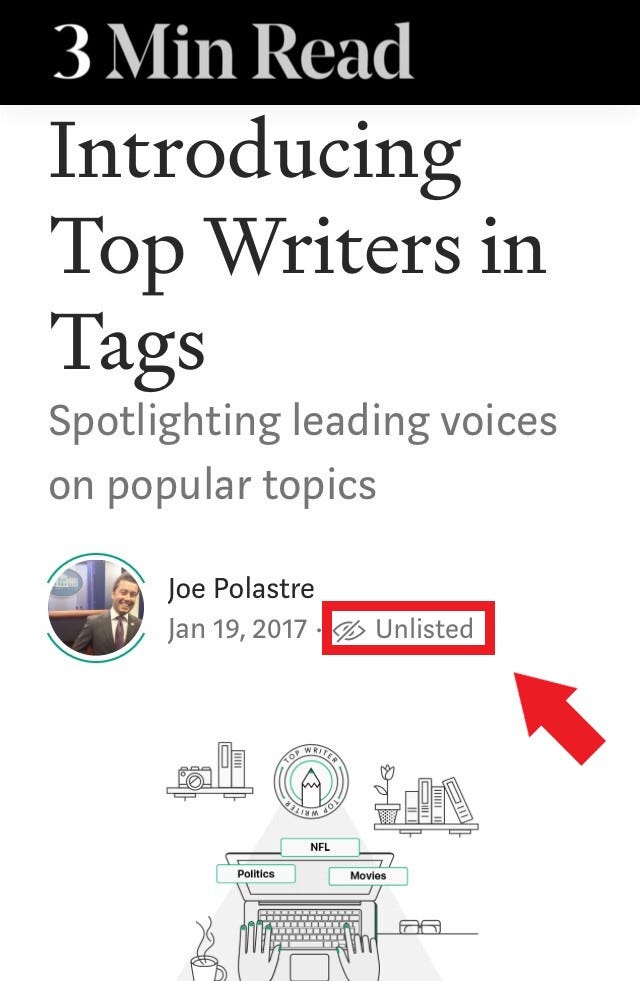
You can only access this article with the direct link. Go ahead and look through, 3 Min Read, or search the author Joe Polastre’s post archive. You won’t find it. Even if you already are a Top Writer, you need the direct link.
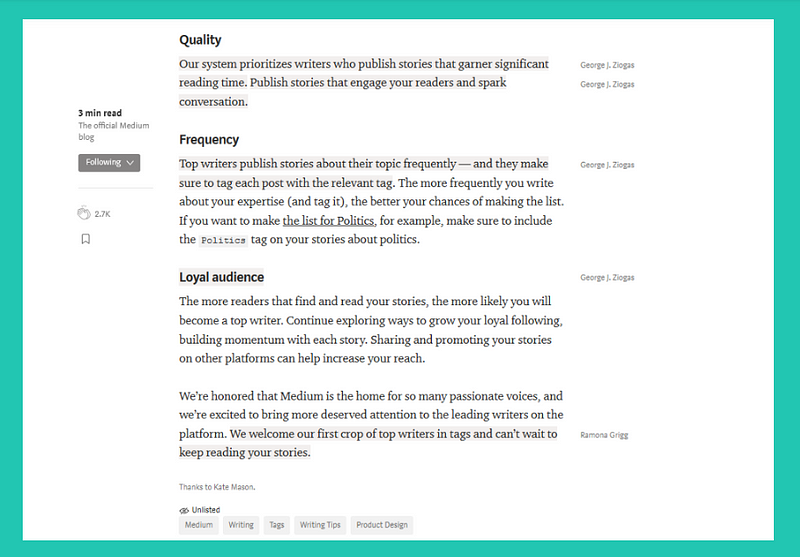
An excerpt from the article:
“Want to increase your chances of getting featured as a top writer? Here are three best practices:”
Quality
Our system prioritizes writers who publish stories that garner significant reading time. Publish stories that engage your readers and spark conversation.
Frequency
Top writers publish stories about their topic frequently — and they make sure to tag each post with the relevant tag. The more frequently you write about your expertise (and tag it), the better your chances of making the list. If you want to make the list for Politics, for example, make sure to include the Politics tag on your stories about politics.
Loyal audience
The more readers that find and read your stories, the more likely you will become a top writer. Continue exploring ways to grow your loyal following, building momentum with each story. Sharing and promoting your stories on other platforms can help increase your reach.
A few thoughts on the unlisted article:
- For starters, the post was not likely meant to be a true secret (although I’m not sure why such a valuable resource from a Medium employee would be unlisted).
- In case you are unfamiliar — unlisted stories do not appear in the home feed, profile page, tag page, or search on Medium, nor will they appear in notifications or email digests. Unlisted stories are not password protected, and anyone who has the link will be able to view the post.
- Starting in December, 2017, when you managed to become a top writer on Medium, the email they send you links to an unlisted article explaining more about the overall process. Obviously this type of information would be useful to writers who haven’t achieved Top Writer status yet 🤔
And indeed the strategy works: I’ve tested numerous tags over the past few months, and the results are clear:
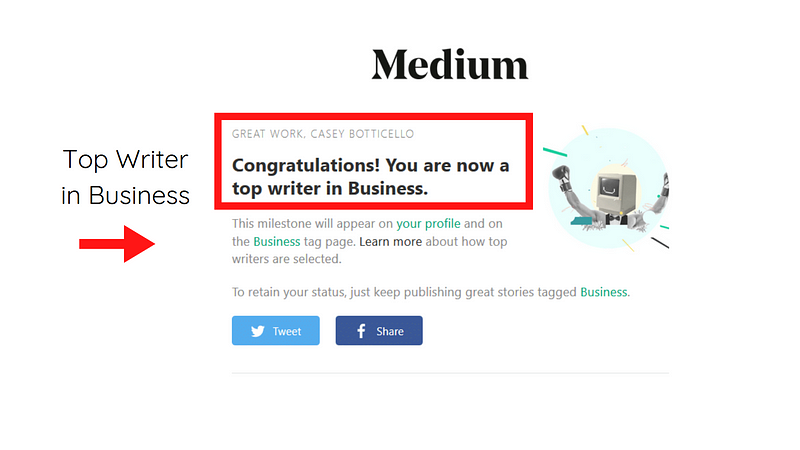
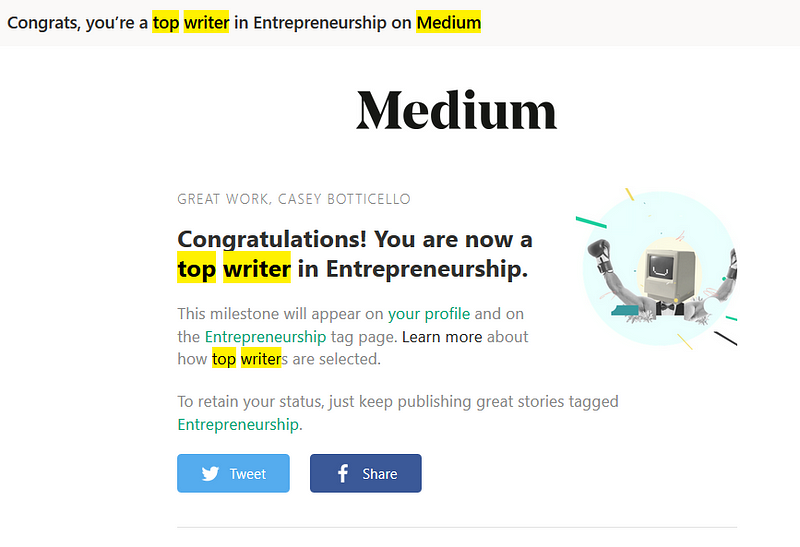
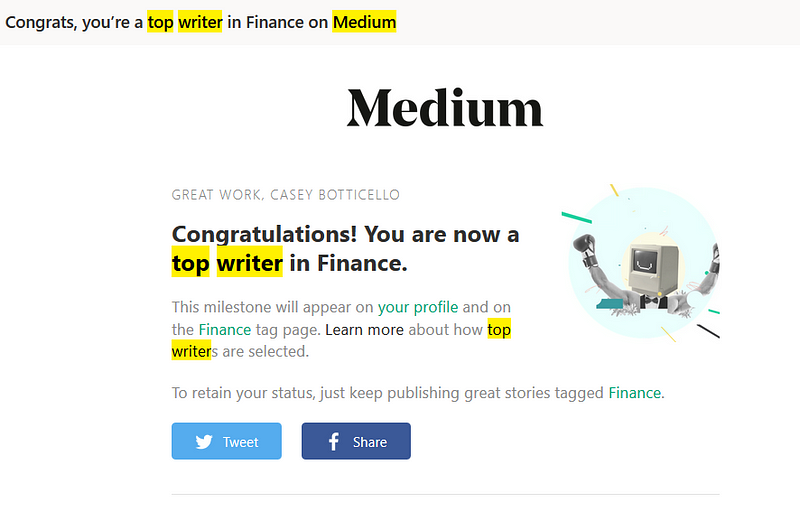
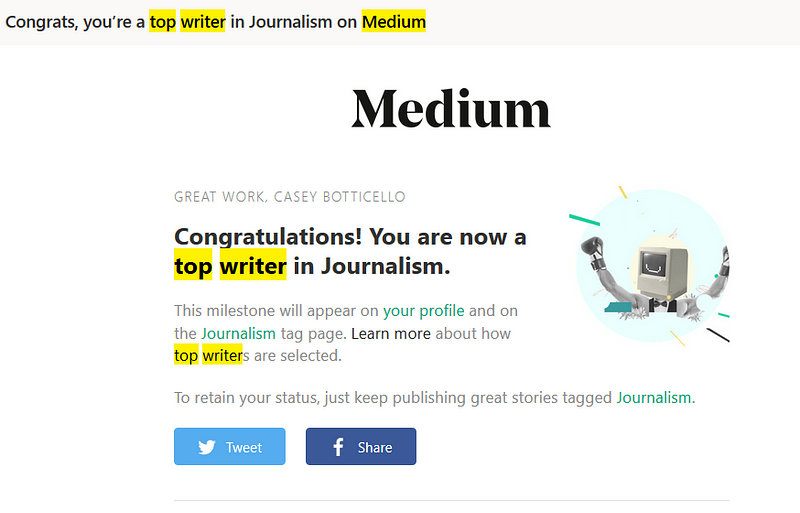
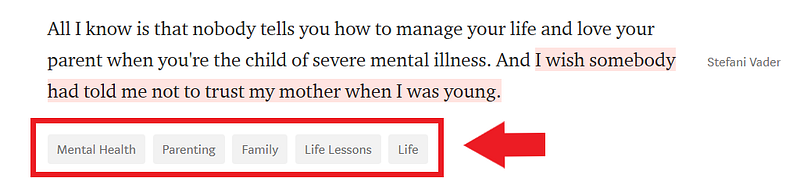
Interestingly, by looking at who clapped and highlighted the unlisted article (suggesting they read it), it seems that after the criteria for being a Top Writer became clear to a select few, many of these writers (wisely) began using only tags that were eligible for Top Writer status. That was a smart strategy.
If you take a look at Shannon Ashley, one of Medium’s highest earning authors, you’ll notice she follows this tagging pattern consistently across her articles:
Combine high quality content with strategic tagging and you will have a very good shot at becoming a Medium Top Writer.
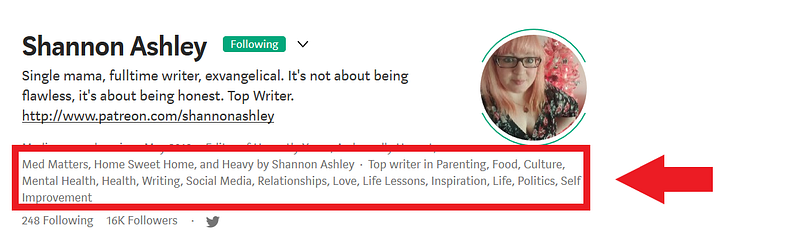
To be clear, I’m not criticizing Shannon. The exact opposite! She is a great writer and being a top writer still requires high quality content. I only used her as an example because she has clearly mastered the strategy, and I didn’t know of an author with more Top Writer profile flair :)
So what can you do beyond strategic article tagging to gain top writer status?
- Write under the topics you want to rank for, frequently.
- Try to maximize views on articles with key tags.
- Expand the focus of articles so that you can include more relevant tags.
Is Being A Top Writer Worth It?
I haven’t seen any noticeable benefits directly from these profile badges. And I don’t think many people look through the top writers list for these few tabs. But they are cool and there is already such limited space on one’s Medium profile that I feel like it gives you a sense of legitimacy and perhaps increases followers.
Still, it is largely a carrot used by Medium to encourage writers to publish frequently across different topics. It’s probably not worth altering what you write but you should definitely pay attention to article tagging.

Thanks for reading this article! Leave a comment below if you have any questions. Be sure to sign up for the Blogging Guide newsletter, to get the latest tips, tricks, and news about writing on Medium and to join our Facebook group, Medium Writing, to share your latest Medium posts and connect with other writers.
If you liked this article, here are some other articles you may enjoy:

Casey Botticello is an internet entrepreneur and the founder of Blogging Guide, an online community of writers with an award-winning newsletter. He is also the creator of the popular Medium Writing Course and the Substack Newsletter Course.
Casey previously worked at several tech startups, a lobbying & strategic communications firm, and has created several businesses of his own. He is a graduate of The University of Pennsylvania, where he received his B.A. in Urban Studies.
You can connect with him on LinkedIn, Twitter, Facebook, follow his Medium publications, Digital Marketing Lab and Medium Blogging Guide, or reach out to him directly on his personal website.


