
The Problem(s) With Greta Gerwig’s Barbie
Or: How Marketing and Questionable Writing Created a “Feminist Masterpiece”
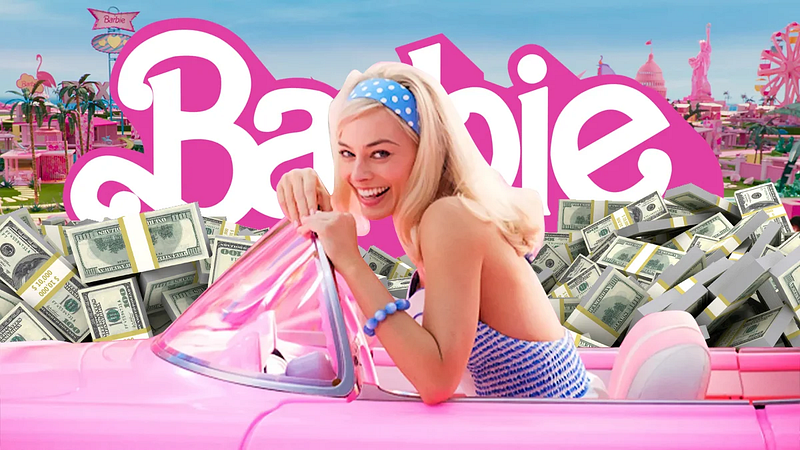
The Court of Popular Opinion gave its verdict on the Barbie movie a long time before it even hit the theaters: this film was going to be great. It was going to be a sensation. It was going to be a cinematic masterpiece, the likes of which haven’t been seen since Orson Welles’ 1941 Citizen Kane.
The few who objected to this unanimous verdict before or even after the film’s release were quickly dismissed by the Court as “not understanding the groundbreaking nature of the film” or the “brilliance” of those involved in its production (“those” mainly indicating film director Greta Gerwig).
Even now, after its official release, some are hailing Barbie as “a masterful exploration of femininity” or a successful “smashing of the patriarchy,” and to say otherwise means to be met by a storm of raging objections and accusations ranging from “can’t we just enjoy something light-hearted and fun?” to “you are clearly an anti-feminist” (just check any social media comment section).
The problem is that, while Barbie is much closer to Legally Blonde in terms of its “groundbreaking feminism” than it is to Jeanne Dielman, it is somehow being perceived as a “feminist masterpiece” — in fact, it has been even before it came out.
Barbie is much closer to Legally Blonde in terms of its “groundbreaking feminism” than it is to Jeanne Dielman.
The Movie Itself and Why It Is Criminally Overrated
Warning: Spoilers Ahead!
Barbie starts off as a rather witty and subtle critique of gender inequality and impossible-to-obtain beauty standards: even though Barbieland is populated by a variety of Barbies ranging in color and size, Margot Robbie’s So Stereotypical Barbie reacts with dreadful horror to the first signs of cellulite on her thighs, which prompts her to travel to “The Real World” to fix whatever is causing her to “malfunction,” thus embarking on a traditional Hero’s Journey quest.
But from the moment Ken returns to Barbieland to try and replicate the patriarchy of the Real World, the film loses its momentum, goes off-rail narrative-wise, and spirals into an overtly literal critique of the patriarchy that leaves zero room for subtlety: the Kens turn Barbieland into a boisterous, much less pink, much less eye-pleasing, much less sparkling-clean version of itself, where once intelligent and self-accomplished women are reduced to objects of sexual gratification¹ and male-ego reassurance.
The solution, naturally, is to turn the Kens against each other by virtue of their own shallowness and self-absorption and restore the original matriarchy. It doesn’t seem strident to the filmmakers that this enables the same gender stereotyping and lack of inequality in the Real World, only reversed. “With enough time, the Kens will have as much power as the women in the Real World do,” says one Barbie, ultimately throwing all subtlety out of the window.
The second part of the movie turns into a chaotic mess of ideas, with the main antagonist — the Mattel company — chasing Barbie back to Barbieland (conveniently, it takes them more than double the time that it took Ken or Barbie to do the same, and by the time they do arrive, the matriarchy has already been re-established). It is then Ken who fills in the role of the main antagonist of the film. By this point, the subtle wittiness of the movie's first half turns to plain unfunny moments that mostly deliver cringiness instead of humor.
An out-of-the-blue musical number involving all the Kens somehow ends up reconciling their differences by what can only be defined as “the power of Song.”
Later, both Ken and Barbie end up realizing that they are, indeed, enough and that they can be whomever they choose to be.²
Additionally, a quick, meta-cinematic remark on how Robbie is too beautiful to play the role of an “ugly Barbie” is a rather interesting addition to a movie whose main point seems to be female empowerment (regardless of one woman’s physical attributes)…
And, finally, the movie ends on what is a more than questionable “Pinocchio twist”, with Stereotypical Barbie deciding that she wants to become a real woman, even if that entails having flat feet and cellulite.
The fact that this movie is being hailed as a “masterpiece” seems nothing short of utter self-delusion induced by late 90s-early 2000s nostalgia, which also accounts for the spike in the sales of the merchandise launched after the movie’s release, ranging from a new set of Barbie dolls to pink-colored popcorn and a virtually endless range of personal accessories. And the irony of this very phenomenon being a triumph of capitalism — specifically of merchandise targeting women — seems completely lost on those who profess their support for the “female-empowering qualities” of the movie.
The irony of this very phenomenon being a triumph of capitalism — specifically of merchandise targeting women — seems completely lost on those who profess their support for the “female-empowering qualities” of the movie.
Indeed, I will hazard the conclusion that the very triumph of this film is but the result of a very successful marketing campaign and of the naive compliance of multiple generations of (primarily) women indulging in nostalgia.
Let me conclude by specifying that not appreciating the Barbie movie does not mean being an anti-feminist, and it does not mean not appreciating women filmmakers or women-driven stories in media. It simply means not appreciating the Barbie movie. In the same way that one is free to not appreciate any given work of media.
Not appreciating the Barbie movie does not mean being an anti-feminist, and it does not mean not appreciating women filmmakers or women-driven stories in media. It simply means not appreciating the Barbie movie.
Similarly, appreciating the film does not grant one the status of “better feminist” compared to somebody who doesn’t.
¹ This is obviously accomplished in a rather sexualized but sexless way, since, by Stereotypical Barbie’s own admission, Kens and Barbies do not have genitalia.
² If only any piece of media had made the exact same point in the last 30 years…
Want to keep reading? Check out these similar articles!
Sign up for Medium through the author’s affiliate link and get instant access to unlimited articles, or show the author your support and appreciation by buying her a coffee!