
The one thing that makes dating suck and what you can do to make it better
“The dating pool has piss in it!” My friend exclaimed about yet another dead-end situationship. I nodded in agreement. My luck was not any better.
The common theme from our experiences riddled with lies, ghosting, breadcrumbing, stonewalling and all kinds of games was a lack of compassion. There was an element of kindness, good-heartedness, and consideration for others that was missing.
One word and its synonyms summarized these sentiments: Humanity.
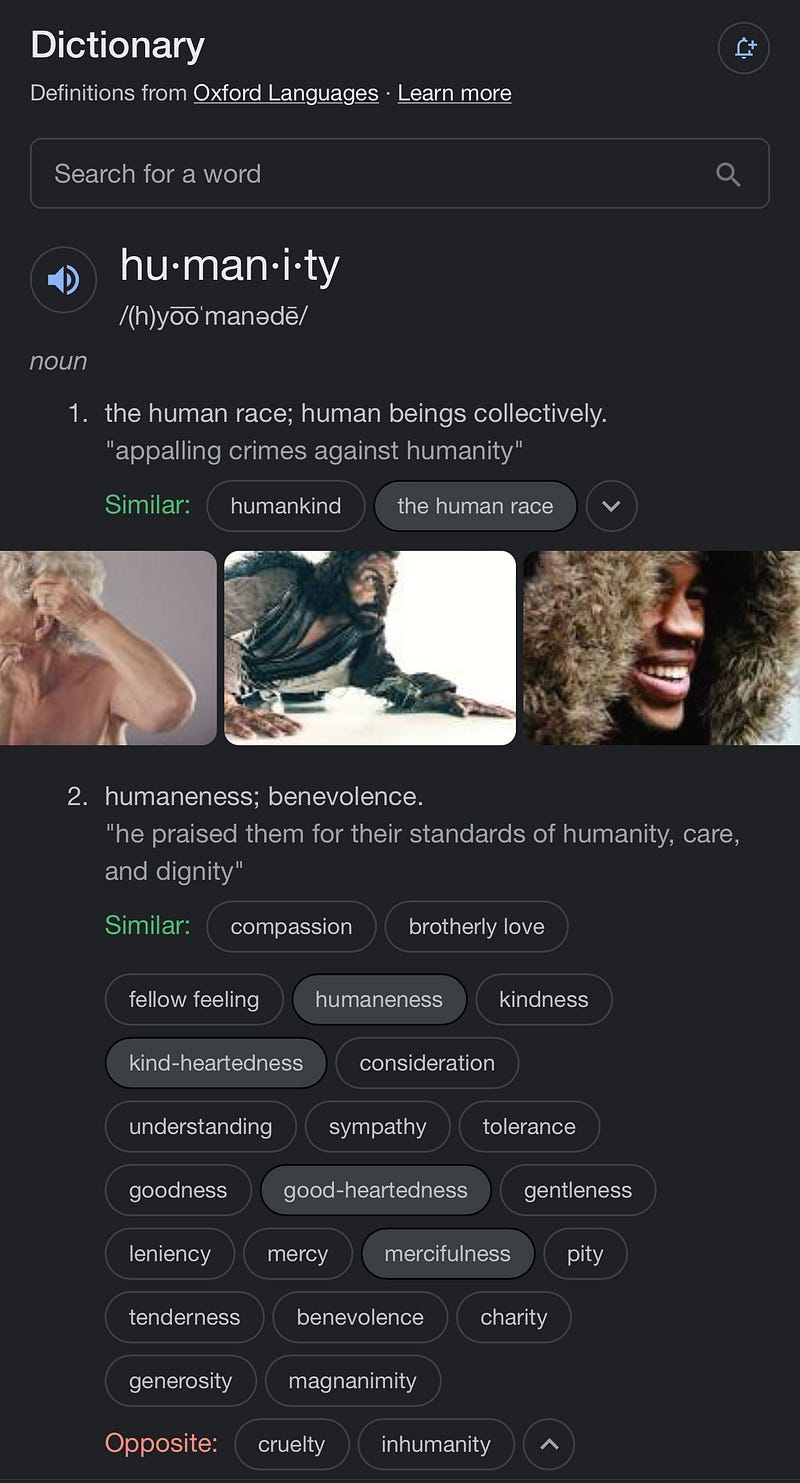
Humanity is missing from the dating scene and from society at large on both accounts of the definition:
- Being a collective human race
- Having humaneness and benevolence towards one another
We seem to have lost sight of the fact that we are all one human race.
We are “othering” each other either by gender or as vessels for personal fulfillment.
The gender* war rages on — but we are two sides of the same coin.
An underlying issue with dating is the widening divide between men and women.
Only 58% of Americans 18+ who have a close friend report having a close friend of the opposite gender. Girls talk about boys and boys talk about girls without representation of an alternative perspective from the other side. As we project, criticize, and generalize isolated events, the gap widens.
There’s an unfair expectation that because you’re “grown”, you “know what you’re doing”. We give no grace to the fact that the other party is also navigating adulthood.
They might be learning what it means to be a man in the absence of ever having a father figure, or what it means to be a woman in the presence of social media pressures.
Being a “woman” or a “man”, should not imply much more than being human. As we know, humans are complex and flawed and don’t always get it right the first time around.
After a conversation with her husband on what it’s like to be a man, a fellow Medium writer concludes it is very similar to being a woman. After all, Psychology shows that as humans, we long for the same things.
Maslow’s Hierarchy of Needs captures our shared need for basic physiology, safety, belongingness/love, esteem, and self-actualization.
We have the same fears of extinction, mutilation, loss of autonomy, separation, and ego death.
We have the same emotional core wounds of betrayal, abandonment, rejection, humiliation, and injustice.
Though we are at different points in healing our core wounds and therefore differ in our approach to meeting our needs and facing our fears, we have more in common than that which divides us.
In fact, most of what divides us is a social construct that has been learned and can therefore be unlearned.
The gender divide is artificial
We are one-track-minded.
We’ve stopped seeing each other as humans and see each other as cash cows or sex cows or husband cows (no disrespect to all cows & shout out to PETA).
We approach situations with an all-or-nothing approach to getting what we want out of it, with minimal consideration of the other party’s experience.
Last week my friend told me he’s getting frustrated with a girl who is unwilling to have sex. “She’s becoming increasingly less attractive.”
Another friend described her ex of nearly a year as “useless” when recounting their breakup.
Everyone seems disposable in a world full of options.
When relationships end, we operate as if the connection we had was a ,myth and enjoying their company didn’t matter if we didn’t get to our ultimate “goal”.
Do you even like the people you’re dating? Are you friends? Or are you tolerating them just to get something?
If he does not prove to be husband material, throw the whole man away. If she doesn’t put out by the third date, throw the whole woman away. Forget who they are as people — as humans.
But individuals are not the only ones to blame. It’d almost be silly to expect anything different from an individualistic capitalist society.
Because of the divide in humanity, we lack benevolence in our interactions with one another.
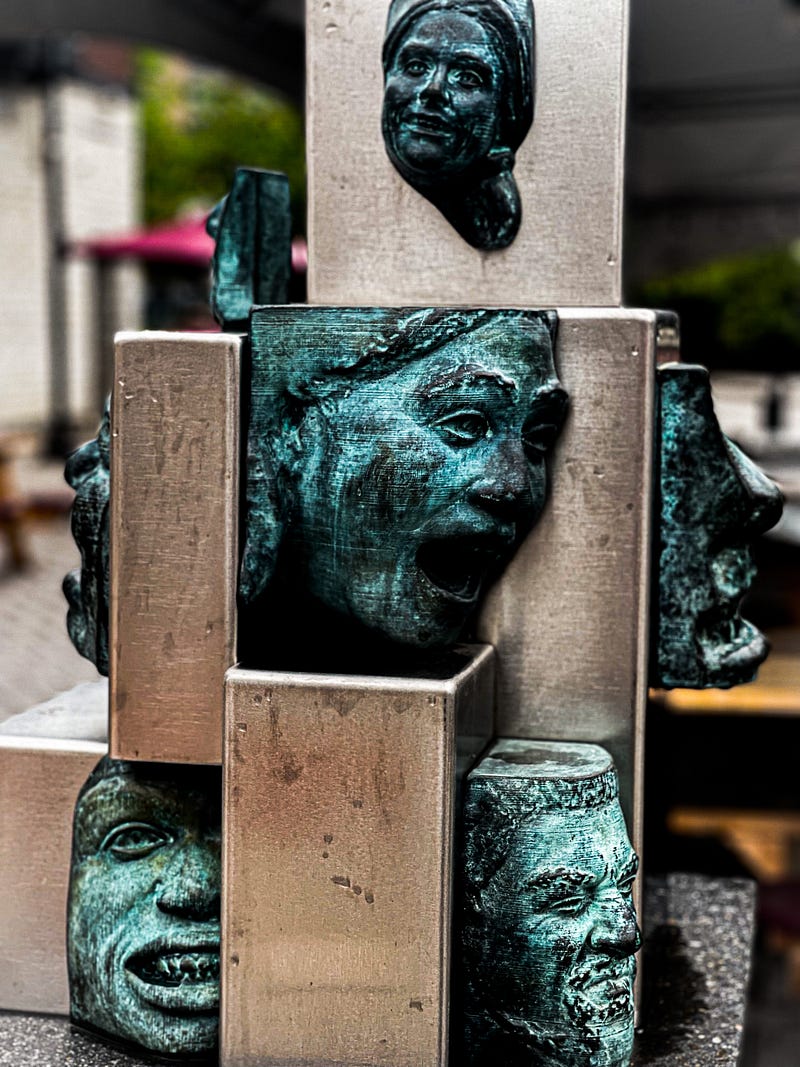
We assume malicious intent.
I’ve heard men say women only want their money. I’ve heard women say men just want a live-in maid.
I’ve heard women say, “if he wanted to, he would have.” I have heard men say, “I wish she would just tell me what she wants.”
Some women I know find it OK (in fact celebrate) to be rude to men; overcorrecting society’s sexist programming that women be “polite”, “nice” and agreeable i.e., to disregard our needs and feelings.
I deeply understand the desire to lash out at men but once I recognize it, I consciously ask myself:
“If you wouldn’t do it to your friend, why would you do it to your potential partner?”
Would you block and delete a friend for not calling you back when they said they would? Would you be so negligent of your friends that they’d consider blocking and deleting you, to begin with?
The dating scene is riddled with lies — whether blatant or by omission — to self-preserve and curate a desired singular experience, with no considerations beyond self.
The truth is:
Most mature adults will never be upset with you for being truthful
(Granted we might be mad in the moment, but when considering the bigger picture, respectful truth is always preferred. It is common decency.) Men, women, everyone do better.
As a result of skepticism of the “other”, we aren’t bold. We are overly cautious.
Most of us strive to live life fully and large, but when it comes to dating, we are very small.
We minimize risks and investments at every turn. Doing coffee instead of dinner for a first date. Texting instead of calling. Ending the call after 3 rings to avoid the feeling of rejection when it goes to voicemail.
Two weeks after my birthday one year, a guy showed up on our first date with a gift and a balloon. It was considerate, it was bold, it was rare. The gesture broke the ice between us. A few weeks later, I planned a birthday dinner for him. His reaction appeared overly emotional until I came to learn, that this had been the first time in adulthood that someone else had planned his birthday. We continued dating for months after that. Though things did not work out in the end, we made lasting memories and parted on great terms.
Nowadays, everyone seems to refrain from being the “first”; the first to text, first to catch feelings, first to ask that the relationship be defined. We don’t want to come off as needy or clingy, so we paint our insecurities as “chill” or “laidback”.
After asking my friend how she felt about waiting two months for her boyfriend to say he loved her back, she told me:
“I love you is not a question that needs a response. It’s a statement.”
She hadn’t said it for him to say it back to her. She’d said it because she felt it. When he felt it too, he did the same. I hope to live as boldly as she does.
Oftentimes, we follow rulebooks, posts, and Instagram threads so closely that we dehumanize the person in front of us.
“Don’t call for 3 days,” “Don’t give gifts in the first 3 months” “Never move for a man”, “Never let her see you cry”.
We forget this person isn’t just “a guy” or “a girl”. If we are dating intentionally, this is our potential future partner. And at the very least, this is a being going through a human experience (which is already hard enough).
How much does it take out of you to make another person smile? Especially one you’re interested in.
So, what do you need to do?
Approach dating with a little more human empathy and compassion. Take risks, be bold. It won’t be easy, and you’re likely going to get burned, but the more of us stop pissing in the pool, the cleaner it will be. #OperationCleanDatingPool
If you’re a biblical person, hold on to this as you put yourself out there:
Let us not become weary in doing good, for at the proper time we will reap a harvest if we do not give up. — Galatians 6:9
Humanity is diverse in experiences and thought processes. Humanity requires patience. It requires benevolence even in the absence of understanding. Yes, men and women are different, and we don’t always get each other, but we can be kind to one another.
In the end, most of us are looking for something friendlier, something kinder, something bolder.
My ask of you: Be a little more human today.
*Gender throughout this article is described in a heteronormative cisgender context from experience and is not intended to exclude non-binary identities.
More from Joyce on Life & Love
Use my referral link to join Medium today to get full access to every story on Medium and read every story from me (and thousands of other writers).


