
The One Punch Man Workout Might Not Be As Effective As It Seems
And what can you do to improve it
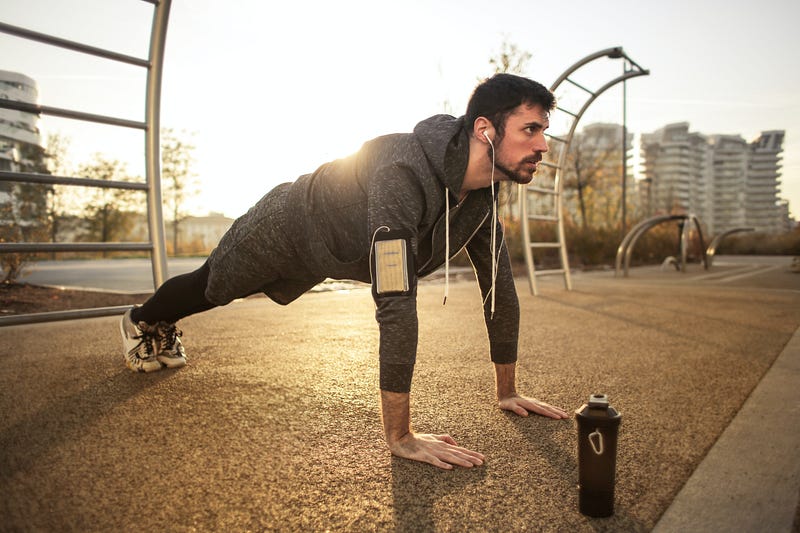
If you are an anime fan, then you too might have got fascinated by the OPM (One Punch Man) workout. At least, I got fascinated in my early days, though I am not a big fan of anime, and sooner than later I realized that this workout may not be as effective and great as it seems to be.
I am still facing issues with what happened to me by undergoing this routine, and that too with a poor form, it was quite an early time when I started with this routine but it had some long-lasting impact on my body.
For those who don't know about the OPM workout, this workout came into the limelight from an anime called “One Punch Man” in which Saitama went through a training phase in which he trained 100 sit-ups, 100 push-ups, 100 squats, followed by a 10 km run every day for 3 years.
Many days, sometimes twice in a row, I thought not to go for a workout, and now I can say that I am glad that I rested on those days. So why am I saying that it’s not an effective workout? Let’s find out.
Lack of rest days
You don’t build muscle or get stronger when you train, but when you rest after your training session.
And that’s where this workout routine hits your body as hard as you might even sabotage your progress if you are a beginner instead of building it.
There’s a reason why many full-body workouts include 2 to 3 rest days in a week. It's those rest days when you expect your muscles to grow, not during your workout.
If you train hard, you’ll require more time to recover, if you train light, you’ll require less time to recover, it’s as simple as it is.
No back workout
Another issue is there’s no posterior chain exercise. You need some pulling exercises to reduce the chances of muscle imbalance by training a lot of upper body pushing exercises.
Not training your back enough might leave you with poor posture and unhealthy shoulders. So incorporate some pull exercises into your routine and save your body.
100 Sit-Ups
One of the worst exercises you can use to train your abs. I still have some anterior pelvic tilt because of tight hip flexors as the second half of the sit-ups is more of a hip-flexor exercise rather than an abs exercise. Yes, sitting for a long time might also have contributed, but at least we can remove one contributor.
100 sit-ups, seven days a week, do you realize how harsh it is for your spine? In fact, just crunches might also heavily harm your spine with such an exorbitant amount of frequent spine flexion.
Replace them with leg raises (though you might need to be cautious here too), boat hold, knee raises, or different variations of the plank hold. These exercises will help you train more effectively and time efficiently than 100 sit-ups.
Fixed amount of reps
This is more of a progression issue and less of a health issue.
One of the major aspects of building a solid-looking body is progressive overload. Where’s the progressive overload in this routine? Time? Yes, to an extent, but after some time it will become endurance training rather than strength or hypertrophy training.
For many of us, 100 might be a very unjustified number. Let’s take push-ups. Some can not even do half, some might even go to double or triple the number. Moreover, such a high amount of reps with poor form might lead to unwanted injuries and imbalances.
If you are a newbie, you can start with a few reps, build up as you get stronger. For stronger folks, they can try hard variations like archer or typewriter push-ups, shrimp squats, etc.
The point is to know what are you training for. If it is for endurance, go to high numbers with relatively easy exercise, if it is for hypertrophy or strength, you need to pick an exercise that’s challenging enough for you.
For more on the intensity of exercise and reps and sets range, you can check out this article of mine…
Conclusion
Overall, by looking at the workout, there’s no doubt that it’s a full-body routine. And there’s no problem in a full-body routine, in fact, in some cases, they are beneficial too. Just keep the following points in your mind so that you don’t harm yourself as I did.
- Rest is for recovery, make sure you include it in your routine.
- Lack of back workout can lead to poor posture.
- Please avoid sit-ups. There are a lot of safer and more challenging ways to train your abs.
- Progressive overload is the key to success.
I hope you liked this article and learned something new, thanks for reading!!
If you liked it, you might also like…
If you liked what you read, you can join Medium with my referral link and enjoy unlimited stories for just $5 a month. The deal is, you get to read unlimited stories on Medium by various amazing writers and in return, I’ll get a commission when you join using my referral link. Thanks for your time!!


