avatarAnkit Das

Free AI web copilot to create summaries, insights and extended knowledge, download it at here

3557

Abstract

<li>Lunges</li><li>Push-ups or Benchpress</li><li>Deadlift</li><li>Rows</li><li>Shrugs</li><li>Delts (lateral and rear)</li></ul><p id="3189">And rest one day after two days of workouts. You can also add one exercise to all the muscle groups in both workouts A and B depending upon your time constraints and strength level.</p><p id="bd63">Research shows that <a href="https://pubmed.ncbi.nlm.nih.gov/27941492/">training 4–6 sets per exercise</a> and <a href="https://pubmed.ncbi.nlm.nih.gov/27433992/">5–10 sets per muscle group per workout</a> can maximize hypertrophy, and both of them can be achieved by the above-shown example. And more importantly, you must avoid doing a high number of sets per muscle per workout, which you can easily achieve by increasing the frequency of your workout.</p><h1 id="3b70">High-quality training volume</h1><figure id="688e"><img src="https://cdn-images-1.readmedium.com/v2/resize:fit:800/1*_d2eFZ6YqbKj0coOn-3-CQ.jpeg"><figcaption>Photo by <a href="https://www.pexels.com/@binyaminmellish?utm_content=attributionCopyText&amp;utm_medium=referral&amp;utm_source=pexels">Binyamin Mellish</a> from <a href="https://www.pexels.com/photo/man-in-black-shorts-carrying-adjustable-barbells-116077/?utm_content=attributionCopyText&amp;utm_medium=referral&amp;utm_source=pexels">Pexels</a></figcaption></figure><p id="6596">If you do a ton of sets within a day as in a bro-split, you’ll inevitably invite poor quality. After you’ve done a few heavy sets for a particular muscle group, the amount of force generated by that muscle group in the later sets decreases significantly.</p><p id="399f">When you do full-body training, you can incorporate two or three exercises per muscle group per exercise. With only two or three exercises to perform for a muscle group, the quality of repetitions does not degrade, and you feel fresh throughout the workout.</p><p id="df52">In fact, a <a href="https://pubmed.ncbi.nlm.nih.gov/25932981/">study</a> even shows that those who train a particular muscle group 3 times a week experienced much more muscle growth than those who trained less often. This can be very easily achieved by a 3 days a week full-body workout routine. And as you progress further, you can increase your number of training sessions from 3 to 4, and eventually to 5.</p><h1 id="7deb">You recover faster</h1><figure id="7d2d"><img src="https://cdn-images-1.readmedium.com/v2/resize:fit:800/1*KNd9RMinhNPX3ExsfSxwQw.jpeg"><figcaption>Photo by <a href="https://www.pexels.com/@victorfreitas?utm_content=attributionCopyText&amp;utm_medium=referral&amp;utm_source=pexels">Victor Freitas</a> from <a href="https://www.pexels.com/photo/man-holding-black-barbell-703012/?utm_content=attributionCopyText&amp;utm_medium=referral&amp;utm_source=pexels">Pexels</a></figcaption></figure><p id="b477">You didn’t expect it, right? But the fact is training more often improves muscle repairing capacity instead of impairing it.</p><p id="15a4">It is proven by a <a href="https://pubmed.ncbi.nlm.nih.gov/12753488/">study</a> that says participants who trained their legs every day for two weeks experienced attenuation in neuromuscular fatigue and gained twice as much strength as gained by the participants training twice a week. Moreover, they recovered within 22 hours after the workout.</p><p id="c125">A significant reason for this might be sleep quality. High-frequency training provides better recovery due to an <a href="https://journals.lww.com/nsca-jscr/Fulltext/2015/05000/Effects_of_Resistance_Exercise_Timing_on_Sleep.28.a # Options spx">improvement in sleep quality after heavy exercise</a> and we all know that <a href="https://journals.lww.com/acsm-csmr/Fulltext/2017/11000/Sleep_and_Athletic_Performance.11.aspx#R6-11">sleep quality has a massive effect on recovery</a>.</p><h1 id="4d92">Your workouts will be shorter, not longer</h1><figure id="0c00"><img src="https://cdn-images-1.readmedium.com/v2/resize:fit:800/1*GNt7PdiTLXirBD3PtiRrxA.jpeg"><figcaption>Photo by <a href="https://www.pexels.com/@olly?utm_content=attributionCopyText&amp;utm_medium=referral&amp;utm_source=pexels">Andrea Piacquadio</a> from <a href="https://www.pexels.com/photo/young-slender-female-athletes-giving-high-five-to-each-other-while-training-together-in-sports-club-3768722/?utm_content=attributionCopyText&amp;utm_medium=referral&amp;utm_source=pexels">Pexels</a></figcaption></figure><p id="c12b">“What? Training the whole body takes less time?” This might be the thought wandering inside your head, but there are multiple ways you can structure your workout to make it shorter.</p><h2 id="1c5b">Staggered sets</h2><p id="b718">In a staggered set, you perform repetitions of two different muscle groups in a set. For example, you can combine a pushing and a pulling movement in a staggered set, you can do bicep curls, then immediately perform tricep extensions, then rest for a minute or two, and continue with the bicep curls again.</p><h2 id="0ef0">Circuits</h2><p id="5f77">Perform exercises in a cycle with 1-minute rest in between, and each exercise targeting a different muscle group. An example of circuits can be alternating between upper-body push, upper-body pull, and leg exercises, you can do push-ups, then pull-ups, squats, start with push-ups.</p><p id="eba3">These training styles allow you to get more amount of volume in a given time without interfering with performance if you set them correctly.</p><h1 id="c3f7">Summary</h1><p id="edae">Following are the benefits of full-body training.</p><ul><li>More training volume.</li><li>Exploit the natural movements of your body and avoid overtraining.</li><li>High-quality training volume.</li><li>You recover faster.</li><li>Your workouts will be shorter, not longer.</li></ul><p id="dc95">I think by now you must know that training full-body is not at all wrong, in fact, in some cases it can be more beneficial than split-training.</p><p id="f49c">In the end, it’s solely the trainee’s decision to decide whether to have 3 long full-body sessions, 5 short full-body sessions, or a split routine throughout the week.</p><p id="422e">Thanks for reading!!</p><blockquote id="56ef"><p>If you liked what you read, you can join Medium with <a href="https://ankitd136.medium.com/membership">my referral link</a> and enjoy unlimited stories for just $5 a month. The deal is, you get to read unlimited stories on Medium by various amazing writers and in return, I’ll get a commission when you join using <a href="https://ankitd136.medium.com/membership">my referral link</a>. Thanks for your time!!</p></blockquote><figure id="5827"><img src="https://cdn-images-1.readmedium.com/v2/resize:fit:800/0*1uibjjhBVYk2-For.jpeg"><figcaption></figcaption></figure><p id="bd13"><b>You just read another post from In Fitness And In Health:</b> a health and fitness community dedicated to sharing knowledge, lessons, and suggestions to living happier, healthier lives.</p><p id="cf2e">If you’d like to join our newsletter and receive more stories like this one, <a href="https://scottmayer.substack.com/"><b>tap here</b></a><b>.</b></p></article></body>

5 Reasons To Train Full-Body Everyday

#3. High-quality training volume
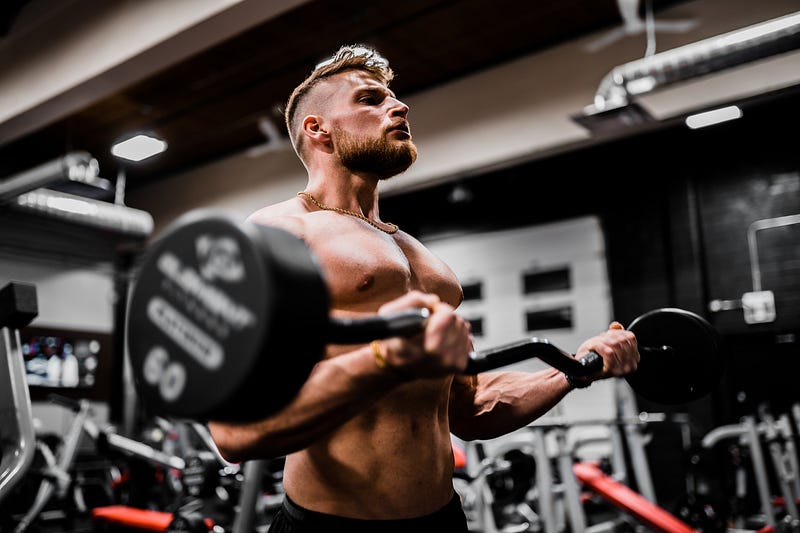
Photo by Anastase Maragos on Unsplash

Split-training is one the most common ways to set up a training routine where you split your training in such a way that you train a particular muscle or muscle group each day.

While split-training can be set in a way to produce very good results, often, the full-body routine is forgotten because many people think that they can’t achieve great results from it.

By no means I am saying that split training is wrong, split-training is beneficial too, but it doesn’t mean that you can’t achieve great results with full-body training, and after reading this article, you would agree with me too. With that said, let’s get to business.

Training volume
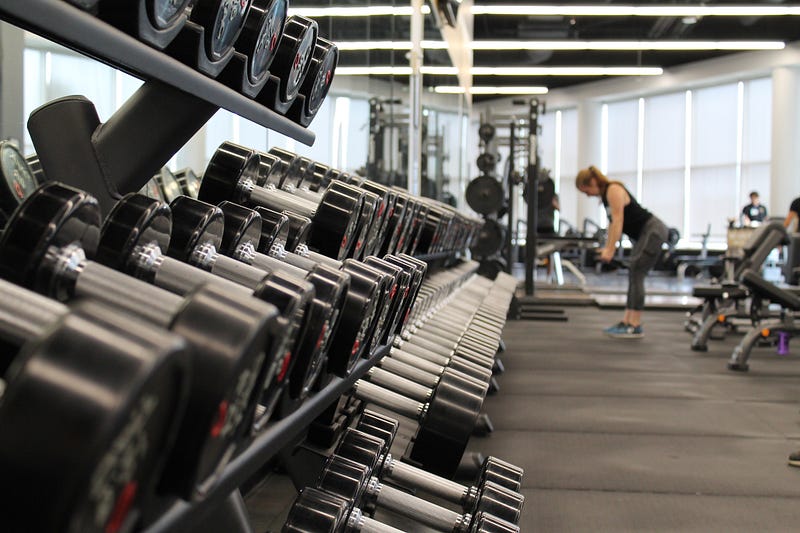
Photo by Danielle Cerullo on Unsplash

To keep it simple, training volume refers to the amount of work you do, and the most useful parameter to determine the training volume is the number of sets you perform per muscle group.

What’s the big deal with sets?

Well, beginners can make optimal gains with just 9–10 sets per muscle group a week, but as you get more advanced, you need higher volume to continue making progress. As you get advanced, your body gets more resistant to muscle breakdown and your recovery time reduces.

For advanced trainees, research has shown a close relationship between training volume and muscle growth. A study has shown that with the increase in sets, one can see an increase in muscle growth.

So a higher training frequency, like 5 full-body workouts per week, which in turn would translate into higher training volume, should promote muscle growth.

5 full-body workouts, isn’t that overtraining?

Photo by Anastase Maragos on Unsplash

This is the best upside of a full-body workout. Our body naturally does not isolate a muscle group while pushing or pulling, and we can exploit that concept to structure our workouts.

You can have one or two upper-body pulling and upper-body pushing movements, one or two leg exercises, and some static or isolation exercises in one session, similarly, you can set up another session too.

For example:

workout A

  • Squats
  • Pike push-ups or Shoulder press
  • Pull-ups
  • Bicep curls
  • Tricep extensions
  • Abs

Workout B

  • Lunges
  • Push-ups or Benchpress
  • Deadlift
  • Rows
  • Shrugs
  • Delts (lateral and rear)

And rest one day after two days of workouts. You can also add one exercise to all the muscle groups in both workouts A and B depending upon your time constraints and strength level.

Research shows that training 4–6 sets per exercise and 5–10 sets per muscle group per workout can maximize hypertrophy, and both of them can be achieved by the above-shown example. And more importantly, you must avoid doing a high number of sets per muscle per workout, which you can easily achieve by increasing the frequency of your workout.

High-quality training volume

Photo by Binyamin Mellish from Pexels

If you do a ton of sets within a day as in a bro-split, you’ll inevitably invite poor quality. After you’ve done a few heavy sets for a particular muscle group, the amount of force generated by that muscle group in the later sets decreases significantly.

When you do full-body training, you can incorporate two or three exercises per muscle group per exercise. With only two or three exercises to perform for a muscle group, the quality of repetitions does not degrade, and you feel fresh throughout the workout.

In fact, a study even shows that those who train a particular muscle group 3 times a week experienced much more muscle growth than those who trained less often. This can be very easily achieved by a 3 days a week full-body workout routine. And as you progress further, you can increase your number of training sessions from 3 to 4, and eventually to 5.

You recover faster

Photo by Victor Freitas from Pexels

You didn’t expect it, right? But the fact is training more often improves muscle repairing capacity instead of impairing it.

It is proven by a study that says participants who trained their legs every day for two weeks experienced attenuation in neuromuscular fatigue and gained twice as much strength as gained by the participants training twice a week. Moreover, they recovered within 22 hours after the workout.

A significant reason for this might be sleep quality. High-frequency training provides better recovery due to an improvement in sleep quality after heavy exercise and we all know that sleep quality has a massive effect on recovery.

Your workouts will be shorter, not longer

Photo by Andrea Piacquadio from Pexels

“What? Training the whole body takes less time?” This might be the thought wandering inside your head, but there are multiple ways you can structure your workout to make it shorter.

Staggered sets

In a staggered set, you perform repetitions of two different muscle groups in a set. For example, you can combine a pushing and a pulling movement in a staggered set, you can do bicep curls, then immediately perform tricep extensions, then rest for a minute or two, and continue with the bicep curls again.

Circuits

Perform exercises in a cycle with 1-minute rest in between, and each exercise targeting a different muscle group. An example of circuits can be alternating between upper-body push, upper-body pull, and leg exercises, you can do push-ups, then pull-ups, squats, start with push-ups.

These training styles allow you to get more amount of volume in a given time without interfering with performance if you set them correctly.

Summary

Following are the benefits of full-body training.

  • More training volume.
  • Exploit the natural movements of your body and avoid overtraining.
  • High-quality training volume.
  • You recover faster.
  • Your workouts will be shorter, not longer.

I think by now you must know that training full-body is not at all wrong, in fact, in some cases it can be more beneficial than split-training.

In the end, it’s solely the trainee’s decision to decide whether to have 3 long full-body sessions, 5 short full-body sessions, or a split routine throughout the week.

Thanks for reading!!

If you liked what you read, you can join Medium with my referral link and enjoy unlimited stories for just $5 a month. The deal is, you get to read unlimited stories on Medium by various amazing writers and in return, I’ll get a commission when you join using my referral link. Thanks for your time!!

You just read another post from In Fitness And In Health: a health and fitness community dedicated to sharing knowledge, lessons, and suggestions to living happier, healthier lives.

If you’d like to join our newsletter and receive more stories like this one, tap here.

Workout
Fitness
Muscle Building
Muscles
Recovery
Recommended from ReadMedium