
How You Need To Train For The Results You Want
There are broadly 4 types of training methods

Many people I see going to the gym just know that they want to get stronger and bigger. They don’t know how to get there. They do everything from intense cardio to powerlifting without knowing what their main objective is.
You don’t need to know the exact path at the beginning, but you must at least know what type of training you should aim for. Many people don’t know how to structure a workout because they don’t know what type of training is optimal for them.
Though it’s difficult to suggest an exact workout plan for any type of training, a 2015 study titled “The effect of training volume and intensity on improvements in muscular strength and size in resistance-trained men” gives a fair enough idea of how to train effectively for different requirements.
Let me break it down for you…
Maximum Strength training
This type of training increases your maximum strength by letting more muscles contract more frequently and improving synchronization in those contractions.
One important thing to keep in mind with this type of training is that it doesn’t focus on increasing muscle mass. You can adopt this training style if you want to stay at a particular weight.
It requires a fresh body, a fresh mind, and a high frequency of training with medium volume and high intensity. With this type of training, you must avoid training to failure and have a long enough rest period.
What this type of training would look like?
- Intensity — between 85% and 100% of your one-rep max. Allowing you to perform anywhere around 1 to 5 reps per set.
- Volume — Stop at 80% of your max reps. Perform 4–6 sets per muscle group.
- Rest — 3–5 minutes per set, depending on the intensity.
- Frequency — As often as possible, condition applied, feel fresh before the workout.
Hypertrophy Training
This type of training is for those who have the goal of building muscle mass and strength. It helps you get stronger with the growth in muscle mass.
There are a lot of different ways to set up hypertrophy training, but every one of them has 4 things in common:
Mechanical stress — It means to offer a specific resistance to the muscles. It must not be too high as in maximum strength training, but it must not be too low.
Metabolic stress — It means to exhaust the muscle group. We can achieve it by training to failure or beyond.
Progressive overload — It means increasing the resistance you offer to your muscles on a regular interval.
Unload — It means a longer rest period after some weeks of tough training. It can vary from 7 days to 14 days depending on your body.
What this type of training would look like?
- Intensity — between 65% to 85% of your one-rep max. This must allow you to pull out 6 to 14 reps, i.e., 30 to 60 seconds under tension, for each set.
- Volume — Perform 3–6 sets per muscle group. Train to failure.
- Rest — 1–2.5 minutes per set, depending on the intensity.
- Frequency — Each muscle group at least twice a week with proper rest in between, i.e., 36 to 48 hours.
Skill Training
This section is especially for all my calisthenics friends. I mean, not everyone into fitness wants to learn different calisthenic skills, but everyone into calisthenics definitely wants to learn at least a few skills.
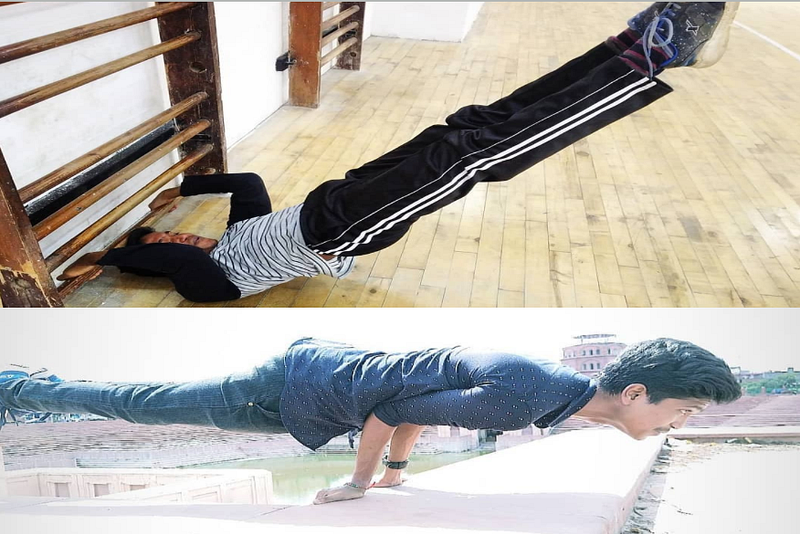
There is no mention of this section in the above report, but being a calisthenics practitioner myself and having unlocked some intermediate-level skills, I think I can give you enough information to at least get started.
It requires a fresh body, more frequent training, a rest period that is enough to make you feel fresh for the next session, and a lot of reps. You don’t need to hit an outrageous amount of reps in one session but over time.
Skill training is mostly neurological practice. You need to teach your body again and again what movement you are trying to achieve. You need to practice more often so that your mind develops automation to execute the movement precisely.
There’s no fixed intensity for this type of training. For some skills like flips you need a lot of practice with low intensity while for something like flags, you need a more intense workout. While some movements like muscle-up require a good mix of both frequency and strength.
It is often advised to avoid going to failure while training for skills. This is to avoid a long recovery time so that you can train the movement more frequently. As skill training requires a fresh body and mind, it is always better to train for skills at the beginning of any workout.
Endurance Training
This type of training is mainly used to increase resistance against fatigue, just like in long events or marathon runners.
It requires a low intensity and high time under tension, which means a high number of reps with less rest time.
What this type of training would look like?
- Intensity — between 30% to 65% of your one-rep max. This must allow you to pull out 15 to 25 reps, or even more i.e., 60 to 100 seconds under tension, for each set.
- Volume — One can not define a specific range of sets for endurance training. Just make sure you train to failure and have a small rest time.
- Rest — Around 1 minute per set.
- Frequency — You can train each muscle group every second day.
One thing to keep in mind is this type of training won’t build your muscle size unless you are on rest for a pretty long time. So what’s the use of this type of training? It is to attain better capillarity and a faster metabolic process of the muscles.
Can I perform only one type of training?
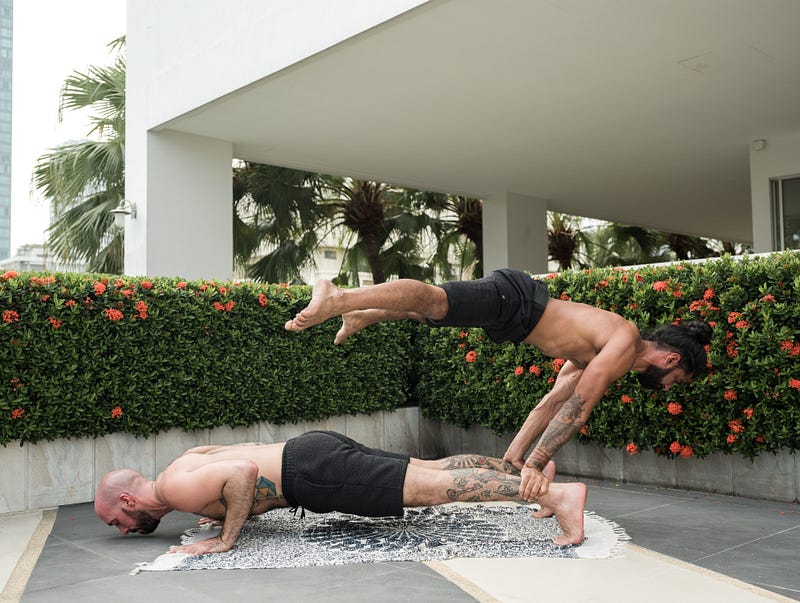
Absolutely no. You can incorporate two or more training routines too until you fulfill the requirements of the training and your body and time allows.
For me, being a calisthenics practitioner, I mix skill training and hypertrophy training. On every workout day, I spend my first 15–20 minutes on skill training and then 40–50 minutes on hypertrophy.
You can replace skill training before hypertrophy with strength training too. Those were just examples, you can try different mixtures and see what works well for you. Just make sure you fulfill the requirements of the training.
One extremely important thing
Any type of training can be as harmful as effective it is if you perform them without an adequate warm-up.
Maybe many days you can go home with no injury without warming up before a workout, but any accident happens just once, and it leaves its impact for quite a long time, sometimes for a lifetime.
Especially, for strength (skills included) and hypertrophy training, warming up gets too essential. I cannot stress more on its importance.
The Takeaway
There are basically 4 types of resistance training.
- Maximum strength training: High intensity and frequency, medium volume, long rest time between sets, and avoid training to failure.
- Hypertrophy training: Medium intensity, train each muscle group at least twice a week, 1 to 2.5 minutes rest between sets. Train to failure.
- Skill Training: Neurological practice. High frequency and reps. Try to train at the beginning of the workout. Avoid training to failure.
- Endurance Training: Low intensity, high volume, high frequency, short rest time between sets. Train to failure.
- You can always combine two or more training routines until you fulfill the requirements of the training and your body and time allows.
- Don’t forget to warm up before your workouts, especially for high-strength demanding training.
I hope you enjoyed it and learned something new. Thanks for reading!!
If you liked this, then you might also like…

You just read another post from In Fitness And In Health: a health and fitness community dedicated to sharing knowledge, lessons, and suggestions to living happier, healthier lives.
If you’d like to join our newsletter and receive more stories like this one, tap here.


