
The Need for Art: From “I Love Coffee” Prints To Andy Warhol
An Attempt To Understand Why People Buy Art
I’ve always wondered why some people spend a lot of money on art, and others don’t. I mean, isn’t it odd that you can buy an Andy Warhol piece for $225 million or buy the same image as a poster print for $5 at IKEA? It often seemed to me that “buying art” is a rather strange human behavior. Here’s how I try to make sense of it.
Caveman Habits, Shaving Foam & Other Needs
As parents we know: Anybody can create art. Toddlers are immortalizing themselves as marker artists on wallpaper flashing old caveman habits while young children are virtually nonstop on the lookout for access to handicraft materials (provided they are denied access to smartphones). Humans just love to create stuff. This is how we learn about the world: we break things (ink-stained wallpaper) and put them together in new ways (e.g. with shaving foam and a copy machine).
Actually creating stuff is such a basic and universal human capacity, that I wonder about people spending money to get stuff that others have created. Given our innate capacity to create stuff, does that not sound a bit odd? And perhaps, could this also boil down to a common essence? So I dug out this well-known psychological framework by Abraham Maslow:
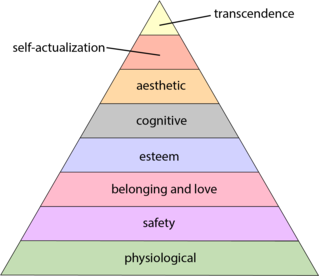
Maslow’s Hierarchy of Needs is a tool to analyze human needs. It’s also pretty straightforward: basic needs are at the bottom and the more complex ones are at the top. As the lower needs are met, higher-level needs become more important for people. So, in a way, we’re all working our way up from
- Physiological needs: securing food, water, and shelter.
- Safety needs: securing health, financial, emotional and personal security.
- Belonging and love needs: family, friendship, trust, intimacy, acceptance.
- Esteem needs: prestige, status, self-respect, and respect from others.
- Cognitive needs: creativity, foresight, curiosity, and meaning.
- Aesthetic needs: beautify one’s life, appreciate the beauty around one’s self
- Self-actualization needs: partner acquisition, parenting, utilizing and developing talents and abilities, pursuing goals
Maslow, who revised this framework several times, later added another level of need that I think is already included in self-actualization, cognitive and aesthetic needs. For the sake of completeness:
- Transcendence needs: Maslow himself described these as “[a reference] to the very highest and most inclusive or holistic levels of human consciousness, behaving and relating, as ends rather than means, to oneself, to significant others, to human beings in general, to other species, to nature, and to the cosmos”.
Overlapping, Universal and Individualistic Needs
Needs are not mutually exclusive, but overlap. This overlap can vary from person to person, but as psychological research has shown, there seems to be a tendency for which needs are most predominant at different stages of life.
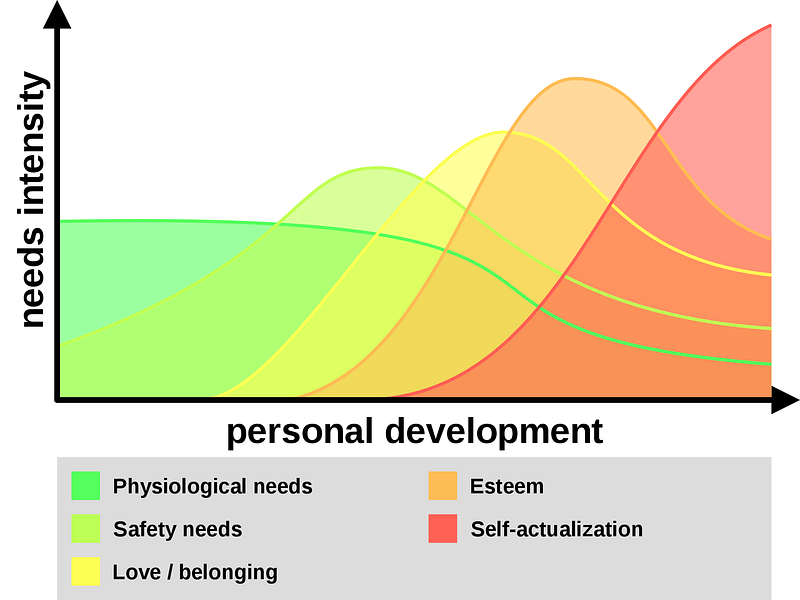
So, for example, in early adulthood, the need for belonging and recognition becomes more prominent, while in midlife, those who have yet to set up routines to secure their needs may struggle with self-actualization.
A Need For Art
Given this understanding of human needs, you cannot expect someone to buy an Andy Warhol original if they are struggling with satisfying their immediate physiological or safety needs. However, it isn’t uncommon for people to incorporate some form of art into their everyday lives even if they are struggling with basic needs. That’s why they’re selling “I Love Coffee” poster prints at IKEA, I guess.

Buying art to satisfy physiological needs
If people are busy acquiring food, water, and shelter, they may not necessarily go and search for their next contemporary art piece to buy. More often, people take care of their physiological needs before buying a Banksy, and instead buy mass-produced decorative items that satisfy their basic need for a pretty-looking shelter. IKEA’s classic “I Love Coffee” poster is the epitome of decoration and practicality in this regard.
Buying art to satisfy safety needs
Once physiological needs are met, people are more likely to think about buying a piece of art “as soon as I can afford it”, or even start considering buying art as an investment. The “I Love Coffee” poster may still be hanging in your kitchen, but you look at it with a subtle sense of disgust and a need to replace it.
Buying art to satisfy belongingness and love needs
With the necessary resources available, people can start buying art to show their support for culture in general or for a particular artist they like. It’s getting social. They buy art at the local flea market or a small piece at an opening of an artist friend’s vernissage to signal to themselves and the world: “I care for art and I do belong to the social circle of art supporters and connoisseurs”. The “I Love Coffee” poster has been replaced or it is still up there — ironically.
Buying art to satisfy esteem needs
After the previous three basic needs are met, the purchase of art can eventually become a demonstration of personal power and strength. This often includes investing in art to show one’s status and wealth or buying for potential profits. In both cases, art is used to signal: “I can afford this”. And the “I love Coffee” poster disappeared for good.
Buying art to satisfy cognitive/aesthetic needs
Since people seek both, aesthetic and cognitive satisfaction, they also buy art as a means of showcasing aesthetic principles or as a means of showcasing the accomplishment of a plan (e.g., a strategy to diversify a portfolio or the extension of a collection).
Buying art to satisfy self-actualization
Finally, the need for self-actualization makes people create art themselves and often completely forget the notion of art as something they own. Instead, they are appreciating the process of creating it: toddlers experimenting on wallpaper and duplicating shaving foam sculptures in a copy machine, or parents who tear an aging “I Love Coffee” poster from the kitchen wall to cut it into pieces in order to make an abstract collage.
Empirical Epilogue
While writing this I found a 2018 survey that asked art collectors why they buy art. The focus was on high-end artworks only, so we may not gain any further insight into the “I Love Coffee” poster phenomenon here, but I think it’s interesting to look at how this correlates with the Hierarchy of Needs:
Why art collectors buy art (from: “Arts Economics”, 2018):
- 83%: “I collect art for aesthetic and decorative reasons” (aesthetic need)
- 73%: “I collect art because it is my passion” (cognitive need)
- 63%: “I collect art to support culture” (belonging and love need)
- 32%: “I collect art for profits” (esteem & cognitive needs)
- 28%: “I collect art to show status” (esteem need)
- 27%: “I collect art to diversify my portfolio” (esteem & cognitive needs)
- 24%: “I collect art to counteract inflation” (security need)



