
AI art is plagiarism, and that’s great!
How AI Art exposes our capitalist understanding of human creativity
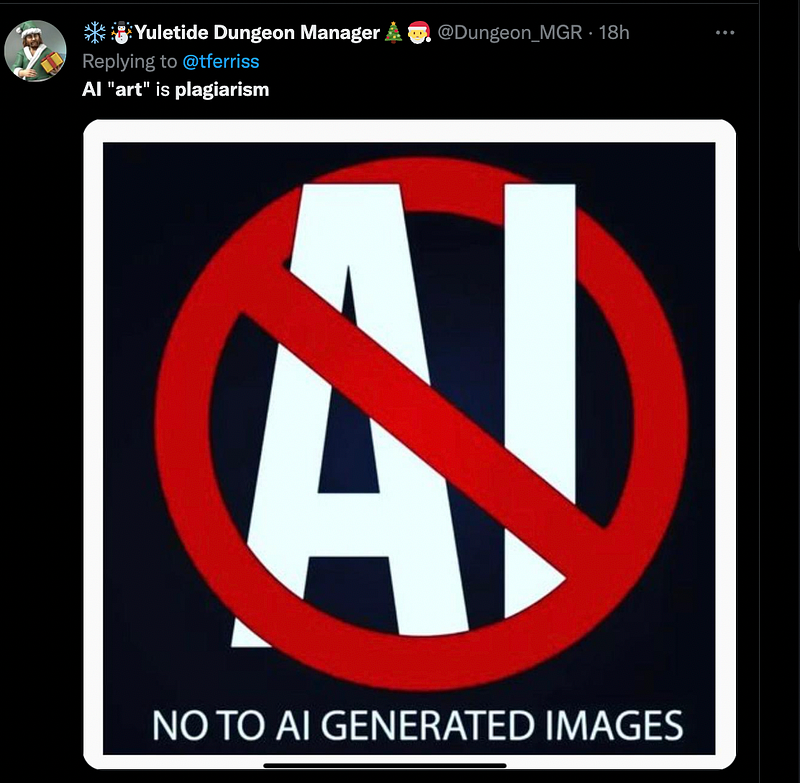
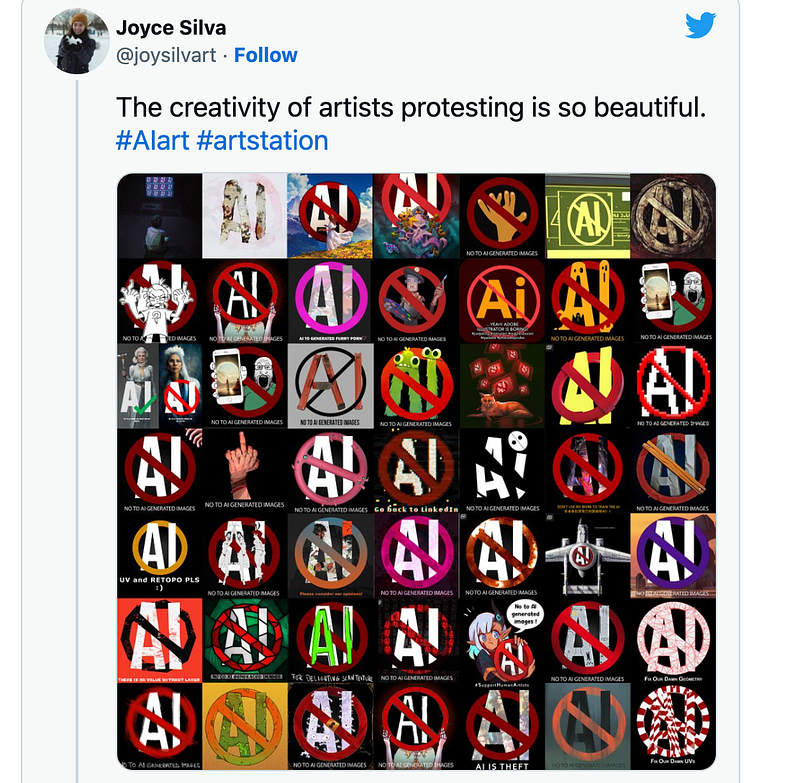
Have you heard that AI is killing art? No? Well, you should. The hashtag #AIArt has been all the rage on Twitter for days and some members of the popular artist platform Artstation obviously didn’t enjoy it very much.
By sharing an “Anti AI” logo on their social media channels they raised their voice against a technology that they fear is killing human creativity: AI artists were accused of stealing the art of others and thus plagiarizing. On closer inspection, this accusation turns out to be a true blessing. Here’s why:
What is plagiarism?
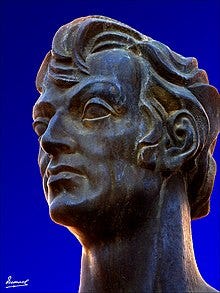
In the first century after a Jewish social reformer known as Jesus remixed popular Eastern belief systems, a Roman writer named Marcus Valerius Martialis accused his fellow poet Fidentinus of falsely passing off Martialis’ poems as his own. “Plagiarius!” he uttered, venting his anger in one of the sarcastic epigrams for which he became famous. For us, in the absence of slavery, this would mean something like “Kidnapper!” or “Hijacker!” (Martialis, in his figurative style, referred to his writings as slaves that he sets free, so that the one who steals them becomes a “slave robber” aka Plagiarius).
While this may have been a funny punchline among literati in the Roman Empire of the first century, the term “plagiarism” found a much more serious connotation a few centuries later with the advent of print culture. For then, concepts such as “originality” and “creativity” were to determine the extent to which a work could stand out from others and claim an independent origin — you guessed it, we enter the age of Romanticism at the end of the 18th century. After some 300 years of the printing press, the idea of intellectual property rights began to fully blossom, and the concept of plagiarism became inextricably linked to the concept of ownership. Two centuries later, the term “plagiarism” finally became what we associate with it today: a norm deeply rooted in the tradition of individual originality and the myth of creative genius. And in the spirit of emerging capitalism, the notion of plagiarism conveniently allowed ideas to be considered private property to be owned and, more importantly, sold at a profit.
Report says that you, Fidentinus, recite my compositions in public as if they were your own. If you allow them to be called mine, I will send you my verses gratis; if you wish them to be called yours, buy them, that they may be mine no longer.
— Martialis, Epigrams. Book 1, XXIX (“To Fidentinus”)
Plagiarism and art
An important aspect that seems to be overlooked by the critics of AI art is that artistic expression, at its core, has always been based on plagiarism. As attributed to a quote by T. S. Eliot: there is a difference between taking something unaltered and calling it one’s own art (as in the case of Fidentinus, who apparently simply recited Martialis’ verses as his own, thus imitating someone else’s artistic persona) and taking something that someone else has created but making it part of one’s own “creative arsenal” to give it a new twist.
“Immature poets imitate; mature poets steal. Bad poets deface what they take.”
— T.S.Eliot
Clearly, AI image generators capable of combining and manipulating art styles or entire art eras can be used to do just that: to create stunning AI art based on remixes of styles and techniques or to create meaningless imitations/defacements. In some ways, good AI artists act a lot like early hip-hop pioneers, as this quote from producer Apollo Brown illustrates:
“As a sampling producer, what I’m doing is praising your art and complimenting you by saying, “Your song is so dope, that I want to sample it and turn it into some modern-day Hip Hop.”
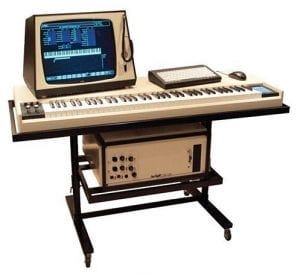
Just like “stealing” styles and motifs from visual artists or narrative techniques and tropes from another writer to “turn it into some modern-day art”, sampling music has been around much longer than we think: from the early 20th-century jazz musicians quoting licks and melodies as a sign of admiration, to the centuries-old folk music traditions in which melodies and lyrics were seen as belonging to the tribe. The difference with today’s capitalism-based understanding of art could not be clearer: within the tribe, the collective voice is placed above individual creativity, because it is assumed that everyone has the right to contribute to and help shape collective creativity.
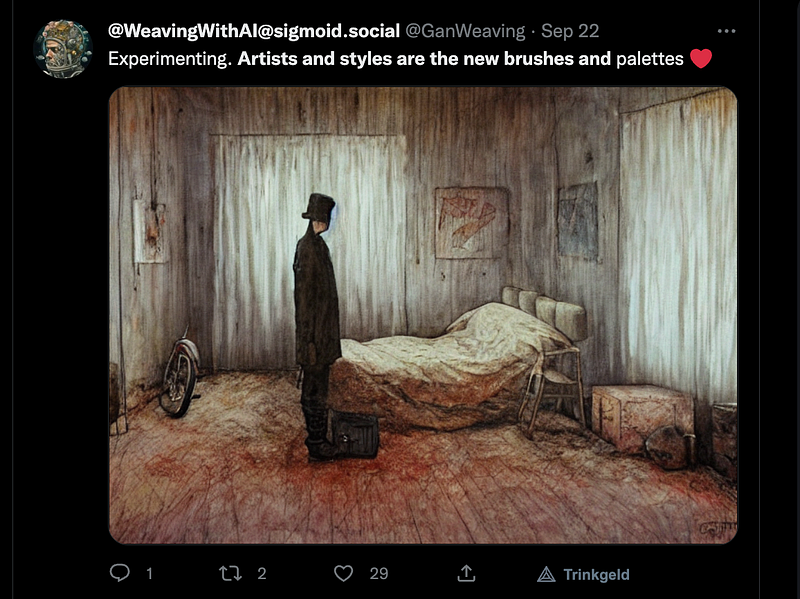
It can be argued that AI artists, using “artists and styles” as “the new brushes and palettes”, are adding their own touch to collective creativity by sampling and remixing. With their creations, they take advantage of the same principle of collective ownership that has been applied to music and all other forms of artistic expression for centuries. They are aiming to create something new and unique while paying homage to those who came before them because their work is “so dope, that I want to sample it”.
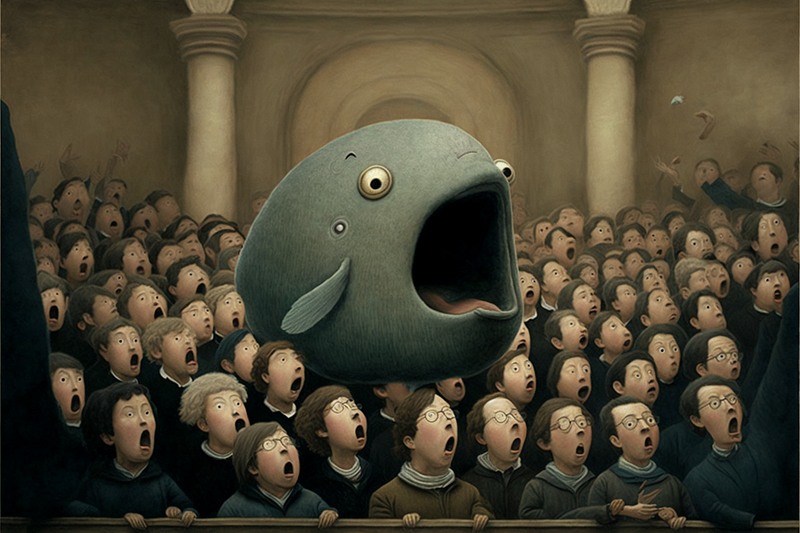
The Creative Choir: AI, Co-Creation & Second Orality
And just as sampling could only become a problem in the context of Western copyright law because it posed a threat to the status quo of the capitalist value chain, AI art is raising fears within the “art system” because the advance of AI will inevitably undermine notions of copyright, exclusive ownership, and creative possession. “Plagiarus! Damn Kidnappers!” some may exclaim in horror when realizing the transformations that lie ahead for our capitalist-based understanding of art.
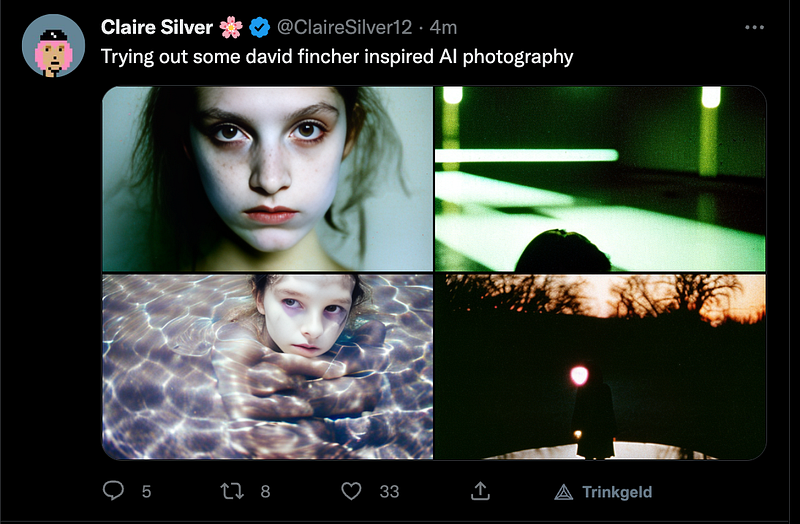
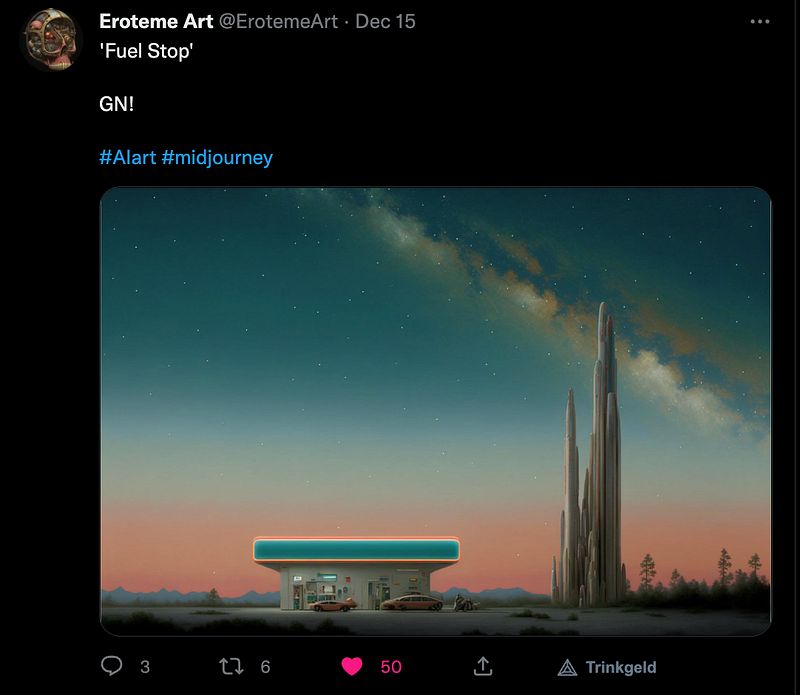
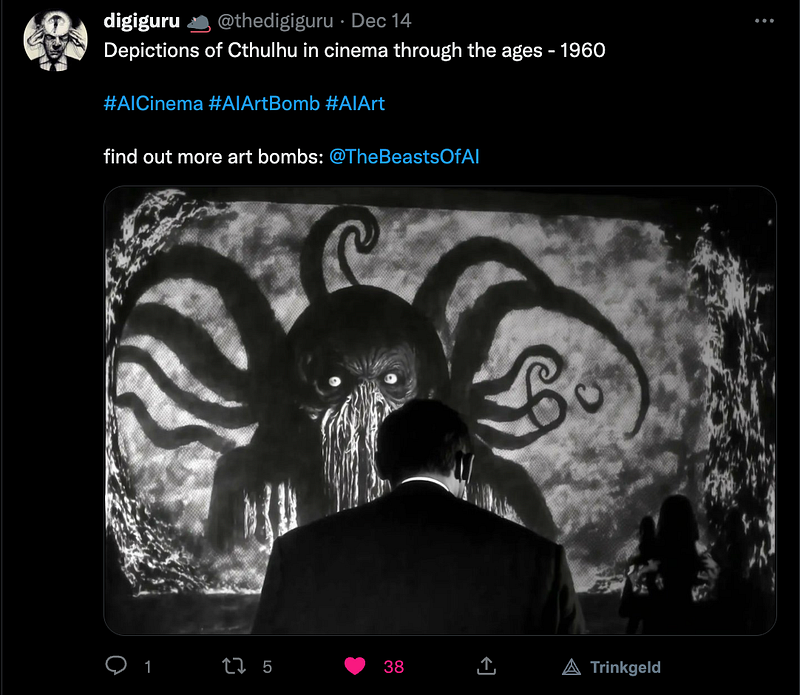
AI artists are not only using “artists and styles as the new brushes and palettes,” but are also experimenting with the idea of collaborative creation: creating art together with other humans, and machines. On Discord servers, where people literally create art together by exchanging image prompts and teaching each other prompt techniques, we might actually be witnessing a groundbreaking experiment for new and unprecedented forms of co-creation. At this exciting intersection of human creativity, digital communication, and cognitive tools, AI art has the potential to revolutionize the creative process in a profound way and give everyone a chance to have a voice that contributes to collective creativity. Note the interesting similarity to what Walter J. Ong called “secondary orality” in his “Orality and Literacy”:
[…] with telephone, radio, television and various kinds of sound tape, electronic technology has brought us into the age of ‘secondary orality’. This new orality has striking resemblances to the old in its participatory mystique, its fostering of a communal sense, its concentration on the present moment, and even its use of formulas […].
The Monetization of Art
Admittedly, we left one thing out: what about those who have to make a living from their art? Well, first of all, the talk of “having to make a living from art” is a myth. You make a living from consistently good work, no matter what profession you’re in. The challenge with monetizing art is that you have to be good at several things at once. In this regard, Mike Messenger posted an interview with Peter Mohrbacher that is worth reading:
“Does that [AI Art] mean you will be able to monetize when everyone can do the same thing equally? This highlights the many jobs required to become a prominent artist beyond just making a JPG. AI tools just make the barrier for entry lower. The job of an artist is complicated: creating a vision and direction, curating a portfolio, and building a brand of art. Those challenges remain.”
(from Mike Messenger’s “AI Artwork will change everything”)
In fact, I expect that especially those already in the creative industry and dedicated to mastering their craft will use AI to find new ways to express themselves, hone their skills, and build their brand. As the number of creative minds grows, the importance of experienced creative guides, provocateurs, and curators will increase, not decrease. It may really come down to looking at creativity more optimistically through the tribalist perspective of cooperative creation, rather than feeding the fear of AI by worrying about an economic system that has led us to think of art and creativity as a one-man show.
Disclaimer: This article proudly plagiarized works by the great Claire Silver, DigiGuru, Eroteme Art, and GanWeaving. Also, reading Michel Maffesoli’s “The Time of the Tribes” as a student significantly helped the author to find a line of thought on capitalism and plagiarism.
For more posts on AI Art and AI Cinema follow me on Twitter: https://twitter.com/tristwolff


