
AI is killing art… and it’s a good thing!
How AI spurs human creativity & why people are mad about it
With AI image generators such as Midjourney, DALL-E, and Stable Diffusion being the talk of the town for quite a while now, some media outlets recently settled on a captivating new story: AI tools are a threat to artists, if not even killing art itself! This narrative is sure to spark a lively debate, attracting plenty of attention, especially when distilled to its core fear of AI undermining a basic human trait — which freelance illustrator and concept artist Greg Rutkowski aptly summarized as “AI threatens human creativity”.
And if Greg was right, that would be a great thing! Here’s why:
The Terror of AI Art
After AI managed to master various games that humans had previously assumed were solely within their domain of expertise, it was believed that artificial intelligence was still a long way off from demonstrating any kind of creative output. So once chess and go had been conquered by AI, human creativity was the last bastion of competitive advantage — the one stronghold humans could rely on to maintain their superiority.
Well, in the early 2020s AI-generated images have become so sophisticated that they won art contests and have been sold at renowned auction houses, demonstrating the ability of AI-generated art to compete with human artworks.
For example, in 2020 an AI-generated portrait named “Edmond de Belamy” was sold at Christie’s for over $400,000, and a painting named “The Next Rembrandt” won a competition for the best portrait at the Dutch National Museum of Art. Interestingly the latter not only used deep learning algorithms to understand the style of Rembrandt’s artwork and create something entirely new but also incorporated a 3D printing process to create a physical painting.
As AI-generated art is on the rise and AI enthusiasts are claiming that their works are a legitimate form of creativity, Forbes magazine asks whether AI “can kill creativity and make us dumber” and Greg Rutkowski even sees AI art heading in a “direction that is terrifying.”
But why is that? What’s so terrifying? What exactly is threatened by this new generation of rapidly developing AI tech?
Is it the sheer speed at which the AI space is advancing? Every day brings a new model or workflow variation, showcasing the astounding power of artificial intelligence and its capability of producing results that would have taken weeks to generate in the past, as pointed out by Rutkowski:
“Right now it just takes five to ten minutes to create something that humans would only be able to create in two weeks.”
It is understandable for traditional artists, primarily from crafts that could be replaced by AI image generators, to feel angry and threatened by AI. From their perspective, it is reasonable to worry about their economic livelihood. But then is AI really a threat to human creativity? Because in this context, it seems to be more of a threat to the financial stability of illustrators and graphic designers. And this would mean we are no longer discussing human creativity but rather how to make money with art in general.
The Decline of the Genius
Some critics of AI claim that AI Art is a form of plagiarism and that this is the often-cited “threat to creativity” because it can lead to people relying on AI to produce artworks instead of learning and honing their own creative skills. But is that the case?
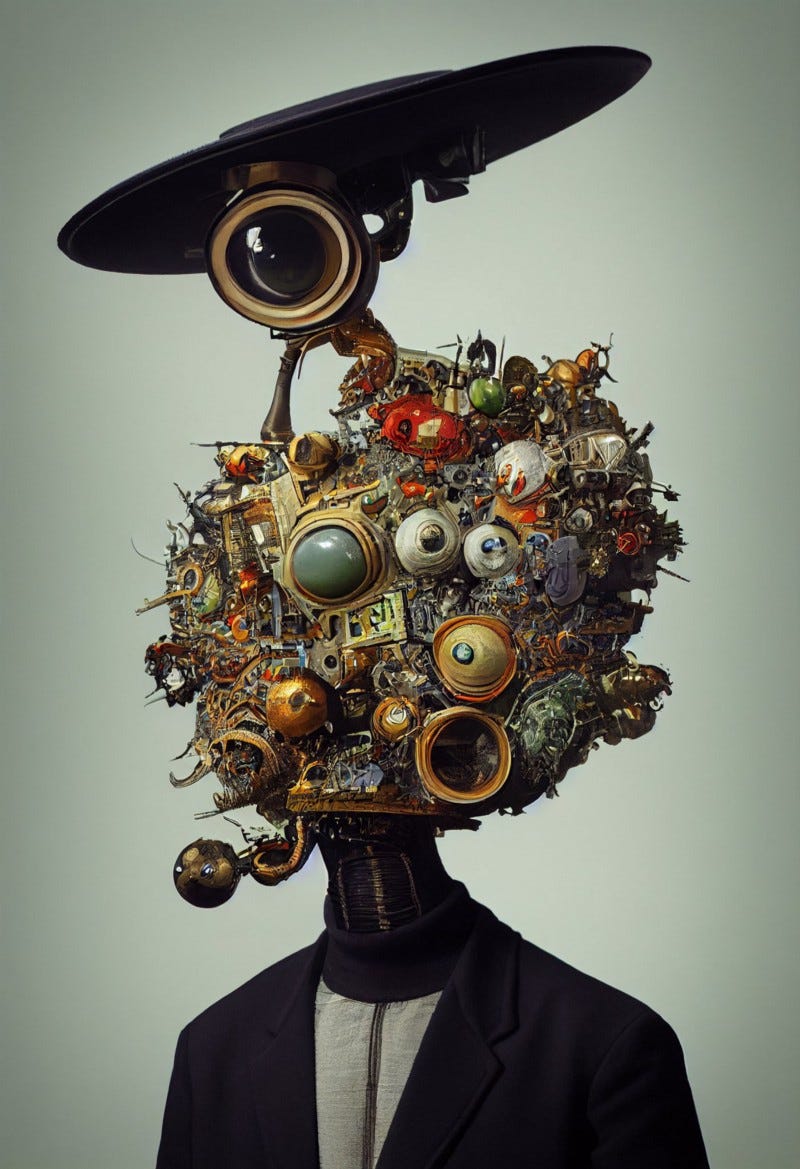
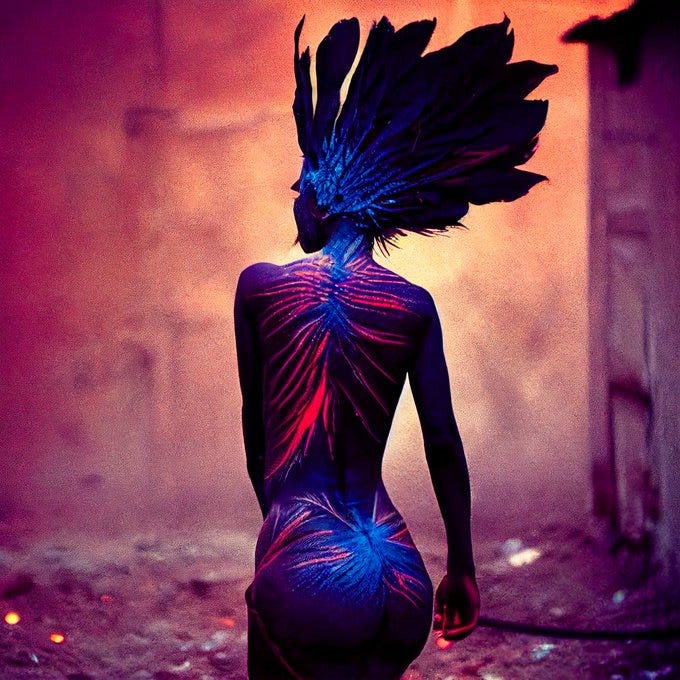
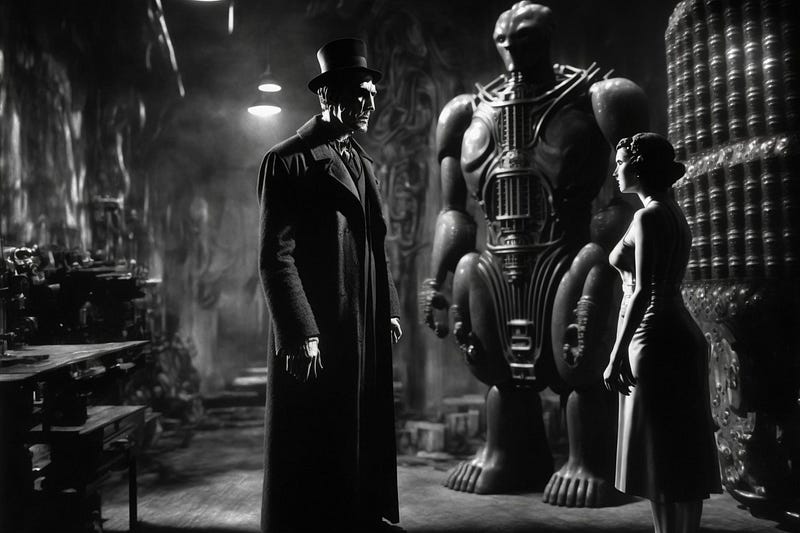
As Nettrice Gaskins pointed out, in many ways AI art is like sampling music. The technique of re-using sounds by recording existing pieces of music, chopping them up, and putting them back together, is an invention of the 1980s, the time when the digital sampler was invented. Similarly, AI artists use isolating, manipulating, and combining elements from other works to create entirely new creations. Just as a musician who can’t play the drums might take a snippet of a drum loop and use it to create a new track, an AI artist might take a piece of art and use it to create a new image: they might play with a certain style or theme, with cameras, lenses, composition, colors, styles … all this without having been to art school. In both cases, sampling music and exploring AI image generation, the creative process has the potential to be controversial: because what is at issue here and what’s causing all the fear and terror amongst AI critics is not potential plagiarism but the decline of the concept of the creative genius. It seems as if it’s not about art, it’s about pride.
In the 1980s and 1990s, the digital sampler caused a massive disruption by allowing a new form of music creation, as well as influencing lifestyles and cultural movements. This famously led to conflict, as some considered sampling to be plagiarism and even “against the law”. With this in mind, it is likely that the creative output of AI artists could spark similar cultural phenomena, this time erasing the outdated concept of “creative genius” and advocating equal opportunities for self-expression: with AI tools everyone can bring their creative ideas to life, even if they don’t have artistic drawing skills. Such a cultural movement would seek to create a future in which creativity is no longer an exclusive domain of the “creative genius”.
AI is killing creativity… and it’s a good thing!
AI does not jeopardize human creativity in terms of crafting physical art, such as painting, sculpturing, or making roses out of napkins. Rather, it undermines the notion that creativity is a mystical, superhuman ability to turn thoughts into artworks that speak to people. The emerging AI art movement seems to be challenging the idea that the human mind is an unmeasurable and mysterious entity, and that art is a sacred, spiritual expression of the human experience.
Ultimately, AI art could be forcing us to recognize art as an expressive game of meaning, similar to any other human expression. Artificial intelligence could then come up with moves that haven’t been seen before, thus encouraging humans to view the game from a different angle, take it to a whole new level and probably make it more exciting than ever before… that is a good thing, isn’t it?
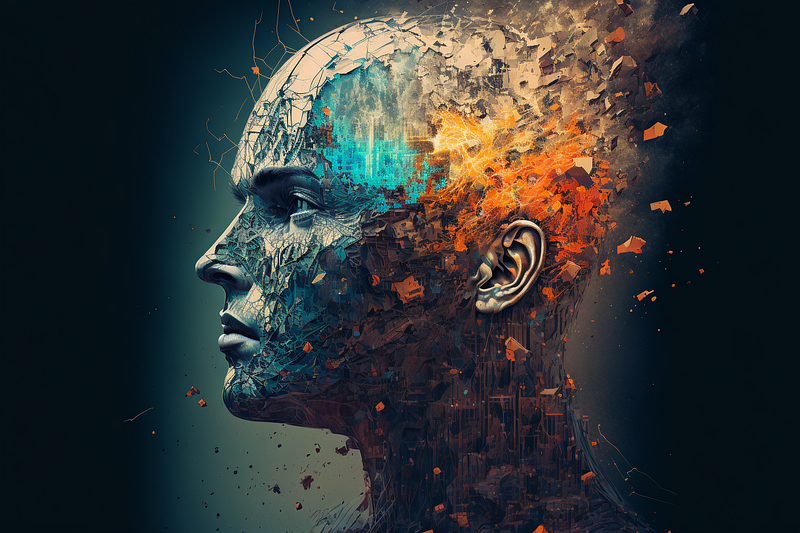
On a different note, if the history of human/AI symbiosis is something you’re interested in, I recommend watching “AlphaGo”: https://www.youtube.com/watch?v=WXuK6gekU1Y


