
The Magnificent Storytelling Formula To Create High Engaging Content
The from some of the best writers in the world and you don’t even realize you should use this.

Tolstoi, Shakespeare, Tolkien, Hemingway, Jk Rowling, Orwell and I could keep going on with this list,
but since your time is so important,
let’s go straight to business.
Aside from being writers,
do you know what all of those guys have in common with their writing?
-Storytelling
Storytelling is the art of telling something.
To create, develop and adapt stories using specific elements placing each one of them in the right spot of the narrative to tell the story in the right way.
Characters, conflicts, places, messages, failures, superation,
everything needs to be in the right place.
It needs to have a beginning, middle and end, to not get confuse, connects and send a message to the reader in an unforgettable way,
even on an emotional level.
Have you ever cried or felt completely mad when some character died in a specific way?
That’s the power of storytelling.
Please tell me in the comments, which scene makes you shivers or get triggered.
Me per example I still didn’t digest the “Viper and The Mountain fight” on Game or Thrones,
My brain and feelings freeze just from remembering it.
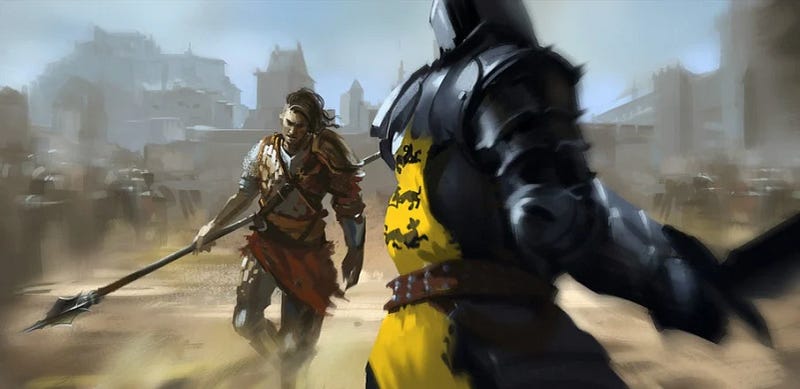
Writing Without Storytelling, is just pruducing a text.
It doesn’t matter if you are writing a novel or creating a marketing piece for a product,
Your campaign needs storytelling.
Of course if you are natural it will help,
but storytelling is a craft, and as any craft you can learn and practice to become a master.
You can have a narrative, but to transform it in a story which makes sense and people will love to read, you need a formula.
There are a few different formulas for storytelling, with some varying more some other less, but the base of most is pretty much the same,
It is What’s called The Hero’s Journey.
Basic Storytelling Formula
**Save this and use it.
A [Hero] faces a [Problem] and meets a [Mentor] who comes up with a [Plan], They get into [Action] to avoid [Failure] and achieve [Success].
You can use in any kind of writing, just change the parts between the brackets for your need.
Breakdown:
-A [Hero]
The Hero can be a person, an action, a product, it doesn’t matter, but the first step in creating a hero is to define who the hero is “saving”.
In marketing terms, discover who’s the ICP (Ideal Customer Persona) of that hero.
The easiest way to do this is by understanding what Pain Points the ICP has, what has value for them and what is their goal.
-Faces a [Problem]
The problem needs to impact daily life,
Most people don’t have time to worry about the future, they are so stuck in everyday life that it needs to have an immediate setback.
The hero needs to be unsatisfied with the struggles he is facing on his routine every day not worried because he might not retire.
-Meets a [Mentor]
The mentor is normally an experienced and trustworthy person, who connects with the values of the hero and consequently with the ICP values.
In most cases has a past that resonates with the hero in uncommon ways, and will share life gained knowledge with him.
-Who gives them a [Plan]
Being the mentor he has the ability to see the problem the hero is facing has a solution, and he will guide step-by-step while helping the hero see a solutions for them through the journey,
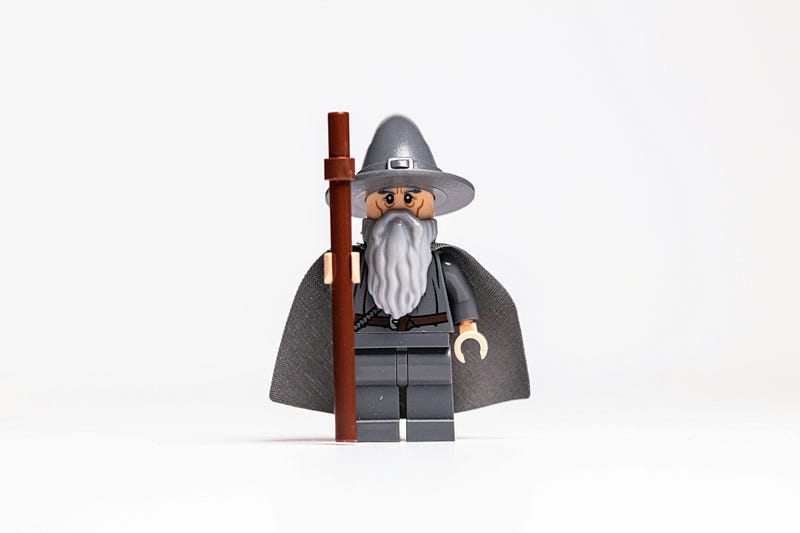
Sometimes the mentor goes up to final battle, normally he stops when the hero needs to face his destiny alone,
and in most cases for emotional and dramatic purposes he dies.
-The Hero is called to [Action]
The CTA (call to action) in maketing or in a story is responsible for making people act.
After they learned the lesson they needed from the mentor and need to face destiny alone,
Destiny will make them act,
It will force them to take action to face THE Challengeof his journey.
-Which helps them avoid [Failure]
In most narratives this is normally the point of where the hero hits rock bottom.
No mentor, no friends, no nothing, Just the need to overcome himself.
In this moment He understands that the lack of action will make him lose something, affect people he loves,
He will see the consequences of not doing it and how the problem will escalate.
And In most cases this is also the moment where “questioning/imposter síndrome” kicks in and he doubts himself.
-And Encounter [Success]
After overcoming the problem, the hero comes out of the journey as a new person.
What he learned comes as “moral of the story”,
If there is a sequence,
it will make people wonder how he will struggle with this new life,
If there is not,
“They lived happily after”.

I Know at first glance this might feels like only works for novels and narratives, but this can and should be used for any kind of piece,
if you have any doubts feel free to ask me in the comments, and don’t forget to tell me which scene makes your emotions trigger when watched, I love this kinds of writing.
I will probably write another article for story telling focused on product marketing only, but for today I don’t want to make this longer.
TLDR:
A [Hero] faces a [Problem] and meets a [Mentor] who comes up with a [Plan], They get into [Action] to avoid [Failure] and achieve [Success].
Change The words in the bracket and you have an instant story to work on.
_________________________________________________________________
Yo Folks, thanks for reading.
I’m Gaspar and write about healthy lifestyle, fitness, and marketing.
I can help you become Your fittest version and sell more.
If you would like to receive more content like this you can click the Follow button right there ↘️ to support my work!
–DGaspar.
See Ya!
Other Articles From Author You Might Like:


