
The Iconic Josephine Baker The First Black Woman to be Elevated to Pantheon in Paris
How even in death, much adoration and recognition showers her legacy
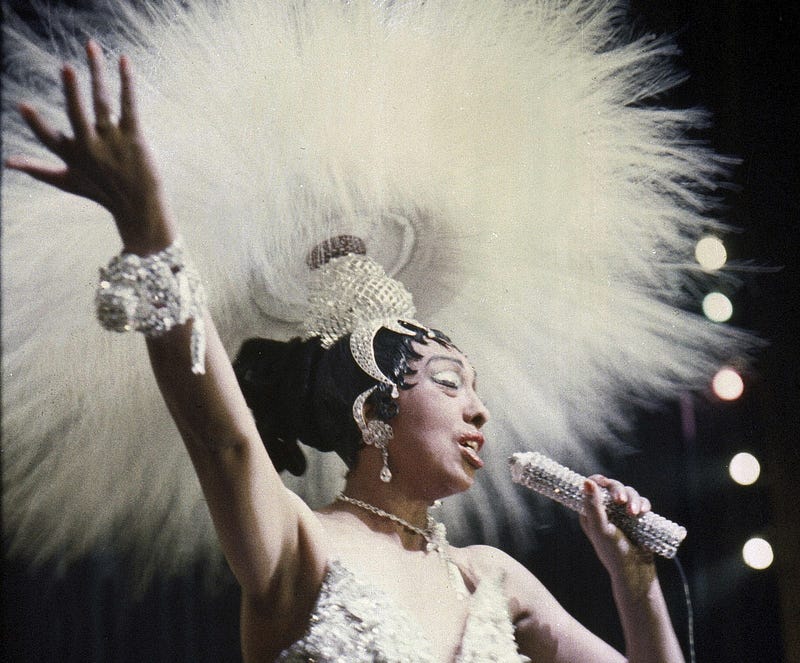
In recognition of the one and only renowned iconic Josephine Baker, may she truly rest in peace as she gets honors bestowed upon her, unheard of for a woman and an African American at that.
Josephine Baker will be always be remembered as an iconic performer who pushed the boundaries of art as she appeared on the Broadway stages and in Paris as she was a born singer-dancer who stood afar from the norm and made so many take note.
To escape America’s racism in the 1920s like so many other African American entertainers at that time moved to Paris, the one place many felt free to share their talent without racism staring them in the face.
She also pushed the boundaries of art and advocacy in Paris making history as a singer and dancer who helped France fight the Nazis. She fought racism and all the anti-isms that people of color were subjected to.
Josephine Baker, 1906- 1975, originally was from St. Louis and became a dancer during her teenage years, made her way to New York and sang and danced in Harlem theaters and Manhattan’s famous Plantation Club.
When the opportunity arose to sail to Europe to join a Paris cabaret show, she took it as her best chance to escape racism in America. She escaped the hatred against Blacks in the United States due to her terror of discrimination, which she felt could paralyze a person’s soul and body.
After arriving in Paris in 1925 at a Paris train station, a friendly white man assisted her off the train. According to the media, Josephine Baker communicated that, that was the first time she felt like a person and not as a color.
All around Paris, she danced and sang in scanty costumes, and became a French celebrity who danced in risque cabarets and her performance inspired Ernest Hemingway, Pablo Picasso, and other artists who sought to make Paris a symbol of culture and freedom after World War I.
Paris embraced her upon her arrival and now is embracing her on a level never dreamed of, receiving the rarest of rare French honors, enshrinement in the Pantheon in Paris, becoming the 81st person to be buried or enshrined in the 18th-century monument that honors the French ideals of liberty, equality, and fraternity.
She will be interned and memorialized with a cenotaph with soil from the many places that she traveled and lived. These honors are normally bestowed on men, Baker will be one of the six women, the first of color and the first America-born person to join the likes of Marie Curie, Victor Hugo, Emile Zola and, Voltaire.
The elevation of honors upon Josephine Baker was partly due to the healing powers of her art, her commitment to the French army and her fight against much racism around the world. also, France wrestled with reckoning with racial identity and their acknowledgment of the contributions of influential people of color.
As a French citizen, Josephine Baker joined the Resistance,charmed Nazis, and stole their secrets on the way to winning medals and admiration of the French people. Josephine Baker was born a rebel and died a rebel doing lots of good everywhere. She is known worldwide for her performance in “banana dance” and the “savage dance,” draped in feathers and even when promoting her shows, she’d stride down the Champs-Elysees in Paris with a pet cheetah, she broke sexual taboos having affairs with women and performed in Fidel Castro’s Cuba making a political statement.
She was the adopted mother of a dozen of children from around the world and they all lived in a utopian village that she built around her castle. Her financial crisis caused her to lose her castle and upon the invitation of Princess Grace, she moved into a villa in Monaco where she spent her final years, died, and was buried there.
America being her first home, she returned periodically to fight racism and America’s segregated laws, she canceled appearances in white-only venues and spoke at the side of Dr. Martin Luther King Jr. at the March on Washington, D.C., and was one of the two women who addressed the crowd on that historical day.
A petition started by a journalist who sought the support of one of Josephine Baker’s sons garnered 40,000 signatures within a month and the group was invited to a meeting at the Elysee Palace. During this meeting, all were informed that Josephine Baker would be joining the Pantheon and this announcement was officially validated by Macron in August.
She was even invited to the White House by President Kennedy, and she was honored to do so, as she was invited not as a colored woman or a Black woman but as a woman, Josephine Baker.
In conclusion, Josephine Baker conveyed her sentiments regarding racism in America. “ I have walked into the palaces of kings and queens and into the houses of presidents,” she said. “And much more. But I could not walk into a hotel in America and get a cup of coffee, and that made me mad.” “Like in a dream”.
May she rest in R.I.P being elevated to the Pantheon in Paris!! Long live Josephine Baker!!
For adadditionaleads:


