
Celebrating the Life and Times of Robert Moses, (86), a Towering Civil Rights Activist
How one trailblazer changed the landscape of America during the 1960’s fighting for civil rights, voting rights, and equal rights
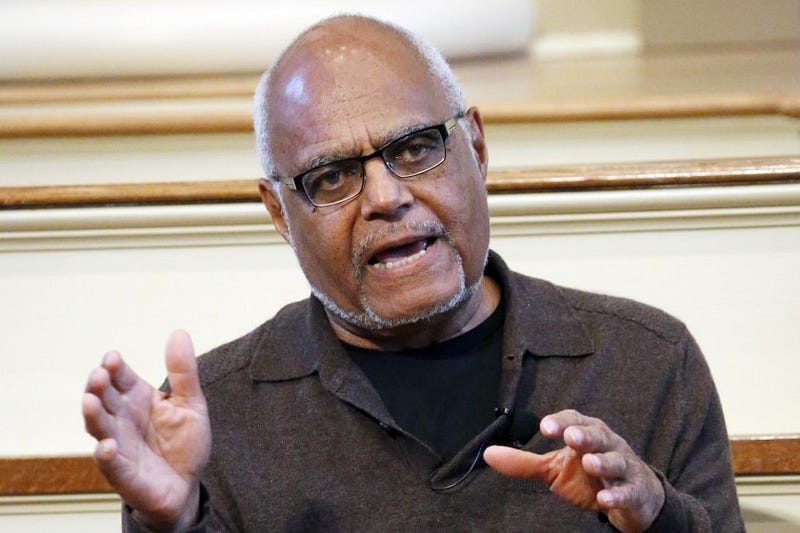
Mr. Robert Parris Moses, a soft-spoken giant, gave his life to the Civil Rights Movement as he put his life on the line having been shot at, beaten, and jailed for leading the struggle and the fight for voting rights and equal rights in the deep South in the face of much racism and jim crowism.
As the field director of the Student Nonviolent Coordinating Committee, he fought to breakdown segregation in Mississippi during the civil rights movement and was one of the forerunners of “Freedom Summer”, a time when hundreds of students went to the south to help register voters and worked along with Mrs. Fannie Lou Hamer, another champion of voting rights and equal rights for all African Americans.
Mr. Moses was a towering figure and a strategist at the core of the Civil Rights movement who charted a course to ensure that all people alike had equal rights and received equal justice over the course of his entire life. He traveled from the north to the deep South during the 1960s to check out the Civil Rights Movement for himself and sought out Dr. Martin Luther King Jr.’s Southern Christian Leadership Conference in Atlanta whose attention thereafter turned toward the SNCC. He became a young civil rights advocate to help African Americans to vote in Mississippi’s rural Amite County which is where he was beaten and arrested. After he filed charges against a white assailant who was acquitted by an all-white jury, the judge provided protection for Mr. Moses while he was escorted across the county line for his departure.
Mr. Moses, along with two other activists, James Travis and Randolph Blackwell in 1963, while driving in Greenwood, Mississippi, someone opened fire on them and 20-year-old Travis was hit as all became within inches of being killed. Even in the midst of constant danger, Mr. Moses always championed causes from registering African American voters, integration of Mississippi, and teaching math to students, nationally and internationally, the importance of math to their education.
He helped organized the Mississippi Freedom Democratic Party as they organized to attend the 1964 Democratic Convention to challenge the all-white Democratic delegation for the voting rights for all African Americans. President Lyndon B. Johnson was a major obstacle in the Mississippi Freedom Democratic Party attending the convention because he thought it would affect his re-election. However, the news media became the major outlet exposing the country to the Mississippi Freedom Democratic Party fight for voting rights and the pressure was on Johnson’s administration which eventually led to the passing of the voting rights act and years later the voting rights bill. When Mr. Moses saw a plight he forged ahead, the Vietnam War, led him to participate in the demonstrations against such a senseless war where many lost their lives at the hand of misjudgment by the current administration. His DNA comprised the struggle for humanity.
Mr. Moses was born in Harlem, New York on January 23, 1935 to William Henry Moses, a prominent Southern Baptist preacher. His family moved from the South to the North for a better life during the Great Migration. He attended Hamilton College in Clinton, New York where he became a Rhodes scholar and was influenced by the work of Albert Camus, a French philosopher, and took part in a Quaker-sponsored trip to Europe which affected his overall belief system before earning a master’s in philosophy at Harvard University.
Other credits to his legacy were a teacher in Tanzania, Africa, earned his doctorate in philosophy from Harvard, taught high school math in Cambridge, Massachusetts, and Jackson, Mississippi. Also, he founded the Algebra Project in 1982 with the aid of the MacArthur Fellowship. One of the high points of the Algebra Project was to help poor students to excel in math.
In conclusion, Mr. Moses leaves a legacy that cements his life and works into the fabric of American History and should be recognized in history books, libraries, and any social or news media that champions the many who have paved the way for others in society. This is what making America greater and better is truly all about. R.I. P. Mr. Moses for you fought a good fight.
For additional reads:


