
The Red Summer, the Biggest Kept Secret in America’s History
How in 1919 there were countless riots across the United States, north and south, where white mobs lynched, burned and murdered blacks
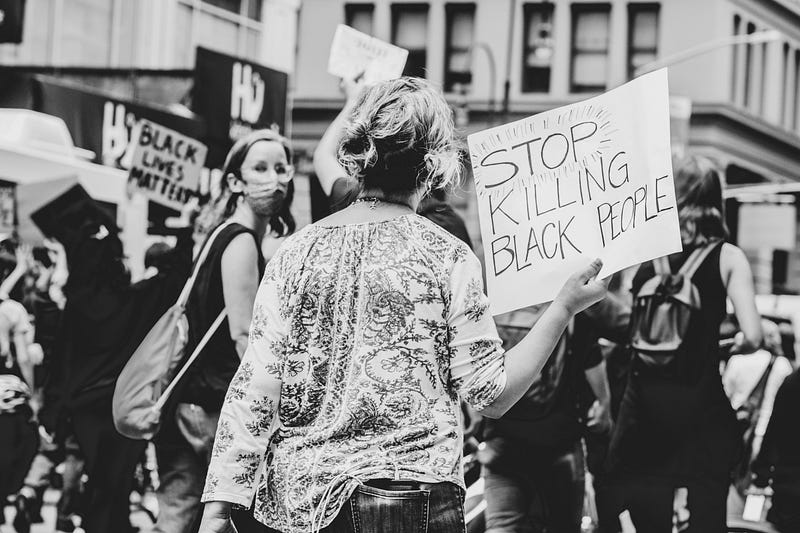
America has a history stepped in suppressing cultures over cultures at the hand of the white culture. Starting with the Native Americans whose land was stolen right from under their noses. Also, African Americans were sold into slavery and forced into servitude, denied equal rights, civil rights and human rights. The Native Americans were renegaded to reservations on a record scale. Other cultures like, Mexicans, Jewish, Irish, and Italians faced similar plights at the hands of European whites who migrated to America in search of a new land and found the Native Americans whom they attempted to remove from the history of America.
So much racist history at the hands of white mobs has been swept under the carpet and the carpet is now busting open for the world to see the reality of what America has done, is doing and trying to do, i.e. suppressing voting rights for people of color and young people around the United States.
Like the Tulsa, Oklahoma riot of 1921, the Red Summer, a period late winter and early autumn of 1919, white supremacist terrorism and racial riots took place in more than three dozen cites across the United States. Red Summer was coined by James Weldon Johnson, an author, civil rights activist, field secretary of the National Association for the Advancement of Colored People (NAACP) since 1916 and he organized peaceful protests against the racial violence that occurred during that summer.
The Red Summer consisted of white-on-black violence. The Blacks fought back during these race riots, most notable was in Chicago and Washington D.C. which resulted in 38 hangings and 15 deaths, respectively. The highest numbers of fatalities occurred in the rural area around Elaine, Arkansas that estimated that 100–240 black people and five white people were killed, an event known today as the Elaine Massacre. There was extensive property damage in Chicago.
The origin of these anti-black riots begun with post-World War I social tensions stemmed from the demobilization of both black and white members of the United States Armed Forces following World War I, an economic slump, and a competitive job and housing market between European Americans and African Americans. Labor unrest created white resentment as the black people were used as strikebreakers for certain industrialists. Thereafter came the Great Migration of African American across the country for betterment, jobs and to escape white on black killings. Industrial cites throughout the Northeast and Midwest had labor shortage and laborers were recruited from the south, where there was a mass exodus of black workers.
By 1919, 500,000 African Americas had migrated to the industrial cites in the Northeast and Midwest as they were called the first wave of the Great Migration that continued until 1940. Black workers filled new positions in expanding industries, i.e. railroads, positions formerly held by whites. Also, in other cites they held jobs as strikebreakers, especially during the strikes of 1917. Well, as you can imagined the whites, immigrants and first-generation Americans resentment increased, one because they were black and two because they replaced them in their jobs they chose to either give up or not show up.
As you can imagine the tension build against the blacks who were just doing their new jobs. By the summer of 1917, violent racial riots against blacks due to labor tensions broke out in East St. Louis, Illinois and Houston, Texas. Adding fuel to an already out of control fire against the blacks, after the war the veterans felt displaced in the job market, and unemployment and inflation increased competition for jobs.
In the autumn of 1919, 38 separate riots against blacks across many scattered cites, this riot was different than past time because for the first time black people in number resisted white attacks and fought back. A. Philip Randolph, a civil rights activist and leader of the Brotherhood of Sleeping Car Porters, publicly defended the right of black people to defend themselves.
Between January 1 and September 14, 1919, white mobs lynched at least 43 African Americans, some were hanged, shot and others burned at stake. The states sat back on their laurels, allowed these atrocities to occur and no prosecution was no where near their mental radar.
When you are not part of the solution, then you are part of the problem.
In the wake of this white mob mentality, killing blacks because they were black, W.E.B. Du Boise publish his essay:
“Returning Soldiers”
We return from the slavery of uniform which the world’s madness demanded us to don to the freedom of civil garb. We stand again to look America squarely in the face and call a spade a spade. We sing: This country of ours, despite all its better souls have done and dreamed, is yet a shameful land.… We return. We return from fighting. We return fighting.
- April 13: Georgia, the riot of Jenkins County led to 6 deaths, as well as the destruction of various property by arson, including the Carswell Grove Baptist Church, and 3 black Masonic lodges in Millen, Georgia.
- May 10: The Charleston riot resulted in the injury of 5 white and 18 black men, along with the death of 3 others: Isaac Doctor, William Brown, and James Talbot, all black. Following the riot, the city of Charleston, South Carolina imposed marital law. A Naval investigation found that four U.S. sailors and one civilian — all white men — initiated the riot.
- Early July: Longview, Texas, a white race riot led to the deaths of at least 4 men and destroyed the African-American housing district in the town.
- July 3: Bisbee, Arizona, the local police attacked the 10th U.S. Cavalry, an African-American unit known as the “Buffalo Soldiers,” formed in 1866.
- July 14: Garfield Park, Indianapolis, The Garfield Park riot took place in where multiple people, including a 7-year-old girl, were wounded when gunfire broke out.
- July 19- 23: Washington and Norfolk, four days of mob violence against black individuals and businesses perpetrated by white men — some were militia men and in uniforms of all three services — in response to the rumored arrest of a black man for rape of a white woman. The white men rioted, randomly beat black people on the street, and pulled others off streetcars for attacks. Again, the police looked the other way, so the blacks were left with no choice but to fight back. The city closed saloons and theaters to discourage assemblies. To fan the fire more, four white-owned local papers, including the Washington Post wrote headlines that instigated more violence against the blacks, calling in at least one instance for a mobilization of a “clean-up” operation. After four days of police inaction, President Woodrow Wilson mobilized the National Guard to restore order. After the violence stopped, a total of 15 people had died: 10 white people, including two police officers; and 5 black people. Fifty people were seriously wounded, while another 100 less severely wounded. It would be one of the few times in 20th-century white-on-black riots that white fatalities outnumbered those of black people.
The NAACP sent a telegram of protest to President Woodrow Wilson: “The shame put upon the country by the mobs, including United States soldiers, sailors, and marines, which have assaulted innocent and unoffending negroes in the national capital. Men in uniform have attacked negroes on the streets and pulled them from streetcars to beat them. Crowds are reported …to have directed attacks against any passing negro.… The effect of such riots in the national capital upon race antagonism will be to increase bitterness and danger of outbreaks elsewhere. National Association for the Advancement of Colored People calls upon you as President and Commander in Chief of the Armed Forces of the nation to make statement condemning mob violence and to enforce such military law as situation demands.…”
July 21: Norfolk, Virginia, a white mob attacked a homecoming celebration for African-American veterans of World War I. At least 6 people were shot, and the local police called in the Marines and Navy to restore order.
July 27 — August 12, the Chicago race Riots was the worse massacre of Red Summer during a time when the Chicago’s beaches along Lake Michigan were segregated and a black youth, Eugene Williams, swam into an area on the South Side customarily for whites, he was stoned and drowned. The Chicago police refused to take action against the attackers, thus young black men responded with violence that lasted for 13 days, with the white mobs led by the ethnic Irish. These white mobs destroyed hundreds of mostly black homes and businesses on the South Side of Chicago. Illinois called in the military, 7 regiments: several thousand men, to restore order in the midst of 38 fatalities, (23 blacks and 15 whites); 527 injured; and 1,000 black families left homeless.
With all the bloodshed on the hands of these white mobs, August 12, the Northeastern Federation of Colored Women’s Clubs (NFCWC) at their annual convention denounced the rioting and burning of negroes’ homes, asking President Wilson “to use every means within your power to stop the rioting in Chicago and the propaganda used to incite such.”
By the end of August, the NAACP protested again to the White House, noting the attack on the organization’s secretary in Austin, Texas the previous week. Their telegram read: “The National Association for the Advancement of Colored People respectfully enquires how long the Federal Government under your administration intends to tolerate anarchy in the United States?”
August 30–31, the Knoxville Riot in Tennessee broke out after the arrest of a black suspect on suspicion of murdering a white woman. A lynch mob stormed the county jail, where they liberated 16 white prisoners, including suspected murderers. The mob attacked the African American business district, where they fought against the district’s black business owners, leaving at least 7 dead and wounding more than 20 people.
September 28–29, the Omaha, Nebraska race riot erupted after a mob of over 10,000 whites from South Omaha attacked and burned the county courthouse to force the release of a black prisoner accused of raping a white woman. The mob lynched the suspect, Will Brown, burned his body, the mob attacked black neighborhoods and stores on the north side, destroying property valued at more than a million dollars. Note, when the mayor and governor appealed for help, the federal government sent U.S. Army troops, but when the blacks appealed to the government and president their words fell on deaf ears.
September 30- November, Arkansas, the Elaine massacre and Wilmington broke out against blacks in Elaine, Phillips County, Arkansas. This event erupted from the resistance of the white minority against the organization of labor by black sharecroppers. Planters opposed such efforts to organize and thus tried to disrupt their meetings in the local chapter of the Progressive Farmers and Household Union of America. In a confrontation, a white man was fatally shot and another wounded. The planters formed a militia to arrest the African American farmers, and hundreds of whites came from the region. They acted as a mob, attacking black people over two days at random. During the riot, the mob killed an estimated 100 to 237 black people, while 5 whites also died in the violence. These African American Sharecroppers Union was accused by the white political forces of banning together to kill white people, even in the midst of agents from the Justice Department’s Bureau of Investigation’s conclusion that the claims of a conspiracy by the blacks lacked merit.
Regardless, the local government, all white juries, tried and convicted 79 blacks and 12 were sentenced to death for murder. As Arkansas and other southern states had disenfranchised most black people at the turn of the 20th century, they could not vote, run for political office, or serve on juries. The remainder of the defendants were sentenced to prison terms of up to 21 years. Appeals of the convictions of 6 of the defendants went to the U.S. Supreme Court, which reversed the verdicts due to failure of the court to provide due process.
November 13, Wilmington, Delaware, the Wilmington race riot was a violent riot between white and black residents.
September 1919, The African Blood Brotherhood formed in response to the Red Sumer and was formed in the northern cities to serve as an armed resistance movement as they protested and appealed to the federal government for weeks. The National Equal Rights League appealed to President Wilson’s international advocacy for human rights: “We appeal to you to have your country undertake for its racial minority that which you forced Poland and Austria to undertake for their racial minorities.”
During this time, lynchings were on the rise, newspapers were covering even as President Wilson addressed all in his 1918 speech: from 1889–1918, 3000+ people were lynched; 2,472 were black men, and 50 were black women.
The states were unwilling to put a stop to these massacres, lynchings, and shootings, and seldom was anyone prosecuted for it. Lynchings were happening in the northern and southern states. All these states were not intervening to stop these atrocities, therefore some black leaders and church pastors and bishops pleaded to the black people to shun violence in favor of “patience” and “moral persuasion.”
In conclusion, the Red Summer is apart of America’s ugly history but needs to be told and inclusive in history textbooks. This is why Race Theory is a threat to many for being taught in schools and colleges as they fight to deny the truth of what has happened at the hands of the government and law enforcement. The young and old, and all ethnicities need to learn the truth about America and look at where we are today and as history threatens to repeat itself again at the hands of the white supremacy residing in the White House and political offices throughout the United Divided States. Voting power by any means necessary is the key. Vote to keep the steal at bay!
For additional reads:


