
The Gong Show and Other 70s Game Shows — I Have Questions (Part 1)
Was ‘Whoopee’ really a word?
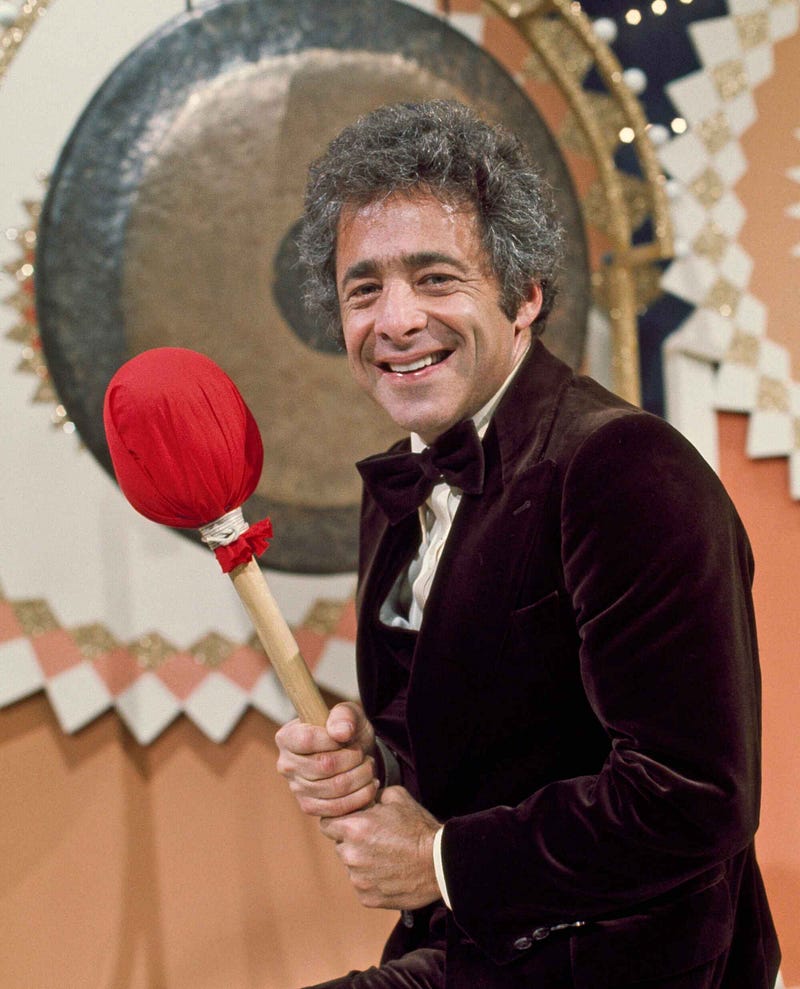
So few TV channels, so much time
The 1970s brought us many things in the entertainment category, which is no surprise. Remember: there was no 24/7 cable, digital streaming services, downloads and watching whatever, whenever on demand was unimaginable. Yes, it’s true: YouTube was non-existent and cat videos hadn’t made their debuts. As a result, we were awfully darn bored back in the day, and took what we were given in the form of TV shows. Let’s say we were a captive audience with lots of time to spare and nowhere to go. It was a prime era for TV programming of any type. Quality took a backseat to quantity during this time with the former in very short supply.
A popular category that lasted throughout the decade was game shows. I’m not sure why, but it really does seem that the years between 1970 and 1980 were the “golden age” of this type of programming. Of course, 1950s-era game show scandals left a mark in the minds of those who witnessed them, but it’s safe to say that the shows in this genre that appeared 20-plus years later were less controversial.
That doesn’t however, mean that the 1970s brand of game show was perfect. If anything they were just the opposite. Certainly there were the common expected elements: live studio audiences, slick hosts and screaming contestants but in a few cases, thats where it ended. If these were the only factors that needed to be considered in a review of the decade’s programming, we’d be okay. Unfortunately, they aren’t. Those of us who had no choice (literally, because there were only a few TV channels and no cable) but to watch these shows remain affected to this day. In some cases we battle with confusion; in others, we cringe at the recollections of particular episodes that stick out in our minds. Still others — myself included — continue to have questions about so many bizarre and ridiculous attributes that were commonplace on these game shows that we finally have to ask the questions in search of, hopefully, answers.
To this point, I have questions. I bet you do, too. Let’s begin.
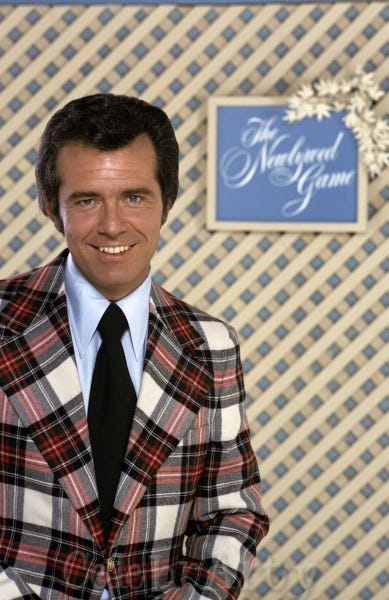
The Newlywed Game
Created by Chuck Barris (more on him later), the show debuted in the mid-60s, but it’s really in the groovy era of shag carpets and avocado-coloured fridges that this show took off.
The premise of the show was simple:
Have one person from each couple leave the room. Ask the remaining partner a series of newlywed questions from this list and write down their answers. Once the questions have recorded, invite the other partner back into the room. (From Wikipedia).
Pretty straightforward, right?
Perhaps that was the key to its success as well as its cringe-factor. To say that the responses provided by the contestants were an embarrassment is an understatement.
The “Cringe Factor” thread that connected these shows was part of what made them so popular.
How well did they really know each other? Judging by their answers, not very well. Were the marriages blind dates that moved much too quickly or shotgun situations where both parties were “coerced” into holy matrimony? The responses provided by these couples were, on a good day, hilarious; on a bad day, well… the word “embarrassing” doesn’t do them justice.
Making Whoopee — As a kid, I didn’t know what this meant but had a vague idea that it was something that married people did. The phrase was funny — it made me think of whoopee cushions, which were hilarious. The subsequent red-faced, stuttering answers were definitely a clue to what the phrase was alluding to, and the often mega-embarrassing answers revealed the intimate details of newly-married couples to the world. The question is — why? Why go on national TV to spill your secrets, dirty laundry and more, all for some cheaply-made furniture or Samsonite luggage? Were the 70s so boring that even those who had promised to love and cherish each other forever would sacrifice what should have been a sacred relationship in the name of fame, but not fortune?
Why go on national TV to spill your secrets, dirty laundry and more, all for some cheaply-made furniture or Samsonite luggage?
The Host, Bob Eubanks — The eternally slick and smarmy host of this show just added to its “ick” factor. With a perpetually cheesy smile and hair-sprayed locks a la evangelical TV preacher, the man seemed to revel just a bit too much in the embarrassment and downright humiliation of his guests. Don’t believe me? Watch this:
And speaking of “making ‘whoopie’”…
Humiliation and marital discord was good for ratings.
Who Wrote the Questions? If you’ve watched even one of these shows, you know that there are some questions that are a bit…out there. It’s almost as if the writers and producers on the show were getting their kicks crafting questions that were guaranteed to:
a) Get mega laughs at the expense and humiliation of the contestants b) Cause marital discord and possibly divorce as a result of the responses c) Show the contestants to have less than average intelligence or, d) All of the above
In the viewers’ estimation, it’s safe to say that the likely truth was “d” because humiliation and marital discord was good for ratings. Take a look here for some examples:
Many of us continue to have questions about so many bizarre and ridiculous attributes that were commonplace on these game shows.
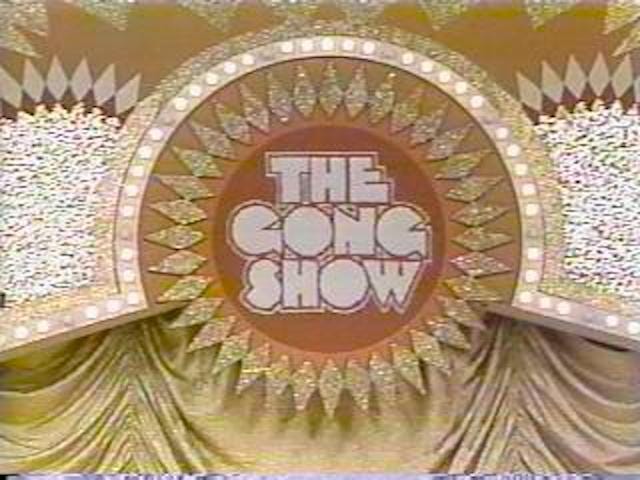
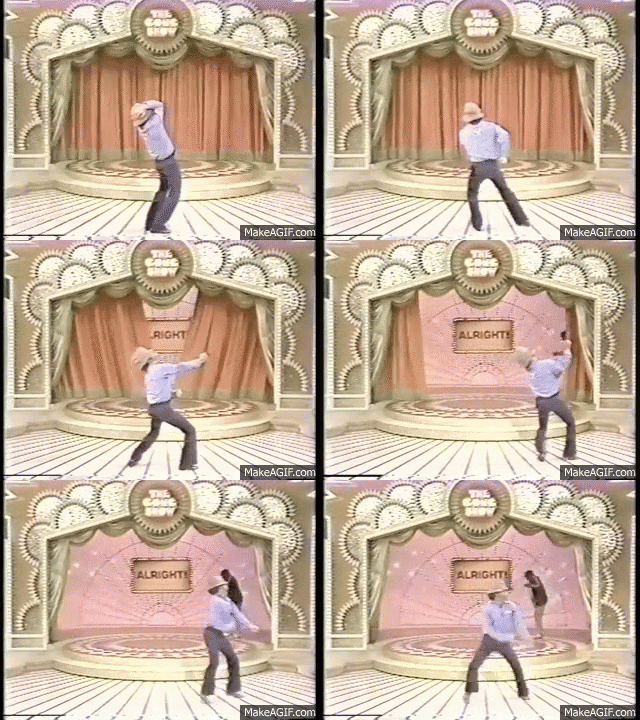
The Gong Show
Chuck Barris, the creator of The Newlywed Game, can also be blamed for a show that lives in the minds and nightmares of Gen-Xers everywhere. Really bad stand-up comedy, off-tune “singing” and one-too-many hackneyed versions of the smarmy 70s hit song “Feelings” were staples of the show.
Long before American Idol and America’s Got Talent, there was a more pedestrian and stripped down version of the old talent show. Yes, those of us who grew up in the 70s were regaled with very ambitious but equally untalented folks who really thought they were that good. But they weren’t, as evidenced by the “gong” sound that reverberated after the three judges mercifully put us out of our misery.
The Gong Show’s cringeworthy acts preceded American Idol’s popular audition shows by decades.
The Gong Show’s premise was simple: stripped down to its core, it was a good old-fashioned talent show. The problem was however, that there was a dearth of the key element: talent. Entertainment was the focus, so in this respect, the show delivered. It was funny in a painful kind of way, when the desperately untalented got up there and performed, only to be “gonged” before ending their set.
The Gong Show was at once silly, painful, cringeworthy, risqué and engaging — quite the feat for a show that was short on talent and long on cheese. But still, there are lingering questions that many of us viewers had while watching this showcase of the untalented.
The Gong Show’s premise was simple: at its core, it was a good old-fashioned talent show. The problem was however, that there was a dearth of the key element: talent.
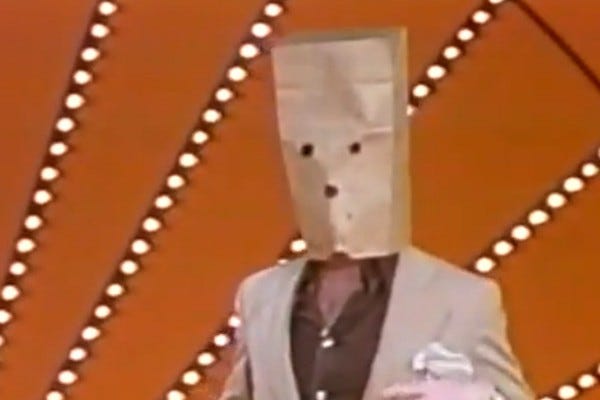
Who wrote the jokes for “The Unknown Comic?” This staple of the program was instantly recognizable by his badly-fitting suit and the brown paper bag that adorned his head at every appearance. That’s right — he never showed his face. Perhaps this was the result of knowing that his jokes were just not funny, despite his — or the Gong Show’s producers — attempts to make them appear that way. The paper-bag-on-the-head routine could never distract us from the fact that this “act” was silly at the best of times and cringeworthy and painful at the worst.
Feelings…whoa, whoa, whoa, feelings If you grew up in the 70s, you probably know every word to the mega-popular song of the era, “Feelings.” Originally sung by Morris Albert, the tune captured the spirit of the decade in all its schmaltzy glory. You must remember, of course, that this was the decade that spawned hits such as “If” by Bread, and “Seasons in the Sun” by Terry Jacks. The bar was set high (or low, depending on your perspective) in terms of which singer or band could out-schmaltz the other and by most accounts, Morris Albert’s 70s dirge was definitely at the top of the list. If you’re not familiar with this staple from the decade, here is the original version:
It almost became an expectation that with each show, the song would be covered — badly. Almost always, the contestant would get the gong, resulting in dreams of superstardom all but vanished in an instant. There was even a full episode where every contestant sang the song — with most of them getting the gong.
It almost became an expectation that with each show, the song “Feelings” would be covered — badly.
Fun Fact — So popular was the expectation that a contestant would belt out “Feelings” on the show that mega-comedienne Carol Burnett jumped on the bandwagon. Her popular character, “Eunice” that was a regular staple on her eponymous 70s hit show, competed on the Gong Show singing the overdone song. Had “Feelings” and the show jumped the shark at this point? Who knows. Check out the clip here.
The Dating Game
And here’s yet another 1970s Chuck Barris production. Thanks, Chuck.
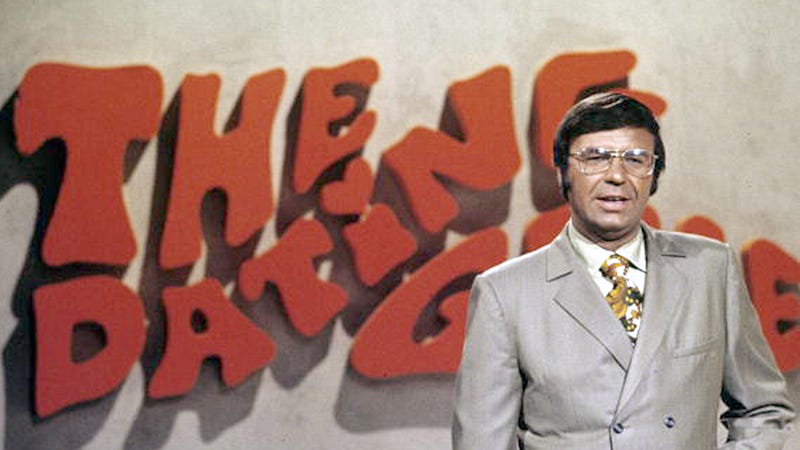
Yes, the game show production king via The Newlywed Game and The Gong Show wasn’t finished with the embarrassment yet. No — though it started in the 60s, The Dating Game really hit its stride in conjunction with the aforementioned staples of the decade, at once creating a trifecta of humiliation and entertainment.
Though it started in the 60s, The Dating Game really hit its stride in conjunction with the aforementioned staples of the decade, at once creating a trifecta of humiliation and entertainment.
The Dating Game’s premise was simple: a lonely soul, looking for love in all the wrong places, appears on a soundstage at ABC Studios, ready for whatever awaited them. Inclusive as it was for its time, the program equally accepted both male and female lonely hearts who were hopeful for the option of partners that they would choose from. Here’s the catch, however: they’d never see the person that they’d ultimately choose, instead determining the best match by the answers to questions that were provided. The three potential suitors would sit behind a dividing wall provided their answers sight unseen. A recipe for disaster? Sometimes. Entertaining TV? Always.
The Dating Game really hit its stride in conjunction with the aforementioned staples of the decade, at once creating a trifecta of shock, humiliation and entertainment.
Some questions about this show include:
Who was vetting the contestants? Whoever it was did a really bad job While it was entertaining to see your “average Joe” and “hopeful Jane” looking for love in front of a live studio audience, there were some sketchy and, in some cases, downright scary characters who participated on the show. Case in point: Rodney Alcala, aka “The Dating Game Killer.” I won’t go into all of the gory details — you can read about them here — but suffice it to say that he was NOT the “Mr. Right” that so many of the contestants were looking for. Loneliness is one thing, and wanting companionship is normal. Going on a date at the expense of your life? It ain’t worth it.
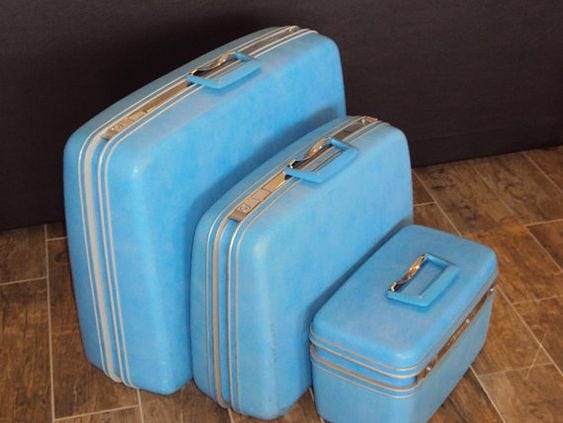
And the grand prize is….a chaperoned date! Sure, they were full-grown adults on a quest to find love and perhaps, lust on this fun-loving game show. After all: showing up, asking or answering questions (sometimes embarrassing ones) and revealing all to the world would be worth that luxury vacation (with Samsonite luggage in tow — see image below). Who knows what may have happened if the winners were allowed to go alone and let nature take its course? The answer? No one. That’s because these adult winners had to be watched, lest they indulge in oh, whatever adults indulge in when alone (maybe “whoopee?”). Whose idea was the chaperone, anyway? Surely not Chuck Barris’
Did Chuck Barris’ claim of being a CIA agent have anything to do with the format of the show? Most would agree that ones’ life experiences certainly affect the choices and decisions made. That being the case, is it safe then, to assume that Chuck Barris’ creations — The Dating Game, The Newlywed Game and The Gong Show (to name a few) are a direct result of his secret life? If you’re not sure of what I’m alluding to, all you have to do is read up on the producer’s memoir: Confessions of a Dangerous Mind: An Unauthorized Biography. In the book, Barris claims to have been a covert CIA agent, going undercover in the 1960s to infiltrate the Civil Rights movement and to assassinate enemies of America.
Weird, right?
While the CIA and others have disputed his claims, he stuck to his story to his dying day. Considering the bizarre nature of his television creations and his equally strange personal life, would it be really that hard to believe yet another unconventional fact about this person? Assuming he was a CIA agent one can definitely then understand his “outside of the box” thinking which manifested itself in TV programming that didn’t fit the norms of its time. He succeeded in more ways than one because look: we’re talking about him and his shows decades later.
Fun fact: An impressive roster of celebrity guests graced the Dating Game soundstage before they were famous. These contestants included Farrah Fawcett, Michael Jackson and Prince. Unbelievable, isn’t it? Check out the clip below starring Arnold Schwarzenegger on the show before he became über famous. For an exhaustive (and pretty unbelievable) list of Dating Game appearances by regular Joes and Janes before superstardom, check out the list here.
Arnold Schwarzenegger on the Dating Game, 1973
As you can see, there are many lingering questions that have resulted from the game shows that were on every TV screen in the 1970s. I’ve just asked some of the questions, but there are so many more to investigate. To this end, there are way too many game shows from the years between 1970 through 1980 to stop at these three gems. Stay tuned for “70s Game Shows — I Have Questions — Part 2,” coming soon.
If you haven’t already, check out the first few articles of the “I Have Questions” series on FanFare here: