
The Flying Nun and Other 60’s Shows: I Have Questions
The laws of aerodynamics were missing in Puerto Rico
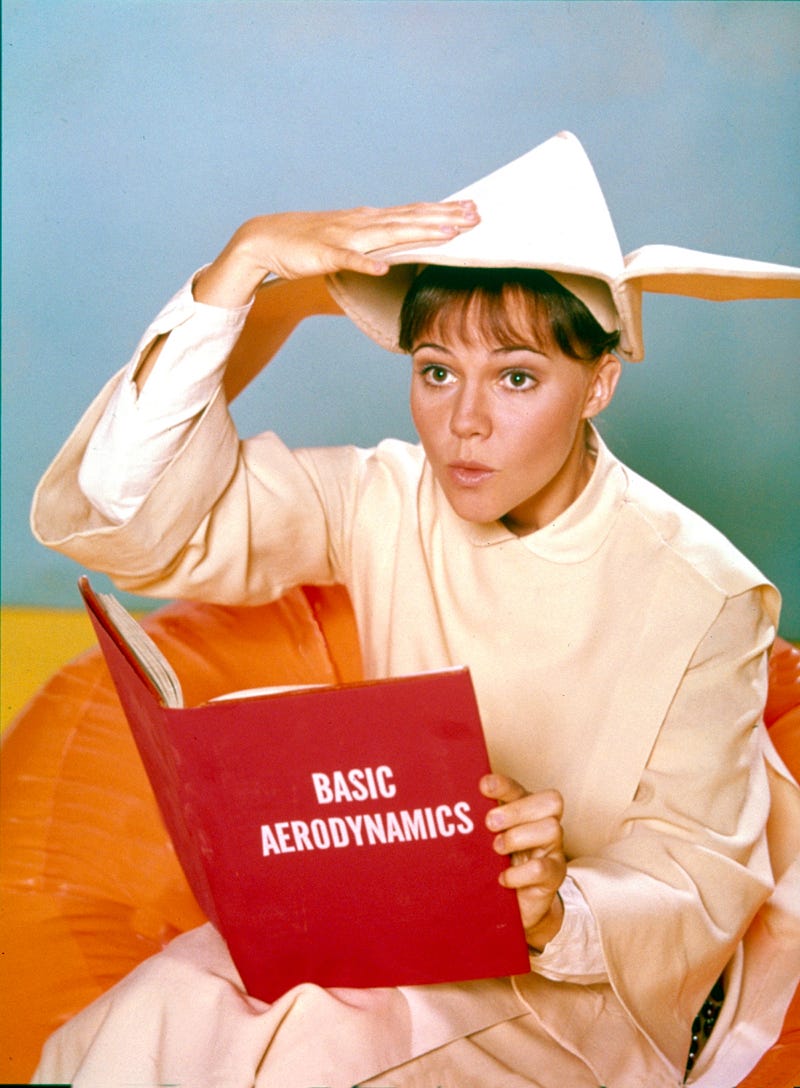
An Extreme Suspension of Disbelief
Now, I know that most sitcoms — particularly ones from the 60s and 70s — rely heavily on viewers’ suspension of disbelief, but even so, The Flying Nun was a bit much. Seriously, the premise of this show was that the main character, Sister Bertrille (played by Sally Field) could solve any problem that occurred at the convent by simply catching a wave on the latest wind and flying. Set in San Juan, Puerto Rico, in a fictitious convent called San Tanco, the show was unbelievable — literally and figuratively.
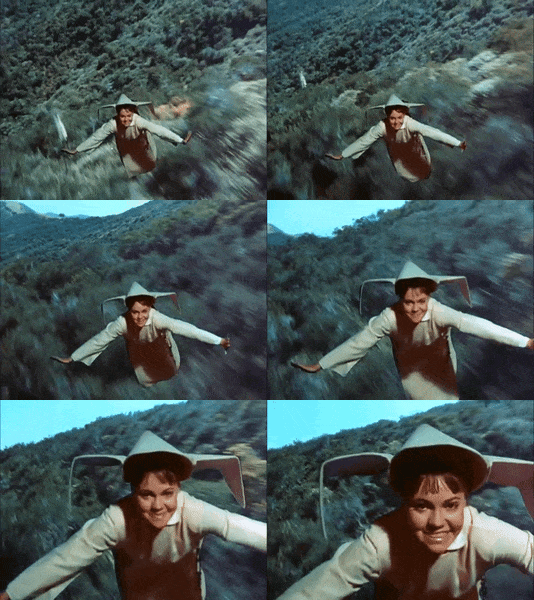
Apparently, the main character had fled to Puerto Rico from New York after being arrested at a protest. After joining the Convento San Tanco, the real fun began, with implausible plot lines (notwithstanding a nun flying solely on the power of her headpiece) the common denominator in each episode. So many questions. I need answers.
The Flying Nun
- Weird Habits…and Headwear — What’s up with the headgear? Were they added to each character on the show to scare unsuspecting children and, possibly adults? As a child, I found Sally Field and her fellow nuns creepy because of these strange contraptions. Some preliminary research indicates that the head pieces worn by the nuns on the show were based on the mid-17th century headwear called the cornette. Presumably the inclusion of these weird items found on every nun’s noggins provided the foundation for the program: the fact that the main protagonist could fly due to the wing-like elements of her headpiece. She was oh, so, slight and evidently able to be whisked off by the wind in an instant. The corvette provided the lift required to soar. Implausible? Yes. Ridiculous? Yes.
- Flying High? Aerodynamics and the laws of gravity be darned, this nun was on a mission (pun intended). Strange that no one in the convent, let alone the town, found it too strange that this slight, habited character could be seen gliding through the skies at any given time. Explanations about her unique abilities included this gem: “When lift plus thrust is greater than load plus drag, anything can fly.” Really? The fact that she was a mere 90 lbs facilitated her ability to catch an aerial wave on a moment’s notice. This pushes the suspension of disbelief to sky-high levels.
- The Funny Foreigner This trope has been used for decades, though it’s not as common now as it was in the 60s and 70s. Nonetheless, The Flying Nun’s Sister Sixto filled the role perfectly, if that’s even possible. A fellow member of the Convento San Tanco order, this character created a perfect foil for Sister Bertrille through the ever-so-funny () stream of mixed-up words, phrases and malapropisms. Making light of mixed up or misunderstood words uttered by non-native speakers is so hilarious. On a related note, was she really that misinformed about the English language and, more importantly, why were they all speaking English as the primary language while they were based in Puerto Rico?
Hogan’s Heroes
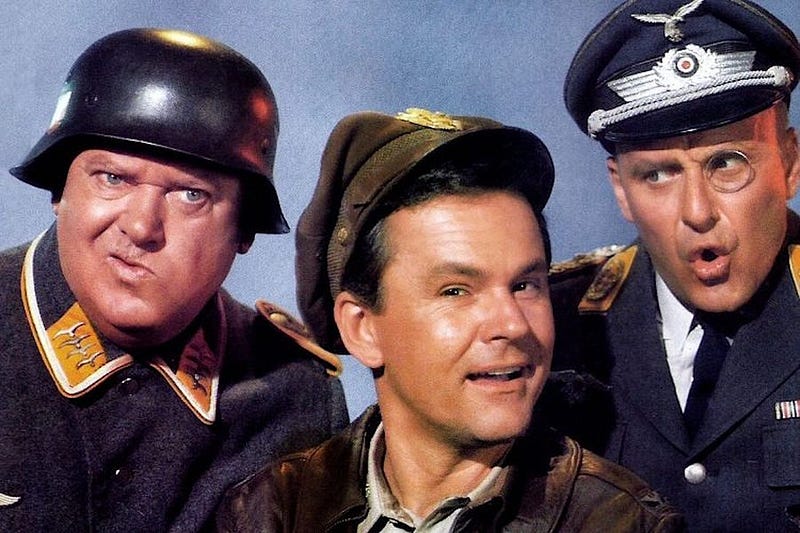
Imagine being a prisoner of war (POW) in Nazi Germany. Horrible, right? Now imagine not only being a POW, but one who is overseen by an inept Commandant and an even more inept Sergeant sidekick who knows nothing, sees nothing and hears nothing.
Scary, right?
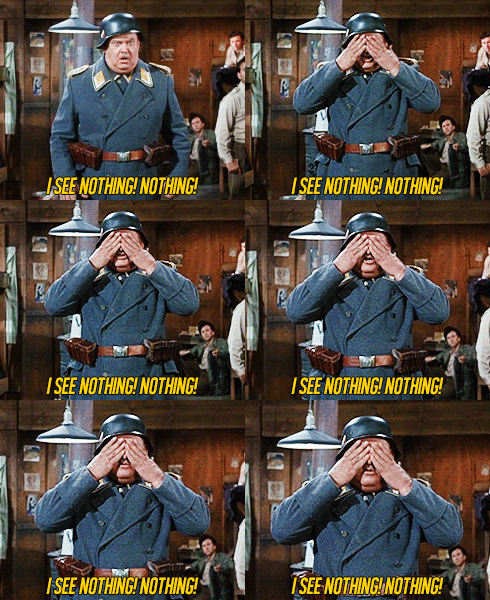
First off, whoever thought that the idea of a Nazi POW camp was fodder for a sitcom should receive the Salesperson of the Century award because, really?
So.
Let’s ponder that for a minute then consider the following. Some questions:
- Colonel Klink + Schultz ≠ Critical Thinkers — These bumbling souls were the constant source of laughs and mockery on the show, much to their chagrin. As the manger and enforcer at Stalag 13, these two jokers were supposed to be competent enough to manage a cohort of POWs as well as the VIPs who would use the location for high-level meetings. They were none the wiser to the covert operations of Colonel Robert Hogan and his crew who were collaborating with “The Underground” resistance groups and others, right under the Commandant’s nose. Critical thinking skills and basic common sense were unknown concepts to these two.
- Typecasting ‘R Us — The Brit, The Frenchman, The Cool African-American…this show was rife with stereotypical tropes. Strangely enough however, the realities related to the evil nature of Nazis was glossed over with a humorous veneer. Whoever thought that could be possible?
- A Peter of All Trades — Where on earth did Corporal Peter Newkirk gain the skills to do anything and everything required at Stalag 13? The con was always on with this character, leading him to master the questionable skills of pickpocketing, forgery, safe-cracking and more. He’s a wily card shark and an entertaining impersonator. He can also sew, since he was apparently a tailor prior to the war. Problem in the barracks? No worries — this friendly Brit will solve it for you. While sewing and acting innocuous at best, stealing, forging and trickery are not. Considering the sketchy nature of his abilities, it’s questionable that he would have every really been part of the RAF, wouldn’t it?
That Girl

It’s an old trope: the young and naive, struggling actor running away from their small town to find fame and fortune in the big city. So it was for Ann-Marie, when she headed to the Big Apple in search of her big break.
A simple yet believable story, right? It happens every day, doesn’t it?
Yes, it does, but there are some serious questions that need to be addressed about this young woman’s quest for success in the late 60s New York City scene. Let’s begin.
- A Struggling Actress in Designer Clothes? Ann-Marie was always the belle of the ball and, accordingly, looked fabulous in every scene. There was only one question, though: how did she afford her wardrobe? A self-professed struggling actress looking for her big break and taking temp jobs to make ends meet doesn’t exactly equate with her designer clothing. Her poor boyfriend, Donald, wasn’t exactly rolling in dough, being a magazine writer and all, so where did the money come from??
- Her Parents. Overprotective is an understatement. How old was Ann-Marie supposed to be, anyway? Mid-20s? If so, wouldn’t it have been time for her parents to cut the apron strings? Wouldn’t her parents have wanted her to leave the proverbial nest? What was she to have done in upstate New York, had she stayed there? Certainly not acting on par with a starring role on Broadway.
- Diamonds, Daisies, Snowflakes… What do these items have in common? Better yet, what do they have to do with Ann-Marie and her quest for fame and fortune? Fun fact: the theme song for the show was only instrumental for the first four seasons. The final season — the fifth — was when the talk of jewelry, flowers and precipitation appeared. Not sure why.
That Girl — Opening, with Lyrics
As you can see there are so many questions about TV shows from the 60s, not to mention the 50s, 70s, 80s and 90s. I will continue to seek the truth and search for answers about these programs that figured prominently in my childhood. They seemed pretty normal at the time, but with the hindsight of age, there are more questions than answers. We can’t have that. Stay tuned for weekly questions and, with your help, answers.