
The Fascinating World of Plasma: A Comprehensive Guide
Exploring the fourth state of matter and its practical applications, as well as its role in scientific research.
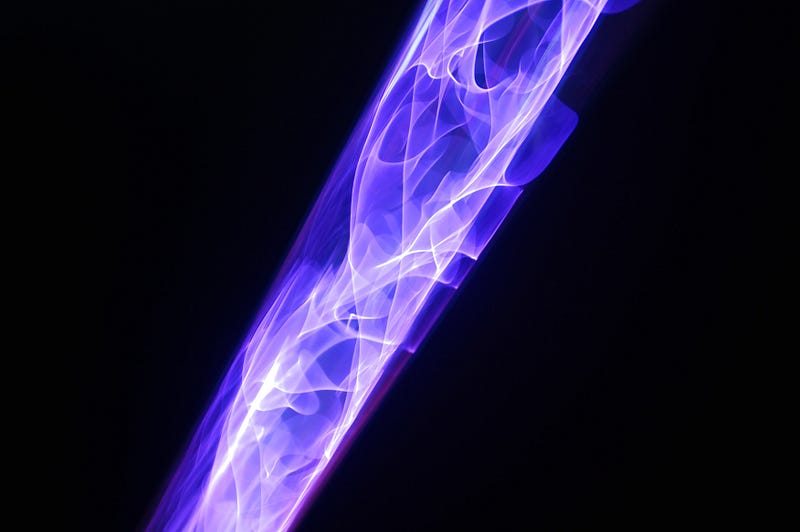
Plasma is a state of matter in which a gas becomes partially ionized, meaning that some of its atoms have been stripped of one or more electrons. This results in a mix of ions and free electrons that creates a conductive, plasma-like medium that can respond to electric and magnetic fields in complex ways. Plasma is often referred to as the fourth state of matter, in addition to solid, liquid, and gas.
Properties of Plasma
One of the key properties of plasma is its ability to be easily heated to very high temperatures. This makes it useful for a wide range of applications, including energy production, welding, cutting, and surface treatment. Plasma can be created by heating a gas to the point where its atoms become ionized, or by applying a strong electric field to a gas, causing it to become ionized.
Plasma is also present in many natural environments, including lightning, the sun, and the Earth’s upper atmosphere, where it plays a role in the formation of the aurora borealis, or Northern Lights. Plasma in the Earth’s upper atmosphere is created when solar wind particles collide with atoms and molecules, stripping them of their electrons and creating a plasma.
Plasma in Medicine
In recent years, plasma has garnered attention in the field of medicine as a potential treatment for cancer. Plasma-based therapies involve using plasma to deliver energy or substances to specific areas of the body, with the goal of killing cancer cells or destroying tumors. As one researcher noted, “Plasma medicine is a new and rapidly evolving field that has the potential to revolutionize the way we treat cancer and other diseases.”
The Study of Plasma
Plasma is also an interesting subject of study for scientists and researchers. It is known for its ability to form complex structures, such as filaments and vortices, in response to electric and magnetic fields. These structures can be observed in a variety of plasma environments, including the sun and in lab-created plasma discharges.
Plasma can also exhibit a phenomenon known as self-organization, in which it spontaneously forms patterns and structures without the need for external guidance. This self-organizing behavior is thought to be related to the complex interactions between the ions and electrons that make up plasma.
Despite the many advances that have been made in our understanding of plasma, there is still much we have yet to learn. Researchers are working to better understand the fundamental properties of plasma and how it behaves in different environments, with the goal of unlocking its full potential for a wide range of applications.
In conclusion,
Plasma is a dynamic and fascinating state of matter that is present in many natural and artificial environments. Its unique properties make it useful for a wide range of practical applications, and it is also an interesting subject of study for scientists and researchers. As research into plasma continues to advance, we can expect to see new and exciting developments in this exciting field.


