
The Genius of Albert Einstein: A Brief Overview
From the Theory of Relativity to the Atomic Bomb and Beyond
Introduction
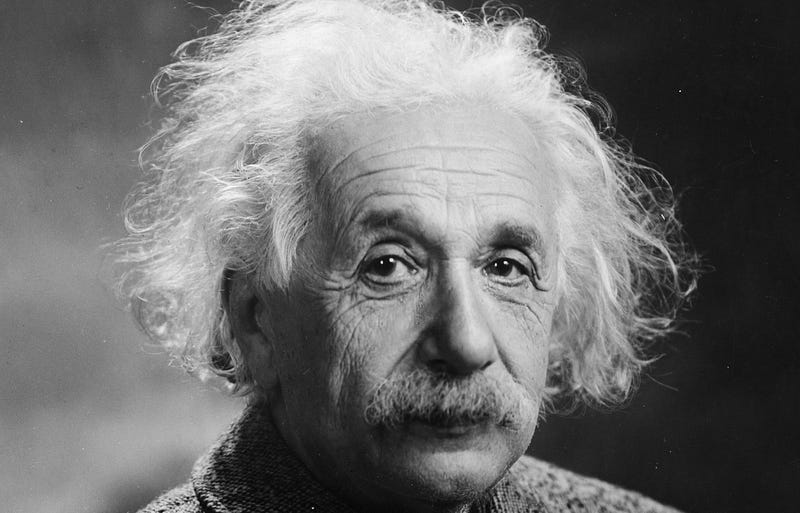
Albert Einstein is a name that is synonymous with genius and innovation. Most people know him as the man who developed the theory of relativity and formulated the famous equation E=mc², which shows the relationship between energy and mass. However, there is much more to Einstein than just this one equation.
Early Life and Education
Born in Ulm, Germany in 1879, Einstein showed an early aptitude for mathematics and physics. He excelled in school, but found the traditional teaching methods stifling and often struggled with authority. After completing high school, Einstein enrolled in the Swiss Federal Polytechnic in Zurich, where he received his degree in physics in 1900.
Scientific Career
Einstein’s early career was marked by a series of academic appointments and publications. In 1905, he published four groundbreaking papers in the scientific journal Annalen der Physik, which would come to be known as the “Annus Mirabilis” papers. These papers, which included the theory of relativity and the equation E=mc², established Einstein as a leading figure in the field of physics.
Einstein’s work revolutionized our understanding of the nature of space and time and helped to pave the way for the development of nuclear energy. In addition to his work in physics, Einstein was also a vocal pacifist and civil rights activist. He was a strong supporter of the Zionist movement and later moved to the United States, where he became a citizen in 1940.
Personality and Legacy
Despite his numerous scientific achievements, Einstein remained humble and down to earth. He was known for his wit and his ability to explain complex scientific concepts in a way that was accessible to the general public. He once said,
“I want to know how God created this world. I am not interested in this or that phenomenon, in the spectrum of this or that element. I want to know His thoughts; the rest are details.”
Einstein’s contributions to science and humanity have made him an enduring figure in popular culture. He has been the subject of numerous books, films, and plays, and his name is synonymous with brilliance and innovation. Today, Einstein’s legacy lives on through his theories and his tireless dedication to improving our understanding of the world around us.
Additional Work and Humanitarian Efforts
In addition to his theory of relativity and the equation E=mc², Albert Einstein made many other significant contributions to science and mathematics. Some of his other notable works include:
The Photoelectric Effect: In 1905, Einstein published a paper on the photoelectric effect, which explained how light can be used to release electrons from a metal surface. This work laid the foundation for the development of quantum mechanics and earned Einstein the Nobel Prize in Physics in 1921.
The General Theory of Relativity: In 1915, Einstein published his theory of general relativity, which expanded upon his earlier theory of special relativity. This theory explained how the presence of mass and energy can bend spacetime and how gravity works on a cosmic scale.
The Cosmological Constant: In 1917, Einstein introduced the cosmological constant into his theory of general relativity in an attempt to describe the expansion of the universe. This concept was later abandoned but has recently been revived as a possible explanation for the accelerating expansion of the universe.
The Equivalence Principle: The equivalence principle, which Einstein formulated in 1907, states that the effects of gravity are indistinguishable from acceleration. This principle played a key role in the development of his theory of general relativity.
Statistical Mechanics: Einstein also made important contributions to the field of statistical mechanics, which deals with the behavior of large systems of particles. He used statistical mechanics to explain the behavior of gases and developed the concept of Brownian motion, which describes the random movement of particles in a fluid.
In addition to his scientific work, Einstein was also known for his humanitarian efforts and his commitment to social justice. He was a strong advocate for world peace and was a vocal critic of nuclear weapons. He was also a member of the National Association for the Advancement of Colored People (NAACP) and supported the civil rights movement in the United States.
Einstein once said,
“I am a deeply religious nonbeliever — this is a somewhat new kind of religion.”
He was a strong advocate for peace and justice and believed that science and religion could coexist.
Role in the Development of the Atomic Bomb
Despite his pacifist beliefs, Einstein played a role in the development of the atomic bomb. In 1939, Einstein and a group of other scientists wrote a letter to President Franklin D. Roosevelt warning him of the potential for Germany to develop an atomic bomb and urging him to support research into the development of a nuclear weapon by the United States.
As a result of this letter, the U.S. government established the Manhattan Project, a top-secret research program aimed at developing an atomic bomb. Einstein did not directly work on the Manhattan Project, but his contributions to the field of nuclear physics were instrumental in the development of the bomb.
It is important to note that Einstein later regretted his involvement in the development of the atomic bomb and became a vocal critic of nuclear weapons. In a letter to President Harry S. Truman in 1945, Einstein urged him to use the atomic bomb as a means of demonstrating the destructive power of nuclear weapons, rather than as a weapon of war.
Conclusion
Albert Einstein was a brilliant scientist and mathematician whose contributions to the field of physics revolutionized our understanding of the nature of space and time. He was also a committed pacifist and civil rights activist who used his platform to speak out against injustice and advocate for peace and social justice. His legacy lives on through his theories and his tireless dedication to improving our understanding of the world around us.
Additional Books and Writing
In addition to his scientific work, Einstein was also a prolific writer and his works spanned a wide range of subjects, including physics, mathematics, philosophy, and politics. Some of his most famous works include:
“On the Electrodynamics of Moving Bodies” (1905): This paper, also known as the special theory of relativity, introduced the concept of time dilation and laid the foundation for Einstein’s theory of relativity.
“The Theory of Relativity” (1916): This book, which expanded upon the ideas presented in the special theory of relativity, introduced the concept of spacetime and explained how the presence of mass and energy can bend spacetime and how gravity works on a cosmic scale.
“The Meaning of Relativity” (1922): This book, written for a general audience, explains Einstein’s theory of relativity in layman’s terms and includes a series of lectures that Einstein delivered at Princeton University.
“Ideas and Opinions” (1954): This book is a collection of Einstein’s essays, articles, and speeches on a wide range of subjects, including science, politics, and philosophy. It includes his famous essay “Why Socialism?”, in which Einstein advocates for a socialist economic system.
“The World As I See It” (1934): This book is a collection of Einstein’s reflections on life, science, and the world. It includes his famous quote, “A person who never made a mistake never tried anything new.”
In addition to these works, there are also many biographies and books about Einstein that provide insight into his life and work. Some recommended books about Einstein include “Einstein: His Life and Universe” by Walter Isaacson and “Einstein: A Life” by Denis Brian.
Final Thoughts
Albert Einstein’s contributions to science and humanity have made him an enduring figure in popular culture. His theories and his commitment to peace and social justice continue to inspire people around the world. His legacy lives on through his theories and his tireless dedication to improving our understanding of the world around us.


