
ANCIENT RUINS I TRAVEL
The Exile Trail
Tracing the Pandavas’ footprints in Krimchi Temples
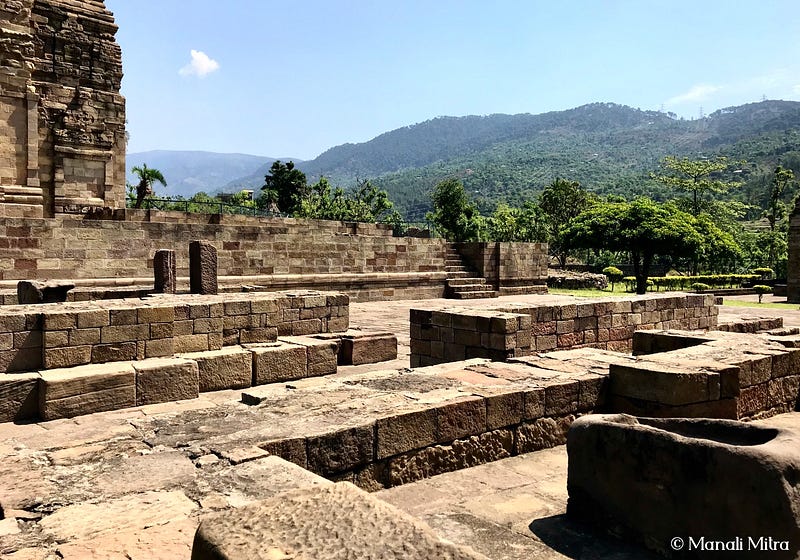
I’m absolutely fascinated by the stories of the ancient ruins that have been populating my feed the last few weeks — thanks to the Globetrotters monthly prompt! Just love the series — Thank you, editors, for coming up with this brilliant topic. Reading the stories jogged my memory of a lesser-known ruin I visited a few years ago.
During a visit to Udhampur, a city in Jammu and Kashmir, a friend casually mentioned the Krimchi Temples, just a 30-minute drive away. Intrigued, I researched and realized that I couldn’t leave Udhampur without venturing into these ruins!
The last 10 minutes of the drive proved to be quite bumpy, as there was no proper access road. Suddenly, the driver stopped and informed me that we had reached! I was taken aback as I faced an empty field with a few huts where sheep were tethered. It became evident that there were few inhabitants in the area. This was Krimchi village.
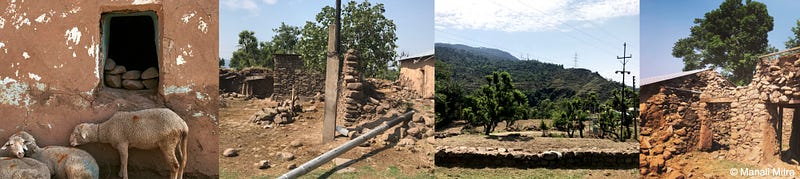
Noticing an elderly lady seated nearby, I approached her and inquired about the location of the Krimchi Temple. She silently pointed in a direction where there was no discernible walking path. The absence of human presence in the vicinity only added to the enigmatic ambience. After navigating the unfamiliar terrain for 15 mins on foot, I saw the temples at a distance!
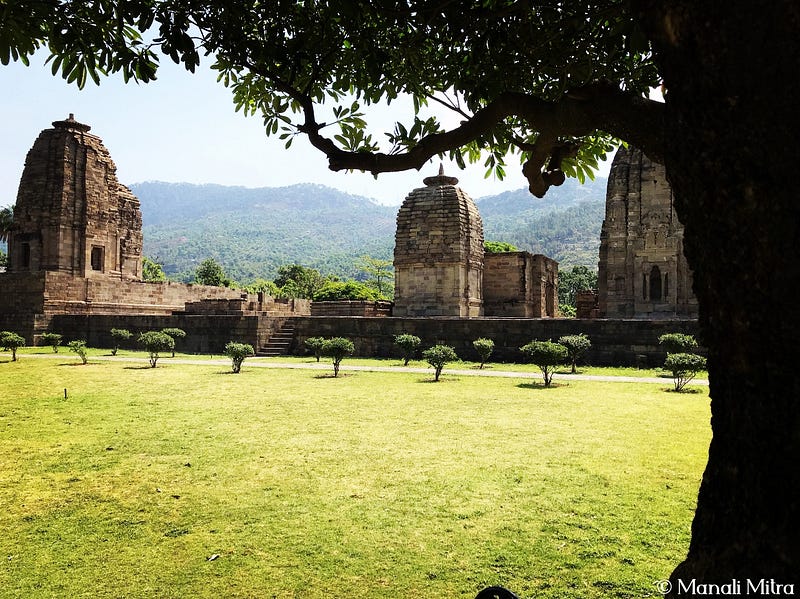
The temples believed to be the oldest in the state of Jammu. Despite the absence of written records to substantiate their historical significance, numerous stories surround their construction. According to some, Raja (King) Kichak, of the epic Mahabharata, built them. Others maintain that the Pandavas (the central characters of Mahabharata — five sons of King Pandu) built the temples during their exile to seek refuge. Hence, these temples are also called the “Pandhava Temples.”
The temple complex comprises seven temples that stand on a raised platform — marked as №1 to 7 by ASI (Archaeological Survey of India) for easy reference.
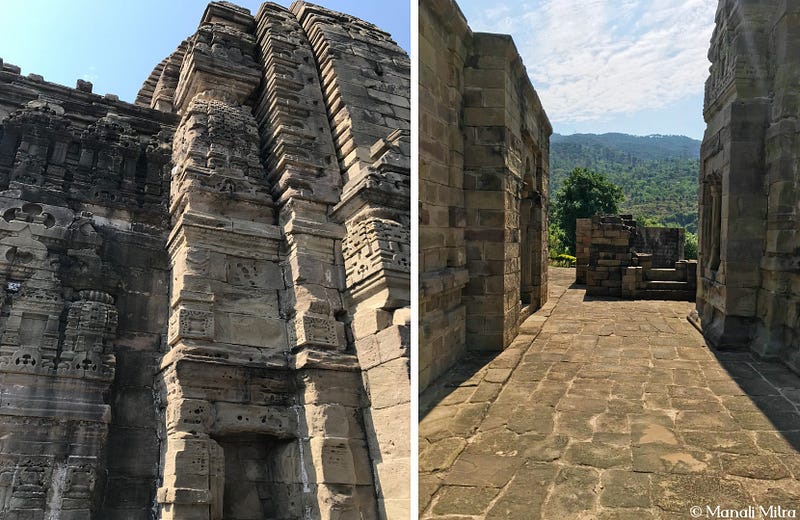
Two prominent architectural styles were used for temple construction in India — The “Old Nagara style” and the “Dravidian style.” In central India, a combination of these styles is known as the “Besar style.” But, the temples of Krimchi are constructed in the “Old Nagra Style.” They resemble Lingraj, Parshurameshwar temple of Bhubneshwar, and Chamba temple, according to the ASI (Archaeological Survey of India). Many attribute the architecture of these temples to Greek influences.
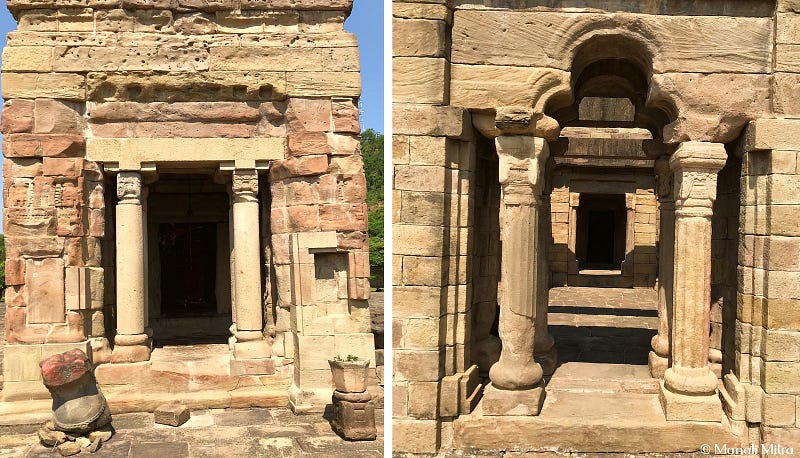
These temples consist of essential features — the Garbha Griha (sanctum sanctorum), which houses the deity idol; the Antrala (foyer), a space leading to the Garbha Griha through its door; the Mandapa (ornate hall), which has pillars, the Ardhmandapa( half open hall), a smaller section, and the Parvesdwar, an intricately designed entrance door.
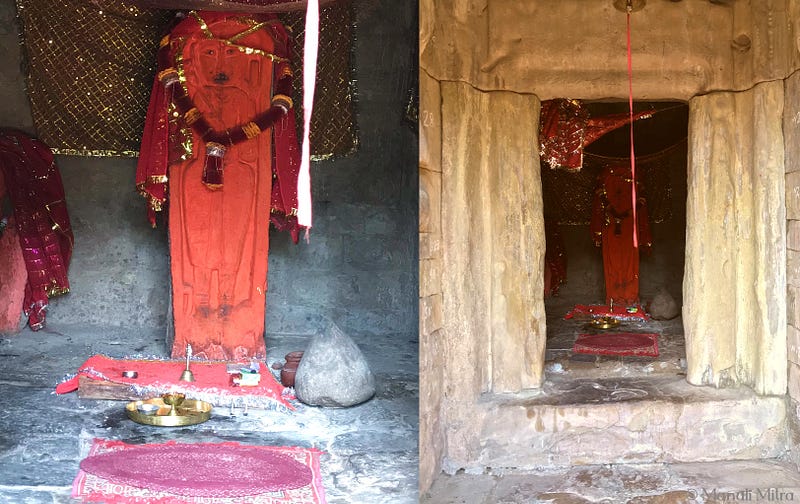
Among the seven temples, temple number 1 depicts large-sized moldings and a beautiful idol in the Garbha Griha. The person at the ticket counter said that it was the four-armed Vaikunth Lord Vishnu (preserver and protector of the universe). Some locals apparently worship as Maa Durga (Goddess of Strength)!
During past excavations, archaeologists and researchers unearthed stone idols, iron arrowheads, earthen pots, and other ancient artifacts. Walking amidst these ancient ruins transported me to a mystical past — a serene and calming experience.
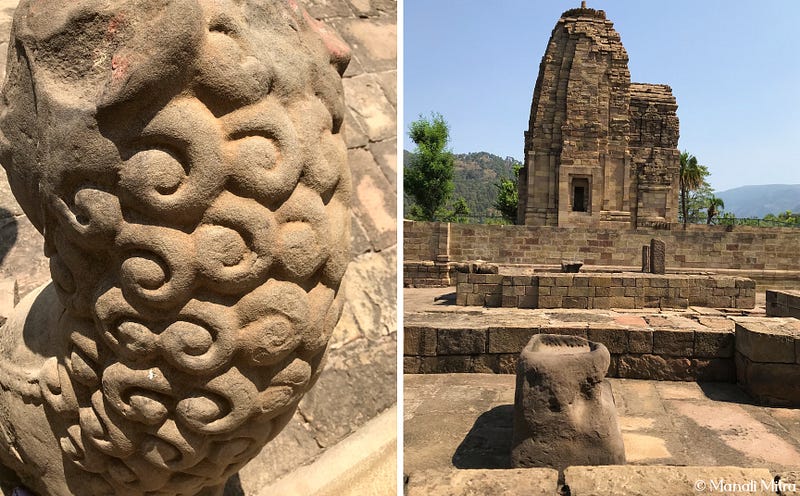
This hidden treasure of this ancient ruins remains largely undiscovered by many. The Archaeological Survey of India (ASI) has done an admirable job preserving and maintaining the site. However, the access road poses certain risks that may deter visitors. During my three-hour visit, I had the entire place to myself, except for the attendant at the ticket counter. Its untouched splendor and mysterious ambience made the experience truly unforgettable.
I’m yet to read all the stories. Here are a few I loved:
Mariana Gonzalez’s story and photos transported me to the world the Inca citadel:
Vidya Sury, Collecting Smiles triggered me to visit Talakadu with her stunning pictures and story:
“If we can find reasons to be appreciative and excited by something, whatever the situation we find ourselves in, we can avoid slipping into boredom and discontent.” Loved this piece by Kerri Duncan