
TRAVEL | TRAVEL WRITING
Ruins in Peru: Beyond Machu Picchu
My first visit to South America started with this magical place
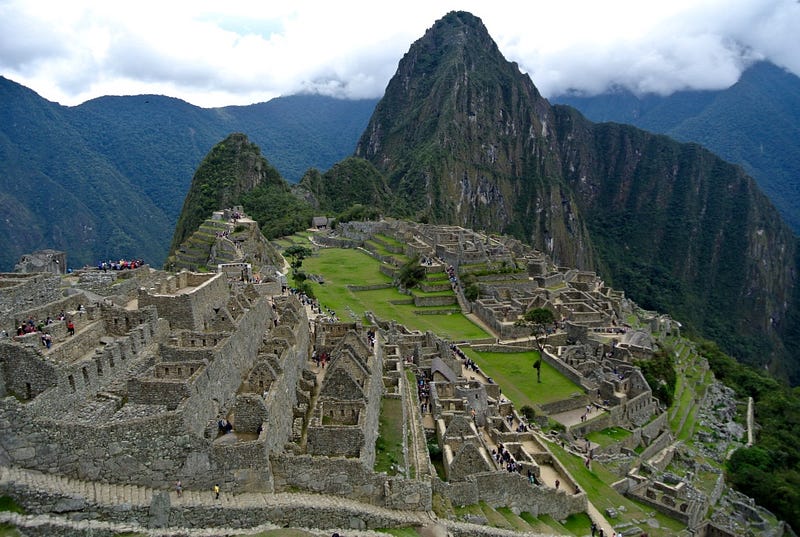
Before visiting Peru in 2016, I really didn’t have South America at the top of my list.
Truth is, I don’t enjoy long flights or multiple stops. Unfortunately, I am not one of those that can sleep on a plane, so the longer the flight is, the more anxious, tired and cranky I get.
But my bestie Adriana came up with the idea when we were talking about our next trip. What if we go to Machu Picchu? She has lived in different countries and travelled to a lot of cities around the world, but she had never been in Peru.
I was doubtful but I knew if I didn’t do it with her, I may not do it at all. So I said yes and we started looking.
At the end we opted to pay for a tour and it was the best decision for us. We only had to book our flights and arrive at Lima for the start of the tour.
By doing this, we visited different places and all transportation, hotels and some meals were taken care of. We didn’t have to worry about much, other than showing up on time at the pick up points (sometimes VERY early).
But keep reading and come along with me to some of the ruins and places we visited.
CUSCO
After arriving to Lima, the next morning we flew to Cusco, the historical capital of the Inca Empire.
Cusco is located at about 3,400 meters (11,152 feet) above sea level so depending on where you are from, the first thing you may feel is the altitude. Some people get sick shortly after coming off the plane, others don’t feel a thing. Thankfully we were part of the latter group.
But if you do feel sick, there are local remedies for el mal de altura (altitude sickness) being sold at Lima airport, or your hotel will probably have coca leaves or tea to help you with the symptoms.
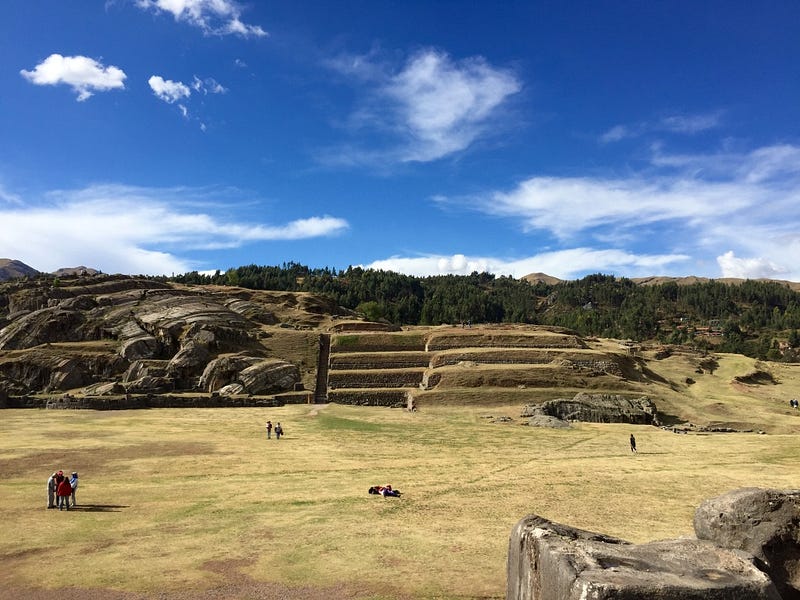
Cusco has several historic sites near by, and on the first day of our tour we stopped by a fortress called la Fortaleza de Sacsayhuamán, a citadel built by the Incas.
Its name is in Quechua and its meaning is something like “satisfied eagle” due to the abundance of this bird in the area in Inca times.
The area is divided in different sectors where you can see well maintained stone walls, terraces, enclosures, arches, tunnels and ceremonial altars.
SACRED VALLEY OF THE INCAS
The next day we did a full day tour around El Valle Sagrado.
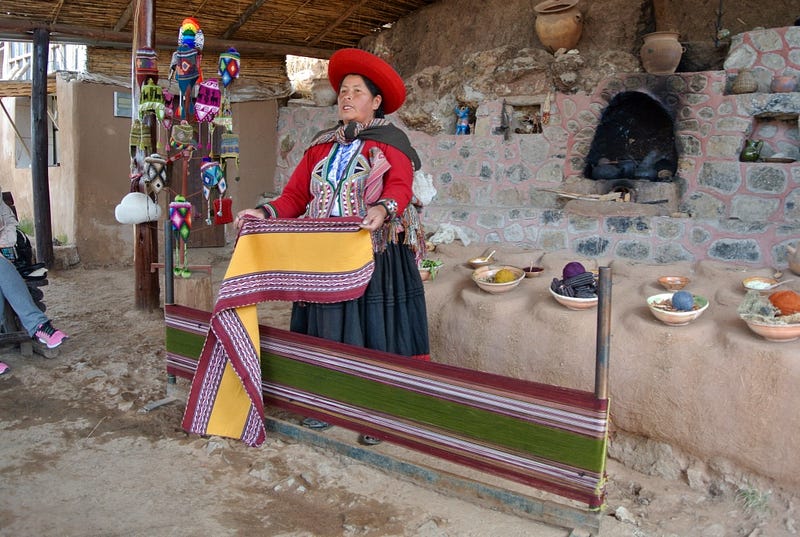
We started in Chinchero, a typical Andean village combining the Inca ruins with wonderful mountain views. In here, we met families who still practice old traditions and showed us how they process wool and use food for colouring to make beautiful textiles.
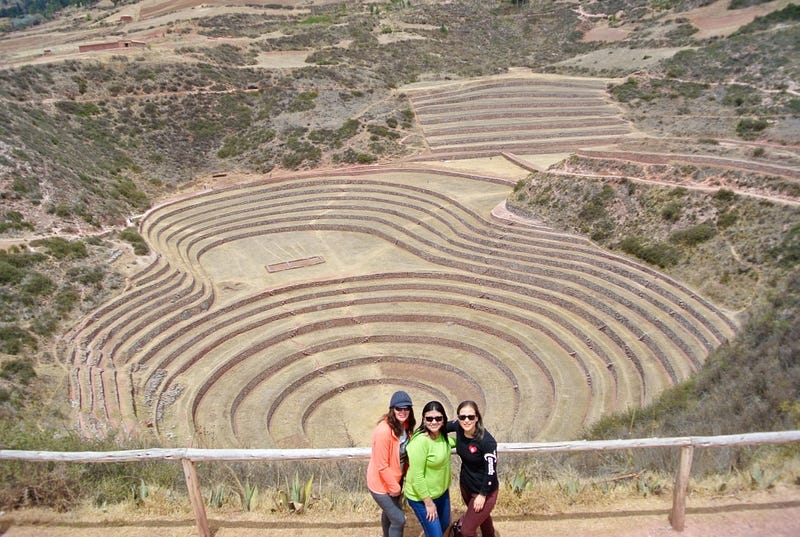
Our next stop was Moray, an archeological site mostly consisting of several terraced circular depressions.
This place is believed to have been used for farming, and different crops were grown at the different levels, creating sort of micro climates.
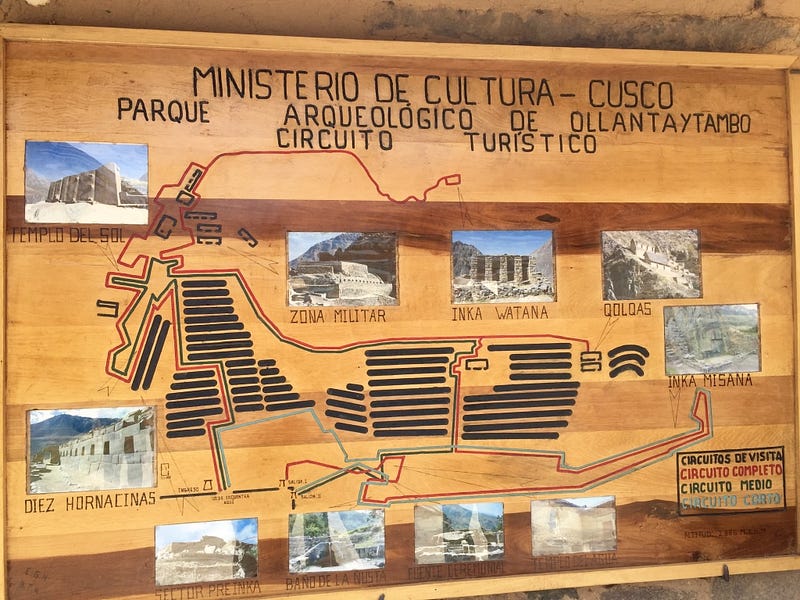
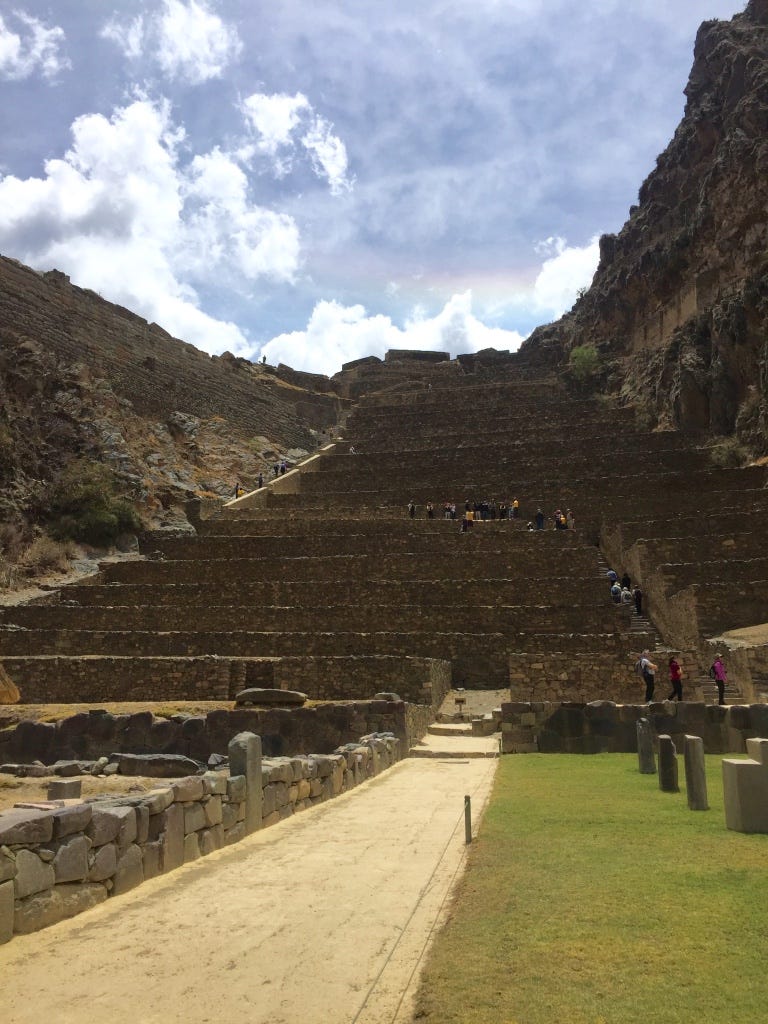
Next was Ollantaytambo, believed to have been a refuge against the frequent Spanish invasions.
Being here felt like you were stepping back in time.
Tipon
Tipon is an Inca archeological park located to the southeast of Cusco where once upon a time, water was worshiped.
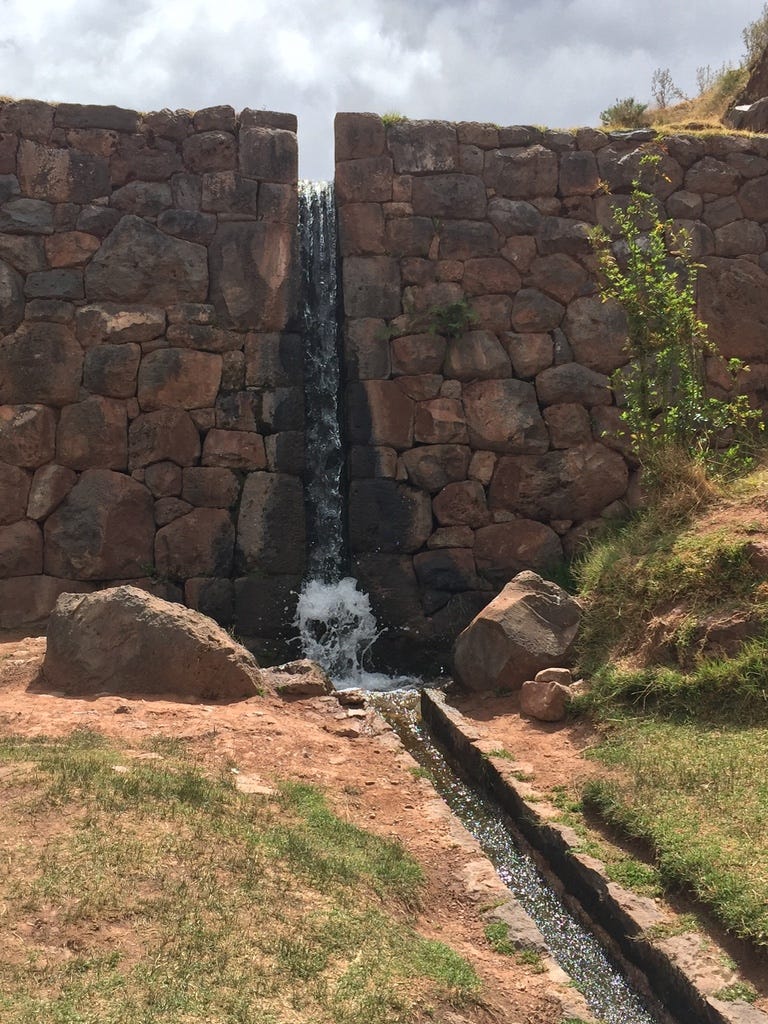
This place was built around a natural spring and here you can see the irrigation system still in full operation, with water flowing all year round, even in dry season.
Peruvian historian Dr. Luis Antonio Pardo, believes that the current name of Tipón may derive from the Quechua word Tímpuj, which means “to be boiling” alluding to the fact that water seems to be sprouting or jumping like boiling water.
I remember this place being very quiet, not a lot of tourists go here. It had beautiful terraces, fountains and water channels like the one below.
Pikillacta
Then we visited Pikillacta, a part of the Huari culture, a rival of the Incas before their expansion. It is considered one of the best preserved pre-Inca cities that exist in Peru.
Pikillacta or Pikillaqta, is a Quechua word that could be interpreted as “Flea City” or “Small Town.” But there was nothing small about this place.
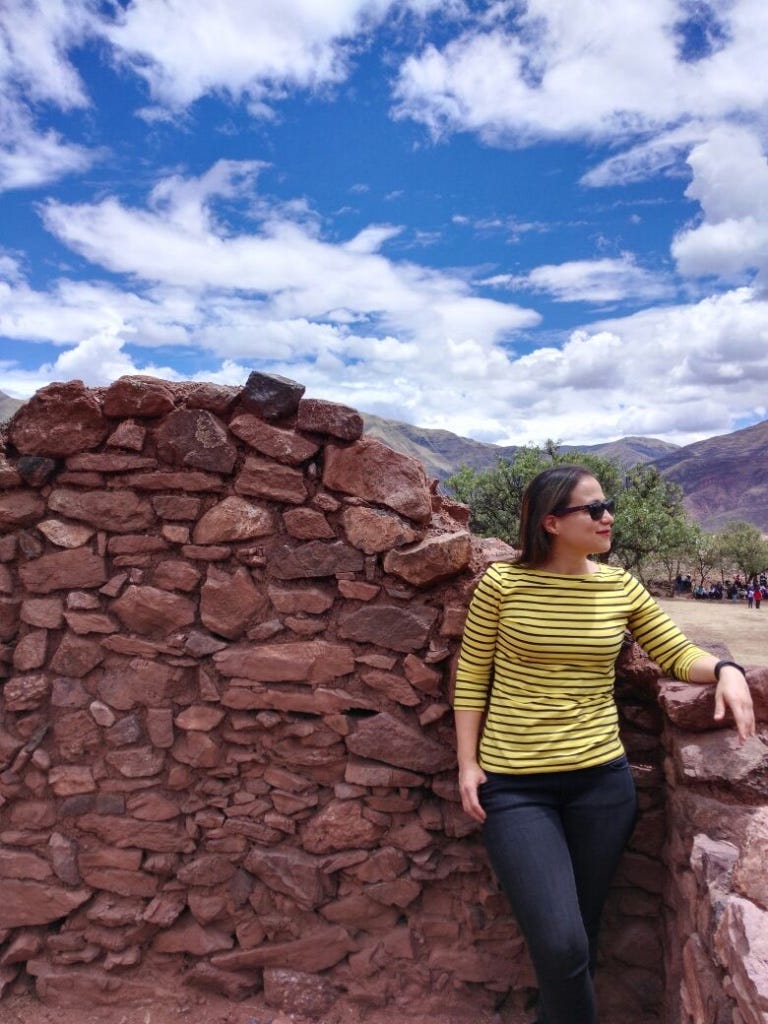
What impacted me the most was the scenery. Red walls and fortifications, mountains around, blue sky and fluffy white clouds.
Machu Picchu
Our visit wouldn’t be complete without a visit to Machu Picchu, the most visited destination in Peru.
A symbol of the Incan Empire, it was designated a UNESCO World Heritage Site in 1983 and named one of the New Seven Wonders of the World in 2007.
In the Quechua Indian language, “Machu Picchu” means “Old Peak” or “Old Mountain.”
We took an early train to Aguas Calientes, and from there you can hike or do what we did and take a bus to the entrance of the city of Machu Picchu.
This place gives you an instant magical feeling. The greenery, the mountains, the clouds, animals roaming around. You can feel so small in such a majestic place.
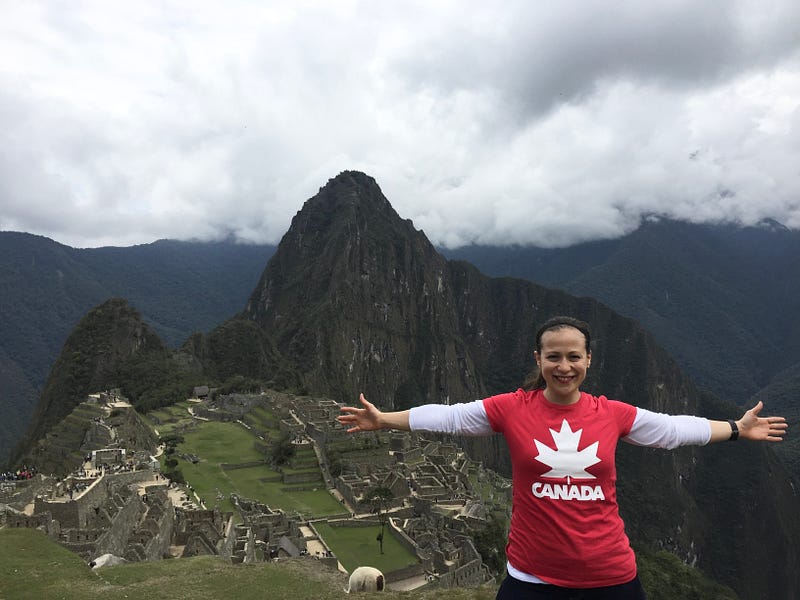
We visited early October, the day we went it was cloudy but thankfully the rain held up for few hours. It was recommended to wear layers, and a long sleeve due to mosquitoes.
Depending on the season you visit, I would also recommend wearing hiking boots (or something water proof), because at the end of our visit, we got caught in a big storm and there is nowhere to hide. Thankfully we were on our way out, otherwise I can imagine how slippery it would be in some of the spots.
I enjoyed this article by Walter Rhein on his visit to Macchu Picchu before it was “cool” to go there.
And Robert G. Longpré tells us about his experience visiting Cusco and Machu Picchu
At the end of the trip, my cup was full.
I visited beautiful places that I would have not known about if I did’t say yes to this adventure. Some of the sceneries we saw looked like someone painted them, they were unreal and photos don’t make it justice.
This trip also left me with wanting more of South America, even if it's a pain to get to some of the countries.
Thank you for reading!
This article is in response to the May Monthly Challenge — Ruins of the World, you can read about it here:
And a little bit about me:
I am a new writer on Medium, but I have been posting stories about travel, food and wellness on Linkedin. Follow me for more!


