
The A-Zs of my Favorite Travel Destinations — C is for Cusco
In December 2017, we decided that we wanted to go to Machu Picchu in the Andes Mountains of Peru. We wanted to get there before the rainy season made it impassable for walking portions of the Aztec Trail. We had finished walking the European Peace walk five months earlier in June 2017.
We caught the last leg of our travel in Peru. All went well as we found ourselves disembarking the plane. Once through customs and immigration, we were let by people who were giving out leaves of cacao, a preventative measure for altitude sickness.
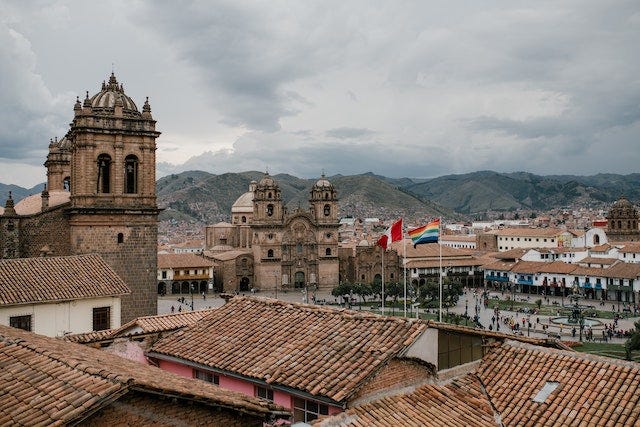
Cusco is a mountain city of 500,000 people. At the low point of the city, the elevation was 3,399 metres — yes, metres. That translates to more than two miles above sea level. There was a good reason to worry about altitude sickness.
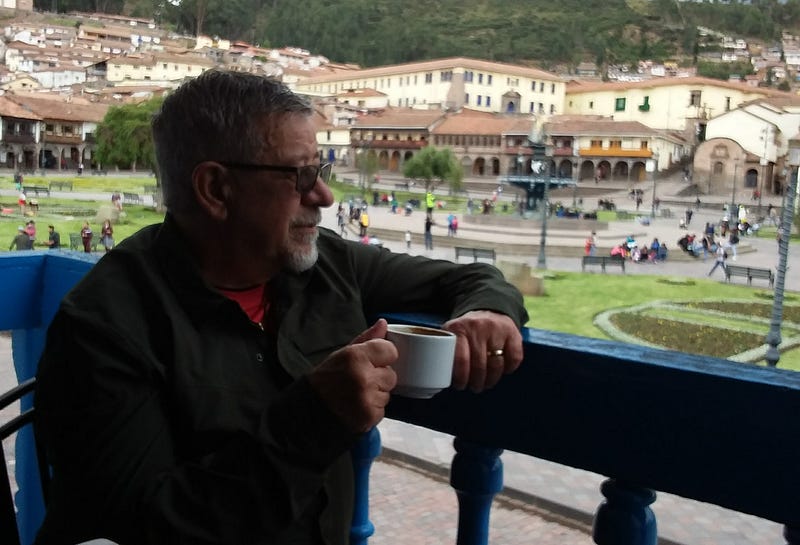
We dutifully chewed the leaves, not worrying about the fact that we had received the leaves from strangers who didn’t look like airport staff. Because it was early in the day, we found a small restaurant overlooking the main square where we drank some local coffee and a cup of cacao tea. The last thing we needed was to get sick in Peru before we got to Machu Picchu.
We spent the rest of our first day in the city being tourists, carrying our backpacks as we couldn’t get into our rental until late afternoon. Part of the day was spent arranging for various tours. We were going to be in the city for a week. We were determined to see as much of the city as we could before moving on to see more of Peru.
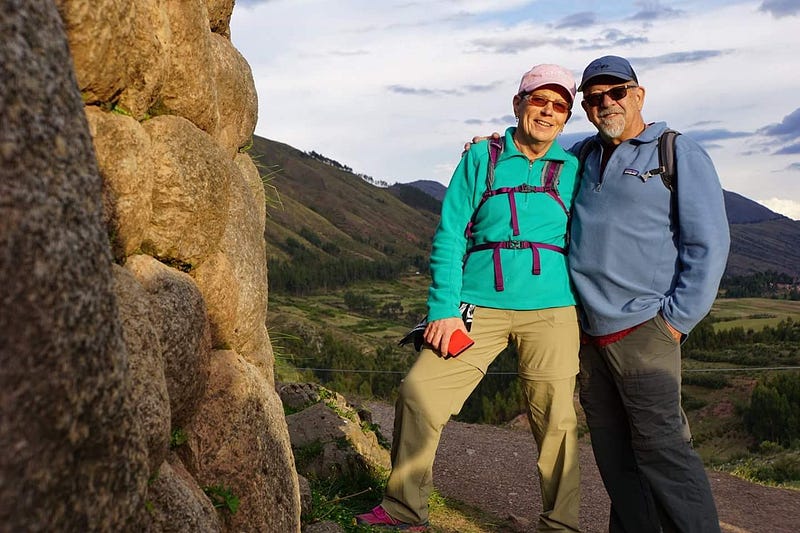
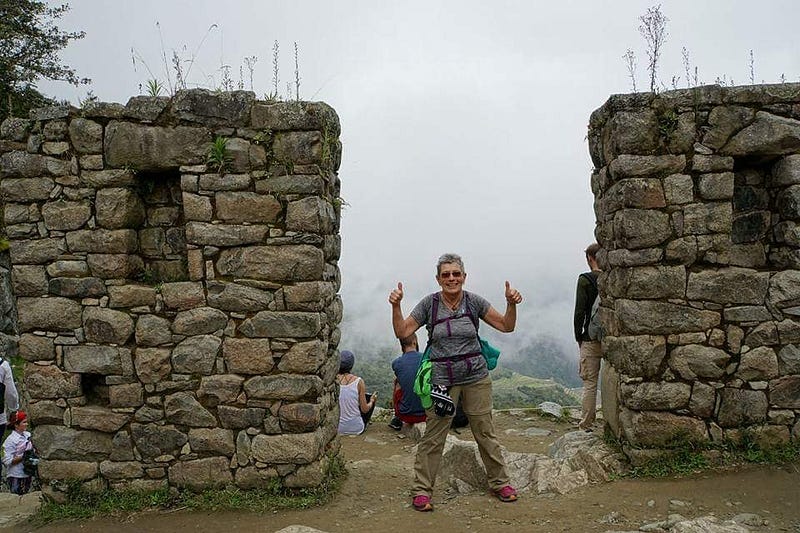
We didn’t delay our journey to Machu Picchu very long. One surprising fact about Machu Picchu was the fact that it was much lower in elevation, though you couldn’t tell that fact by looking at ancient city. Once there, we got our obligatory photo as we passed through the Sun Gate with a follow-up photo of the city further down the Aztec Trail. Machu Picchu is at an elevation of 2,430 metres, almost a thousand metres lower that the city of Cusco.
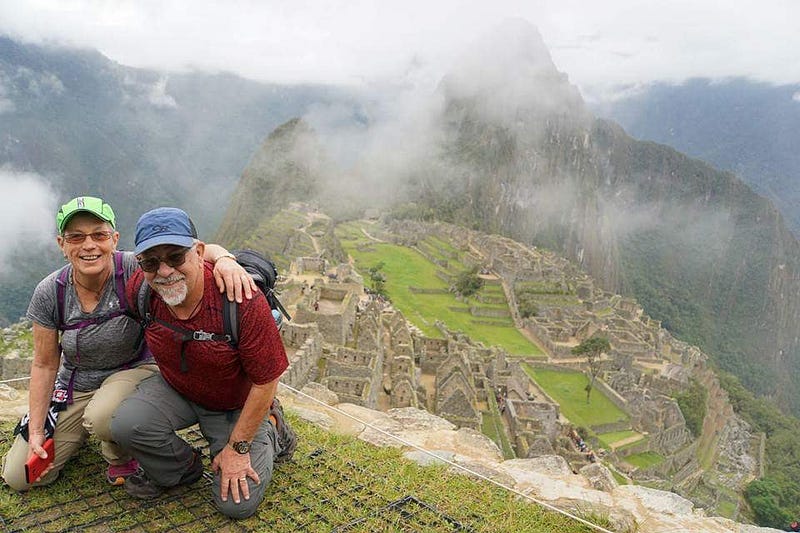
We returned to Cusco as we had several more adventures to take in. The one that remains embedded forever in our memories has to be the trip and hike up to Laguna Humantay — Humantay Lake.
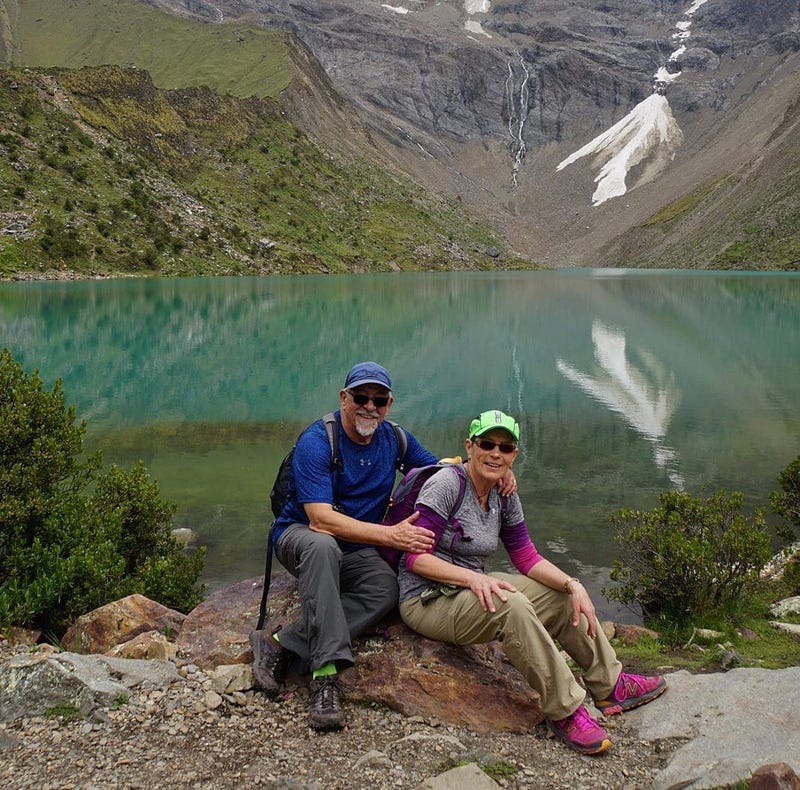
We left the van at an elevation of 3,800 metres and began a strenuous hike up to the lake. There was an option of making the journey by horseback. For those that chose to walk like these two seniors in the last half of our sixties, guides were carrying oxygen bottles — just in case. We were by far, the oldest people making the trek. Several quit soon after beginning fearing heart attacks. Two went further but collapsed and required assistance to return to the base camp.
A handful of us made it up to the lake where the surface was at 4,200 metres. It took us quite a bit of time, but we made it wearing smiles. The sight reminded us of the lakes in the Canadian Rockies, lakes which were at around 1,600 metres elevation.
We learned about a trek along the top ridge of Rainbow Mountain, but passed on the side excursion. We didn’t have the time, and the elevation of 5,000 metres sounded too daunting.
Walking pilgrimages in Europe during the past five years had done much to prepare us to stretch ourselves in Peru.