
The Enigmatic Temple of Hathor
Not your garden variety ancient Egyptian monument
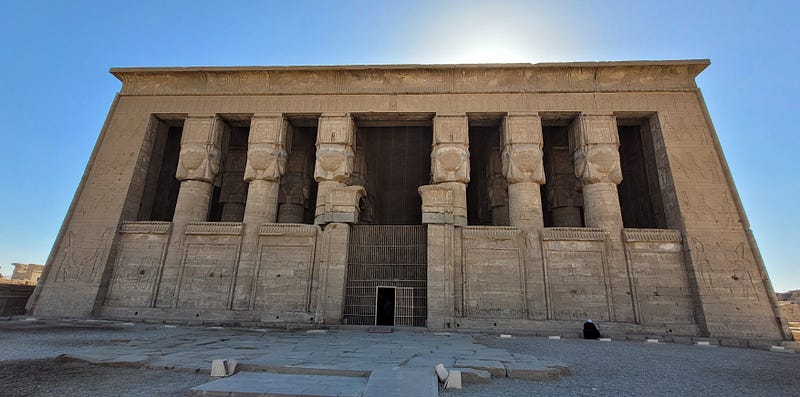
There were a lot of rules in ancient Egypt. Many of them revolved around how to record the accomplishments of famous people and events, and how to pictorialize those people and events in monuments. When I say ‘famous’, I mean exclusively those of royal blood, or individuals whose luck, hard work, or connections brought them into the sphere of the ruling class.
And then there are those who, by political force, created for themselves a narrative that simulated the Pharaonic god-kings, but long after those Pharaohs were themselves ancient history.
Two hours north of Luxor is such a dedication, near the town of Dendera, on the Nile’s west bank. It is called the Dendera Temple Complex, of which the Temple of Hathor is the main attraction. I took a taxi there during a trip to Egypt last year. Unlike the tourist mobs swarming over Karnak and Luxor Temples, here I saw only a few people wandering around. The monument does not figure into most organized tour itineraries. It allowed for a much more relaxing viewing experience.
The first structures at this site date back to Old Kingdom Egypt, but the temple as it stands today was constructed in 54 BCE, under the reign of King Ptolemy XII (Ptolemy Auletes), long after the last native Egyptian pharaoh had breathed his last.
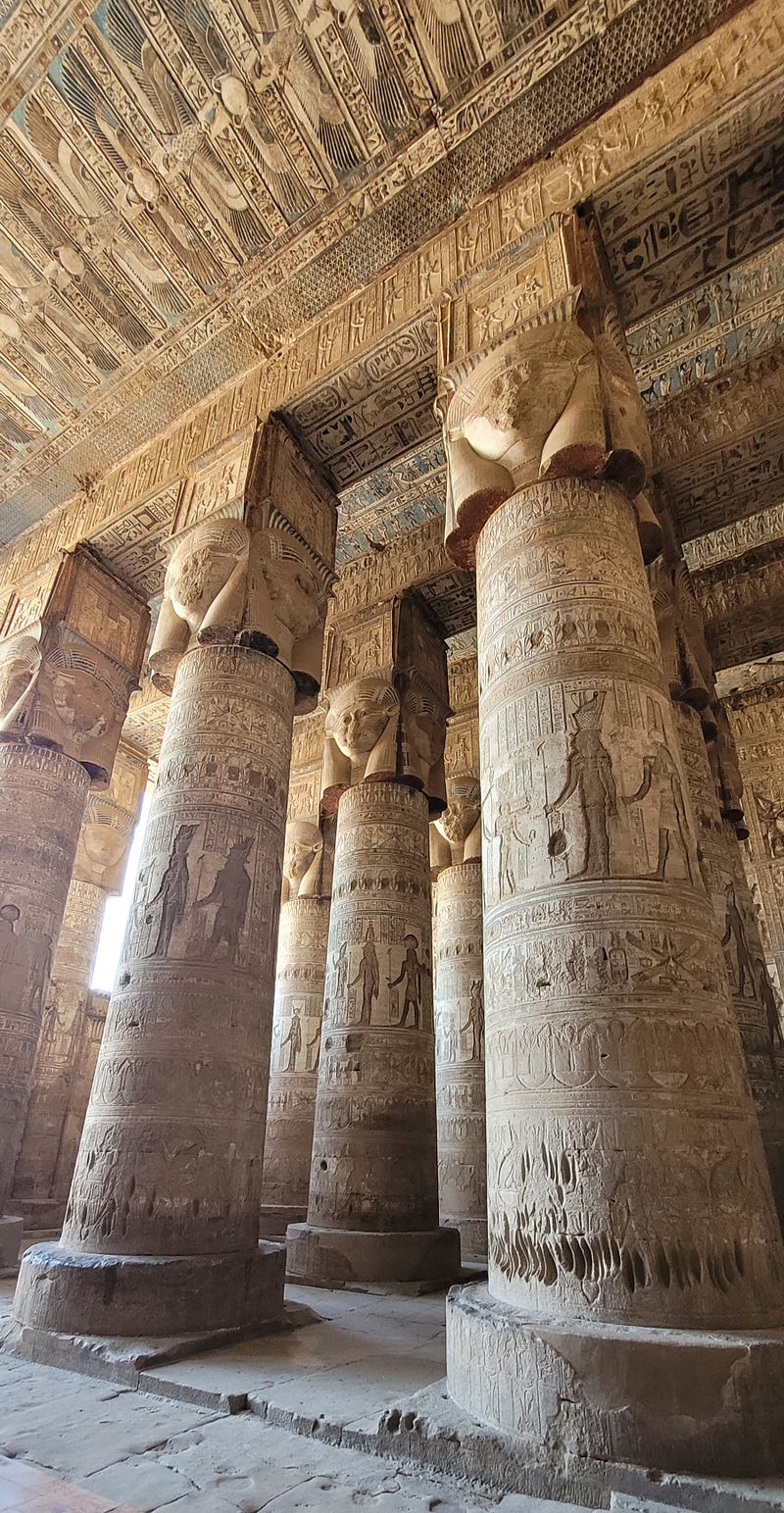
Ptolemy XII was in the royal line of an Egyptian dynasty started by Ptolemy I Soter, one of Alexander the Great’s Macedonian generals. When Alexander died in 323 BCE, his vast empire split into pieces, Egypt becoming one of them.
There are many spectacular temples in Luxor and its environs. I could show many examples of well-preserved Pharaonic style art from other locations. The unusual aspect of the Temple of Hathor is that almost none of the rulers honored here are Egyptian, but rather Macedonian and Roman.
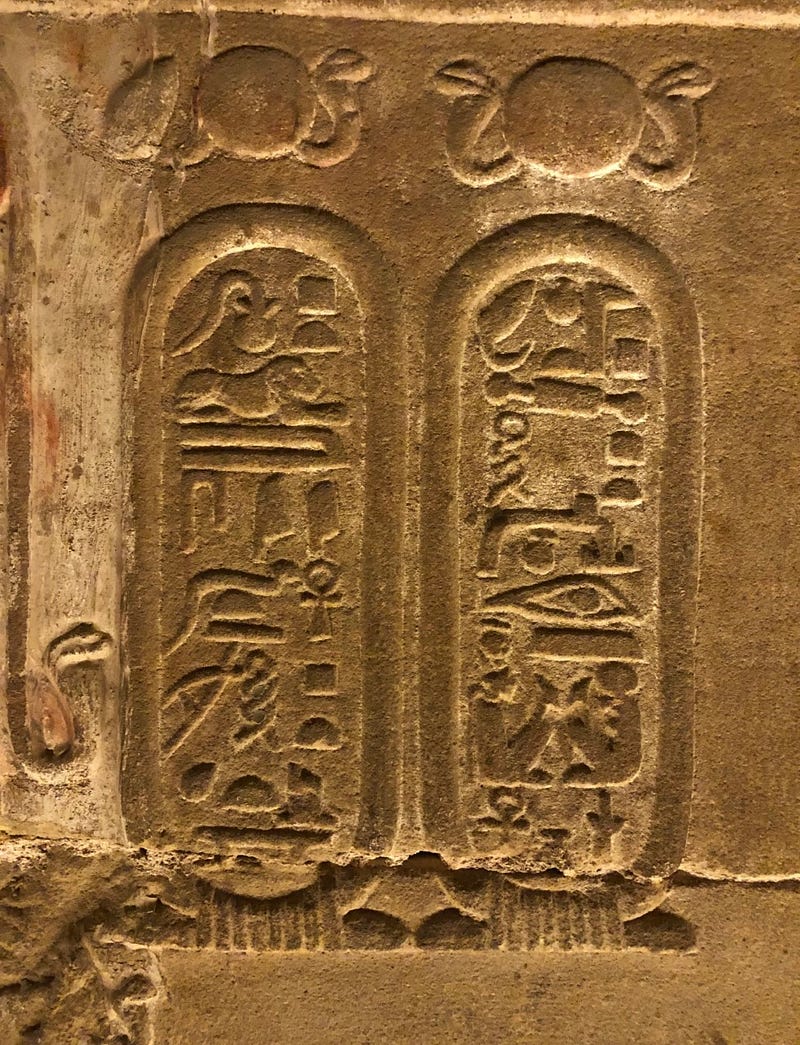
Ptolemy XII had a daughter who eventually became ruler after his death. Her name was Cleopatra VII Philopater, and yes, that is the Cleopatra everyone is familiar with today. She left her mark on the Temple of Hathor as well, with portraits and hieroglyphs of her name.
Besides this famous association, many others also left their insignia. After Cleopatra’s death, Egypt became a Roman province. The rulers dedicating additional construction projects to themselves in the temple complex were all Roman emperors, such as Tiberius, Trajan, and Nero.
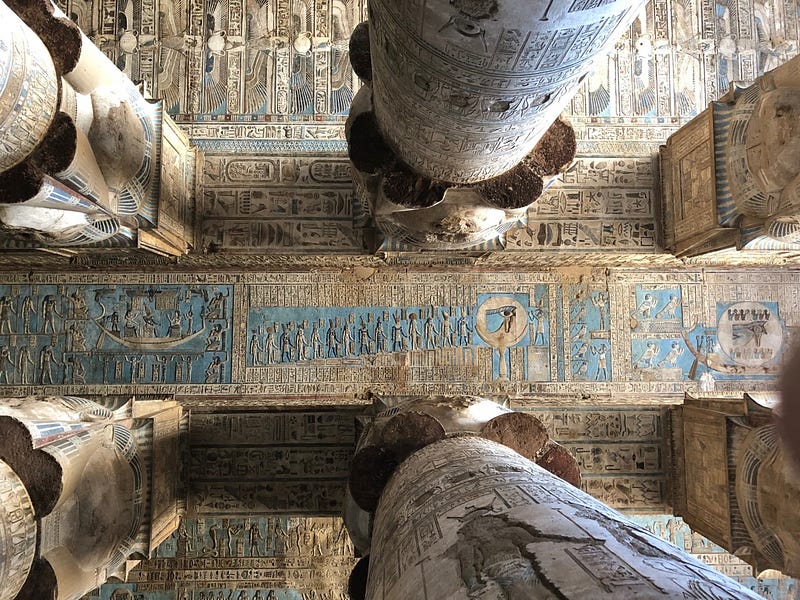
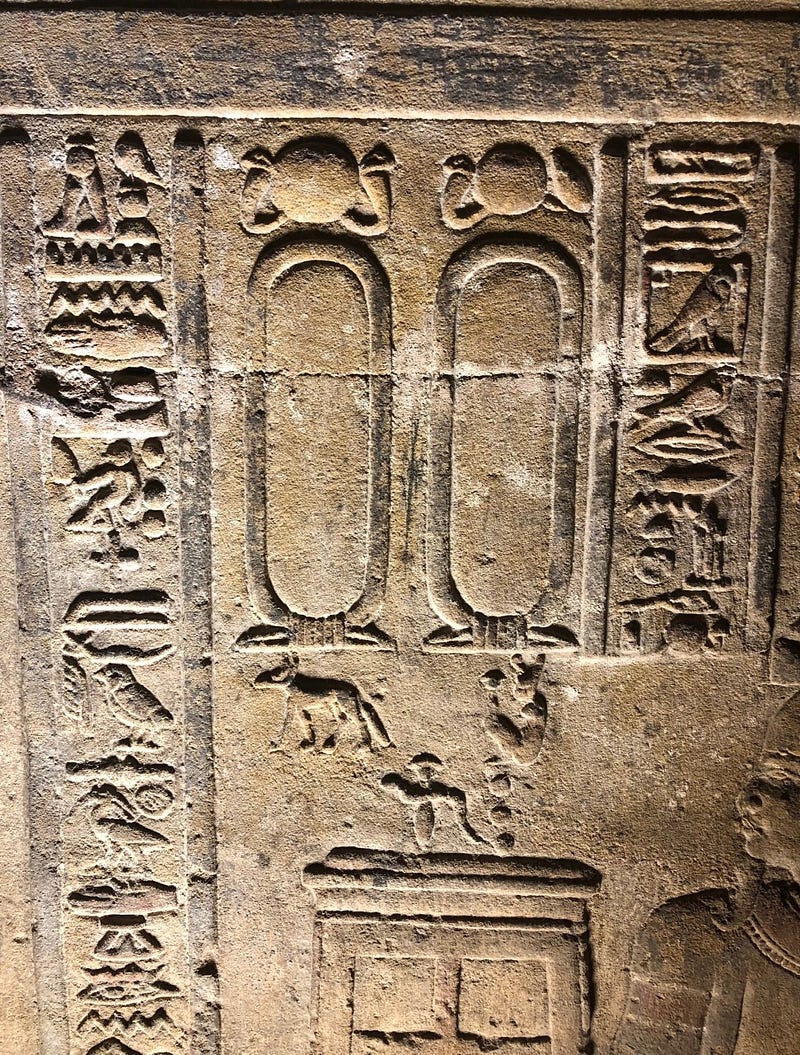
There are some odd details to the temple that make it even more fascinating. The first I will mention are the empty cartouches. Cartouches are used to make the name of the ruler jump out from the accompanying text, like using a highlighter. The names of Ptolemy XII I show a few photos above are inside two cartouches.
But there are many rooms in the temple with completed artwork, obviously engraved for dedication to a ruler, but with cartouches left blank until the artists were sure who that person would be. I could find no conjecture about who was on the short list. Only that the royal succession of the Ptolemies was so unstable that the matter of completing the royal narrative in these rooms was abandoned.
There is another bit of art that has generated plenty of controversy. It is called the ‘Dendera Light’ and to get my own photo of it, I crawled through a stuffy, narrow subterranean passageway near the back end of the temple.
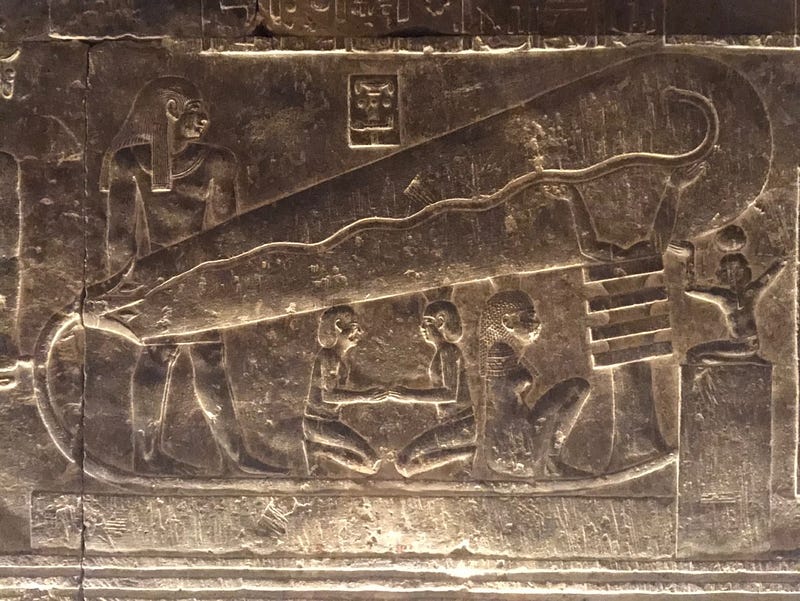
Doesn’t it look like a light bulb? Could the ancients have discovered electricity millennia ago?
Sigh.
So much of ancient Egyptian history gets wrapped up in controversies like this. The motif is repeated in several places in the temple and represents the emergence of Harsomtus (another name for the god Horus) from a lotus flower. What looks like a filament is a snake, and the lotus flower, at lower left, has a long stem attached that to twenty-first century eyes looks like a power cable.
The whole scene depicts an Egyptian creation myth, and Egyptologists confirm this from the hieroglyphic text surrounding the image. It is a fascinating and strange visual, and unfortunately joins the long list of artworks used to promote fantasies about advanced technology in ancient times.
The one thing that is disappointing to see in the Temple of Hathor is the degree to which the wall engravings have been defaced.
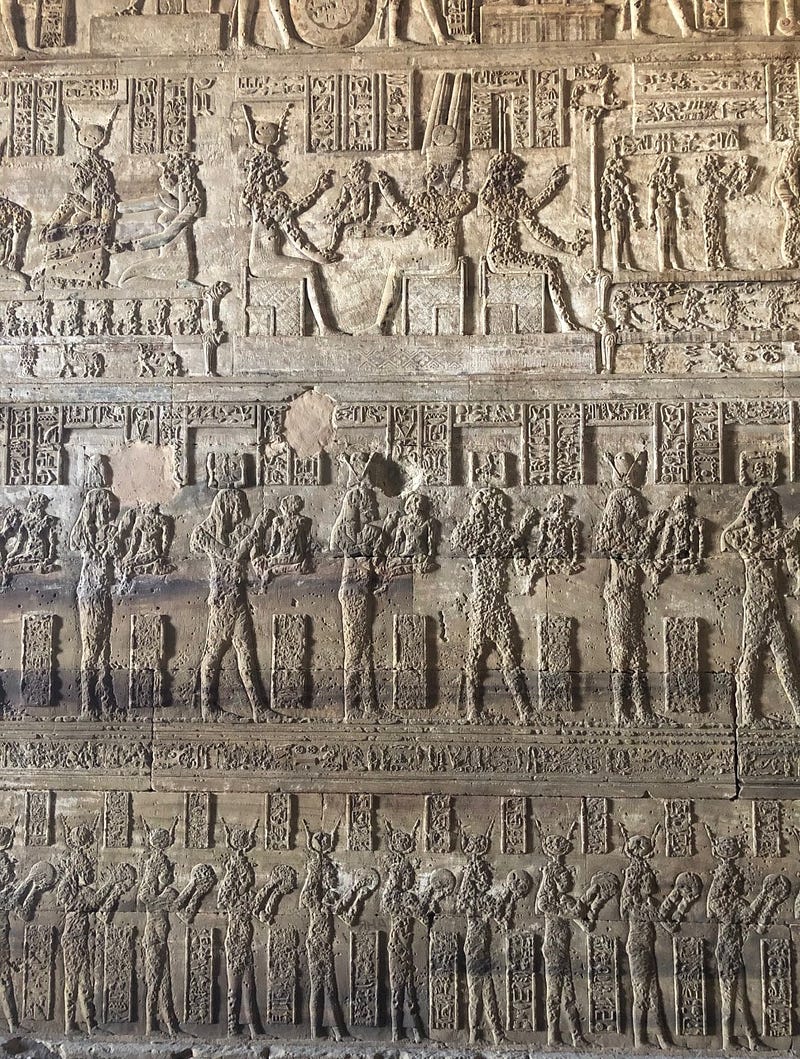
It is not rare in Egypt to see the portraits of certain rulers, or their names, chiseled out of monuments. But in parts of this temple, it has been done comprehensively, seeking to damage the image of any god, king, or their family members.
It is thought that this defacement was executed by early Christians. A Coptic Christian Basilica was constructed, probably after 300 CE, just in front of the Temple of Hathor. This likely provided a nearby source of religious antagonism against the images of old pagan gods and their worshippers.
There are other interesting stories that can be conjured forth from the Temple of Hathor. I’ve just given a few of them here. It was a delight to crawl around tiny corridors, wind up the long staircase to the temple roof, and otherwise explore this unique and perplexing monument. It rates up there as one of my favorite Egyptian archaeological sites.
This article is being submitted for the Globetrotters May Monthly Challenge — Ruins of the World.
For another submission to the monthly challenge by Scott-Ryan Abt, read about the citadel and amphitheatre of Amman, Jordan:
And another by Adrienne Beaumont with great photos of the beautiful ruins of Volubilis in Morocco, which I have yet to visit:
Also, a great comprehensive introduction to the Acropolis of Athens by Alejandro Cuba Ruiz, a monument that should be on everyone’s bucket list:
For another article I’ve written on travel in Egypt:
Please check my profile for other travel-related articles at Brad Yonaka, and consider joining Medium to read many great stories by using my referral link. I receive a portion of your subscription fee.