
The White Desert is Another World
A different side of Egypt
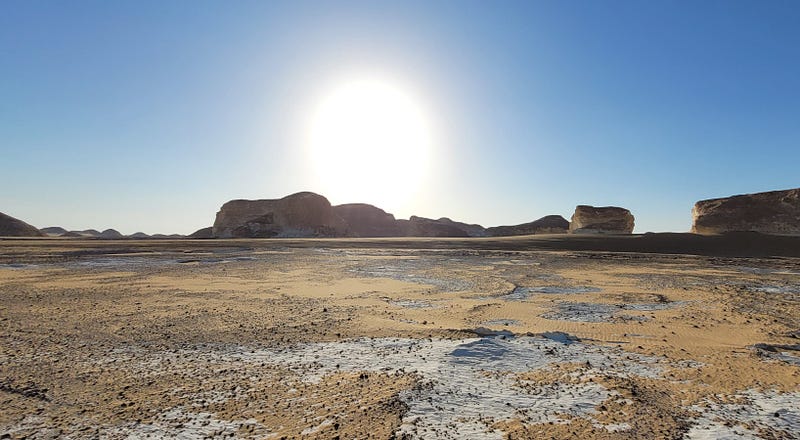
On the bus from Alexandria to Cairo, my daughter begins throwing up. It is almost certainly food poisoning from the roadside shawarmas hastily consumed before leaving town. All night she is sick, as we sit in our dilapidated Cairo hotel room, swatting mosquitos and taking trips with her to the shared bathroom down the hall.
My wife is less than eager to embark on our next destination, that of camping for three days in the White Desert. But the vehicle and guides are already arranged, and a driver will meet us outside at 7 AM. Bleary-eyed and exhausted, we stagger downstairs in the morning and pile into the minivan.
The White Desert is in the western part of Egypt, north of Dakhla Oasis. Some tour companies no longer go there. The Egyptian government has deemed the region unsafe for reasons of national security, restricting entry by foreigners. I had found a tour operator who still offered trips, and who was honest about the questionable legality.
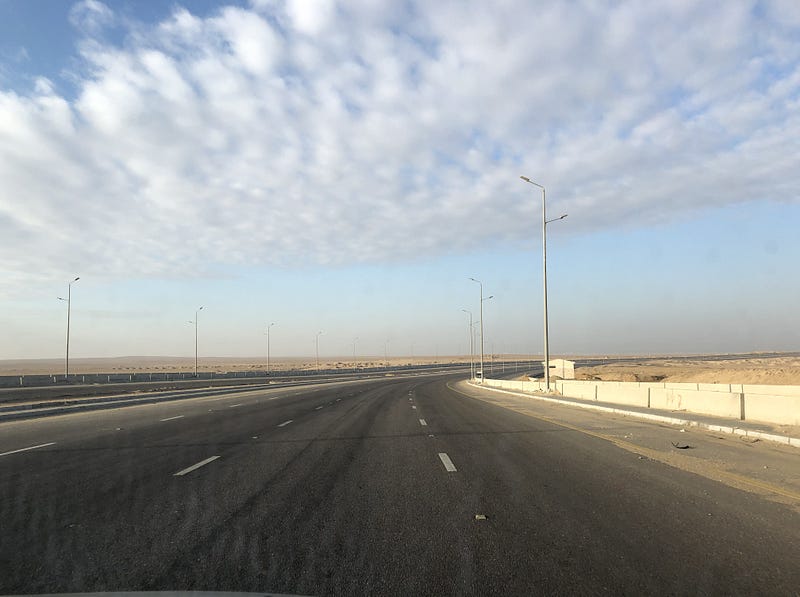
So, with my daughter pale but smiling, we weave our way across the Nile, Giza, and 6th of October City to the desert highways beyond. The route is a bit circuitous, in order to avoid the main military checkpoint.
Four hours later we arrive in the bleached desert town of Bawiti. It is winter, so even the mid-morning blaze of sun is not oppressive out here. We meet our guides Khalid and Ayman, and the 4WD vehicle we will take the rest of the way. My daughter, who had been looking better for the last few hours, runs over and throws up again, into a nearby trash can buzzing with flies.
I ask if we could visit a pharmacy. We drive around and find one. The door is open but it looks like there is no one around. We call out and startle the pharmacist, who is sleeping on a mat below the front counter. The only medicine they have for us is Motilium. That will have to suffice for now.
From here the roads are narrower, and the vastness of the Western Desert closes in on us. Barriers are placed at strategic points to stop the drift of sand over the highway, but it piles up here anyway.
Our day improves dramatically once we reach the oasis of Al-Haiz. The pollution and noise of Cairo are long gone, the clear sky opening like a curtain on our collective mood. My daughter’s color improves, and she is hungry. There is a restaurant, and plates brimming with hummus, pita bread, and cucumbers.
South of here, we veer off the paved road and into the desert. The way forward is unmarked, just sets of tracks disappearing into the distance. We stop on the side of a hill with eroded remnants of an ancient cave system, the cavities now filling with sand. My daughter runs to the top of a ridge, now full of energy and apparently free of nausea.
Further on, we enter the White Desert proper.
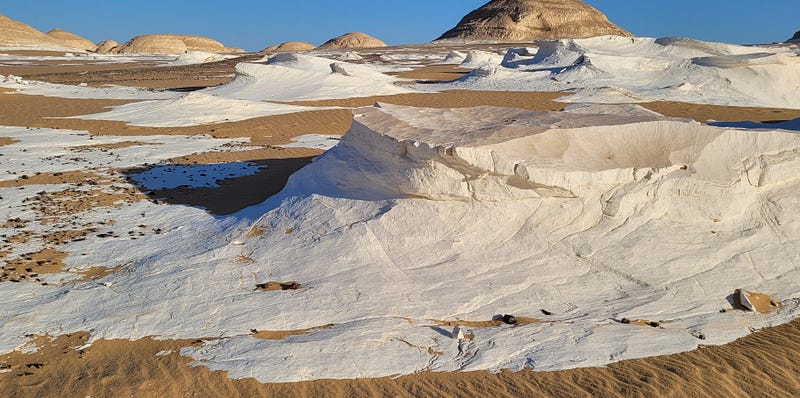
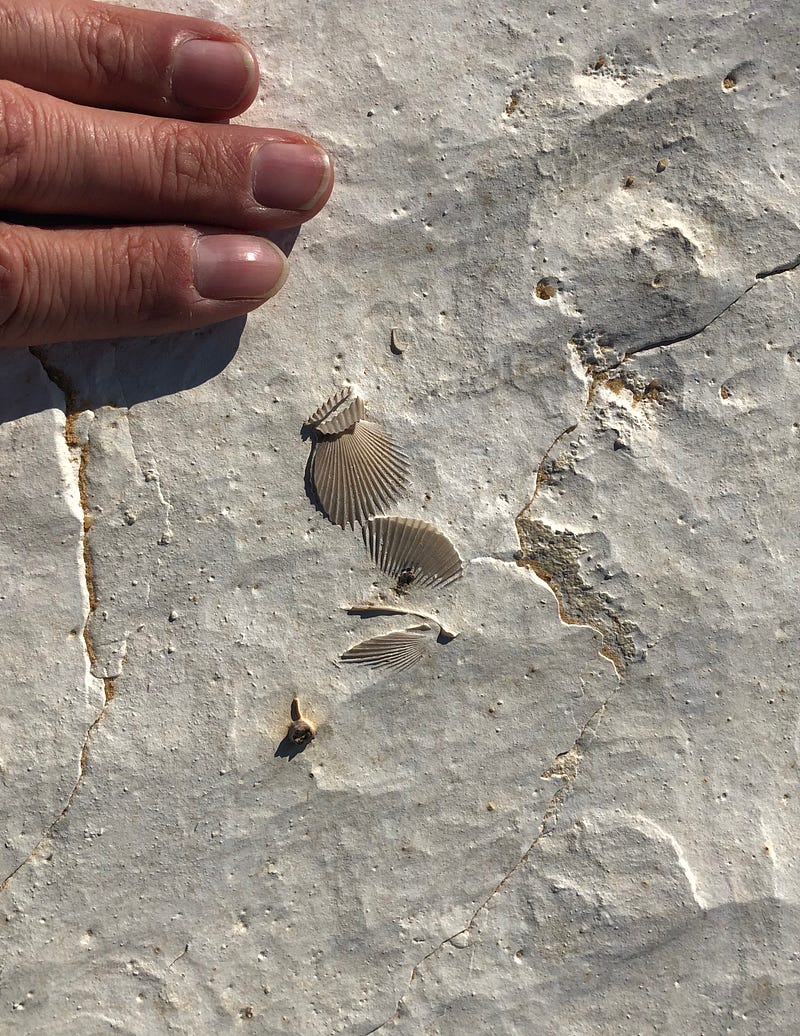
The chalk is what gives the White Desert its name. It formed 80 million years ago when the land we now call Egypt was at the bottom of the sea. A gazillion prehistoric microorganisms rained down through the water column and their skeletons collected as substrates for eons. Many subsequent layers of sediment formed above it. Since that time, the ocean has dried up and the surface eroded downwards, leaving a fantastic terrain, now sculpted by wind.
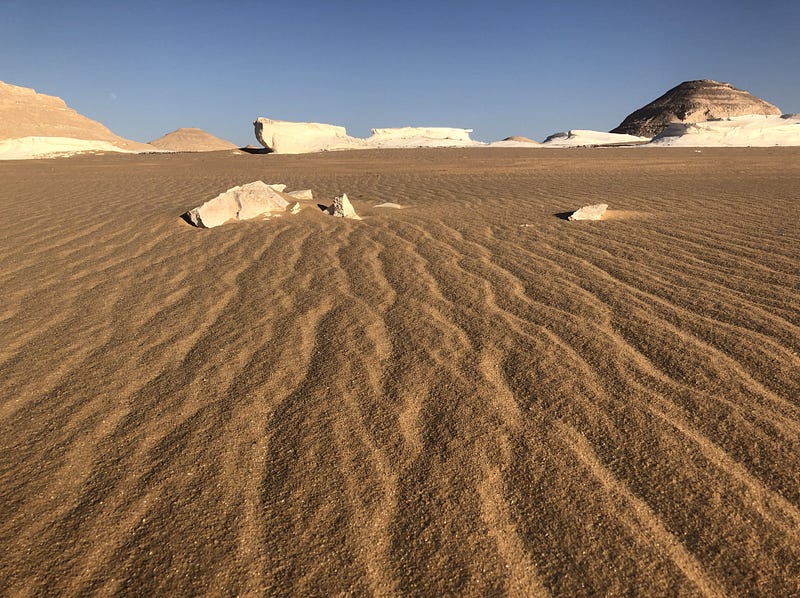
Late afternoon we arrive at our camping spot, a long flat dune between a series of rounded, bare rock hills. As soon as the engine is off, stark serenity flows in around us.
This area has no plant life. Not a single blade of grass. The only sounds are our voices, the wind, and the periodic tick of the truck engine as it cools. Not a single fly or other insect comes droning by.
But the evidence of indigenous life out here is betrayed by numerous tracks in the sand. We can see that there are mice, and their predators, fennec foxes.
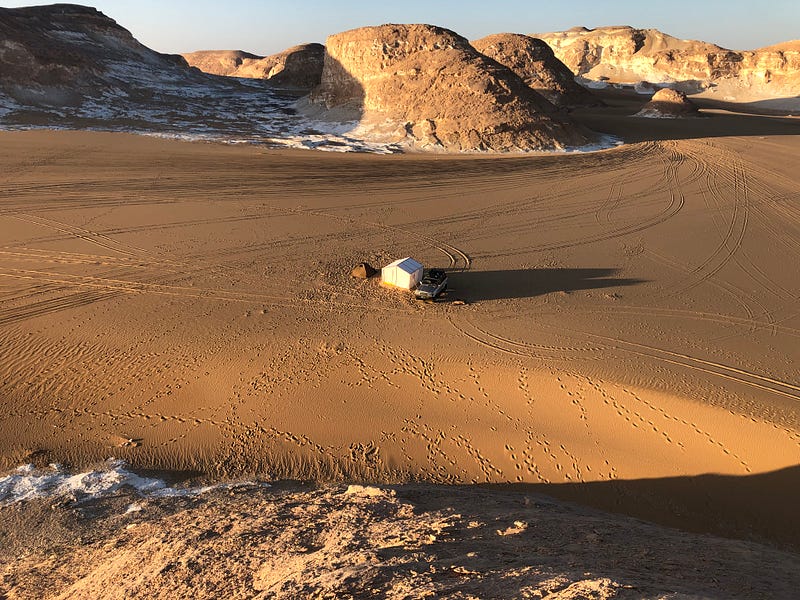
Khaled and Ayman cook up a simple dinner of hummus, chicken, fattoush, and pita. A few foxes come nosing around, barely visible ghostly forms just beyond the light of the campfire.
The moon rises and illuminates the desert enough that we can find our way without flashlights. We wander around for an hour, past immobile, frozen rock giants. The wind dies down and there is absolute silence.
December nights in the White Desert are very cold. We curl up in sleeping bags inside the tent, under two layers of heavy camel hair blankets.
The next day we make our leisurely way to the next campsite. We stop at many places along the way, each interesting and different in some way.
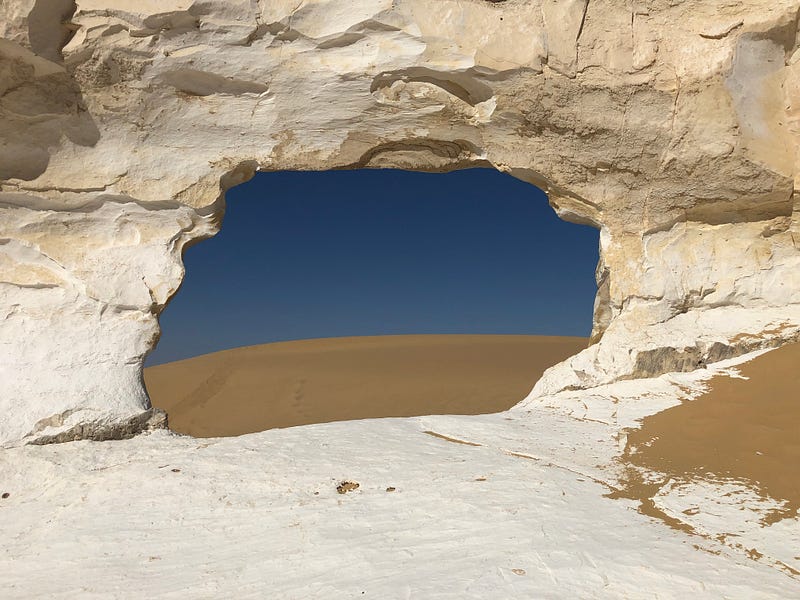
We pass through a few areas with vegetation. No more than a few bushes and trees, but it seems like a lot after seeing nothing green at all. We go sandboarding down a dune, hunt for fossils and eat lunch under an acacia tree. A few times we see other vehicles, carting around visitors but most of the time it is just us.
We stop at an oasis. There is no stereotypical pool of water here, just a tiny spring emerging from amidst a clutch of date palms. It has been channeled through a pipe to a concrete reservoir, where camels can come to drink.
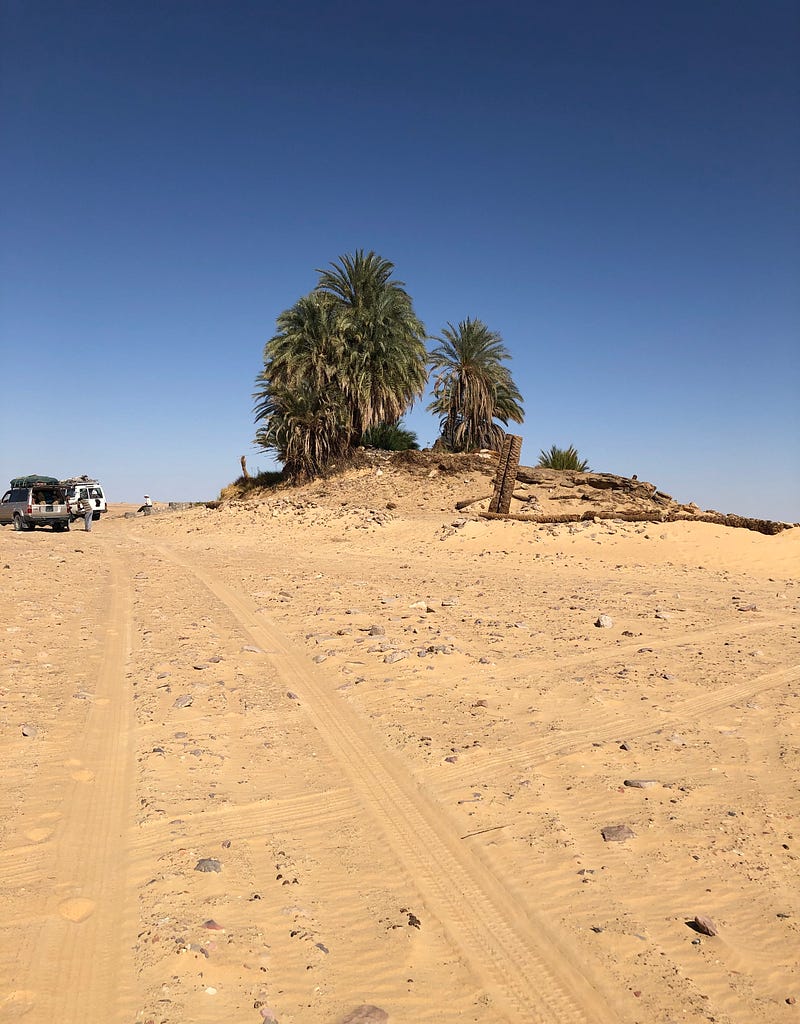
This oasis, and others we see, have been on the map for thousands of years, used by trans-Saharan trading caravans from Pharaonic times onward. They’ve quenched the thirst of Roman soldiers. The lumpy topography around them is littered with the detritus of humanity.
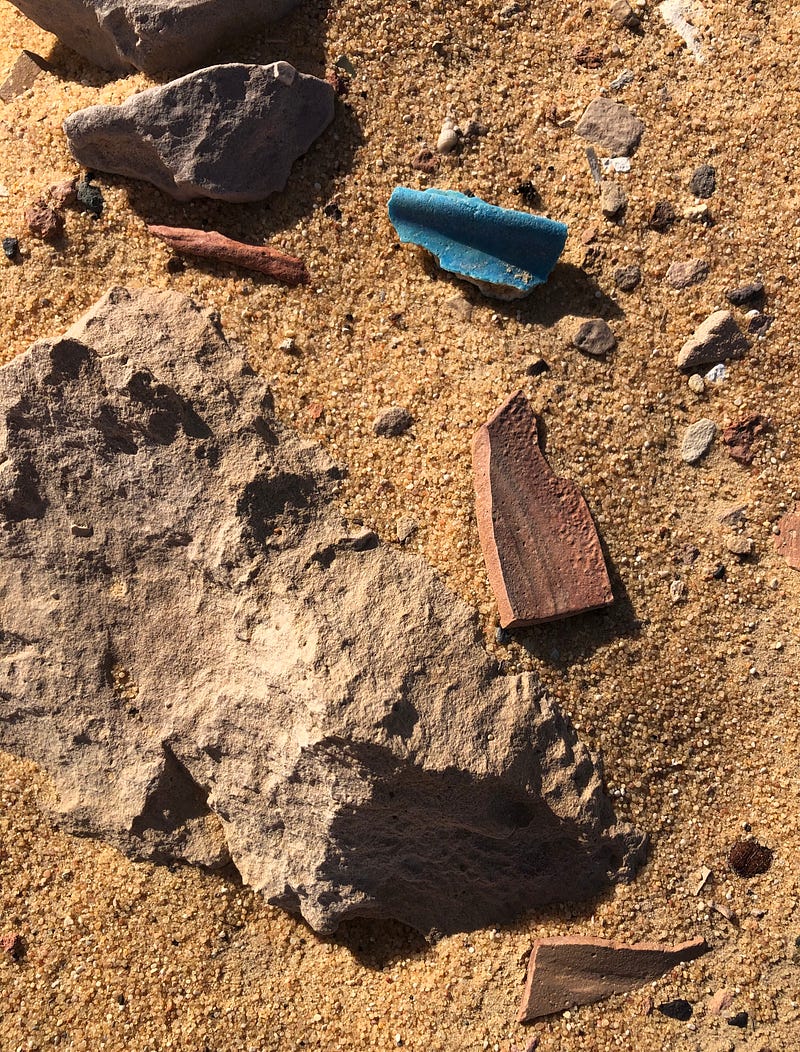
From the years I’ve spent kicking around Egyptian archaeological sites, I can tell there are treasures to be found. This is evidenced by the arrangement of worked stone, the shape and color of pottery shards, and the squared-off, half-buried mud brick foundations of structures now long gone.
The place we stop to camp on the second day is just as surreal and beautiful as the first. Here, the chalk formations have eroded into discrete pillars, suggesting many forms such as eagles, mushrooms, and camels.
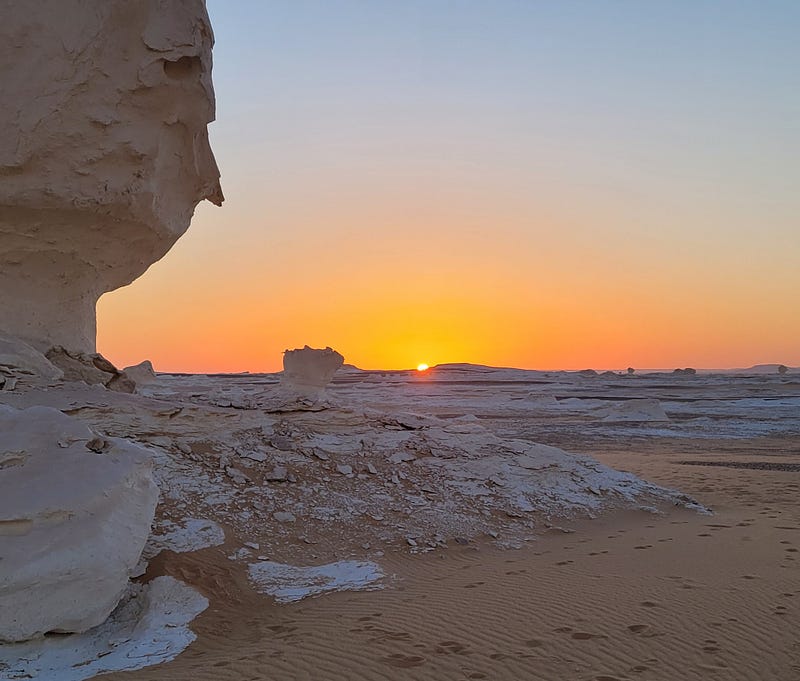
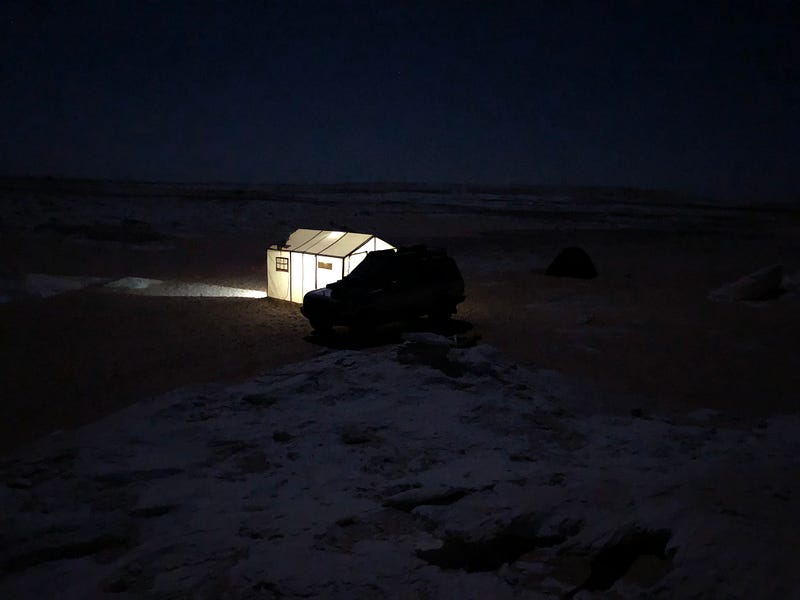
At night, the foxes call to each other in the distance, yipping and hooting. Khalid comments on the cultural differences between his desert upbringing and the lifestyle of the Nile Valley cities. Out here, religious doctrine is tempered by Bedouin traditions, and the stark necessities of living in such a harsh environment.
Spend much of the next morning walking around, enjoying the unusual rock formations. For my daughter, it is like the biggest playground in the world.
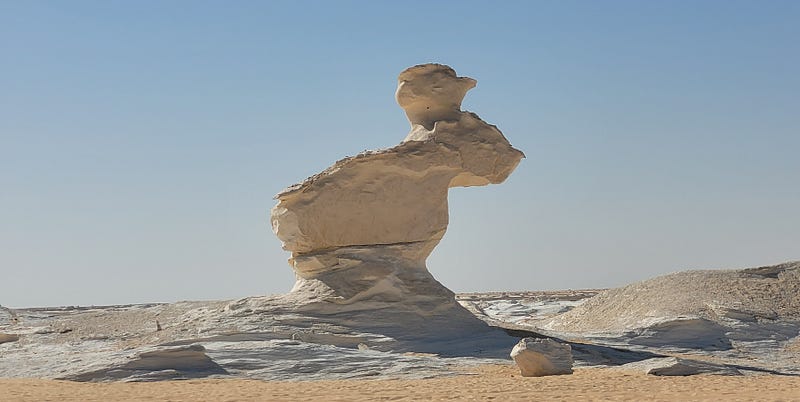
We leave the exposed chalk layers and enter a sequence of rocks dominated by mudstones. They form much more rounded exposures.
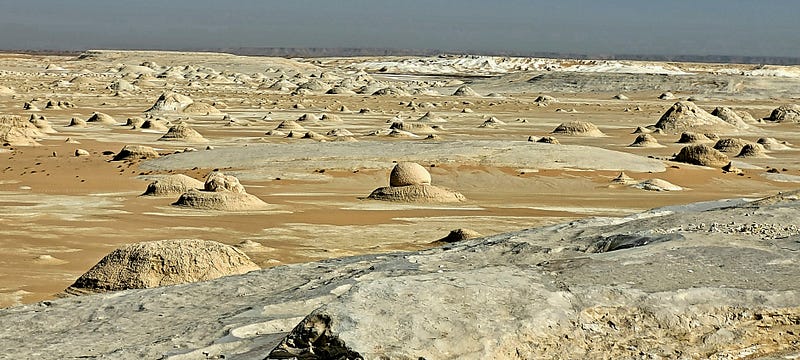
It is our last night camping. For the first time, we meet other visitors camped nearby and share on-the-road experiences around the fire. The conversations undulate in that familiar pattern between travelers; recounting, comparing, best and worst of, and advice on how to get here or there. Khalid drags out a battered hookah and the talk gradually takes a turn into the philosophical and esoterica.
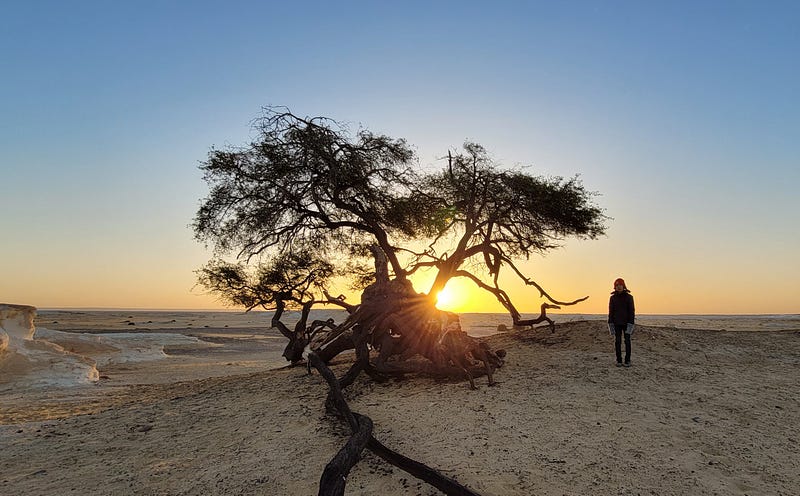
Egypt offers a great variety of travel experiences, but the White Desert stands apart, timeless and alone. If I were putting together two words that best describe this place, they would be, perhaps, beautiful emptiness.
For a similar experience with many beautiful photos, and including much more about the nearby Black Desert, check out this article by Darren Weir:
For another article by myself relating to Middle Eastern travel:
Please check my profile for other travel-related articles at Brad Yonaka, and consider joining Medium to read many great stories by using my referral link. I receive a portion of your subscription fee.


