
SCREEN HABITS, FOCUS, PRODUCTIVITY & BRAIN TRANSFORMATION — PART II
The Biggest Lessons About Habits I’ve Learned From a Boy & His Best Friend
… and how they can help you to transform your Life.

Let me paint you a picture. At 5 p.m., a brown dog sits in front of a bus stop, waiting.
He is waiting to see someone, a special someone, its one true friend.
Fifteen minutes later, a ten-year-old boy and the hound were playing together while walking home, as the boy had just come back from school.
After what probably was half an hour playing with his friend, the boy would then seat down with a book in his hands, reading out loud, while the hound lay next to him.
His caring Mom would appear too, letting the boy know dinner would be ready around 7 p.m., and he still had homework to do.
There were no smartphones, no tablets, and I found out later that the only TV they had was broken — and yet, they didn’t care. I also found out that boy was a straight-A student.
That family didn’t have much, but they had each other, and they had all they needed.
As for those who were watching, our hearts were full, with a lesson to hold dearly: In a world where everything seems to be digital, distractive, and artificial, real happiness continues to lie in the simple habits and moments of our lives that keep us fully present, while surrounded by true lasting and profound connections, love, and loyalty.
This, however, would be only one of the lessons. There was another one, hidden from the naked eye.
Before we continue, if you have just landed on this page, I must tell you this is the second part of a 2-Part Article, so I invite you to please read Part I first, to your advantage. It won’t make much sense otherwise.
You can read it here ⬇️
How To Have Focus & Transform Your Brain Even If You’re Over 25
You already know how your brain (and your children’s brains) work as a sponge before reaching the 25-year-old mark, and why science is calling our attention to the fact that excessive use of smartphones and other digital gadgets is empoverishing our children’s intelligence, focus, and productivity while hurting their brains and overall health.
You also know that if you are over 25, you no longer have neuroplasticity in the same way you had before.
I’m always saying that no matter where you are in your life, you can still rewire your brain to build the life you dream of, and this is still true. However, to open your neuroplasticity windows and transform your brain after this age, you’ll need to make sure you meet a few conditions.
Today’s post is a bit long, but in it, I'm going to dive deeper into the biology of these processes. I‘ll keep it simple, and in the end, I’ll be giving you tools to help you transform your brain, thus creating the foundations to transform your life.
🧠 There Are 2 Conditions To Open Your Neuroplasticity Windows:
One is ‘emotional’, and the other is ‘cognitive’.
📌 #1) ADRENALINE: Activated when you are awake and in an alert state (the ‘emotional condition’).
This is what science calls “autonomic excitability”. I know, it’s a bit complicated name, but basically, it refers to the passage from an apathetic state to an alert state, necessary for neuroplasticity to occur. And this gives you a few important pieces of information:
— First of all, this means that if you are used to listening to anything while sleeping in hopes that you’ll learn something, that won’t happen. On the contrary, if you’re listening to stuff while sleeping, it will damage the quality of your sleep, and without quality sleep, there is no neuroplasticity.
— On the other hand, during the day, you need to be awake and alert. Chemically speaking, this means the presence of adrenaline in your brain. And if you’re wondering where adrenaline is produced, the answer is in the adrenal glands (in your kidneys), but also in your brain, in a place called locus coeruleus (complicated name, I know, but don’t worry, it’s not for you to memorize, it’s only for nerds like me that might want to study this subject deeper). 🧠
From there, adrenaline is projected to all places inside the brain. In essence, adrenaline makes electric shots, elevating your alert state — so much so, that if you have a traumatic experience you’ll never forget it because there’s a lot of adrenaline released at that moment: your body is putting you in an extreme alert state because you’re in a potential fight or flight situation.
When you’re in an alert state, you learn new things. Have you ever had a professor with a monotone? Do you remember his/her lessons? No, because he/she closed the neuroplasticity windows in your brain (and you probably fell asleep in the process).
When you do things that engage and motivate you, thus putting you in an alert state, you transform your brain— from a chemical point of view, this is linked to the presence of adrenaline as I’ve mentioned before.
Just a curiosity for you who love details: to differentiate the adrenaline produced in the brain, specialists like to call it “epinephrine”. But what I truly want you to keep in mind is that without an alert state, there is no neuroplasticity, and that’s why neuroscience tells us that we need an emotional state to open those windows: joy, excitement, motivation, sense of purpose, (…), are all emotional triggers to build an alert state inside of you, releasing adrenaline and thus opening the neuroplasticity windows, allowing your brain to be transformed.
— Ok Sally, but what about emotions like fear or anger? Yes, those work too. The truth is, to our brains, adrenaline is adrenaline, regardless of the emotional state that triggers it. However, if you go through a trauma that puts you in an extreme and unwanted alert state, most of the time this will scar your brain. This happens because one of the bases of the memory of traumatic experiences is precisely the quantity of adrenaline inside your brain, making you relive that moment (to the point of you developing PTS (Post-Traumatic Stress), needing psychological and psychiatric treatment).

📌 #2) ACETYLCHOLINE: Activated in 2 different areas of your brain when you focus (the ‘cognitive condition’) There are several types of attention studied by science, but not every type of ‘focus’ will allow your brain to transform.
The two types of focus that open the neuroplasticity windows and allow your brain to transform, are, simultaneously: Selective Attention (when you pay attention to one thing, and one thing only, selectively choosing that thing to focus on, regardless of all others), and Continuous Attention (when you put your focus on that one thing for a long period of time).
I’m not going to enter into the complex scientific terms and chemical processes that activate the brain circuits necessary for this to occur, as that is not the goal of my articles. The only thing I want you to understand is that these complex processes occur only when you have selective and continuous attention simultaneously, increasing the salience of a stimulus, and thus opening the neuroplasticity windows.
In summary: when you are in an emotional alert state (motivated) and focused on one thing and one thing only for a long period of time, your brain transforms.
But keep in mind: you need to sleep for the right amount of time and with quality, to make sure your brain solidifies this transformation.
In the meantime, there is also the GABAergic substance involved in these processes, because being focused is not saying ‘yes’ to everything: on the contrary, is saying ‘yes’ to one thing, and ‘no’ to everything else — this is true in a psychological point of view, but also in your brain’s roots. If you can’t say ‘NO’ to everything else, you will never be able to say ‘YES’ to what truly matters, and your brain will never be transformed.
While Epinephrine (Adrenaline) and Acetylcholine are neuromodulators that will excite the neurons, increasing the likelihood of firing neurons, GABA, on the other hand, is a highly inhibitory substance in your brain, that kinda shuts down neurons to make sure you are laser-focused.
The problem in our contemporary world is that the most stimulated attention is not selective and continuous attention, but alternate attention (the distraction). When you jump from one app to another on your smartphone, for instance, you are closing your neuroplasticity windows as I’ve explained in the first part of this article.
That’s precisely why we have so many cognitive problems in the new generation, accustomed to digital gadgets since infants. This prevents the brain from transforming itself to its full capacity, and learning new things, even if we’re talking about brains less than 25 years old because these brains will never transform as much as a brain that practices continuous attention.
We live in a world of movement: everything is video or movie, and it’s no wonder that people have increasing difficulties in just seating down to read a static book.
Smartphones are the center of all this. If you stop to think about it: everything on your smartphone is movement, with your alternate attention being stimulated all the time. You feel motivated, but you’re impoverishing your capacity of having selective and continuous attention, thus impoverishing your brain’s capacity to transform.
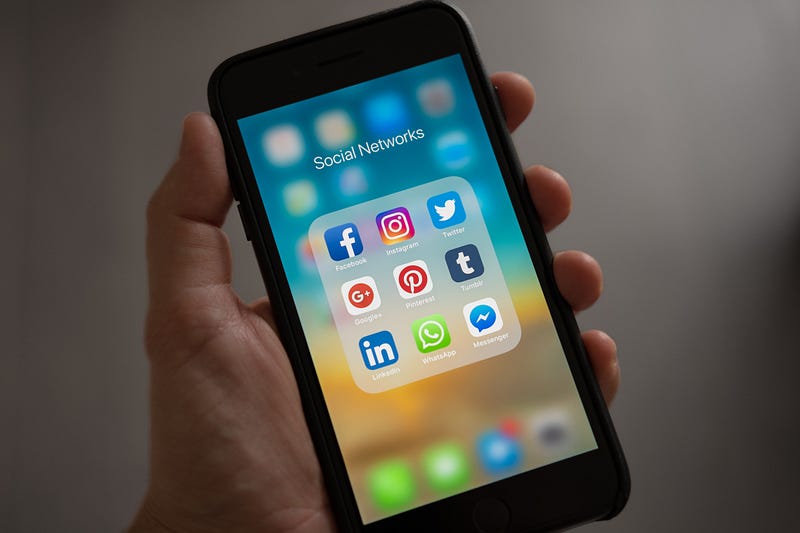
You need healthy habits that motivate you and engage your continuous attention, in order for you to transform your brain and your life. A brain without a healthy routine is a sick brain.
Remember the story of the boy and his canine friend I told you at the beginning? Here’s the second lesson:
Without knowing it, that hound was keeping the boy fully aware of the present moment, focused on one thing for a considerable period of time, while playing with each other.
This stimulus was helping the boy’s brain to train its continuous attention because he’s excited and engaged, focusing on one thing only at a time, and with a sense of fulfillment and happiness. Because he’s used to reading and takes pleasure in doing so, when doing his homework he’ll be motivated, able to focus and absorb information while transforming his brain and his life.
🧠 How to Open Your Neuroplasticity Windows in 5 Seconds With 5 Simple Habits:
📌 1 — Did you know your Mental Focus is directly associated with your Visual focus? Scientific studies show that when you learn how to focus your vision, you learn how to focus your mind even if you’re above 25.
Andrew Huberman, a Neuroscientist and Professor of Ophthalmology at Stanford University (his specialty is the correlation between the eyes and the brain), has a practical tool I’m going to share with you:
You can regulate the scope of your focus, just as if your eyes are a camera lens. Try this exercise:
> With your conscious, you can focus on just one word of this text. Your eyes will become a bit cross-eye for a moment because you’re diminishing your interpupillary space.
> Now do the opposite: consciously, open your vision scope to everything around you.
Everything you practice becomes better and easier for your brain. If you want to focus on a professional project, just reduce your eye scope. You are promoting a signal to your brain to open the secretion of Epinephrine (Adrenaline) and Acetylcholine, opening your window of neuroplasticity, and brain transformation.
So simple, right? It’s insane that no one teaches you this in schools.
The same applies if you want to pay attention to one thing you’re hearing: you reduce the scope of your audition. It’s harder since we have better control over our vision, but it’s doable. One way to do it is by closing your eyes.
Have you ever watched a professional musician playing? Some musicians not only close their eyes, but they also play with one ear close to the instrument they’re playing, so they can hear better while increasing the signal of what they want to hear and decreasing all noises around them.
In both situations (vision and audition) you need to shut down completely the noise (being that visual noise or sound noises).
📌 2 — Shut down all notifications from apps on your phone, or at least the ones you don’t absolutely need. While you’re at it, uninstall all apps that are not absolutely necessary and are only highjacking your continuous attention.
📌 3 — When you are trying to focus on an activity, hide your smartphone, to make sure you’ll no longer have drains sucking your attention.
📌 4 — Don’t have a gazillion of tabs open on your computer: learn how to reduce the noises around you, so you can focus on the task you have at hand.
📌 5 — We all have biological rhythms. One of them is the circadian cycle, which I’ve talked about in previous articles, and comprises the 24h of the day, but there’s another one: the ultradian cycle, comprising 90 minutes.
The scientific recommendation is that you don’t stay in a hyperfocused state for more than 90 minutes. This means you should make breaks every 90 minutes top (the minimum is 30 minutes of continuous attention for maximum benefits), and then a break of 15 minutes to recover energy. Don’t focus on anything during that time, only relax, take a walk, and practice mindfulness — meditation practiced daily actually brings incredible benefits to improve your focus. Then go back to work.
That speech that you hear from a few ‘gurus’ that you need to work while others sleep, to get what they only dream of, is bul*hit. You need to have balance in your life, and sleep and relaxation are also mandatory for your brain to work at its full potential.

🧠 The 3 Pillars of Neuroplasticity:
📌 Pillar 1: Respect Your Circadian Cycle — you need the biological rhythms of your body to be regulated and healthy. This starts with your SLEEP. During your sleep, your brain sediments memories and learning processes and prepares itself to learn new things and to work at its full capacity. The word “Circadian” comes from Latin, and it means ‘one day’. When I say you have to regulate your circadian cycle, I mean you need to have a routine with time to sleep, time to work, time to relax, etc., aligned with that cycle.
If you’re the type of person who struggles to adapt to a routine like I used to, you probably say that chaos is what allows you to function better. Today, as a more mature person, I understand the size of my self-deception, because today I have a lot more focus, productivity, energy, and creativity.
I do a lot more in less time than ever before, allowing me to relax and have fun more often. I function better today than when I was in my twenties with more chaotic routines because I got my circadian rhythms right: I’ve regularized my sleep and daily routines, to make sure I’m awake and productive when I’m supposed to, and I’m relaxing and sleeping when I’m supposed to.
If you are always tired and sluggish, it’s impossible for your brain to transform because you won’t be able to reach an alert state — necessary to open the neuroplasticity windows, as I’ve told you before. How to get there? SLEEP! For the right amount of time (minimum 7h, maximum 9h), and always at the same time frame.
Dopamine is involved in your capacity to be in an alert state so you can have energy and a predisposition to do your tasks. When you don’t have quality sleep, you harm your dopaminergic system.
Be aware: your smartphone and computer screen’ lights between 10 p.m. and 4 a.m. send a signal to a cerebral circuit named habenula, making your dopaminergic system to be deficient the next day.
In other words: if you’re one of those people who like to stick their faces in their smartphones at midnight, or 1 a.m., make no mistake: you will have less focus, less energy, less motivation, and a smaller alert state the next day, eliminating any possibility of your brain (and life) to transform. Besides, I’m sure you don’t like living constantly tired and sluggish… that’s not living.
Generally speaking, everything that harms the dopaminergic system of your brain, harms any chances of opening your neuroplasticity windows.
📌 Pillar 2: Exercise — if you’re not a physically active person, it’s time you become one. The best combination is aerobics (swimming, running) with resistance activities, at least 2 times a week, but ideally 3 to 6 times (this depends on your age and physical condition, so I advise you to consult a good professional in the physical exercise arena to help you develop a personal strategy). Another way to exercise is by playing outdoors: with your pets, and your children.
Sedentary Bodies and Brains, do NOT transform at their full potential: they are closed to any transformation.
📌 Pillar 3: Nutrition — Whatever you put inside your body, will determine how your body and brain will function. I’ve published two articles regarding this topic with what foods you have to eliminate asap, and what foods are good for your body in general, and brain in particular. I invite you to read them in case you haven’t done so yet (I’m leaving the links at the end).
For today’s article, I’ll only add this information: You need Acetylcholine as one of the brain chemics necessary for your brain to transform.
For Acetylcholine to be formed, you need foods rich in Coline, such as: . Eggs . Fish and Seafood . Liver . Chicken meet . Ox meet . Cauliflower . Broccoli . Brussel sprouts . Almonds . Shiitake mushrooms . Beans . Quinoa (among others).
All these foods help you develop acetylcholine, thus improving your focus.
Another thing to consider is the complete removal of sugar from your food intake, and during the period you wish to be focused avoid refined carbohydrates altogether (sugary foods but also everything derivative from flour, such as bread, pasta, biscuits, cookies, etc.), because due to processes that involve tryptophan and serotonin, refined carbohydrates generate drowsiness. So avoid them when you need to be alert and focused.
Also, don’t eat until you’re stuffed, regardless of what you’re eating: stop at 80%, to make sure you don’t get sleepy — this is ancient wisdom, proved by the most modern scientific studies.

Final Thoughts…
In this second part of my article, I've shared with you the 2 conditions, 5 simple steps to achieve those conditions, and the 3 pillars needed for you to open your neuroplasticity windows and transform your brain regardless of your age.
Habits are key for everything in your life, and when it comes to neuroplasticity and brain transformation, habits that respect the Circadian Cycle, Sleep, and the right Nutrition, are the 3 pillars that will help you acquire energy and an alert state from different healthy sources.
Also, don’t forget to follow the little boy and his best friend’s example in adding passion and love (motivations) to what you are doing, while exercising the brain in selective focus and continuous attention — to make sure the 2 conditions (emotional and cognitive) necessary for the neuroplasticity windows open are present.
This means you must treat your smartphone as a tool, not as a master: turn social media notifications off, because everything with movement will always make you turn your head to look. If you are always distracted, you’ll be reinforcing your brain to close your neuroplasticity windows.
One of the best ways to exercise selective and continuous attention (focus) is by reading for at least 30 minutes without interruptions — not on your tablet or smartphone, but hardcover books. Pick books that push your boundaries to make your brain evolve continuously (I share several in my articles and newsletters, hand-picked).
I have used a few scientific terms today because I trust your capacity to step out of your comfort zone: this is what transforms your brain.
Always remember: regardless of your age, your brain adapts to whatever you repeat constantly. At the same time, if you stop repeating, your brain will stop reinforcing those avenues, and you’ll get worse at something, even if you were good once.
I know not everyone who started reading will get to the end — most people are already too adapted to alternate attention, and find it difficult to focus on an article that requires precisely that: focus and continuous attention.
To you who have stayed with me this long, congratulations: If you were focused all this time without distractions, you have opened your neuroplasticity windows while transforming your brain with more knowledge to empower you to unlock your full potential and lead a truly successful life.
🧠 Join my VIP List to access Exclusive Content. To learn more and subscribe, click here (it’s free).
Yours truly, Sally.
_
Recommendations:
Because the bibliography that inspired today’s article is a bit extensive, I won’t leave it here, but please feel free to send me an email at [email protected] in case you wish to dive deeper into this subject. I will however reinforce the one book you must not leave out:
📚 Screen Damage: The Dangers of Digital Media for Children, by Michel Desmurget, Neuroscientist & Director at the National Institute of Health and Medical Research in France — Click here to read a summary and check the price(s) of the English version.
_


