
SCREEN HABITS, FOCUS, PRODUCTIVITY & BRAIN TRANSFORMATION — PART I
Screen Damage: This Is What’s Happening To Your Brain, And Your Children's Brains
You cannot afford to disregard this information.

I don’t want you to be scared of what I'm about to tell you, but this is something everyone should know, particularly if you’re a parent, but even if you’re not.
In 2019, Neuroscientist Michel Desmurget, Director at the National Institute of Health and Medical Research in France, published a very controversial book.
In his book, he states and proves that digital gadgets are dumbing down people around the world.
In other words: the constant use of smartphones and other digital gadgets is reducing cognitive capabilities, including our intelligence, particularly in newer generations, while increasing abnormally the equivalent of the number of hours of work of the brain: added up over the first 18 years of life, the number of hours spent in front of a screen by an average teenager is now the equivalent of almost 30 school years or 15 years of full-time employment.
Let that sink in.
There’s a phenomenon called in science as the Flynn effect, documented by Psychologist James R. Flynn, and corroborated by several other scientists. This phenomenon is basically the fact that the average IQ tends to grow from generation to generation, which means that every generation tends to be smarter than the previous one.
Until now. Recent studies have shown that in developed countries the Flynn effect is reversing. For the first time in history, the new generation is less intelligent than the previous ones.
According to Michel Desmurget’s research, this is associated with the increased use of digital gadgets.
If you understand how your cellphone, tablet, laptop, and computer work, but you don’t understand how your own brain works, you’re neglecting the one tool that will truly make or break your success (and your children’s success) in all areas of life. I strongly advise this reading.
Today’s society is getting dumber by the day; for the first time in history, our children have a smaller IQ compared to their parent’s generation.
Now you know why it’s a controversial book.
One of the motives behind this IQ decrease is surely the severe focus crisis we are facing: truth is, we struggle to focus more than ever before.
Have you noticed how social media keeps pushing you to create short videos? This is happening because algorithms have picked up that the average focus time of a human being is now less than 20 seconds.
The human brain is adaptative: it adapts to the environment you are living in right now (which is why it’s so important you choose your habits wisely if you truly want to live a happy and successful life). The problem is that the majority of us are living in environments that do NOT promote nor stimulate our focus, but rather our constant distraction.
Let me ask you a question: how many apps (particularly social media) have you installed on your smartphone that keep popping up news or anything else that requires your attention?
This type of environment is making our brains adjust to a world of distractions, which in turn is making it increasingly harder to focus even when you know you need to focus to get a job well done.
This affects your productivity, professional growth, and even your personal relationships: if you can’t focus on your work, you won’t be doing a great one, and someone will eventually replace you; if you can’t focus on your spouse, son, or daughter, your relationships will most likely also take a severe toll.
But it doesn’t stop there.
Our brains have a very peculiar characteristic: they can change, which is why it’s possible for you to keep learning and becoming a better human being by the day. It’s what science calls ‘neuroplasticity’ — it’s thanks to it that your brain can learn new things, make you think differently, forget things that no longer deserve your energy, surpass hurtful memories, change your emotional patterns (transforming your emotions into your allies instead of enemies), and evolve your emotional intelligence.
So, if you want to transform your life, you need to learn how to use neuroplasticity in your favor so that your brain can become better by the day.
And here comes the kicker: in an adult brain, neuroplasticity only happens when you FOCUS. Yes, you read that right: Without focus, there is no neuroplasticity in an adult brain — which means your brain does not transform, and it slowly starts to die.
Now you understand the huge problem our modern society in general — and our families in particular — are facing.

This Is How Your Brain Works
To understand better how our brains work, we need to start from the beginning: by studying a baby's brain.
Unless you’re somehow involved with sciences that study the human brain, you probably don’t know that a baby’s brain has many more connections than an adult’s brain. However, in a baby’s brain, those connections are very imprecise, which is why a baby can’t walk, talk,… etc.
Imagine a city, with lots of small streets intertwined in complete chaos. There are no avenues, no structured neighborhoods. Such is a baby’s brain.
What happens while the child gets older, is a process of reduction of connections so that the connections that truly matter can be strengthened, forming ‘avenues’ that will make the connections between neurons more efficient — leading to a more efficient brain.
This means that in a baby's brain, neuroplasticity is very high: when you put a baby into a specific environment, he/she absorbs very rapidly the transformations of that environment (like sponges).
A very good example of this is language: a baby that is put in a bilingual school and grows up in a home where parents communicate in both languages, will naturally speak those two languages. But if you had to learn a second language when you were an adult, you already know how difficult that was. This shows well how plastic and malleable a baby’s brain is, which continues through adolescence as part of human development.
If you’re wondering when the human brain starts losing its neuroplasticity and sponge effect, it’s around 18 years old and gets concluded around 25 years old.
What I want you to understand at this point is that the capacity that a baby, child, and even adolescent has to transform, is automatic — which means that when included in a specific environment, he/she won’t need the same focus you need as an adult to absorb that environment. After those first 25 years on Earth, everything changes.
This malleability in our brains, when we are children or adolescents, brings a series of benefits, obviously — it’s easier for us to learn things at that age, making it also easier to learn other things in the future.
For instance: those of us who had the opportunity to learn two languages when we were growing up, have much more facility to learn a third and even a fourth language in our adulthood. Why? Because the roads were already opened in our infancy.
Another example is a child who learned to play a musical instrument. In his/her adulthood, his/her brain has a series of benefits from a cognitive perspective: their brains are more efficient because music recruits the brain in a very complex way, bringing benefits that remain in adulthood.
The study between the brain and music is very interesting and is the subject of several scientific studies. Because we are all surrounded by music every day, this applies to you too regardless of whether or not you play an instrument. To help you dive deeper into this subject, I recommend this book written by a former music producer who is also a neuroscientist.
That being said, if it's true that malleability in a child’s brain brings benefits for adulthood, it’s also true that it can bring a series of problems, particularly in traumatic experiences: emotional abuse, emotional negligence, and physical abuse — particularly in the early years of a child, but also during childhood and adolescence —, is profoundly striking for the brain, bringing issues that can be carried throughout adult life. If the child’s brain is more malleable, that means it’s also more vulnerable to negative experiences.
For you to dive deeper into this subject, there’s a book I must recommend that explains how the body and the brain keep the trauma, and how it can be healed. You can learn more here.
If a child had any kind of abuse or even lack of a primary caregiver to give her protection and a sense of security, that will be very memorable, with severe consequences that will be taken throughout life. That’s why protecting children and adolescents from that kind of experience is mandatory for all of us as a society.
As mentioned before, that malleability starts to end between 18 and 25 years old. Please note this is not me who says it, it’s the most recent and respected scientific studies: at 25 years old our brains are no longer automatically plastic.
This means that neuroplasticity can happen, but only in very specific situations. That being said, there's something else I must address: the emergence of new neurons in the adult brain. You’ve probably read something about it in newspapers, it’s what science calls “neurogenesis in adulthood”.
We are talking about new neurons in the hippocampus (a very important structure for our memory); new neurons related to smell, etc. However, the most recent studies show that neurogenesis happens in some circumstances, but is very rare, and even when it happens, those new neurons are very few.
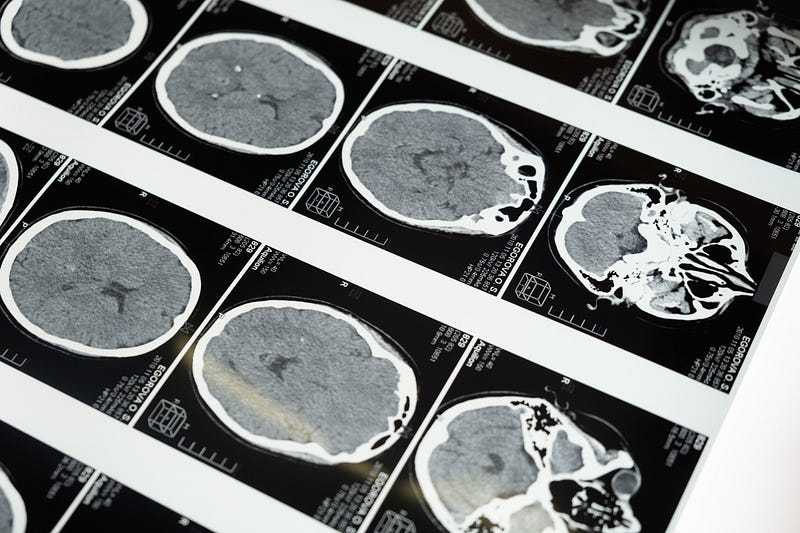
There’s a study made with patients with terminal cancer, who received markers to see if new neurons would appear. After the person died, scientists analyzed how many neurons were born, and the results were categoric: a few were born in some circumstances, but very few. You can read it here.
This is only one study, but there are others showing the same. What does this mean to us: when we talk about the adult brain’s transformation, we are not talking about new neurons, because this is very circumstantial, very specific, and does not happen with a volume high enough for us to be able to say there was a big transformation.
This is the bad news.
The good news is that neuroplasticity happens in the adult brain, but in a different way after you’re 25 years old: after that age, neuroplasticity happens as a reorganization of the connections between neurons — for instance, reorganization of ‘streets’, abandonment of streets that no longer make sense, reinforcement of roads so that they can become bigger, etc., making the brain more efficient.
That’s why it doesn't matter how old you are: if your brain is alive and healthy, you have inside of you the capacity to transform. However, there are a few things I must address.
If you’re in your adulthood, and you are looking to change something in your life, and in yourself — maybe you want to stop suffering because of a memory of something that has hurt you, let go of emotional trauma, learn a new language, or maybe learn how to play a musical instrument, or become a better professional in order to be successful in your arena and earn more money — for all of that you need neuroplasticity: you need your brain to be able to transform. But because after you are 25 years old your brain is no longer a sponge, you need to meet a few conditions for the transformation to occur.
The term used in science is “neuroplasticity windows”: those windows are closed after you’re 25 years old, so you need to open them again.
To help you understand better the machine you have inside of you — a.k.a. your Brain — I’ll dive a bit deeper into the biology of it in the second part of this article, but I promise to keep it simple, and in the end, I’ll be giving you tools to help you improve your focus and transform your brain.
A lot of the things you do daily are automatic, you don’t really think about it anymore — for instance, when you get up to drink a cup of water, or even when you walk. When we’re babies, it’s not automatic for us to walk: our brains need to focus, and we need outside help to get started.
Another example is writing: you write your name even with your eyes closed, but when we are children and we’re learning to draw letters, this is a process that demands self-consciousness, attention, and full focus. It only becomes a habit, an automatic process, after a while.
Another example is when you play a musical instrument. If you are proficient in this, you know it comes naturally. But when you’re just getting started, and you’re still trying to put the fingers in the right cord, you know you need a lot of self-consciousness and focus to nail it — you become more present and aware, which is actually something that brings a lot of benefits to your brain.
Consider this your first lesson in neuroplasticity and brain transformation:
Get out of your automatic mode. Have consciousness and clarity of what you wish to change.
When you’re in an automatic mode, there is no transformation in your brain, because your neuroplasticity windows are closed.
I’m always saying that self-knowledge is freedom, and now you can understand why: while reading this article, you are acquiring consciousness of what is happening inside your brain, and at this particular moment, you are getting out of your automatic mode. By doing so, you are allowing your brain to transform, regardless of your age.
Apply this to all areas of your life: get conscious about what you wish to change specifically.
That being said, there’s something else you need to know: There’s an emotional aspect and a cognitive aspect needed for your brain to transform. Both must occur at the same time.
But because my original article is long, with a lot of information for you to process, I’m aware that I would be pushing your continuous attention to the limit if I shared it entirely in just one post.
For this reason, I’ve decided to divide it into two parts. In the second part, I’ll be sharing with you a story of a boy and a hound, and how they teach us how to open our neuroplasticity windows to improve our focus and transform our brains — necessary conditions to build the life you dream of, regardless of your age. You’ll find a link to it below.
🧠 Join my VIP List to access Exclusive Content. To learn more and subscribe, click here (it’s free).
With love, Sally. _
Recommendations (Books & Studies mentioned in today’s article):
📚 Screen Damage: The Dangers of Digital Media for Children, by Michel Desmurget, Neuroscientist & Director at the National Institute of Health and Medical Research in France — Click here to read a summary and to get it with a discount.
📚 This is your Brain on Music: The Science of a Human Obsession by Daniel J. Levitin, Neuroscientist & former Music Producer — Click here to read a summary and to get it with a discount.
📚 The Body Keeps the Score: Brain, Mind, and Body in the Healing of Trauma, by Bessel Van Der Kolk, Psychiatrist & Trauma Expert — Click here to read a summary and to get it with a discount.
📄 Neurogenesis in the adult human hippocampus Scientific Study by Peter S. Eriksson, Ekaterina Perfilieva, Thomas Björk-Eriksson, Ann-Marie Alborn, Claes Nordborg, Daniel A. Peterson & Fred H. Gage, published in Nature Medicine Journal — You can read the study here.
_
⬇️ What To Read Next:
(Second part of today’s article)


