
Discover The “Healthy Foods” That Are Damaging Your Body & Brain…
…and why you should STOP doing diets once and for all.

Once upon a time, there was a very hard-working young woman who started losing her health and gaining weight she didn’t want to as a result of bad nutrition and sedentary habits. She then went on a mission to recover her body and her health, and like most women around the world, she tried every possible diet under the sun.
As a result, she ended up in a yo-yo situation, becoming sicker by the day — with sluggish feelings, mood swings, lack of concentration and focus, etc.
She then discovered how to eat healthily, but oddly enough, she was not getting better.
It was when her memory started failing her that she started panicking — until a neuroscience professor told her that her daily food intake, which she thought was healthy, was in fact killing her as much as her previous lifestyle.
That hard-working young woman was me.
If you have read my previous article, you already know several foods responsible for our lack of energy, procrastination, emotional burnout, fatigue, lack of memory, mood swings, and lack of focus while opening the doors to diseases such as Anxiety, Depression, and Alzheimer’s — just to name a few.
In today’s article, however, I’m going to talk about the supposedly ‘healthy’ foods that are also damaging to your health, and why.

FISH & SEAFOOD
We all know the best ‘meat’ we can eat is fish and seafood due to the healthy fats and acids such as omega 3, absolutely necessary for our body and brain to function (you should eat at least 3 meals per week for your overall health). However, not everything is as it seems, and there are 2 very in-demand fish I must address:
#1 — TUNA One of the most consumed fish in any diet, Tuna is very sought-after by those who wish to lose weight. But if you are consuming this fish convinced it is helping you to lose weight in a healthy way, you have another thing coming: Tuna has a very high concentration of methylmercury, which is toxic! — Read that again.
All fish is contaminated with methylmercury to some degree due to the ocean’s contamination, but Tuna (and also Codfish, Bass, and Swordfish, to give a few examples), are among the ones that live a longer life in the ocean, feeding themselves on other fish, thus increasing their intake of methylmercury.
To summarize, and contrary to what you’ve probably been told, you should NOT eat Tuna (or any of the other fish I’ve mentioned) more than 1 or 2 times per month in total.
#2 — SALMON Due to the popularisation of Japanese food, particularly sushi, salmon has become in recent years the king of fish on every table. The problem is, the majority of the salmon sold in supermarkets and restaurants is created in captivity, not in the ocean! Some companies feed their salmons with quality food (such as shrimps — the natural food for salmon in their natural environment). That type of captivity salmon is very good and rich in omega 3, but the problem is the majority of the companies that create and sell salmons in captivity feed their salmons with low-quality foods in order to make a bigger profit.
What this means to you: the majority of the salmon sold is NOT rich in omega 3.
Furthermore, the 2004’s study Global Assessment of Organic Contaminants in Farmed Salmon, published by Science Magazine— one of the most important scientific magazines in the world — has concluded that farmed salmon (created in captivity) has the biggest concentration of contaminants when compared with the salmon in the ocean.
The quality of the farmed salmon depends on the companies, but we don’t really have a way of knowing which company is good or not, nor do we have a way of knowing the conditions in which the salon was fed. A good indicator is the price: if the salmon is too cheap, be aware, you are probably eating zero omega 3, and a lot of contaminants harmful to your health.
And if you love sushi (raw salmon), there’s one more factor you need to take into consideration: worms, and other parasites.
When the restaurant does not store the salmon adequately, there will be worm eggs that will contaminate your intestine (you can imagine the rest…), and damage your brain.
Bottom line: If you want omega 3, wild fish (fresh from the ocean) is the best option. However, all wild fish are contaminated by mercury as I’ve told you before. This is why pregnant women are usually advised not to eat fish during pregnancy.
Eat often the other fish, the ones with less concentration of mercury because they occupy the bottom places in the feed chain, such as the Sardine — not the one in cans, but the wild one, fresh from the ocean.
Sardine is very healthy because it’s very high in protein and healthy fats, but also because it’s the only fish that does not feed on other fish: it only eats plankton (you could say it’s a “vegetarian” fish), so it’s not as contaminated by mercury as fish that feed on other fish.

WHEY PROTEIN
Highly sought-after by those looking to lose weight, whey protein can actually be doing more harm than good: a lot of whey has something written on the label but delivers something else.
Moreover, there’s a lot of ‘fake’ whey being sold. That happens because the popularity of a few brands led some golddiggers to falsify variants, that people buy thinking it’s the original brand. Some even include wood powder… So, be very aware.
Once again, the price is a good indicator of the quality.
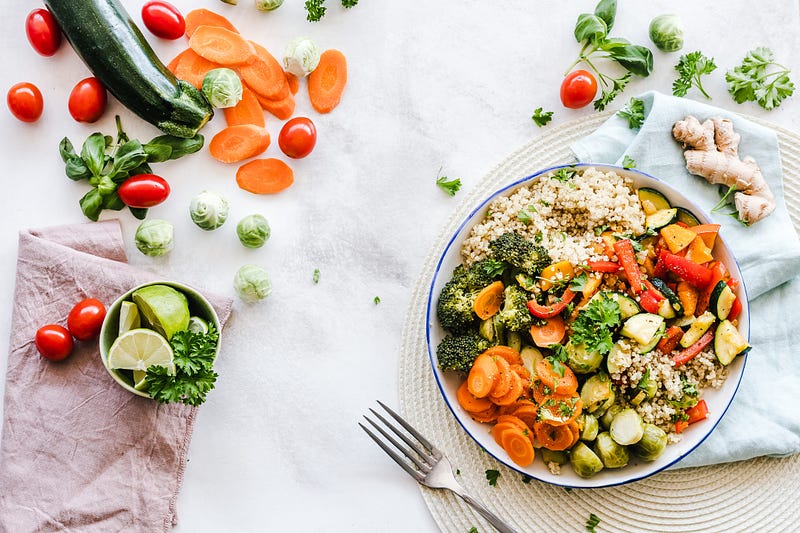
VEGETABLES
You’re probably appalled by this one, and please don’t get me wrong: vegetables are indeed healthy to consume, but — and this is a big but — you need to be sure of where they come from.
Just like fish (usually used as a healthy protein as we’ve discussed before), not all vegetables are made equal. Most of the time they are filled with pesticides that are absolutely damaging and toxic to your body and brain, with little to no vitamins, and doing you more harm than good.
It’s no wonder that major master chefs cultivate their own vegetables: quality is key. And the good news is, you can do it too, even if you don’t have a piece of land.
Truth is, our food supply is very vulnerable, the recent pandemic has exposed that, and growing your own vegetables in your apartment has become an important skill. Creative solutions can turn your apartment into a micro-farm, and in case you have no clue how to do it, just search on YouTube for ideas and you will find all the information you need to get started and have bigger control over the quality of the vegetables and plants you consume. This activity is also very therapeutic, and you’ll also save money, so it’s a ‘win-win-win’ situation, with your brain and overall body thanking you.
Final Thoughts:
You are what you eat.
Nutrition is a pillar of self-knowledge and one of the most efficient ways to improve not just your body but also your mental health and brain function. It’s self-care.
You must love yourself regardless of the number on your scale — this is not open to discussion. However, keep in mind that excess fat, particularly in your brain, is very damaging.
That being said, remember:
- What you need to focus on is NOT your weight: it’s your overall Health. This means you need to get rid of restrictive diets and restrictive thoughts about yourself — once and for all. Life is hard and difficult enough; don’t cultivate an enemy within.
- Be aware of everything you eat, including everything labeled as ‘healthy’ or ‘light’ at your supermarket.
- Focus on the foods’ origin, variety, preparation, and nutrients! I’ve addressed this in this article regarding a few foods, but the principle is the same for all.
- Drop the restrictive diets! They will only harm you due to lack of nutrients and will take you on a very dangerous yo-yo ride while you develop cravings. What you need is to eat real food, the right way (even carbs, because your body and brain need good carbs.)
- No SUGAR and No Processed Foods! Those are another form of toxins, have no place in your body (no vitamins, no minerals, no nothing), and are therefore immediately stored as fat while aging you and worsening your focus, your humor, your disposition, and your memory, creating glycemic peaks highly damaging to your body and brain opening the doors to all kinds of diseases. I dive deeper into this subject in my previous article. In case you haven’t read it yet, I strongly recommend you do so. I’ll leave a link to it below.
Your Body and Brain will thank you!
🧠 Join my VIP List to access Exclusive Content. To learn more and subscribe, click here (it’s free).
With love, Sally. _