
The Average Salary By Education Level
Is a college degree worth it financially?

In view of the high tuition fees, one has to ask oneself whether it is still financially worthwhile to study for a Bachelor’s, Master’s, or even Ph.D. degree.
The main motivation to aim for such a degree is probably that you can earn more money later on. But how much more? And is it even worth it in view of the student loans? In this article, I try to provide an answer to these questions.
The Average Salary By Education Level
According to data from the U.S Bureau of Labor Statistics, the average salary earned by educational level is as follows:
Less than High School Diploma
For individuals without a high school diploma, the median weekly earnings are $592, which equates to approximately $30,784 per year.
High School Diploma
With a high school diploma, you can expect to earn $746 a week or $38,792 a year.
Some College but No Degree
If you have completed some college courses, but not a degree, you earn approximately $833 a week ($43,316 annually).
Associate Degree
Individuals with an associate’s degree earn an average of $887 per month / $46,124 per year.
Bachelor’s Degree
A bachelor’s degree gives you the perspective of earning about $1,248 a week, which equates to $64,896 a year.
Master’s Degree
A master’s degree allows you to earn an average of $77,844 a year.
Doctorate or Professional Degree
With a Doctorate or Professional Degree, the average salary is as high as $97,916 and $96,772, respectively.

Student Loans
It is obvious that you earn more with a better degree. Whether it is financially worthwhile, however, can only be judged if you consider the following aspects:
- How long does it take to complete the degree?
- How much is the student loan afterward?
The average student loans
Here is the exact data on the magnitude of student loans according to educationdata.org.
The average undergraduate student loan debt balance is $36,635.
The average debt among master’s degree holders is $71,287.
The average debt among PhD holders is $159,625.
14.3% of the average graduate student debt is from the borrower’s undergraduate study.
The average graduate student debt is 141.8% higher than the average debt balance among all student borrowers.
How long do you have to study?
In the following calculation, I assume the typical study duration of 4 years for a bachelor’s degree and another 2 years for a master’s degree.

An exemplary calculation
With the following example, I try to find out if a college degree is really worth it.
Let’s look at the fictitious triplets Tim, Tom, and Tobi. All three are in the same grade and graduate at the age of 18 from high school together.
- Tim gets a job right after high school.
- Tom studies for four years and starts working after his bachelor’s degree.
- Tobi gets his master’s degree six years after high school graduation.
They all earn average wages for their level of education. In addition, they all save 15% of their income and, once their student debt is paid off, invest it in the same index fund, which yields them an average of 8% per year.
The Networth Of The Brothers After 6 years (Age 24)
Tim starts working right out of high school and earns an average salary of $39k a year. He saves 15% a month, so he can invest $487.5 a month. After 6 years, a little over $44k has already been accumulated this way.
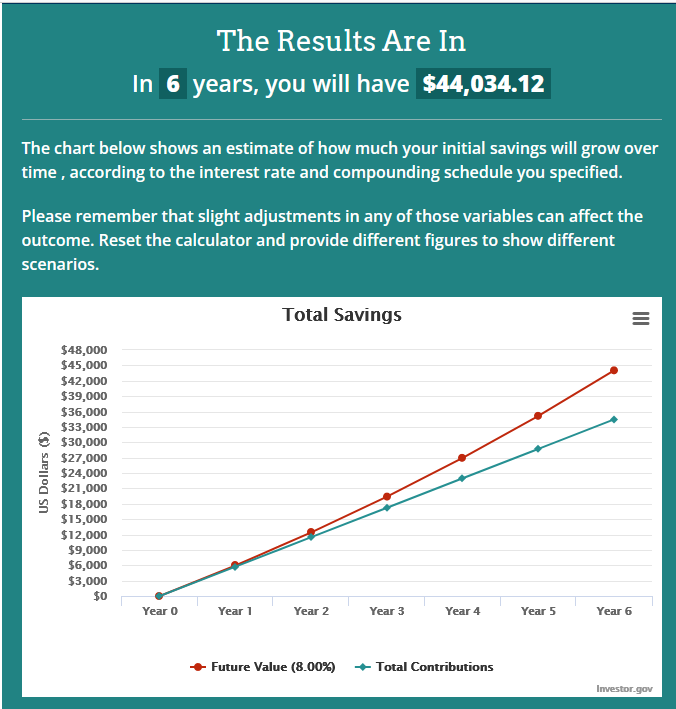
Tom: In the meantime, Tom has completed his bachelor’s degree and has been working for 2 years. After graduation, he had $37k in student debt. Now he earns $65k a year and could therefore already pay off $20k of it. So he still has $17k in debt.
Tobi: Tobi has just completed his master’s degree. Therefore he owes $71k. However, soon he will start working and earn a good salary of $78k a year.
12 Years after graduating Highschool (Age 30)
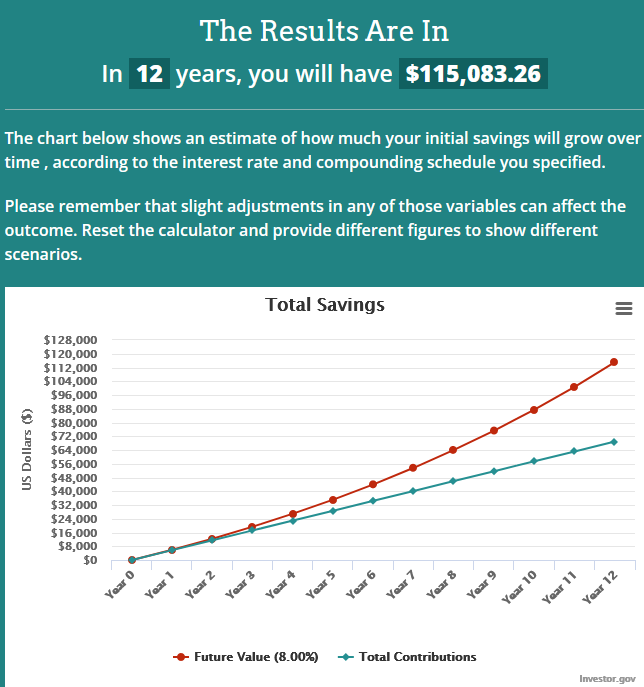
Tim continued to work at his job and continued to invest nearly $500 each month. In the meantime, he has accumulated over $115k.
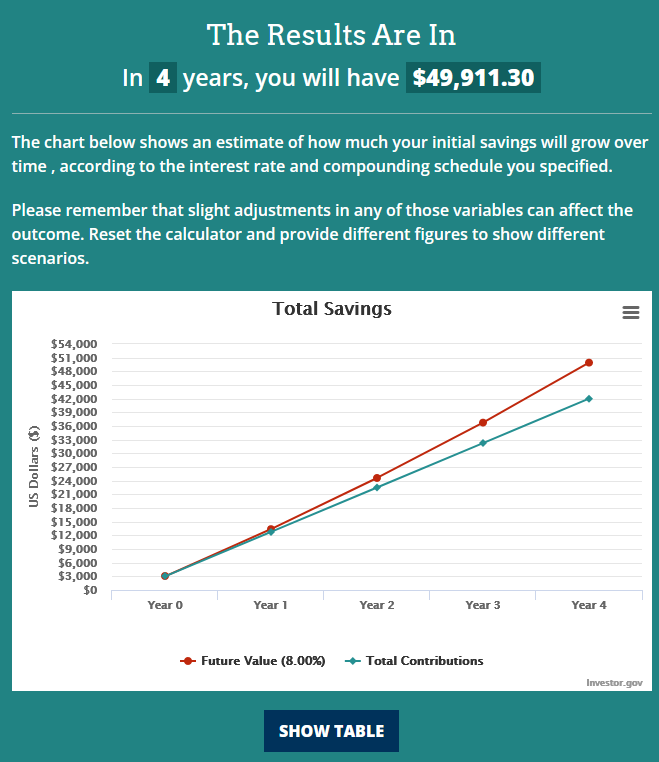
Tom managed to pay off his student loan after another 2 years, at the age of 26 and even had $3000 left at the end of the year. From that moment on he invests $812.5 a month, so that at the age of 30 he has accumulated just under $50 k.
Tobi has been working in his job for 6 years now. He saves $11.7 k every year to pay off his student loan. At the age of 30, he has almost done that. There is only $800 in debt left.
Even at age 30, Tim, who didn’t graduate from college, is still the richest brother.
After 20 Years (Age 38)
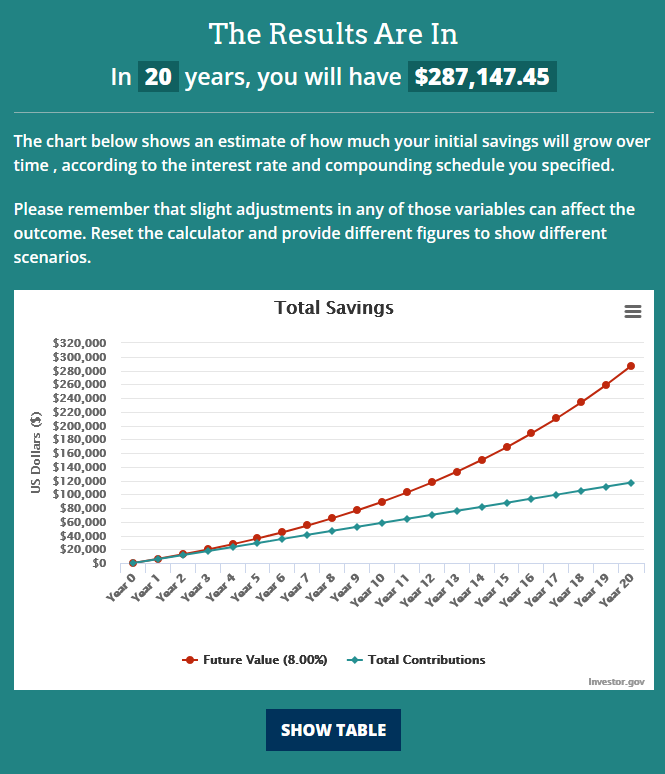
For several more years, Tim continued to invest every month. Gradually, compound interest becomes more and more effective and his net worth goes parabolic. He now has more than $287k.
Tom has also continued to work and invest diligently.
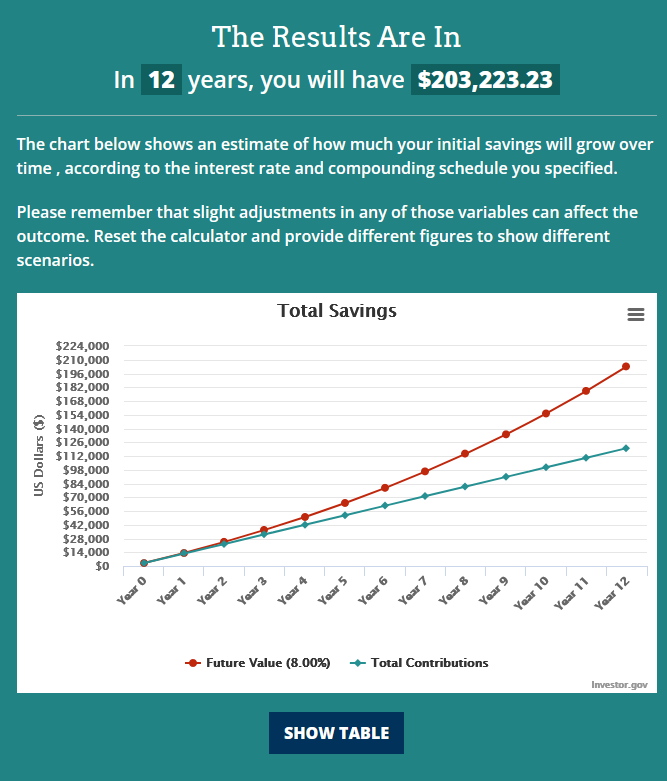
Tobi was able to start investing at the age of 30, after paying off his student loan. By the time he is 38, he has accumulated almost $130k.
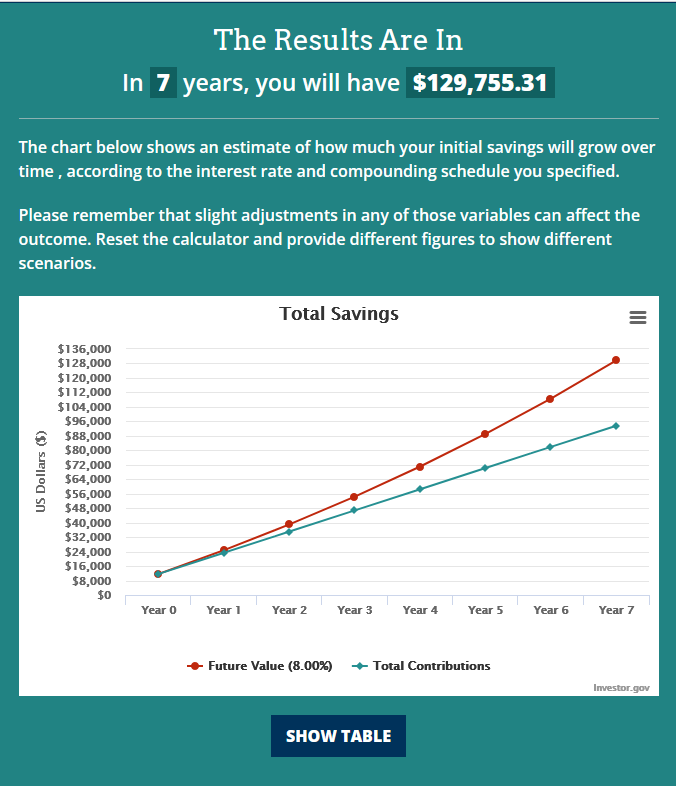
Even at the age of 38, the brother with the best degree is still the poorest.
Age 50:
- Tim: $864.8 k
- Tom: $724.5 k
- Tobi: $572.3 k
Even at 50, Tim is still the richest brother.
Age 65:
- Tim: about 3 million
- Tom: 2.68 million
- Tobi: 2.2 million
Assuming equal savings rates, Tim remains the richest brother until old age.
Criticism and Conclusion:
It is certainly debatable whether it makes sense to assume the same savings rate of 15% for all three brothers. After all, it is much easier to save a larger share with a higher salary. If this had been done differently, the results would certainly have been different.
For example, if one had assumed the same cost of living instead of the same savings rates, the brothers with the higher income would have saved more and would probably have ended up richer than Tim.
Moreover, regardless of who is the richest brother, in the end, you can see that it pays off big time to invest regularly and for the long term because over time the compound interest becomes incredibly powerful.
Nevertheless, my example shows that it is definitely a good idea to think carefully about whether it is worthwhile to go to college or not. The debts and the duration of the study are huge disadvantages when it comes to building up wealth.
Thanks for reading!
Wait a second. You should get my articles in your inbox. Subscribe here. Maybe you also want to start writing on Medium yourself and make money. I made $2300 in my second month! You only need a membership for $5 a month. If you sign up with my link, you support me with a part of your fee without additional costs.
I think you will also like these articles:


