
The Art of Living With Mental Illness
A Vulnerable Memoir
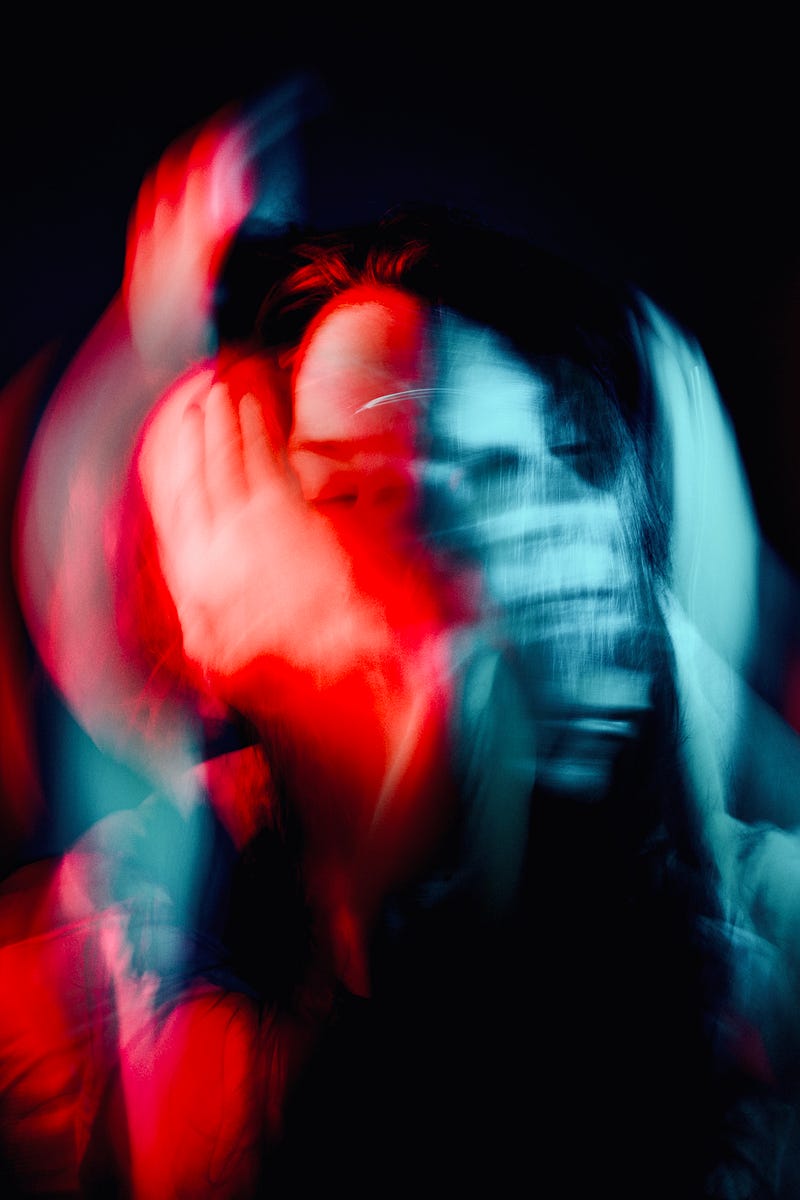
Trigger warning: This story contains descriptions of self harm and suicide. Please read with an understanding that this is a very honest account of my experience for the sake of helping people understand how to sympathize with someone dealing with severe depression.
Mental Illnesses Are Not Feelings
The most common representation of people going through depression is that they’re just too sad to get out of bed. While this is not completely inaccurate, there is a lot more going on internally than just sadness.
It’s different for everyone, but my experience as someone diagnosed with clinical depression and social anxiety has been agonizing.
Depression is more than a dramatic sadness that takes over and makes you lazy. It’s waking up feeling entirely in-equipped to get up and walk to the bathroom to face my reflection. Again. I’m sick of her.
It’s staring at the wall wishing I could disappear into my internal darkness until I convince myself that’s more of a waste of time than the mundane routine of getting ready for the day. Again.
It’s having no motivation to eat, do any form of self-care, or do anything that requires energy because I’m convinced I don’t deserve anything good for myself.
It’s the fact that being alive exhausts my spirit to the point that it feels easier to give up on myself than continue this miserable existence. And worse? It’s my fault I feel like this.
Anxiety can make you feel claustrophobic in your head. For me, it’s like having a pathological fear of embarrassment combined with chaotic, racing thoughts of self-deprecation and worthlessness.
It’s an irrational level of self-consciousness that often makes daily interactions feel like an impossible feat. I procrastinate leaving home until I’m late, even for things I love doing, because I have to convince myself I’m capable of hiding my internal panic.
“The pain of severe depression is quite unimaginable to those who have not suffered it, and it kills in many instances because its anguish can no longer be borne. The prevention of many suicides will continue to be hindered until there is a general awareness of the nature of this pain.” — William Styron
Please read this wonderful piece by Martine Nyx:
Everyone knows what it’s like to feel anxious or depressed sometimes; those are rational feelings that all of us experience under certain circumstances.
Have you seen the world? It’s equally as horrifying as it is beautiful and our species is responsible for most of the horror.
Being nervous about the state of the world and heartbroken over all the tragedy and loss just proves you’re not a narcissistic sociopath. These are not feelings that require medical help.
Mental illnesses are not just feelings. They are persistently exhausting, unavoidable, and devastating thought processes that feel involuntary and uncontrollable.
There is no logical explanation; it’s as if my mind’s homeostasis is in a state of anxious depression.
The Cure?
Even when I was very young, I remember being so overwhelmed with the world that I would completely withdraw from everyone because I had no idea how to express why I felt so existentially hopeless.
This only got more intense when I was a teenager, as it usually does, and I started going to therapy (against my will). I was prescribed a variety of antidepressants, anti-anxiety meds, and sleeping pills for insomnia. None of them helped.
Part of the problem was that I expected my internal warfare to cease to exist as soon as I took a Prozac, but it also just wasn’t right for me.
As if I didn’t hate myself already, this lead me to believe that I was beyond help and that whatever was wrong with me was a perpetual issue.
I’ve been hospitalized more than once due to suicidal ideation and actions, as well as an addiction to self-harm.
There was a time in my life when I would cut and burn my skin repeatedly out of self-hatred. I felt it was the only means of release for the excruciating, inescapable mentality of longing for death.
Something about having a visual representation of my pain validated what I was going through. I did not harm myself to get attention.
I did not want help. The idea of someone discovering my injuries was my worst nightmare. (Even writing this years later feels like a confession I don’t want to make.)
I’ll never forget the day I’d sliced my thighs so deeply the night before that they were bleeding through my pants. My mom noticed, and at this point was aware that I’d been hurting myself, but I hadn’t let her see the scars.
She cried when she saw what I had done to myself. I still feel guilty about that.
After this incident, I was sentenced to another week in a mental hospital; a place that was so suicide-proof it almost felt patronizing.
Living behind barred windows is less than comforting.
The anti-hang-yourself door knobs and grippy socks were comical to me.
The intensive therapy made me feel like a bug under a microscope.
Unfortunately for the nurses who worked there, I did everything in my power to prove to them that I could still hurt myself. I can’t explain why I felt the need to rebel against anyone who tried to help me, but I have a lot of regrets about that now.
I would bang my fists against the walls in my room until my knuckles bled, which of course resulted in a trip to “the quiet room.” This awful place was exactly like what you’d see in a movie: a small room with gymnastics pads on the floor and walls and a tiny window in the locked door.
One night, I tore up an entire box of tissues and scattered them around my room. When a nurse came to do the hourly check-in, I told her it snowed.
I thought this was hilarious at the time… Now I wish I could go back to that hospital to apologize for what I put them through.
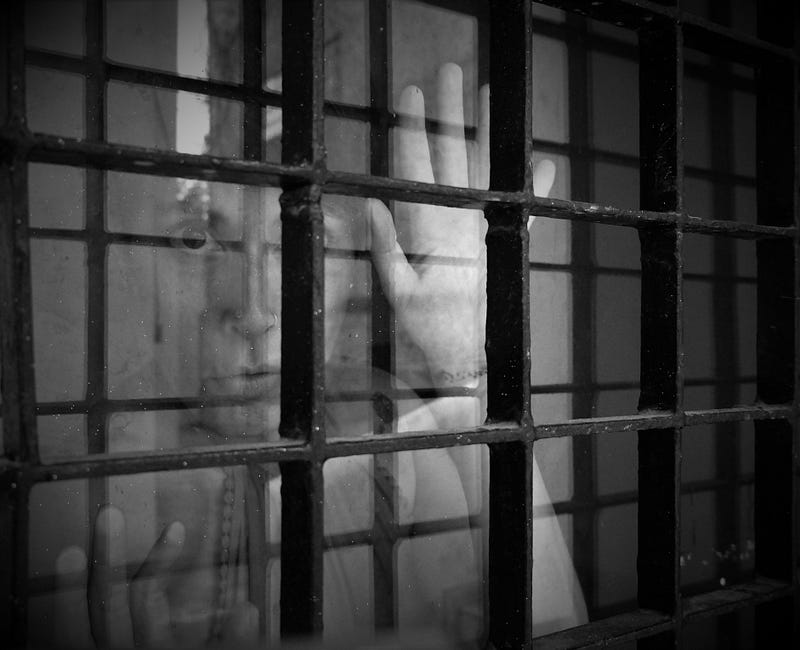
I spent my 16th birthday in a mental hospital and I have not been back to one since, besides the out-patient therapy I had to do for months.
I saw dozens of therapists during my time at the hospital, but there was one who said something that changed everything for me.
“You have to let yourself feel.”
That may seem like strange advice for someone who has negative feelings, but somehow it’s exactly what I needed to hear.
This was a small piece of a very in-depth conversation with the only person I was ever honest with in therapy sessions. He explained to me that I had to recognize anxiety and depression as entities that were outside of me.
If I allowed myself to feel their presence rather than resisting it, I could control how it affected me. Trying to ignore it only perpetuates it.
I was self-destructive because I was angry at myself for thinking the way I did. It’s hard to see yourself as a victim of mental illness when the problem is in your head. I felt like I should be able to control it but I didn’t know how.
I am very familiar with the process of grieving over a lost loved one. It’s different every time, but a consistent part of the process is allowing yourself to feel the pain of the loss. You have to give yourself time to heal.
The same is true with mental illness, specifically concerning self-harm.
This therapist guided me to a new perspective where I could see myself from outside the metaphorical dark cloud that had taken over. I was hurting and it’s like I didn’t even realize that was a problem. I had no sympathy for myself.
16 was a dark time for me, but I survived.
So can you.
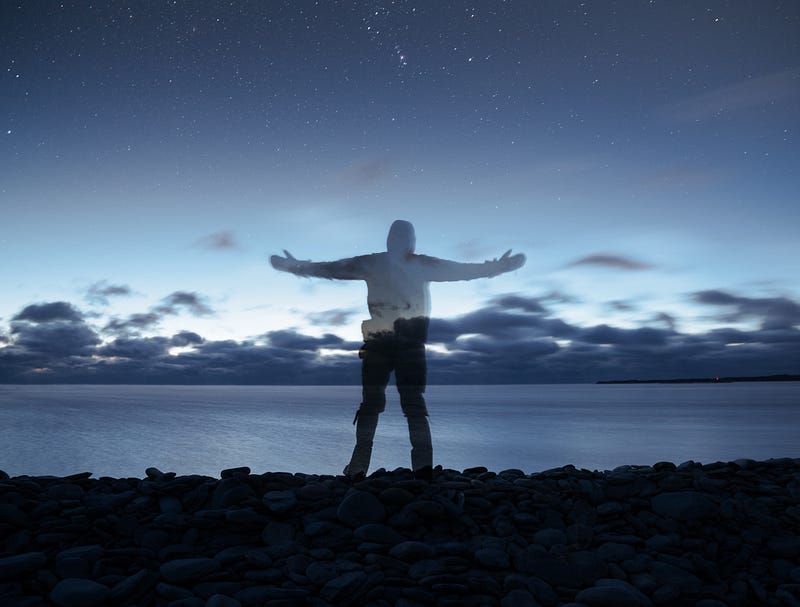
Coping
A lot of people I know (and online) refer to mental illnesses as “my depression,” “my bipolar,” “my anxiety,” etc.
I refuse to claim depression or anxiety as my own.
I do not want to validate the idea that they’re “mine,” they are diseases that I am recovering from even as I experience them. I don’t try to deny their existence anymore, but viewing them as separate from my thoughts has helped me tremendously.
The way I cope is by identifying which of my thoughts I want to give energy to and recognizing the ones that come from depression or anxiety as something outside of my chosen mind state.
It’s easier said than done to achieve and maintain a peaceful mind state.
It is possible (and necessary) to learn how to accept depression and anxiety as nothing but an intrusion of your inner peace to deal with them accordingly.
We have to be aware of the disruptions and know how to take care of ourselves when we are ill.
Just like a physical sickness, mental illness needs to be addressed and treated. It doesn’t just go away, you have to learn what you need to heal from its imposition.
The treatment required is different for everyone.
There is no magic cure for mental illness, it takes a lot of painstaking work to learn to live with it, but I know that only I can change my mind and I’d imagine the same is true for you.
Thank you to Karin Blak for this insight!
Their Influence Now
When I was 18, I moved from my parents’ house in Milwaukee to a studio apartment in Nashville. My lifestyle completely changed; I was independent and working full-time.
I was the only one making sure I stayed alive.
Maybe going into survival mode was a distraction, but I was happier than I’d ever been.
I don’t take medication anymore, but I started smoking weed which (for me) opened up a whole new mindset and appreciation for life.
I’ll be 25 in a few months, I’ve lived in 3 different states in the past 6 years, and I’m honestly living the dream I lost sight of amid my personal tragedy.
I’ve done a lot of inner work to get to a place where I can live a healthy life.
I haven’t hurt myself since I was 16, but I do have over 20 tattoos now.
I truly can’t recommend tattoos enough for those with scars from self-injury. Not only are we comfortable embracing the pain of getting a tattoo, but the healing process is like a visual representation of self-evolution.
I always hated looking at my scars, they were constant reminders of a miserable time. Now when I look at my arms I see beautiful designs and I’m reminded of the artists who have contributed to the collection of art that I’ll always have with me.
Do unscarred people look at their arms a lot?
Thank you to Natasha MH for sharing this.

I write all of this, as painful as it is to recount because I want you to know it gets better. That doesn’t mean our problems go away, but it gets easier to cope with them after a while.
Much like grief, there are different stages of coping. You may be angry with yourself, try to suppress or ignore negative thoughts, or even attempt to deny their existence entirely.
I encourage you to write about it, even if finding the words is a struggle. Writing this and reflecting on my growth has been so therapeutic.
Be patient with yourself on your journey.
Take the time to appreciate what you’ve overcome.

Thank you for reading.