
Why You Will Never Truly Understand Mental Illness
An open letter to neurotypical individuals everywhere
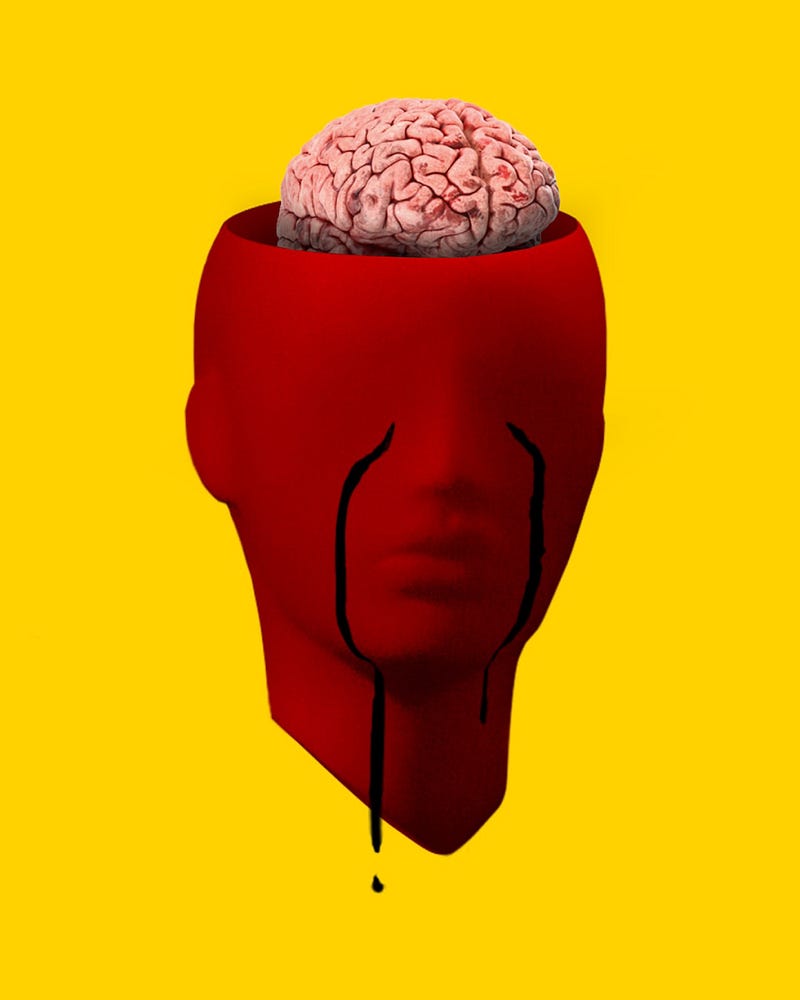
Neurotypical individuals will never be able to fully grasp the idea of mental illness. They will never truly understand the nature of mental illness, or the way that it affects a person’s perception and understanding of the world. And that is because of two main issues which are directly related to each other: the first one is subjectivity; the second one, which stems directly from the first, is the commonly accepted definition of “normal” in our society.
The first thing to understand about “normalcy” is that it is a highly subjective concept: for a neurotypical person, “normal” will apply to everything they feel and experience in their day-to-day life, and that way of perceiving and experiencing things is the blueprint for society’s definition of “normal”. However, what most people perceive as “normal” could be much better defined as “habitual.” Neurotypical people are used to perceiving things and people in a certain way. They have since they were born. That is the paradigm for “normalcy” that they come to accept as universal and therefore unquestionable.
Now, let’s take the example of a mental health patient with a neurodivergent condition. They were born this way. Whatever the neurodivergent way that they perceive reality is, that constitutes what’s “normal” to them. It is their “habitual”: the way they’ve been experiencing things ever since they can remember. And just like the neurotypical person assumes that the way they perceive things is the only and truly authentic one, a neurodivergent person will naturally assume that the way they perceive reality is the only possible one unless specific circumstances force the neurodivergent person to recognize that something is “off” with them.*
I grew up in what’s commonly defined as an “emotionally invalidating” family environment. It was also an environment filled with abuse (physical, emotional, verbal and psychological) and general neglect, as well as generations of undiagnosed mental illness.
I was raised with one, inflexible rule: I was never allowed to “bother” anyone with my emotions. If I displayed any negative feelings, such as crying, I would be castigated and physically punished. This was always the case, as far as I can remember. And what that did to my developing psyche was to convince me that the reason I was being treated this way was because I was bad, meaning that something was inherently wrong with me and that I was clearly undeserving of my parents’ love. That was my subjective perception of reality, and, therefore, everything that was going on was “normal” to me. And it is only now, at the age of twenty-six, that I’m finally starting to realize the extent of the abuse I’ve gone through and how much that has shaped my perception of the general world.
My definition of “normal” included having sporadic panic attacks since my early childhood, as well as frequent episodes of “dissociation.” It took me approximately twenty years to realize that “dissociation” is not something that “normal” people experience.
I learned to keep my “negative emotions” to myself, to stifle every issue or difficulty I ever encountered, because my feelings were simply too trivial for anybody to pay attention to, and because I wasn’t supposed to have negative feelings in the first place, even though I was regularly abused in my own household.
My perception of reality and of the world surrounding me was severely distorted from an early age. As the years went by, it escalated until I was formally diagnosed with Borderline Personality Disorder (BPD).
By talking to numerous other people with BPD, I was relieved to discover that I was not “simply crazy”, that my paranoid thoughts, emotional dysregulation, chronic feelings of worthlessness, and suicidal ideation were all common symptoms of my condition, and that they stemmed both from my childhood experiences and from genetic and neurobiological factors. I discovered that I was, indeed, “normal”. Just not in the traditional sense of the term. I was “normal” in the context of my condition: my symptoms matched the symptoms experienced by others with the same condition. I was “normal” according to the standards of a neurodivergent person affected by Borderline Personality Disorder.
There are still people out there who will contend that mental illness in general, including Borderline Personality Disorder, is not real. They are the ones who cannot fathom how somebody can be “depressed”. “Why don’t you just cheer up?” they ask. Their perspective is limited by their own lifelong experience as a neurotypical person, and no, it is not entirely their fault: just as I was oblivious that my perception of the world was highly distorted, they are utterly oblivious to the fact that their own is just as limited as mine was.
I had to come to terms with the fact that what seemed like an objective, unquestionable reality to me was in fact a by-product of my mental illness. Somebody once expressed this to me in this very simple line:
Your brain is lying to you.
And it was. A neurotypical person can hardly imagine what it’s like to have your own brain lie to you. Your brain is everything that regulates one’s perception and interaction with the outside world. How am I supposed to know what is real and what is a result of my mental illness if what I perceive simply feels and looks real?
The answer is, naturally, with treatment. Although Borderline is a particularly tricky condition to treat, other disorders are generally more easily treated with the use of pharmaceutical treatment, psychotherapy, or a combination of the two. Eventually, a mentally ill person will begin to heal and perceive reality as it really is, but the journey is often long and tumultuous. It is also incredibly painful. And solitary.
This is what neurotypical people need to understand. You don’t need to experience things the way a mentally ill person experiences them — and, lucky you, you never will. But you owe it to those who are different from you to educate yourself on the subject, to try to understand instead of rushing to judge others.
Yes, the subjectivity trap of our brains makes it hard to adopt another person’s perspective, which is why you should start by questioning your definition of “normal” and by understanding that there are, indeed, multiple types of “normalcies” in society. If a person with a severe mental disorder can see beyond their limited perception of reality, so can you. Listen and learn.
*And hopefully, the right type of treatment, which is entirely dependable on the individual’s specific diagnosis, will offer a way to gradually move away from that distorted view of the world.
Want to keep reading? Check out these similar articles:
Sign up for Medium through the author’s affiliate link and get instant access to unlimited articles, or show the author your support and appreciation by buying her a coffee!