
Reclaiming Your Identity After a Personality Disorder and a Pandemic Destroyed It
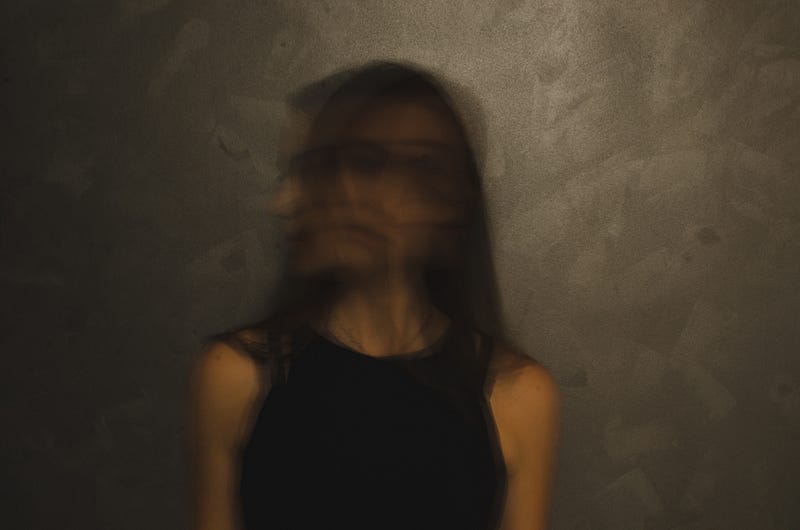
My early to mid-20s (I am twenty-six as I write this) were dedicated to the initial misshaping and eventual utter disintegration of my identity as I had always known it. I just recently gained the courage and strength to admit this to myself. You’re probably wondering what I mean by “disintegration of identity,” so let me take a step back and introduce you to the fascinating world of personality disorders.
At the age of twenty, my lifelong struggle with anxiety led me to seek the help of a psychiatrist. I was diagnosed with Major Depressive Disorder and Generalized Anxiety.
Flash forward to one year later: far from making any progress, I slowly but steadily begin to feel things I have never felt before. Disturbing things. I experience episodes where I don’t feel like myself anymore. It’s like I’m a stranger in someone else’s body, and when I look at my past it’s like I’m looking at somebody else’s life, and I feel no emotional connection to that person or those memories whatsoever.
It is my second year of college at NYU. The workload is heavy. The anxieties keep toppling on top of each other: tuition, bills, assignments, deadlines, body image, relationships, just to name a few. I don’t know what’s happening to me. My doctor is not sure either. He puts me on a larger dose of antidepressants. In a few months, I find myself in a psychiatric ward for the first time in my life.
That was just the beginning. I still didn’t have any clear answers as to what was happening to me, and neither did my doctors. I was depressed. And yet I wasn’t responding to pharmaceutical or therapeutic treatment. Occasionally I felt normal. But most of the time I felt like a human puppet with no soul, a body pulled and moved around by strings, with no will or desire of its own. I felt numb. Like somebody had robbed me of my own identity. And then, in moments of crisis, the most horrible thoughts and the most heart-wrenching feelings would take over me. It felt like torture, and yet it was all in my head. How do you explain to a neurotypical person the feeling of being mentally tortured for hours on end? It’s an invisible illness. An invisible pain. Which means that, to the outside world, you’re forced to be invisible in your agony. If you don’t, and you share the intensity of your invisible pain to others, two are the most likely outcomes: number one, people will assume that you are “crazy”, whatever that label means to them, and cut all contacts with you; number two, they will think that you are “whining” about things that “everybody experiences in life” and that “everybody pushes through”. Yes, somebody just told you to “man up” and stop complaining about your disabling mental illness.
There was no way for me to find relief and to put an end to my agony. Except for one.
I honestly don’t remember when or how I ended up attempting suicide for the first time that year. I only remember how I did it. This would prove to be rather fortuitous during my subsequent hospitalization because, as it turns out, even the most incompetent mental health professionals will be able to recognize the infamous duo of dramatic mood swings and self-harming.
And from that came the diagnosis of Borderline Personality Disorder.
Personality disorders in general, and Borderline Personality Disorder (BPD) in particular, can be seen as a “disruption” in a person’s sense of self. People with personality disorders can experience episodes where they feel like a completely different person — not to be confused with Dissociative Identity Disorder (DID), which most of you will know under the mislabeling of “Multiple Personality Disorder”. Upon being “triggered”, a person with BPD might turn into an anger-powered fiend that hardly bears any resemblance to the person they normally are. Or they might enter a depressive state so intense that they feel the utmost loathing towards themselves and engage in a number of self-destructive and potentially life-threatening actions. And, to make matters worse, BPD is a condition that is “on the borderline” — hence the name — between neurosis and psychosis, meaning that it will usually not respond to treatments normally employed to treat the other two because, while it contains elements of both, it doesn’t quite fit either category.
I might take my time explaining to you how and why the many “resources” that were available to me at the time were insufficient and ineffective, but then this would turn into a kafkaesque tale of medical incompetence. Suffice it to say that I was a broke international student in the United States of America.
Even though I managed to graduate magna cum laude, made the Dean’s List every year for four years, and received additional honors upon graduating, I was struggling. And that’s a very soft way of describing what I was going through. Most of the time, I was in emotional and mental agony. From the age of 21 to the age of 25 I was hospitalized at least five times. Most of the time it was right after yet another failed suicide attempt. And every single time, when I was dismissed from the hospital, as the international student with no family in the US and very few friends that I was, I had to walk myself home alone. In some cases, that was less than 24 hours after having attempted another suicide.
Then, the very semester that I graduated from college, Covid-19 happened.
To give you a frame of reference: I had majored — and planned to work — in Film & Television. An industry whose activity had now been completely halted because of the unprecedented, large-scale, fatal disease that had suddenly stormed the entire world.
If that wasn’t enough, my untreated BPD and the stress and uncertainty of a post-Covid world created the perfect storm for my biggest mental breakdown to date, which, as if the timing couldn’t have been any more perfect, occurred during the first relationship where I ever uttered the words “I love you” to another person. And absolutely meant them.
This is not meant as a sentimental or pitiful tale, so let me skip ahead to the major point I’m trying to make: my identity was utterly shattered to pieces. I didn’t know who I was anymore or what my purpose in the world was. Even if I hadn’t suffered from BPD, there were major factors that forced me to question who I really was and what I was supposed to do as a freshly graduated college student who saw her plans for the future collapse in front of her eyes. All my life I had wanted to be a filmmaker. Now, with Covid suddenly stalling all big and small productions alike, that seemed like an impossible prospect. My visa was going to expire soon, and US laws made it virtually impossible for me to apply for a work visa like any other young professional in most foreign countries would. Again, that is without taking into consideration the disabling effects of BPD on my psyche and day-to-day life.
That was almost two years ago. If you’re wondering how I survived this entire ordeal, that makes two of us. There was no single hope or beam of light that pushed me forward. For those of you who have never once considered ending your life, trying to explain what that feels like is like trying to communicate something in a language you don’t know. All I can say is this: seriously considering to end your own life is something that you don’t just come back from. Once you’ve been there, you’re changed forever. And yet, there’s something incredibly powerful about this. If you’ve got to the point where you were going to put an end to your own life, to be able to acknowledge that and then keep going requires a strength and fearlessness that few can imagine.
Past that point, you’re not just a survivor, which is something incredibly impressive by itself. You’re also an active fighter. Both those roles are bestowed upon you whether you like it or not. I initially did not like it. It took me a very long time to learn what those names truly meant and how strong I was. Once I was able to see that power, my perspective began to change.
Don’t get me wrong: BPD, and the episodes of deep depression that come with it, are not the results of perspective. They are the results of complex genetic, neurobiological, and psychological factors. What I’m talking about here is that the moment I got to the “very bottom”, so to speak, I was able to see things without any fear for the first time, and what happened next shocked me: I felt free. I was no longer afraid of anything, because I had already faced something so horrific that I couldn’t imagine anything worse happening to me. I had lost myself and all hope for my future. I had nothing to hold on to. Not even myself. As terrifying as that may sound to some of you, to me, it was freedom.
Once your battle is “lost”, and you feel free for the first time — free from the fear of losing, free from the fear of not being strong enough, free from the fear of giving up, free from the fear of breaking into a thousand pieces — you look around at what’s left of yourself. And it’s usually not a pretty picture. There’s no changing things back the way they were. Something has been lost. So it’s really just a matter of figuring out what to do next.
I took my time to recoil from everything that had happened to me. Then, once the emotional distance allowed it, I began to truly acknowledge the extent of the trauma that I had gone through. I am still in the process of doing that as I write these words. Acknowledging my trauma doesn’t make me weaker. It makes me stronger. It proves to me and to others how much I’ve survived and how I came out of it not unscathed, but definitely alive. That is no small feat. Believe me. That requires a superhuman amount of strength.
I ended up moving to Toronto. My mental health was slowly getting better, but that doesn’t mean that I was, or am, “cured”. That is rarely the case for people suffering from conditions such as BPD. But what did happen is that I slowly began to find myself again. The process of finding yourself again, or reclaiming yourself, looks something like this:
- Lose yourself;
- Let go of everything, including the person you think you love;
- And now, start again from zero.
After I let everything go, I went back to the things that made me the person that I thought I knew for a very long time. The things that filled my life with a type of love that nothing could take away from me. For me, this was film. Rediscovering what had been the passion of a lifetime. Rediscovering why I loved movies. Why it was vital for me to make movies. Why I would never stop writing or making movies as long as I lived. I am a filmmaker. Film is my medium. I believe that the destiny of a true artist is tied to their medium. There is something that comes out of creating with your medium that by itself makes life worth living. That was the first step. What I loved the most spoke to me about who I was. I saw myself again because I saw a mirage of the old, authentic me: the filmmaker in me. And even though that is just one part of me, it was enough to start reclaiming my true identity.
After that, I started re-connecting with a number of things that had always made me who I was: writing, reading, playing music, learning more about the countless things that fascinate me. Mind you: I did not approach this process hoping or expecting anything to happen. I did it because I was finally free to do whatever I wanted. And, at some point along the way, an idea for a story came to me. And, since I had nothing left to lose, I began exploring this idea, and eventually I opened my laptop and typed in the words: “Fade In”. And, before I knew it, I was creating again. And, before I even had time to wonder whether what I was creating was good or not, I realized this was a story that I had to share with the world, no matter what. That was the voice of my true self speaking, the person that I thought I had lost forever, the one who had been through so much that I thought nothing was left of her.
This process is not over yet. I am still actively reclaiming my identity every single day. I make a small step every day, with the help of an amazing therapist who truly understands my condition and who holds my hand every step of the way, which is as vital for my recovery as the extensive self-work that I have done and keep doing.
Losing myself was the scariest thing that ever happened to me. It shook me to my core. It shattered me into pieces. I started putting those pieces back together, not thinking I would succeed. I did. I am.
To all the active fighters out there: if you are reading these words, I’m guessing you have seen the things I’ve seen and felt the way I’ve felt. And if you did, you are stronger than you think you are. Celebrate and honor that strength, because it’s that strength — not your trauma and not your mental illness, if you suffer from one — that says the most about who you are.
Want to keep reading? Check out these similar articles!
Sign up for Medium through the author’s affiliate link and get instant access to unlimited articles, or show the author your support and appreciation by buying her a coffee!


