
How to Break the Stigma Of Mental Illness
The Power of Sharing Stories In Defiance of Guilt and Shame
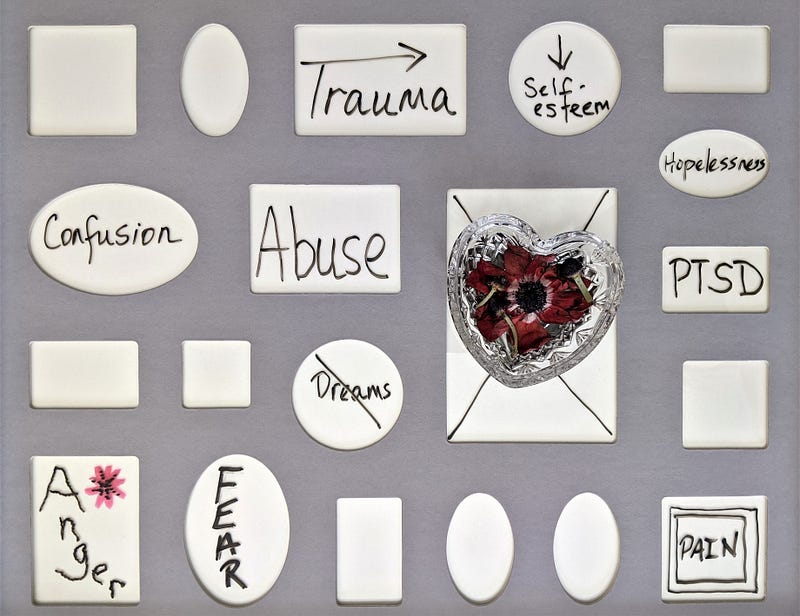
It’s taken me a very long time to speak up about my mental health condition, the incidents related to it, and the unjust and unfair treatment that I had to endure as a consequence. And, truth be told, my story is not nearly over. There is so much that I have intentionally left out of the picture. So many other elements that have contributed to the worsening of my mental health, so many instances of trauma that I have yet to speak out about, so much discrimination that I’ve experienced due to my mental illness. And more.
Any victim of trauma knows that speaking up can be an extremely daunting task. It is much easier to just don the role that society and authority usually impose on us: that of the silent victim, whose history of violence and suffering is invisible to the eyes of collective consciousness, whose voice is never spoken, and, if it is, it is hastily dismissed as either irrelevant or fabricated.
Society has also implemented a very powerful tool to keep victims of abuse — any type of abuse — silent and isolated: shame. Many of us are naturally inclined to question our responsibility in the “incidents” that have harmed us, wondering whether or not we are as accountable as the other party, or even if we are the only party accountable for what happened. And even when we do come to the conclusion that we were, in fact, victims, and not perpetrators, shame will often stop us from moving forward and sharing our stories.
If something too horrible to even think of happened to us, we do not want people to know about it. We may not want to acknowledge it happened in the first place. And if we do speak up about it, what are others going to think of us? Are they going to look at us differently? Are they going to exclusively associate us with our trauma, and nothing else?
The very concept of “victim” has, at least in my perception, a shaming quality to it. A more apt term for it would be “survivor”. But to acknowledge that we were “victims” means to acknowledge that we were powerless, that we were taken advantage of, and that somebody overpowered us and used our bodies or minds in whatever way they liked.
Nobody wants to be a victim. Nobody wants to be abused. And if we were used, abused, and humiliated, who would want to let others know that?
For a very long time, I experienced deep shame in regard to my diagnosis of Borderline Personality Disorder. Part of it came from my upbringing, and part of it came from the subsequent reactions that I received from people who, I thought, would be “on my side”, or at least supportive. I lost a lot of friends when I opened up about my mental illness. And I have met people who have experienced the same: “As if they thought it was contagious!” said one of them.
Consequently, I kept quiet about my “terrible secret” for very long. If I happened to meet a new person, it was vital not to let them discover that I had this thing. And, as long as I could manage my symptoms and act “normal” in public, all would be well, right? It didn’t matter that I was suffering, all that mattered is that people didn’t see it, because if they did they would judge me for it, or leave me, or both.
This went on for years. Until one day I suffered a massive nervous breakdown, which people around me definitely noticed. And yes, once again, I lost a lot of people in the process. I was called “crazy”. I was shunned by people who were meant to be my closest friends and even family. It was after this incident that something changed.
I got angry.
I got angry because I knew that I didn’t deserve to be treated like this. Because I was in terrible agony, and yet nobody around me was showing me any sympathy or compassion, turning instead to stigmatizing judgments and accusations that “I was trying to get attention”.
I got fed up. Because, even under the weight of my many layers of self-loathing induced by past trauma, I knew that my real self deserved better than this. She deserved to be heard. And she would be heard.
Even after that, it took me some time to finally muster the courage to speak up about my condition. I chose to do so on social media. My voice would be heard, and not just by those who immediately surrounded me, but by the entire world.
I published a 35-minute long video on YouTube where I talked about the nature of Borderline Personality Disorder, my experience with it, and some of the coping strategies that had proven to be the most effective for me. That video was eventually followed by a second part, where I discussed specific BPD symptoms and how to address them. This was followed by more short videos, an entire TikTok account dedicated to the subject, and, finally, my writing on Medium.
Specifically, it culminated in an article that, for the first time ever, recounted my story. Including the most painful parts of it. It was also the first time that I ever directly talked about the infamous “S word”: suicide.
I wrote that article unapologetically, not caring about how it would be perceived by the people who knew me, and not feeling any shame for it or for any of the events described in it. Because that was my story of survival. And it needed to be shared. It needed to be shared because I should not have had to keep quiet about my suffering or the injustices that I had suffered. I had no power over what had happened to me, except for the power to speak up about it and reclaim my own narrative. And I harnessed that power.
Up to that moment, that article was the most brutally honest piece of writing I had ever put out there. Voicing my story and sharing it with the world was an act of courage and liberation, but it was quickly followed by some questions. I knew that what I had put out there was but a fragment of the entire story, that so much — especially the most “unsavory” parts — had been left out, and that there were still things I was simply not ready to talk about.
Telling your story is a process, and it may take some time. Depending on the intensity of your experiences, you might need to take gradual steps in revealing the whole truth to others. That was, and still is, the case for me.
The next step was the publication of yet another unapologetic article, this one even more brutally honest, and particularly honest in the way that it recounted the abuse that I had suffered at the hands of somebody else.
Anybody who knows me knows that my relationship with my parents is strictly taboo. When strangers ask me about my family, I quickly change the subject. If they’re insistent, I let them know that I have a “complicated relationship” with my parents. The truth is that I grew up in an extremely abusive household, and that, as a result of the trauma I’ve had to endure, I began suffering from panic attacks very early in my childhood, which both my parents routinely ignored until they were over, leaving me to “deal with it” on my own.
That was a step of utmost importance in my journey. It is one thing to talk about your mental illness in general. It is an utterly different thing to open up about the specific instances of trauma and abuse that are among the primary reasons for the existence of your mental illness. It takes courage. And strength. And an honesty that too many people are still afraid of.
And, as I proceed along the path to reclaim my story and to de-stigmatize mental illness, as well as experiences of abuse, there are many more steps that I have to go through. The next one awaiting me is that of self-harming, which is a symptom that has plagued me for years, as well as the topic of suicide and suicidal ideation. Both topics are extremely stigmatized in our society, with much disinformation and uninformed judgment surrounding each one, which is precisely why we need more people to break the stigma associated with them by sharing their own stories and reclaiming their own narratives. Because their voices need and deserve to be heard.
Breaking the stigma of mental illness is breaking the silence that has been enforced upon us and reclaiming our voices, as well as our stories, and the validity of those voices and stories.
The more we do that, the more the wall of prejudice and ignorance will become frail, and eventually crumble to the ground. And we will no longer be shamed because the very act of speaking up is an act of defiance that requires enormous courage and strength. In fact, if you have already shared your story with the world, or are in the process of doing so, I want you to know that I am proud of you and that I sincerely thank you. You may not know this, but your strength is giving strength to others.
And for those of you who have yet to share their stories, I, and the rest of the world, will be waiting for you to share them, because we need to hear them as much as you need to share them.
Want to keep reading? Check out these similar articles:
Sign up for Medium through the author’s affiliate link and get instant access to unlimited articles, or show the author your support and appreciation by buying her a coffee!