
The 94th Academy Awards: Who Should Win (Part II)
On March 27, the Academy of Motion Picture Arts and Sciences will hold the 94th Academy Awards and reveal their selections for the best in film from the past year. In this article, I rank the contenders in four key categories: Best Picture, Best Director, Best Adapted Screenplay, and Best Original Screenplay.
Although I unabashedly adore the glitzy ceremony, behind-the-scenes drama, near-century of statistics and milestones, and fun of predicting the eventual winners, I care about the Oscars each year primarily because I love movies. I love watching movies, reflecting on movies, and debating the merits of movies. I believe that the art of filmmaking has shaped my life — and our culture — in profound ways.
Each year I make sure to see each film nominated in the “top eight” categories (Best Picture, Best Director, the four acting categories, and the two screenplay categories), along with as many of the others as I can squeeze in. Below, I rank the nominees in the categories of Best Original Screenplay, Best Adapted Screenplay, Best Director, and Best Picture.
BEST ADAPTED SCREENPLAY
5.) Ryusuke Hamaguchi, Drive My Car (See below in Best Director). Drive My Car contains beautifully poetic dialogue, rich themes and allegories, and deep psychological complexity. Unfortunately, it also features a great deal of padding, with meandering segments and an over-reliance on excerpts of Anton Chekhov’s Uncle Vanya, a production of which is rehearsed at length during the film. The excess is unsurprising considering that the screenplay transformed a short story by Haruki Murakami into a sprawling three-hour film.
4.) Maggie Gyllenhaal, The Lost Daughter (1 prior nomination for Best Supporting Actress for Crazy Heart). Maggie Gyllenhaal’s adaptation of Elena Ferrante’s 2006 novel is as fascinating as it is opaque and occasionally frustrating. It is filled with fascinating moments depicting complex psychological phenomenon and extraordinarily uncomfortable interpersonal interactions over two time periods (part of the film follows Olivia Colman’s middle-aged Leda and the other part follows Jessie Buckle’s twenty-something Leda). But some of these elements are insufficiently set up, unsatisfactorily resolved, and occasionally distractingly odd. It is a fascinating screenplay, but not one that always coheres compellingly.
3.) Jon Spaihts, Denis Villeneuve, and Eric Roth, Dune (Spaihts: 1st nomination; Villeneuve now has 3 nominations: Best Picture and Best Adapted Screenplay for Dune this year and Best Director for Arrival; Roth has 7 prior nominations: Best Picture for Mank and Best Adapted Screenplay for A Star is Born, The Curious Case of Benjamin Button, Munich, The Insider, and Forrest Gump; Roth won the Oscar for Forrest Gump). This impressive trio skillfully adapted the first half of Frank Herbert’s classic 1965 science fiction into a thrilling big screen epic. As with nearly all adaptations of beloved epics, the screenwriters were faced with some difficult choices about what to trim and thankfully I found most of their decisions to be excellent ones. The screenplay could have benefitted from some more tonal variance (it is exceedingly dour) and some better pacing in the buildup to the climactic siege, but ultimately I think the adaptation was a smashing success.
2.) Sian Heder, CODA (She now has 2 nominations for Picture and Adapted Screenplay for CODA this year). Sian Heder’s adaptation of the 2014 French coming-of-age dramedy La Famille Bélier may not be particularly innovative or edgy, but it is a deeply moving, endlessly charming, and emotionally authentic story of a culturally deaf family whose way of life is disrupted when the sole hearing member of the family contemplates leaving to pursue a career in music. The screenplay has richly drawn characters and delves into themes rarely explored on the big screen.
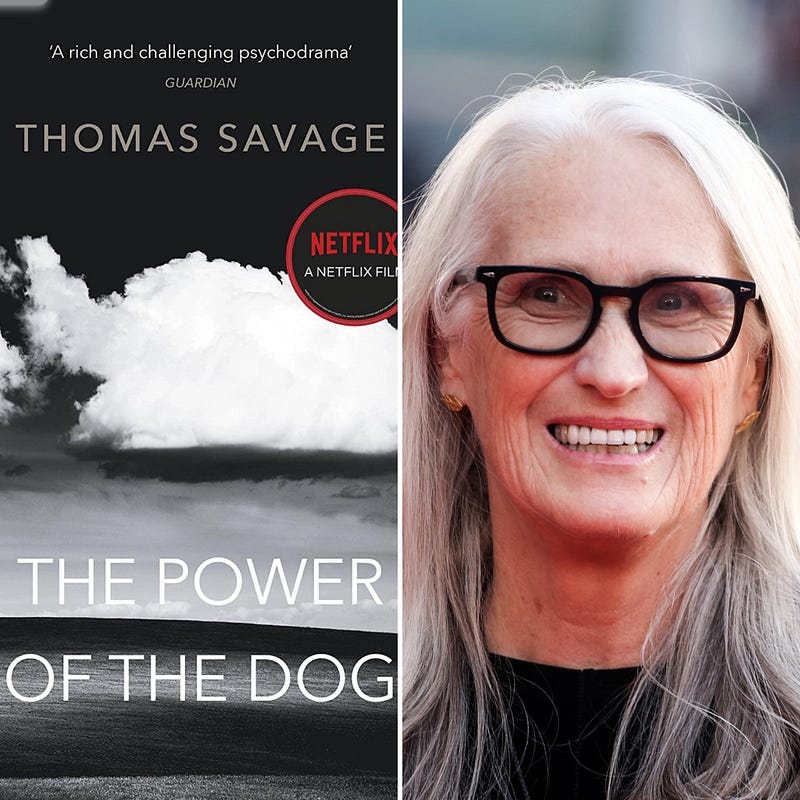
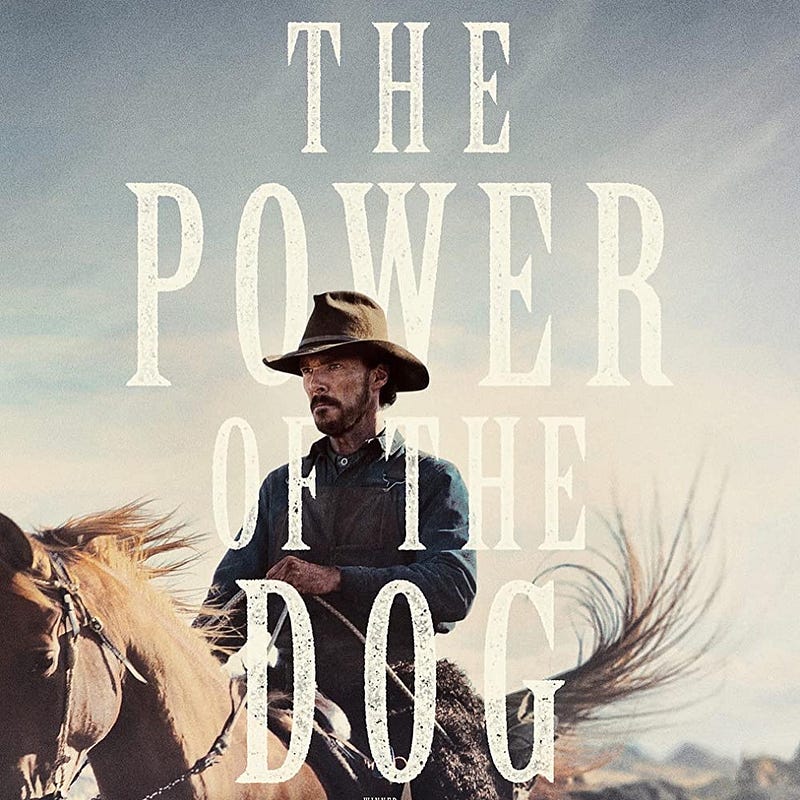
1.) Jane Campion, The Power of the Dog (see below in Best Director). I have written at length about my admiration for The Power of the Dog, including Jane Campion’s fascinating and sensitive adaptation of Thomas Savage’s 1967 novel. Suffice it to say, I found it to be an extraordinary in its psychological complexity and narrative structure.
BEST ORIGINAL SCREENPLAY
5.) Adam McKay and David Sirota, Don’t Look Up (McKay now has 7 nominations: Best Picture and Best Original Screenplay this year; Best Picture, Best Director, and Best Original Screenplay for Vice; and Best Picture and Best Director for The Big Short; he has never won an Oscar; Sirota: 1st nomination). In stark contrast to its very strong Adapted Screenplay counterpart, this category is a notable disappointment and easily the weakest lineup among all the major categories. The worst of the group is undoubtedly this all-star Netflix satire that takes a painfully obvious climate change metaphor and beats it into the ground for an overly long and often cringe-inducing 2 hours and 18 minutes.
4.) Paul Thomas Anderson, Licorice Pizza (See below in Best Director). Paul Thomas Anderson has always been an anomaly to me. I think some of his films are flat-out masterpieces (e.g., There Will Be Blood and Boogie Nights) while others were massive disappointments (e.g., Inherent Vice and The Master). Yet all seem to gather universal critical adoration. This coming-of-age comedy falls decidedly into the “disappointment” camp for me. I had many issues with the film, but most extended from the meandering and uninteresting screenplay, which fails to create nuanced characters, generate interesting satire or social commentary, or yield big laughs. Its clumsy handling of its more controversial aspects (e.g., glorification of a romance with an illegal age difference, racist humor towards Asians) makes it even worse.
3.) Zach Baylin, King Richard (1st nomination). Similarly to Licorice Pizza, I had numerous issues with King Richard and most centered on the screenplay. In addition to being overly long and overly familiar, it glossed over all of the thornier (and to me, much more interesting) aspects of Richard Williams’s character (e.g., the sometimes reckless stubbornness, bordering-on-delusional narcissism, values-inconsistent infidelity) in favor of bland hagiography. For me, the screenplay failed to adequately capture most of what made the extraordinary rise of the Williams family so captivating and inspiring.
2.) Kenneth Brannagh, Belfast (See below in Best Director). I found Kenneth Brannagh’s semi-autobiographical story of growing up in Belfast during The Troubles in 1969 to be refreshing in numerous ways. I particularly enjoyed its infusion of humor, its brevity, its themes of multigenerational coexistence and national identity, and its effective use of the risky device of telling the film from a child’s point of view. However, it is certainly not without flaws. Particularly toward the film’s end, there are some jarring tonal shifts and critical moments that are underdeveloped.
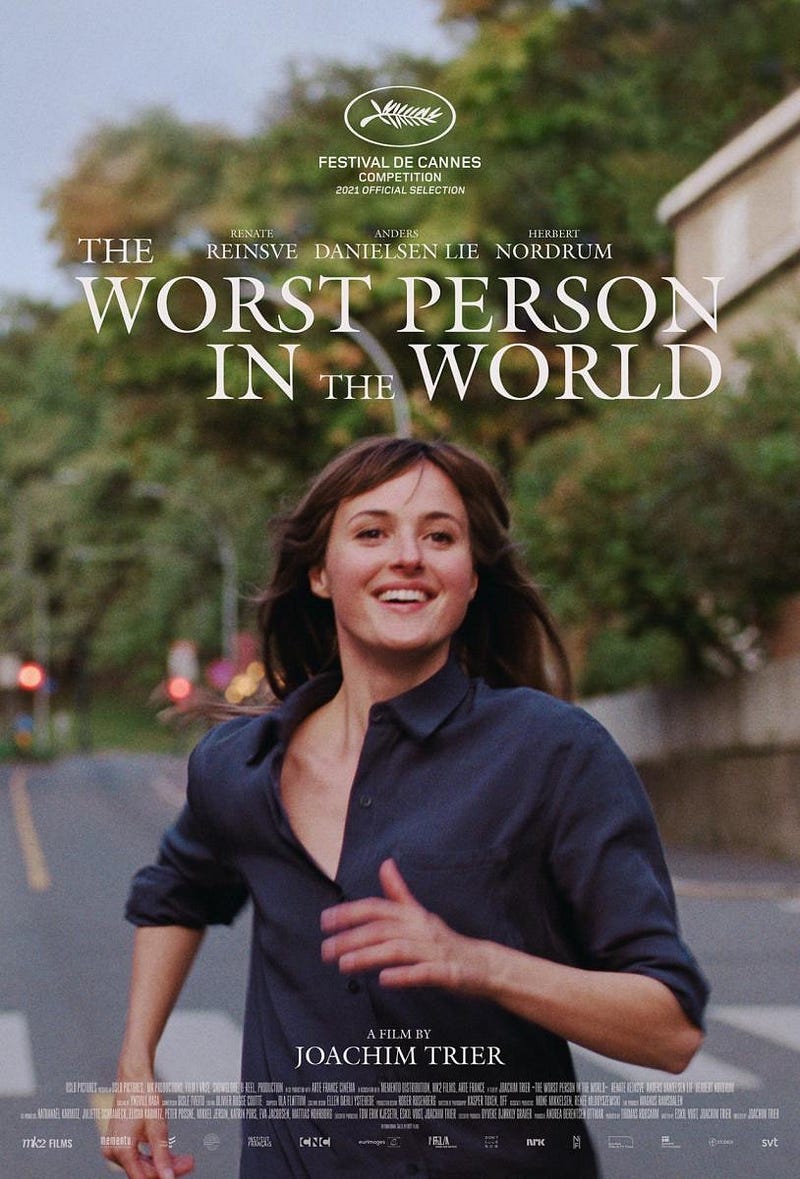
1.) Ekil Vogt and Joachim Trier, The Worst Person in the World (1st nomination for both). For me, the third film in Joachim Trier’s Oslo Trilogy (following 2006’s Reprise and 2011’s Oslo, 31 August) has far and away the best of the screenplays nominated in this category. It evolves remarkably throughout, starting as a darkly comic tale of the exploits of an impetuous young woman named Julie (Renate Reinsve) and by its end becoming a wrenching examination of loss. The screenplay is sharply insightful, deeply moving, and crafts numerous memorable characters. It is a truly impressive feat that would make a richly deserving winner.
Click below to check out my rankings of the Oscar nominees in the screenplay, directing, and Best Picture categories at recent ceremonies.
BEST DIRECTOR
5.) Paul Thomas Anderson (Now has 11 nominations across 4 categories — Best Picture, Best Director, and Best Original Screenplay for Licorice Pizza this year; Best Picture and Best Director for Phantom Thread; Best Adapted Screenplay for Inherent Vice; Best Picture, Best Director, and Best Adapted Screenplay for There Will Be Blood; Best Original Screenplay for Magnolia; Best Original Screenplay for Boogie Nights; he has never won). Despite my numerous issues with its screenplay, I did find some things to appreciate regarding Anderson’s direction. This isn’t particularly surprising considering I have always found him to be a better director than writer. He manages to elicit engaging performances from the entire cast (including novice newcomers Alana Haim and Cooper Hoffman who do strong work in the lead roles) and he creates a distinct visual aesthetic with his recreation of San Fernando Valley in the 1970s. But no directorial skill can overcome the weaknesses of the screenplay.
4.) Ryusuke Hamaguchi, Drive My Car (1st nomination; he has an additional nomination this year for Best Original Screenplay). Ryusuke Hamaguchi is a remarkably gifted filmmaker, particularly when it comes to visuals. His breakthrough film is sumptuously staged, with gorgeous framing of both the driving sequences and the more intimate moments between the characters. For me, however, Drive My Car suffered from a lack of focus and an unnecessarily long running time that detracted from its many strengths.
3.) Kenneth Brannagh, Belfast (Now has 8 nominations across a record 7 categories — Best Picture, Best Director, and Best Original Screenplay for Belfast this year; Best Supporting Actor for My Week with Marilyn; Best Adapted Screenplay for Hamlet; Best Director and Best Actor for Henry V; Best Live Action Short for Swan Song). Many critics and awards enthusiasts have derided what they see as Brannagh’s unsophisticated visual storytelling and the film’s saccharine tone. Neither bothered me in the slightest. I found the film to make effective use of black-and-white (and brief flashes of color) and to have brisk pacing and a charming tone. However, the same criticisms I had about the film’s screenplay also apply here.
2.) Steven Spielberg, West Side Story (Now has 19 nominations — Best Picture and Best Director this year; Best Picture and Best Director for ET, Schindler’s List, Saving Private Ryan, Munich, and Lincoln; Best Picture only for The Color Purple, Letters from Iwo Jima, War Horse, Bridge of Spies, and The Post; Best Director only for Close Encounters of the Third Kind and Raiders of the Lost Ark; he has 3 Oscar wins — Best Picture and BestDirector for Schindler’s List and Best Director for Saving Private Ryan). Given that he is perhaps the most beloved, celebrated, and commercially successful film director alive, it would make perfect sense if Steven Spielberg coasted into his mid-70s. Instead, he took on a remarkable challenge by not only directing his first musical but remaking one of the most beloved musical films of all time (itself a Best Picture winner). Although I had doubts, Spielberg’s West Side Story is an unqualified triumph. It retained and updated what made the original a masterpiece, while also making key changes that made the film richer and more authentic. (Of course, many of these changes are the result of Tony Kushner’s brilliant — and shockingly un-nominated — screenplay.)
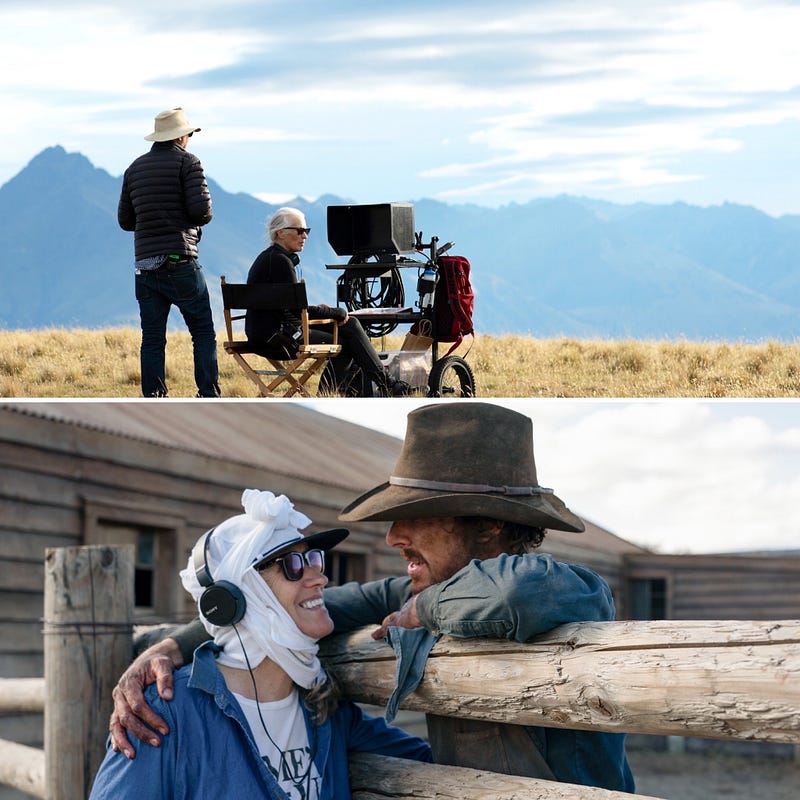
1.) Jane Campion, The Power of the Dog (Now has 5 nominations across 3 categories — Best Picture, Best Director, and Best Adapted Screenplay for The Power of the Dog this year; Best Director and Best Adapted Screenplay for The Piano; she won Best Adapted Screenplay for The Piano). Even if Denis Villeneuve’s brilliant direction of Dune had been contending here (rather than being one of the most egregious Best Director snubs in history), I would still have to call this award for Jane Campion. The New Zealand-born director, who became only the second woman to ever be nominated for the Best Director Oscar with 1993’s The Piano, made another masterpiece with this atmospheric Western that brilliantly evokes themes that are taboo, tragic, and universal. She is in pure command of every aspect of her craft here — as a visual storyteller, as an actor’s director, and as an iconoclast.
BEST PICTURE
10.) Don’t Look Up (4 nominations). At the risk of sounding mean-spirited and hyperbolic, I honestly don’t know what shocks me more — the fact that a group this talented produced such a dismal failure or the fact that so many critics and industry members adored it. Despite having an almost unprecedented level of star power among its cast (stars Leonardo DiCaprio, Jennifer Lawrence, Meryl Streep, Cate Blanchett, and Mark Rylance have a combined total of 39 Oscar nominations and 8 wins) and an intriguing setup (a satire about how America would respond with selfishness and indifference if the end of the world was nigh), Adam McKay’s film manages to fail at nearly everything it tries. It never stays on one target long enough to say anything remotely interesting or funny about it and nearly every joke falls flat. The only redeeming aspects of the film are a strong performance by Jennifer Lawerence and a refreshingly daring ending.
9.) Licorice Pizza (3 nominations). So much attention has been given to the controversy surrounding the central romance between a 25-year-old woman and a 15-year-old boy and the racist humor that the movie showcases, that it drowns out the small but vocal minority who thinks the movie simply does not work for reasons far beyond those ethically questionable choices. I found the film to be largely devoid of laughs, heart, or tension and to ultimately be a meandering and unengaging film.
8.) King Richard (6 nominations). Even despite the endorsement of the film by Venus and Serena Williams, I still struggled immensely with the fact that the story of two of the most extraordinary female athletes in history is told through the lens of how their father got them there. It’s not that Richard’s contribution isn’t extraordinary, rather its that the film has minimal focus on the contributions of the film’s women (particularly the Williams sisters themselves). Given Hollywood’s longstanding and deeply problematic portrayal of stories about strong women, it feels disappointingly regressive. But even trying to put all that aside, the film felt lacking in passion and originality for me. This was particularly notable in the climactic tennis sequences, which to me felt generic both in terms of how they were staged and the emotions they evoked.
7.) Drive My Car (4 nominations). I both expected and wanted to love Drive My Car, Ryusuke Hamaguchi’s tale of the unlikely connection between a grief-stricken actor and the young woman appointed as his chauffeur. I am generally a fan of philosophical and poetic dramas that wax existentially about the nature of love and grief and with almost no exceptions I have been a big fan of the foreign language/international features that have been feted in major categories by the Academy over the last two decades. Unfortunately, I found that its 3 hour running time was unearned by the plot and actually detracted from the immense strengths the film possessed. Of note, however, the film has many extraordinary elements from which to detract (unlike the previous three films on this list). It is beautifully shot, evokes complex emotions, and explores fascinating themes.
6.) Nightmare Alley (4 nominations). Writer-director Guillermo Del Toro followed up his Best Picture-winning 2017 film The Shape of Water with this atmospheric remake of Edmund Goulding’s 1947 film noir. The film tells the story of the tragically-fated collaboration between a carnie-turned-psychic (9-time Oscar nominee Bradley Cooper) and a well-heeled psychologist (7-time Oscar nominee Cate Blanchett) in the early 1940s. Del Toro elicits superb performances from the sterling cast (which also includes Oscar winner Mary Steenburgen and Oscar nominees Rooney Mara, Toni Collette, David Strathairn, Willem Dafoe, and Richard Jenkins). The film never quite reaches the lofty heights one might expect given the astonishing talent both in front of and behind the camera, but I found it to be a compelling and elegantly staged drama with a truly chilling ending.
5.) CODA (3 nominations). It is not much of a surprise to me that in recent weeks CODA has catapulted to Best Picture frontrunner status. No film this year is as emotionally evocative and just plain likable as CODA. Plus, who doesn’t love an underdog story? The low-budget film about a culturally deaf family grappling with change may not be the year’s most innovative or memorable, but it is a beautiful and compelling film that shines a light on a segment of society that Hollywood rarely sets its sights on.
4.) Belfast (7 nominations). Kenneth Brannagh’s coming-of-age dramedy set against the civil unrest in Northern Ireland in 1969 is a charming, often funny, refreshingly brief, and moving story of a multigenerational family navigating complex and tragic events. It is not a perfect film, but I found it highly enjoyable and felt that the ensemble cast was one of the year’s finest.
3.) Dune (10 nominations). Denis Villeneuve’s adaptation of Frank Herbert’s classic 1965 science fiction novel succeeded where previous adaptations had fallen short and even garnered comparisons to Peter Jackson’s work on Lord of the Rings. It is a brilliantly cast, visually breathtaking, technically astonishing, and thoroughly compelling film that is epic in every sense of the word.
2.) West Side Story (7 nominations). As I mentioned, I was skeptical about West Side Story. I knew that in the hands of Steven Spielberg and Tony Kushner it would be good, but I doubted whether it would be thrilling and, well, necessary. I was pleasantly surprised that it was one of my favorite films of the year. It is technically marvelous, highly entertaining, deeply nuanced, and features some of the finest musical numbers to be put on film in the past quarter century.
1.) The Power of the Dog (12 nominations). Of the five films in this category that I truly loved, the last four all had notable limitations. CODA and Belfast veer into schmaltziness at times and elements of them feel overly familiar. Dune and West Side Story were technically marvelous and highly resonant, but as adaptations of very familiar properties they lacked a bit of freshness. The Power of the Dog is the only film this year (or, at least, the only film nominated for Best Picture this year) that I felt had it all. It is a striking artistic achievement, a compelling and entertaining watch, and profound and sensitive in its exploration of complex themes. Were it to win here, it would make a remarkable three-year streak following Bong Joon-ho’s Parasite and Chloe Zhao’s Nomadland.
Follow the author of this article on Medium and Twitter.
Read recent articles about movies written by this author:


