
The 93rd Academy Awards: Who Should Win (Part II)
We are just two days away from this year’s Oscar ceremony, following what has been perhaps the longest, strangest, and most unpredictable awards season in history. In this article, I rank the contenders in each of the four acting races while delving into my take on the relative merit of the contenders.
To find out who I think should win in the four acting categories check out Part I of this article.
To find out who I think will win, check out my preview of the show and predictions in all 23 categories.
Although I unabashedly adore the glitzy ceremony, the behind-the-scenes drama, the near-century of statistics and milestones, and the fun of predicting the eventual winners, I pay so much attention to the Oscars each year primarily because I love movies. I love watching movies, reflecting on movies, and debating movies. I believe that the art of filmmaking has shaped my life — and our culture — in profound ways. Thus, each year I make sure to see each film nominated in the “top eight” categories (Best Picture, Best Director, the four acting categories, and the two screenplay categories), along with as many of the others as I can squeeze in. Below, I rank the nominees in the categories of Best Adapted Screenplay, Best Original Screenplay, Best Director, and Best Picture and give my take on the relative merits of each.
BEST ADAPTED SCREENPLAY
5.) Sacha Baron Cohen, Anthony Hines, Dan Swimer, Peter Baynham, Erica Rivinoja, Dan Mazer, Jena Friedman and Lee Kern, Borat Subsequent Moviefilm (Cohen has a prior nomination for writing the original film and another nomination this year for his performance in The Trial of the Chicago 7; three of the eight (!) additional credited screenwriters have a prior nomination for the original Borat film). Like the 2006 mockumentary blockbuster that it was a sequel to, Borat Subsequent Moviefilm scored a somewhat surprising nomination here. Although much of the film was improvised, the audacious and satirical scenes certainly required the writers to create clever and compelling setups and the addition of Borat’s daughter Tutar in a major role actually makes the film more narratively and character-driven than the original. Overall, it’s a solid — and at times quite inspired — screenplay, but I can think of numerous ones this year that I think deserved this spot more.
4.) Ramin Bahrani, The White Tiger (1st Oscar nomination). Writer-director-producer Ramin Bahrani’s adaptation of Aravind Adiga’s 2008 novel is fresh, urgent, and compelling. The story of an ambitious Indian man who schemes to rise out of the trappings of his caste and become the right-hand man of a wealthy and powerful Indian family plays out like an intriguing mashup of previous Best Picture winners Parasite and Slumdog Millionaire. It is a strong film that I am pleased to see get recognition, but the screenplay is far from perfect due to its over-reliance on a clunky framing device and some pacing issues.
3.) Chloe Zhao, Nomadland (see below in Best Director). Chloe Zhao’s adaptation of journalist Jessica Bruder’s 2017 nonfiction book about the Great Recession is remarkable in its detailed observations, rich characterization, and sociopolitical commentary. It is loosely structured enough to perfectly fit the subject matter, tone, and themes while also having enough of a narrative through-line that it plays like a dramatically engaging film as opposed to an impressionistic art film. Although the screenplay is certainly worthy of admiration, I truly feel that Zhao’s spectacular direction is more responsible for the film’s greatness than what was on the page.
2.) Kemp Powers, One Night in Miami (1st Oscar nomination). Kemp Powers’ adaptation of his stage play depicting a fictionalized interaction between four historical figures one night in Miami (hence the title), retains everything that made it great while also making the necessary tweaks to make it feel like a film as opposed to a recorded theater production. The screenplay features striking, effective, and believable dialogue that works consistently well, even as the screenplay shifts from philosophical discussion to witty banter to tense character conflict. (Fun fact: Kemp Powers also could have — and perhaps should have — been nominated in the Best Original Screenplay category this year for co-writing the Pixar film Soul).
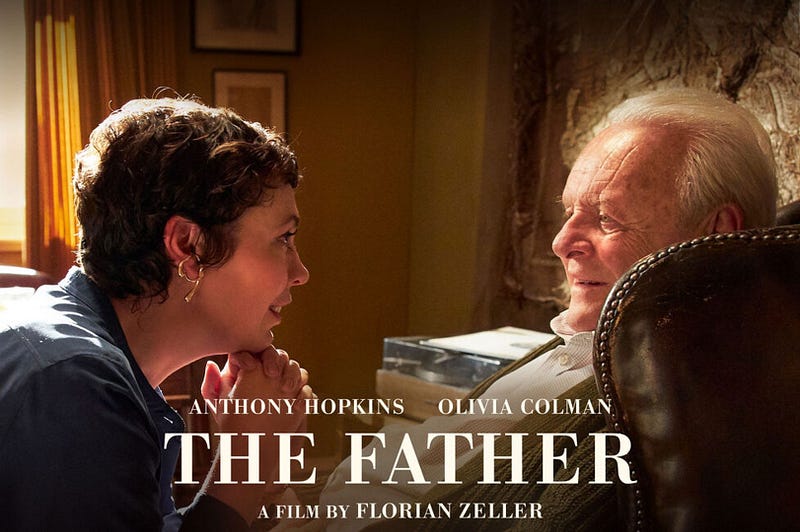
1.) Christopher Hampton and Florian Zeller, The Father (Hampton has a previous win in this category for Dangerous Liaisions and an additional nomination for Atonement; this is Zeller’s 1st Oscar nomination). Christopher Hampton and Florian Zeller’s adaptation of Zeller’s French play La Pere is a true masterwork. The film depicts a man’s descent into dementia, which unfolds on screen through a series of confounding inconsistencies, time disorientation, jarring transitions, and major emotional and tonal shifts. The labyrinthine structure of the screenplay feels so carefully constructed, however, that the film never feels disorganized, chaotic, or emotionally manipulative. Rather it feels like a richly and carefully built narrative that demands repeated viewings to truly appreciate. But my love for this screenplay goes beyond ambition and mechanics — the emotional dynamics between Anthony and those around him are full of raw and unflinching honesty.
BEST ORIGINAL SCREENPLAY
5.) Will Berson, Shaka King, Keith Lucas, and Kenny Lucas, Judas and the Black Messiah (All 1st time Oscar nominees this year). Despite being in last place on my list, I actually found the quartet’s screenplay for Judas and the Black Messiah to be quite strong. The story of FBI Agent Bill O’Neal’s infiltration into the Black Panther party through which he became embroiled with revolutionary socialist Fred Hampton is a compelling one and the screenplay tells it with urgency and power. However, many of the elements — the speeches, the romantic subplot, and even the plot arc itself — felt overly familiar to me. I think the film’s considerable strengths were more due to strong direction and terrific acting than its screenplay.
4.) Aaron Sorkin, The Trial of the Chicago 7 (4th Oscar nomination; previous win for The Social Network and previous nominations for Moneyball and Molly’s Game). Over the past 30 years, Aaron Sorkin has repeatedly demonstrated that he is one of the most skilled and unique writers of his generation with his iconic work across stage, television, and film. His latest film, which he also directed, refreshingly eases up on some of the more familiar elements of his writing (e.g., the rapid and impassioned dialogue exchanges while the characters are in transit, the flirtatious banter) and focuses more on the plot and themes. The film depicts the fascinating and historically important legal fallout from the violent protests at the 1968 Democratic National Convention and is a fairly compelling hybrid of legal drama and political thriller. Nevertheless, I did not find many of his characterizations particularly compelling and found several of the key dramatic moments notably underwhelming.
3.) Lee Isaac Chung, Minari (see below in Best Director). Lee Isaac Chung’s semi-autobiographical story of a family of Korean immigrants trying to make it as farmers in 1980s Arkansas is by far the warmest and most moving of the five nominees in this category. Although the film doesn’t have a particularly unique or powerful plot arc, it remains compelling and engaging throughout its entire run time largely due to the extraordinarily rich characters and interrelationships Chung creates. The screenplay touches on themes about acculturation, marriage, and family that are rarely depicted at all on the big screen, let alone so honestly and poignantly.
2.) Darius Marder, Abraham Marder, and Derek Cianfrance, Sound of Metal (All 1st time nominees this year). The exceptional screenplay for Sound of Metal has numerous strengths. First, the subject matter feels genuinely fresh. Although the plot synopsis “musician adjusts to losing his hearing” sounds like it could be maudlin and familiar on paper, the film injects fascinating and unexpected dynamics into the proceedings, including the exploration of recovery from addiction and the tension between working to restore hearing versus adjusting to hearing loss. Second, the three main characters are all brimming with psychological complexity that is conveyed through their actions and expressions far more than through traditional dialogue. Third, the screenplay undoubtedly formed the basis for the film ‘s use of sound and perception to illustrate the protagonist’s experience — perhaps the film’s most unique and compelling aspect.
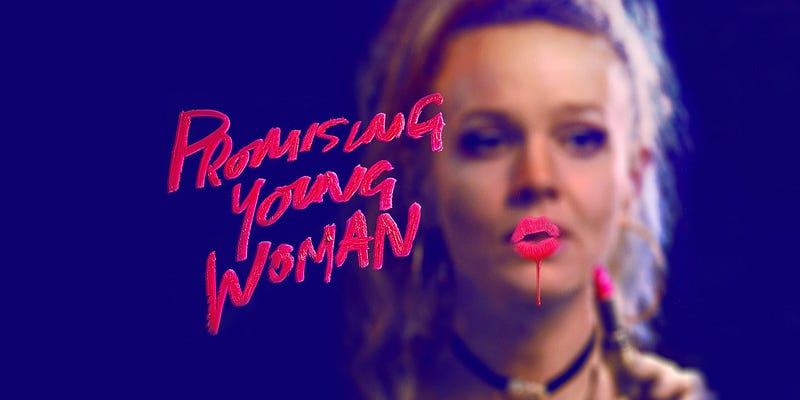
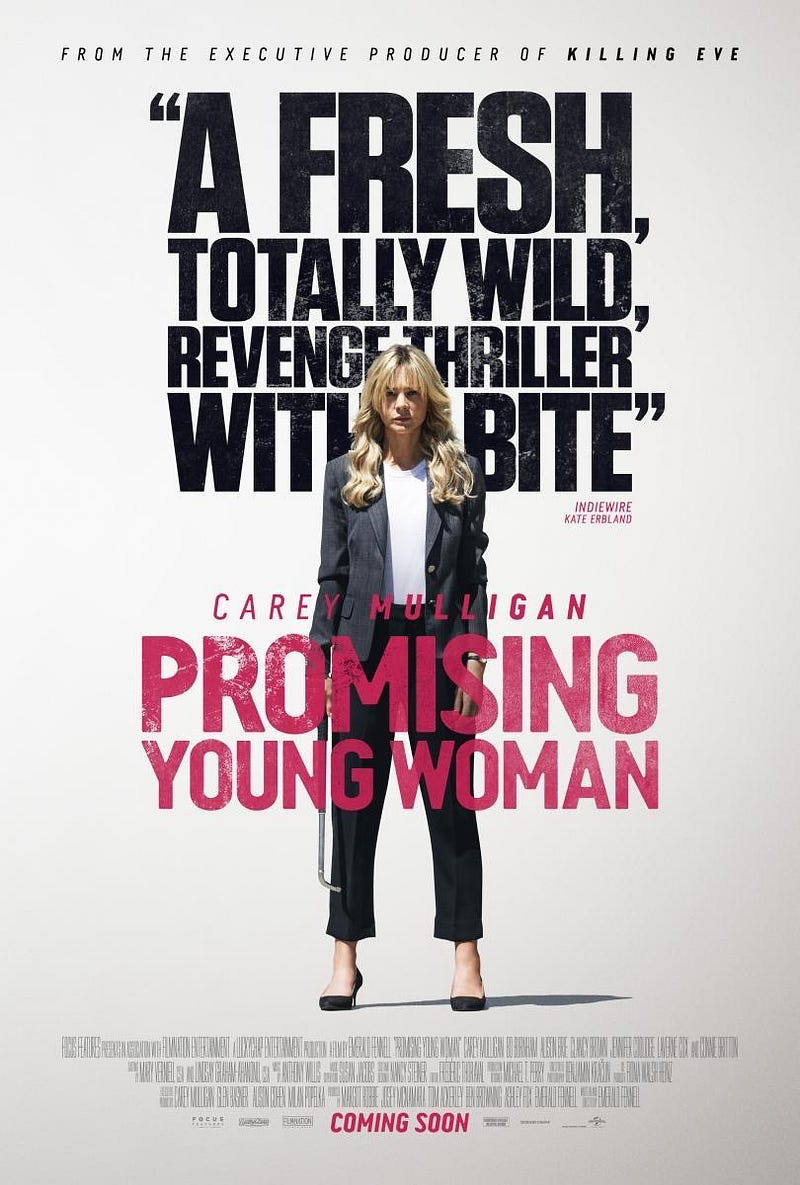
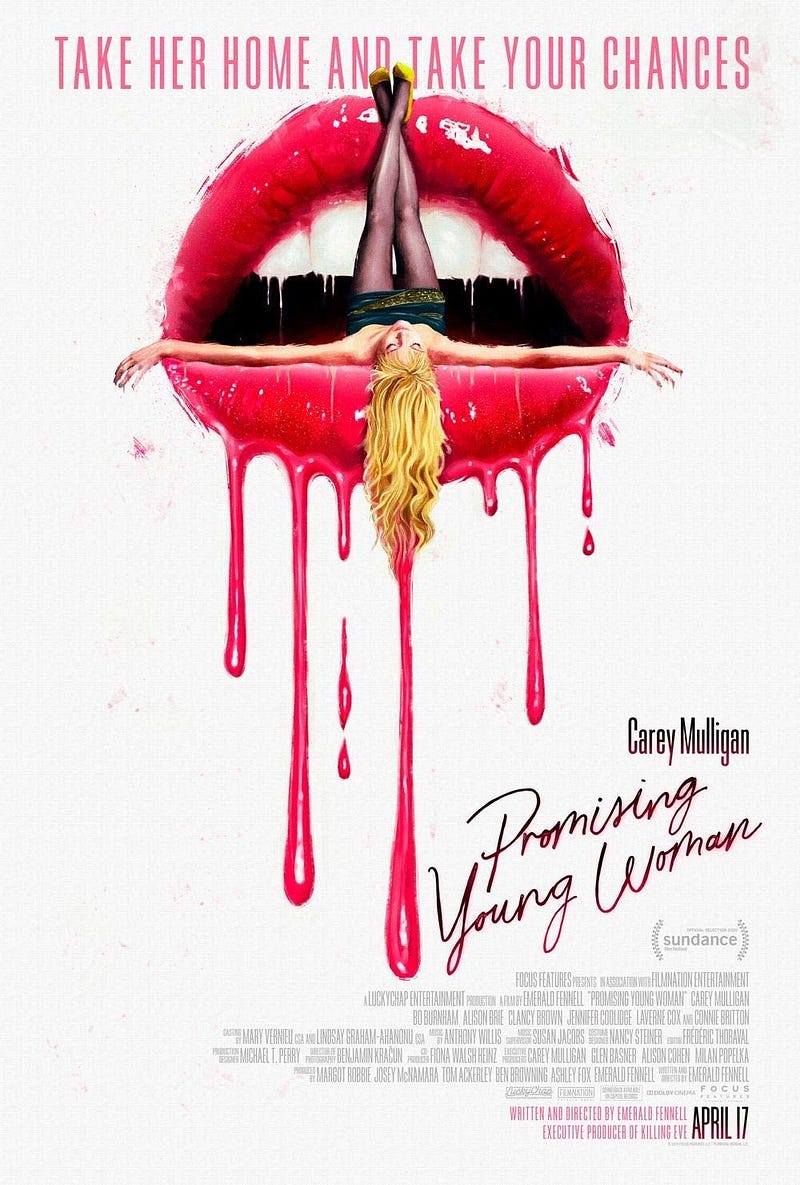
1.) Emerald Fennell, Promising Young Woman (see below in Best Director). It should be no surprise that the film debut of the woman who so expertly took over the reins of Killing Eve from Phoebe Waller-Bridge is an expertly crafted, joltingly original, darkly comic, feminist thriller. The screenplay begins with a deeply unsettling sequence in which our deeply tormented protagonist tries to teach some misogynists a lesson about sexual consent and doesn’t let up for the rest of the film, which simultaneously reveals her backstory and chronicles her ambitious, and perhaps reckless, plan of revenge. The screenplay is unflinching and unrelenting in its messaging about rape culture in modern America, but it never becomes preachy and its characters and themes remain complex and unexpected throughout. Of all of the films nominated this year, this one elicited the most divisive reaction from critics and audiences and this exciting (although at times infuriating) dialogue is almost entirely due to the bold and innovative screenplay.
BEST DIRECTOR
5.) Thomas Vinterberg, Another Round (1st Oscar nomination). Danish director Thomas Vinterberg was a surprise inclusion in the Best Director category for his film about a group of Danish men seeking to shake up their stale lives by embarking on an experiment to maintain their blood alcohol content at 0.05% in order to improve functioning and emotional engagement. It is an interesting and compelling twist on the “midlife crisis” character drama and there are scenes in the film that he directs with masterful and memorable touches that make the film soar beyond what it would have been in the hands of a lesser director. Nevertheless, I felt that the film was beset by a handful of issues such as inconsistent pacing and the lack of nuanced character development for anyone outside of the protagonist (who is played exceptionally well by Mads Mikkelson).
4.) Lee Isaac Chung, Minari (1st time nominee this year; also nominated for writing this year). Chung brings his semi-autobiographical screenplay to vivid life in a tender, moving, and visually appealing film. The most impressive element of Chung’s direction is the richly detailed and authentic performances he elicited from the superb cast. In particular, the scenes of marital strife between Jacob and Monica and bonding between young David and his grandmother Soon-ja are remarkably impactful, in large part to his brilliant direction.
3.) David Fincher, Mank (3rd nomination; previous nominations for The Curious Case of Benjamin Button and The Social Network). I am among the many, many people who think that Fincher should already have an Oscar (my vote is for his brilliant work on The Social Network). However, I would not vote for him this year for Mank given that it is one of the weaker of his major films, not to mention one of the weaker films among this year’s crop of nominees. Nevertheless, I was very impressed by the film’s ambitious direction. He recreates the aesthetic of Citizen Kane (which Mank chronicles the development of), while feeling much more than an imitation. For me, Fincher’s work on Mank is visually stunning and impressively staged enough to make up for the film’s shortcomings.
2.) Emerald Fennell, Promising Young Woman (1st time nominee this year; also nominated for producing and writing this year). Emerald Fennell matched her audacious and riveting screenplay with a bold aesthetic dominated by bright colors and a pitch-perfect soundtrack. But the true brilliance of her direction lies in the dramatic tension she creates in the staging of the scenes and the striking and often unexpected performances she elicits from the film’s impressive ensemble. It is mind-boggling to me that this was her first time in the director’s chair for a feature film.
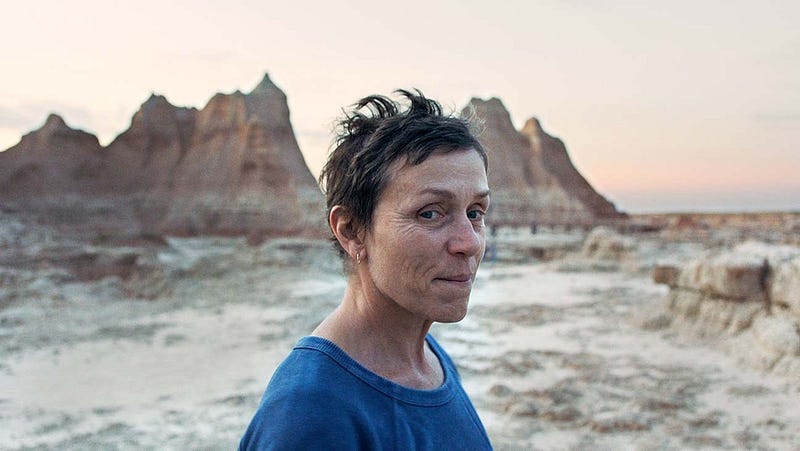
1.) Chloe Zhao, Nomadland (1st time nominee this year; also nominated for producing, writing, and editing this year). As much as I adored Fennell’s directorial debut, I would undoubtedly cast my vote for Chloe Zhao in this category if I had a ballot. She has dominated the race this season for a reason. Several reasons, actually. Nomadland is a visually stunning film with some unimaginably beautiful and memorable shots. She elicits authentic and deeply moving performances from a mix of Hollywood veterans and non-actors. She expertly injects emotional depth and dramatic tension into the loosely structured narrative in order to keep it consistently engaging. Ultimately, Zhao demonstrates astonishing technical skill coupled with a profound respect for, and interest in, the overlooked human beings that her film pays tribute to.
BEST PICTURE
8.) The Trial of the Chicago 7 (6 nominations). For the first time in four years, I didn’t have a strong negative reaction to any of the Best Picture nominees. Although I wouldn’t have personally nominated The Trial of the Chicago 7, it is a perfectly fine film. I didn’t find the filmmaking to be particularly fresh or unique, the sociopolitical commentary to be particularly original, or any of the performances to be particularly memorable, but it is a compelling, well-made film that tells an important story effectively.
7.) Mank (10 nominations). For me, Mank is one of the many films showered with Oscar nominations in recent years that is far more of an ambitious and dazzling directorial achievement than a truly great film overall. But that doesn’t mean it is a bad one. Despite its flaws, which include its uninteresting protagonist and lack of soul, it is a richly detailed and entertaining film that tells an interesting and engaging tale of Old Hollywood.
6.) Judas and the Black Messiah (6 nominations). Four films directed and written by black artists and brought to life by virtually all-black ensembles were major Oscar contenders this year — Spike Lee’s Da 5 Bloods, George C. Wolfe’s Ma Rainey’s Black Bottom, Regina King’s One Night in Miami, and Shaka King’s Judas and the Black Messiah. Each of the four were brilliant and it is frustrating that only one of them made it into the Best Picture lineup. Even more frustrating for me is that the one I thought was the weakest of the four is the one that made it. Judas is a riveting, well-made film about an important subject that features superb performances, but I found it have some pacing problems and to play out a bit familiarly and predictably.
5.) Minari (6 nominations). There was considerable controversy early on in awards season when Minari was being nominated by some groups in the category of Best Foreign Film. Although much of the film’s dialogue is not in English, it could not be a more American film. It is a film about immigrants to America trying to achieve the American Dream and it was filmed in America by an American. But this controversy is sadly unsurprising as the immigrant experience in America remains poorly understood and rarely depicted by Hollywood. That is one of the things that made the success of Minari such a beautiful thing to behold. Lee Isaac Chung’s semi-autobiographical tale about Korean immigrants trying to make it in America is a deeply moving family drama featuring spectacular performances and a lot of heart.
4.) Sound of Metal (6 nominations). When I heard the initial buzz on this film, I pegged it as one of those critical darlings that would probably feature a terrific performance or two but would fail to cohere into a particularly unique and memorable film. (There are more examples of this in recent years than I can count.) I was utterly astonished at the artistic vision that director Darius Marder brought to the film and the unique slice of the human experience that it delves into with such technical skill and unflinching emotion. It is far more than a showcase for truly brilliant performances from Riz Ahmed and Paul Raci; it is a breathtaking cinematic achievement.
3.) The Father (6 nominations). The Father is as technically ambitious a depiction of mental anguish as Sound of Metal, but even more taut and dramatically powerful. With its profoundly complex structure that keeps the viewer constantly questioning whether they can trust their own experience and committed performances of astonishing emotional authenticity by two of our greatest living actors, the film is a singular cinematic achievement. And it accomplishes its feats in a lean 97 minutes.
2.) Nomadland (6 nominations). Chloe Zhao’s homage to those affected by the Great Recession is simply a gorgeous piece of filmmaking. It shows enormous respect and compassion for its subjects and shines a light on their misunderstood plight. It tells a compelling and moving story centered on a protagonist unlike any we have seen in major films in recent years. It contains stunning technical achievements alongside documentary-style realism. Nomadland is a richly deserving frontrunner that will stand among the best of the modern Best Picture winners.
1.) Promising Young Woman (5 nominations). As much as I loved Nomadland and The Father, no film this year managed to topple Promising Young Woman for me. I have written elsewhere at length about my admiration for the film, particularly its bold reinterpretation of the revenge thriller, its blistering commentary on rape culture in modern America, its unexpected narrative twists, and the uniformly superb performances from its cleverly selected cast. It is by far the most controversial and divisive of this year’s nominees but I am firmly and unapologetically in the camp that declares it a masterwork.
Click here for my ranking of this year’s contenders in the four acting categories
Follow the author on Medium and Twitter.
Check out the authors recent articles about awards season:
- “Promising Young Woman” and “Nomadland” Boldly Confront Toxic American Beliefs
- The 27th Annual Screen Actors Guild Awards: Five Key Takeaways
- And the Nominees for the 93rd Academy Awards Are…
- The Highs and Lows of the Utterly Chaotic 78th Golden Globe Awards
- Spare Me Your Rage Regarding the Academy’s Inclusivity Initiatives
- “The Silence of the Lambs”: A Timeless Masterpiece Turns 25


