
The 93rd Academy Awards: Who Should Win (Part I)
We are just two days away from this year’s Oscar ceremony, following what has been perhaps the longest, strangest, and most unpredictable awards season in history. In this article, I rank the contenders in each of the four acting races while delving into my take on the relative merit of the contenders.
To find out who I think should win in the other major categories — including Best Picture — check out Part II of this article.
To find out who I think will win, check out my preview of the show and predictions in all 23 categories.
Although I unabashedly adore the glitzy ceremony, the behind-the-scenes drama, the near-century of statistics and milestones, and the fun of predicting the eventual winners, I pay so much attention to the Oscars each year primarily because I love movies. I love watching movies, reflecting on movies, and debating movies. I believe that the art of filmmaking has shaped my life — and our culture — in profound ways. Thus, each year I make sure to see each film nominated in the “top eight” categories (Best Picture, Best Director, the four acting categories, and the two screenplay categories), along with as many of the others as I can squeeze in. Below, I rank the five nominees in each acting category from worst to best based on my evaluation of the quality of the respective performances.
BEST SUPPORTING ACTOR
5.) Sacha Baron Cohen, The Trial of the Chicago 7 (1st Oscar nomination for acting; previous nomination for writing Borat and current nomination this year for writing its sequel). As liberal activist Abbie Hoffman, one of the titular defendants, Borat star Cohen goes against type with a dramatic performance. He is strong in the role and actually has moments of real dramatic power and scene-stealing wit, but I did not find his performance to be any stronger than several of his co-stars who went un-nominated (e.g., Mark Rylance, Frank Langella). It is undeniable, however, that between Borat and this, he had quite a banner year that demonstrated his impressive versatility as an actor.
4.) LaKeith Stanfield, Judas and the Black Messiah (1st Oscar nomination). As many have noted before, the placement of both LaKeith Stanfield and Daniel Kaluuya in the Best Supporting Actor category makes absolutely no sense. Not only are they the title characters of the film, but they are unquestionably the only two leads in the film. But I try not to hold bizarre or fraudulent category placements against the actors who likely had little to no say in them. Stanfield is an endlessly interesting actor who has a very exciting career ahead of him and, unsurprisingly, he gives a very strong performance as Bill O’Neal, an FBI informant who infiltrated the Black Panther Party. Unfortunately, he is upstaged throughout the film by the much showier performance of Kaluuya, whose character the screenplay seems decidedly more interested in fleshing out.
3.) Leslie Odom Jr., One Night in Miami (1st Oscar nomination; has an additional nomination this year for Best Original Song). Speaking of strange category placement, Odom Jr.’s campaign for Best Supporting Actor never really made sense to me. The film (and the play on which it was based) is famously focused fairly equally on four historically important black icons — boxer Muhammad Ali, Nation of Islam leader Malcolm X, singer-songwriter Sam Cooke, and NFL star Jim Brown. If I had to split them into lead and supporting characters, I would have no hesitation selecting Kingsley Ben-Adir’s turn as Malcolm X and Odom Jr.’s turn as Sam Cooke as the leads. Their dynamic is by far the film’s most compelling and both actors dominate virtually all of the scenes. Category placement drama aside, Odom Jr. does terrific and compelling work as a man who is working on changing the system from the inside, as he attains unprecedented clout in a white-dominated industry. His charismatic turn may not win him the Oscar, but it does mark a successful transition to the movies for the Tony-winning star of Broadway sensation Hamilton.
2.) Paul Raci, Sound of Metal (1st Oscar nomination). Every now and then the Oscars really get some things beautifully and unexpectedly right. After being an early winner at several regional film critics’ association awards, Paul Raci was snubbed at numerous high-profile awards shows for his work in Sound of Metal, leading many to doubt whether he would even be nominated at the Oscars. But the Oscars came through and granted him a nomination for his profoundly affecting performance as Joe, the compassionate but steadfast director of a recovery community for deaf addicts. He injects so much nuance and dramatic heft into his role that he truly elevates an already excellent film whenever he appears on screen.
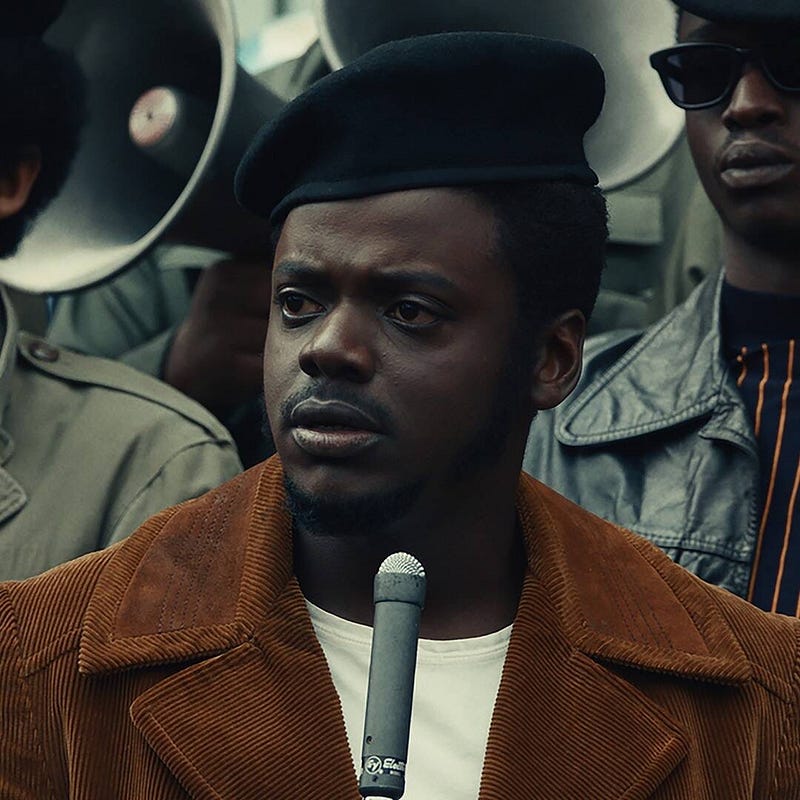
1.) Daniel Kaluuya, Judas and the Black Messiah (2nd Oscar nomination; previous nomination for Get Out). Daniel Kaluuya has an utterly extraordinary four-year run with his breakout, Oscar-nominated turn in Jordan Peele’s modern horror classic Get Out leading to turns in Best Picture nominee Black Panther and critical darlings Queen & Slim and Widows. And he now gets his best role to date as revolutionary socialist Fred Hampton in Judas and the Black Messiah. Whether in the extended sequences where he delivers remarkably charismatic speeches rallying support for his cause or in the quiet moments that depict his blossoming romance with Deborah Johnson (the superb Dominique Fishback), Kaluuya gives a consistently astonishing performance. He has steamrolled the awards season for a reason. He’s that good.
BEST SUPPORTING ACTRESS
5.) Glenn Close, Hillbilly Elegy (8th Oscar nomination; previous nominations for The World According to Garp, The Big Chill, The Natural, Fatal Attraction, Dangerous Liaisons, Albert Nobbs, and The Wife). The astonishingly negative reviews for the film combined with the fact that this role gave seven-time Oscar loser Glenn Close the distinction of being only the third actor in history to get nominated for both the Oscar and the Razzie for the same role might lead you to suspect that the Academy nominated a truly bad performance in a fit of name recognition and love of biopics involving prosthetics. But Close’s performance is not bad. In fact, I don’t know if Close is capable of giving a bad performance. There are moments where her role as hillbilly grandmother Bonnie “Mamaw” Vance is actually deeply affecting. Unfortunately, the film is so poorly made, with its uneven pacing, muddled structure, and often embarrassing dialogue that her impressive efforts are undermined throughout.
4.) Amanda Seyfried, Mank (1st Oscar nomination). After delivering superb performances in film and television for nearly two decades, Amanda Seyfried received her first Oscar nomination for her performance as Old Hollywood starlet Marion Davies. The film captures the declining years of Davies’s Hollywood career when she was best known as legendary tycoon William Randolph Hearst’s mistress. She holds her own superbly against larger-than-life performances from Gary Oldman (as Citizen Kane screenwriter Mankiwiecz) and Charles Dance (as Citizen Kane inspiration Hearst) and delivers a memorable, charming, and interesting performance that elevates the film. She is the soul of a film otherwise severely lacking in one. Unfortunately, I felt that she didn’t quite get the meaty material that would make her a strong contender for the win.
3.) Maria Bakalova, Borat Subsequent Moviefilm (1st Oscar nomination). One of the biggest surprises of an awards season filled with them is the successful run of Maria Bakalova. In addition to being a virtually unknown young actress from Bulgaria, Bakalova stars in a film that is extremely far outside of the Academy’s wheelhouse. In the wildly offensive mockumentary comedy sequel Borat Subsequent Moviefilm, she plays Tutar, the daughter of the titular journalist. She convinces her father to let her accompany him on a journey to America, where he plans to offer her as a child bride to Vice President Mike Pence. The role requires her to engage in grotesque physical comedy, improvise alongside a master, and even get seduced by Rudy Guiliani. Not only is she up to all of those tasks, but she unexpectedly injects some major emotional depth into the proceedings. It is a bold, star-making performance that would be worthy of a win.
2.) Yuh-jung Youn, Minari (1st Oscar nomination). When Korean immigrants Jacob and Monica Yi struggle to keep their family together while trying to start new careers as farmers in 1980s Arkansas, Jacob flies Monica’s mother in from Korea to help out. When Grandma Soon-ja arrives in the form of the magnificent Yuh-jung Youn an already great film becomes a truly wonderful one. Youn’s performance is not your typical grandmother role. She is eccentric and hilarious but not a caricature. She is a wise and grounding force but not an infallibly noble elder. She is the film’s most entertaining and fascinating character and Youn is spectacular throughout, including when the script takes a dramatic turn that substantially elevates the degree of difficulty of her role.
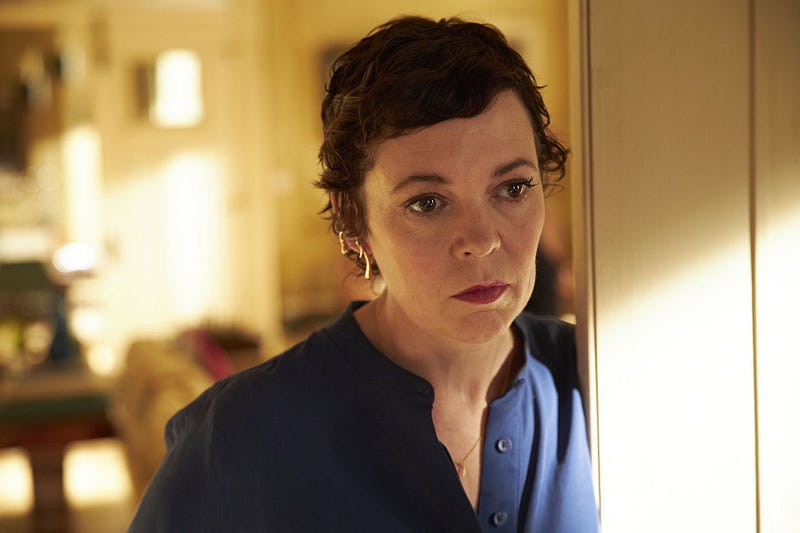
1.) Olivia Colman, The Father (2nd Oscar nomination; previous win for The Favourite). I would absolutely love to see Bakalova or Youn win this award. They gave extraordinary and unexpected performances and a win here would have a much larger impact on their careers than it would on Colman’s. After all, Colman already was a highly respected star of the big and small screens in the U.K. before becoming well-known in the U.S. following her upset Best Actress win for 2018's The Favourite. But her performance as Anne, a woman watching in helplessness, devastation, and horror as her father succumbs to dementia is so utterly extraordinary that I can’t help but conclude that if I had a ballot, I would have to cast my vote for her. The performance is enormously challenging, highly affecting, and differs fascinatingly from Colman’s other high-profile work.
BEST ACTOR
5.) Gary Oldman, Mank (3rd Oscar nomination; previous win for The Darkest Hour and previous nomination for Tinker, Tailor, Soldier, Spy). Easily my pick for the weakest of all 20 nominated performances this year, Gary Oldman’s turn as Oscar-winning Citizen Kane screenwriter Herman J. Mankiewicz isn’t necessarily bad acting. It’s just that it’s a bit over-the-top and hammy, especially during the character’s drunken rants (of which there are many). There are numerous lead actors who gave superior performances this year (e.g., Da 5 Bloods’ Delroy Lindo, The Mauritanian’s Tahar Rahim, Another Round’s Mads Mikkelson, One Night in Miami’s Kinglsey Ben-Adir) and numerous actors that I suspect could have pulled of this particular role just as well — or even better.
4.) Steven Yeun, Minari (1st Oscar nomination). After making a name in Hollywood as Glenn on The Walking Dead, Stephen Yeun gained critical adoration for his turn in a number of well-reviewed independent films. However, his big break only came recently in the form of Minari. He shines as Jacob Yi, the patriarch of a family of Korean immigrants whose wife Monica does not share his dream of relocating from their life in California to rural Arkansas to start a farm. The move puts a strain on his marriage, pushing the family to their emotional limits. He turns in a complex and moving performance that is utterly heartbreaking.
3.) Riz Ahmed, Sound of Metal (1st Oscar nomination). In a typical Oscar year, Riz Ahmed would be far out front as my pick for the winner. It is a testament to how utterly stacked this category is this year that I could even find two performances to rank above his. Ahmed has been delivering strong work in film and television for years, but nothing prepared me for his work as Ruben Stone, a recovering addict and heavy metal drummer whose life is thrown into disarray when he begins to lose his hearing. His heartbreak, disbelief, and palpable rage as he navigates this horrifying ordeal is profoundly moving and consistently riveting and as he begins to make peace with his situation toward the film’s end he expertly taps into a unique and compelling emotional experience rarely depicted in film.
2.) Chadwick Boseman, Ma Rainey’s Black Bottom (1st Oscar nomination). I had read the rave reviews for Boseman’s work in Ma Rainey’s Black Bottom, and while I had no reason to doubt them there was a small part of me that wondered if the raves were perhaps a bit inflated by the strong emotion surrounding the actor’s tragic death earlier in the year. Before the final credits even rolled, I had concluded that somehow the critical raves actually undersold the brilliance of his work. As Levee Green, blues legend Ma Rainey’s ambitious and overconfident trumpeter, Boseman begins the film as a fast-talking, high-spirited, young man bursting with passion and hope. Cracks in this facade begin to form, leading to the wrenching revelation of his past and a tragedy in the present. He plays the emotional roller coaster with power and precision and gives a performance so full of life, strength, and urgency that it is almost impossible to fathom that he was in the process of being weakened by the disease that would tragically take his life.
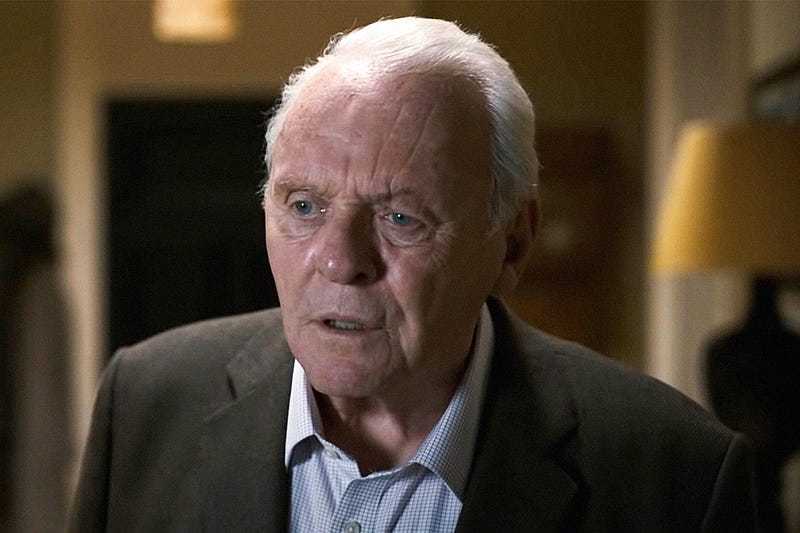
1.) Anthony Hopkins, The Father (6th Oscar nomination; previous win for The Silence of the Lambs and previous nominations for The Remains of the Day, Nixon, Amistad, and The Two Popes). When I saw Boseman’s performance, I was 100% convinced that there was no way another actor would give a performance in the remaining months of Oscar eligibility that could rival him. And then I watched The Father. As Anthony, an octogenarian Brit in the middle stages of dementia, he gives one of the all-time great leading man performances. He jarringly transitions between being soft and innocent, confident and charming, and explosively angry and unfathomably cruel and plays each of these emotions with extraordinary skill. The film is largely built on the premise of seeing the horror of dementia from the perspective of the afflicted and Hopkins proves more than up to this extremely difficult task, with a breakdown at the end of the film that you will have trouble shaking for weeks.
BEST ACTRESS
5.) Vanessa Kirby, Pieces of a Woman (1st Oscar nomination). Prior to this film, Vanessa Kirby was best known for her terrific, Emmy-nominated turn as Princess Margaret in the first two seasons of the Netflix royal family drama The Crown. She started off awards season as a major contender having picked up the prestigious Volpi Cup for Best Actress at the Venice Film Festival for her turn. Buzz slowly faded for her performance — and the film — but she was nevertheless one of only two actresses who was nominated for every major award this year (the other being Frances McDormand). In the film’s harrowing and masterful opening sequence, she loses her baby during complications stemming from a home birth. Her performance, particularly in the film’s opening stretch, is remarkably raw, honest, and unrestrained. However, in my opinion, the screenplay largely underserves her for the remainder of the film, which certainly has some memorable scenes (e.g., her testimony at the trial of her midwife, her explosive confrontation with her mother, superbly played by Oscar-winner Ellen Burstyn) but ultimately fails to make her a multidimensional character outside the tragedy that befell her.
4.) Andra Day, The United States vs. Billie Holiday (1st Oscar nomination). Like Kirby, Andra Day’s turn as blues legend Billie Holiday is another clear case of a film where a problematic screenplay and some questionable directorial choices undercut an extraordinary performance that — if surrounded by a stronger film — could have been one for the hall of fame. Singer-songwriter Day is remarkably compelling in her feature film debut. It is a remarkably demanding performance that requires her to physically and vocally transform into a beloved American icon, while also requiring her to descend into drug addiction and legal trouble with remarkable dramatic flair. Day doesn’t strike a single false note, but the film she is in strikes so many that it ultimately detracts from her performance.
3.) Viola Davis, Ma Rainey’s Black Bottom (4th Oscar nomination, the most among black women; previous win for Fences and previous nominations for Doubt and The Help). Like many others, I was surprised by the size of Viola Davis’s role in Ma Rainey’s Black Bottom. I was expecting a more traditional biopic with the beloved Davis dominating the film as the central character whom everyone else revolved around. However, the film — like August Wilson’s play on which it was based — is just as much about her band as it is about her. But just because she doesn’t dominate in terms of screen time doesn’t mean that the incomparable Viola Davis doesn’t deliver a scene-stealing, award-worthy turn. Ma Rainey is a remarkably complex character. At first, she comes off as a narcissistic and even self-destructive diva. Throughout the film, however, she is revealed instead to be a woman who knows her worth and demands respect despite how much she is beaten down and disrespected both as a woman and a black person in late 1920s America. Davis is one of our finest living actors and her performance here only strengthens that reputation.
2.) Frances McDormand, Nomadland (6th Oscar nomination for acting over 5 consecutive decades; previous wins for Fargo and Three Billboards Outside Ebbing, Missouri and previous nominations for Mississippi Burning, Almost Famous, and North Country; she has an additional nomination this year as a producer of Nomadland, bringing her tally to 7). I am a huge admirer of Frances McDormand, but I was not a particular fan of her second Best Actress win for 2017’s Three Billboards Outside of Ebbing, Missouri. I found the film highly problematic and thought that despite her best efforts her performance was unable to overcome the problematic elements of the screenplay. Her extraordinarily subtle work in Nomadland seems almost diametrically opposed to her work in that film to me. As Fern, a woman who loses her husband, home, and job during the Great Recession, McDormand delves deep into her character’s heartbreak, stubbornness, pride, determination, and resilience. It is a remarkably vanity-free performance that feels impressively lived in. Despite being a legendary film star she feels just as authentic in the role as many of the non-actors that writer-director-producer Chloe Zhao cast alongside her in the film.
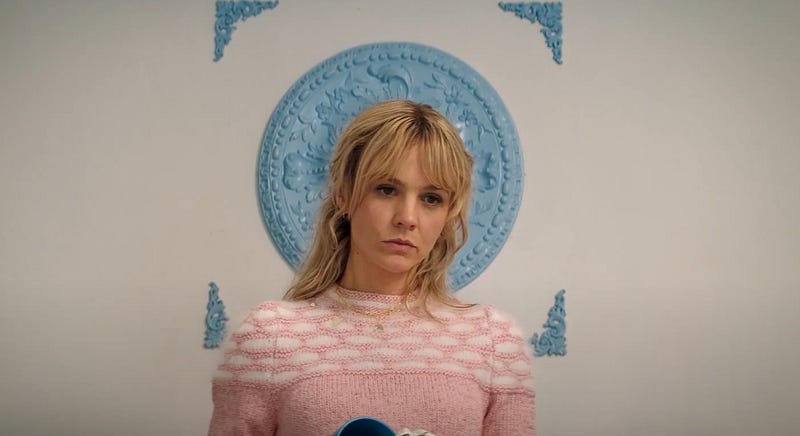
1.) Carey Mulligan, Promising Young Woman (2nd Oscar nomination; previous nomination for An Education). It is exceedingly rare that there is an Oscar category where all five nominees would make deserving winners. I truly believe that this year’s Best Actress lineup is one of them. Much has been made about how wildly unpredictable the race is with the four major televised awards going to different actresses. But more should be made of how utterly extraordinary this lineup is. Nevertheless, as good as Kirby, Day, Davis, and McDormand are, no performance this year matched Carey Mulligan’s work in Promising Young Woman for me. As a med school dropout with a profoundly complex reaction to the grief and trauma she experienced due to her best friend’s violent rape and death by suicide, Mulligan pulls off her remarkably unique, morally questionable, brave, and reckless character with tremendous skill. She is utterly heartbreaking and compelling in every scene. More than perhaps any of the films this year, the success or failure of Promising Young Woman largely rode on whether the actor cast in the main role could sell the ambitious and controversial screenplay. And Mulligan pulled it off with flying colors. It is in one of the most interesting and nuanced performance to be nominated at the Oscars in years and I think the very fact that it — and the film — are so divisive is a testament to that.
Follow the author on Medium and Twitter.
Check out the authors recent articles about awards season:
- “Promising Young Woman” and “Nomadland” Boldly Confront Toxic American Beliefs
- The 27th Annual Screen Actors Guild Awards: Five Key Takeaways
- And the Nominees for the 93rd Academy Awards Are…
- The Highs and Lows of the Utterly Chaotic 78th Golden Globe Awards
- Spare Me Your Rage Regarding the Academy’s Inclusivity Initiatives
- “The Silence of the Lambs”: A Timeless Masterpiece Turns 25


