
The Masterful and Divisive “The Power of the Dog”: An Analysis
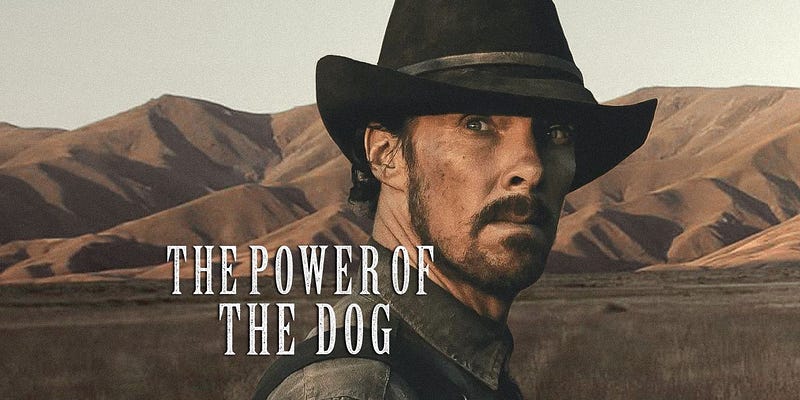
Critically adored from its very first screenings, Jane Campion’s psychologically complex Western now leads this year’s Academy Awards field with an impressive 12 nominations. As more viewers discover it, discussions about its dark themes, provocative ending, and unabashed queerness are growing. Here’s my take.
[Author’s Note: This article is an analysis of a recently released film and is filled with spoilers, including a detailed discussion of the film’s ending. If you have not seen the film, I strongly encourage you to bookmark this article and return to it after you have.]
Few films in recent years have surprised me, compelled me, or provoked as much reflection in me as The Power of the Dog.
Based on the acclaimed 1967 novel by Thomas Savage and directed and written for the screen by Jane Campion (the acclaimed director best known for the 1993 masterpiece The Piano), the film tells a fascinating and harrowing story of masculinity, internalized homophobia, unprocessed grief, loneliness, and fierce devotion.
The film premiered at the Venice Film Festival last September and received a limited release in U.S. movie theaters prior to premiering on Netflix on December 1. The film has received near universal praise from critics, as evidenced by its 94% approval rating of Rotten Tomatoes and its average score of 89 out of 100 on Metacritic.
Although critical praise does not always translate into awards season success, it certainly did here. After being feted by two dozen regional critics’ groups, the film was nominated for seven Golden Globes and won three — Best Motion Picture (Drama), Best Director, and Best Supporting Actor (Smit-McPhee). It then want on to score three SAG Award nominations, seven BAFTA nominations, and 10 Critics’ Choice Awards nominations. It has also been nominated for a field-leading 12 Academy Awards, including four acting nominations — Best Actor for Benedict Cumberbatch, Best Supporting Actress for Kirsten Dunst, and Best Supporting Actor nominations for both Kodi Smit-McPhee and Jesse Plemmons. The film is also nominated for Best Picture, Best Director, Best Adapted Screenplay, Best Cinematography, Best Film Editing, Best Original Score, Best Production Design, and Best Sound.
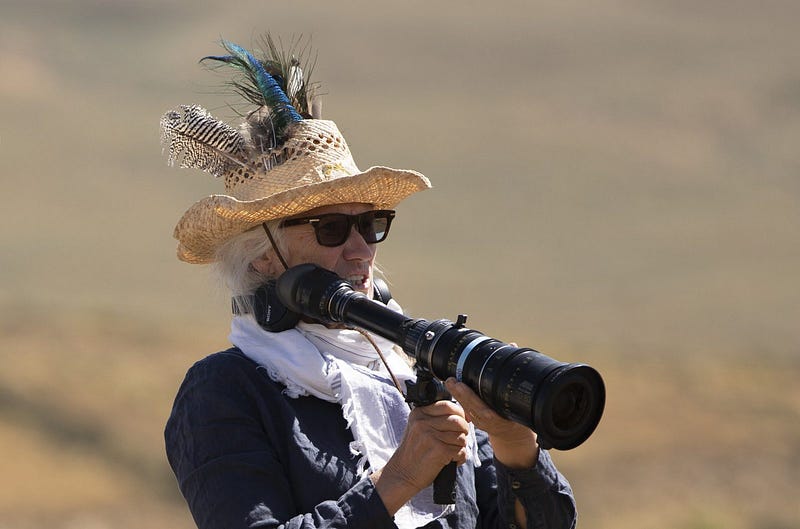
Despite this acclaim, many viewers have expressed confusion and frustration about the film’s plot and themes. Furthermore, a high-profile Academy member denounced the film as “shit” in an expletive-laden rant that reeked of misogyny and homophobia and undoubtedly echoes a reaction that many others had to the film but refrained from vocalizing. As discussions about the film increase in the lead-up to this year’s Academy Awards, I decided to give the film a second watch this past week. My fascination with it and appreciation for it only grew upon a repeat viewing.
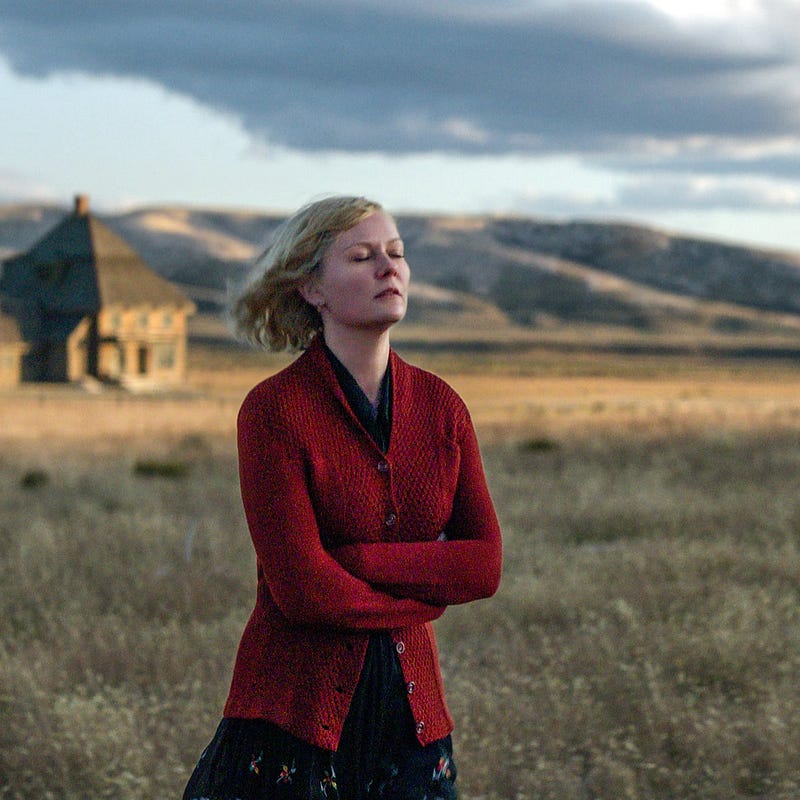
Set in Montana in 1925, the film centers on wealthy ranch owning brothers Phil and George Burbank (Benedict Cumberbatch and Jesse Plemons, respectively). George is a gentle, respectable soul who marries an emotionally fragile widow named Rose Gordon (Kirsten Dunst), who has an awkward and withdrawn teenage son named Peter (Kodi Smit-McPhee). The arrival of Rose and Peter ignites jealousy and anger in the brooding, hot-tempered Phil.
The complex dynamics between the four central characters are established when the Burbank brothers dine with their ranch hands at the Gordons’ restaurant during a cattle drive. Phil cruelly derides Peter for his effeminate nature, mocking his lisp and burning one of the paper flowers he made to dress up the dinner tables. Peter withdraws and goes off to brood, while Ruth remains in the kitchen and breaks down in tears. When George finds Rose to settle the bill, he appears deeply moved by her pain and vulnerability.
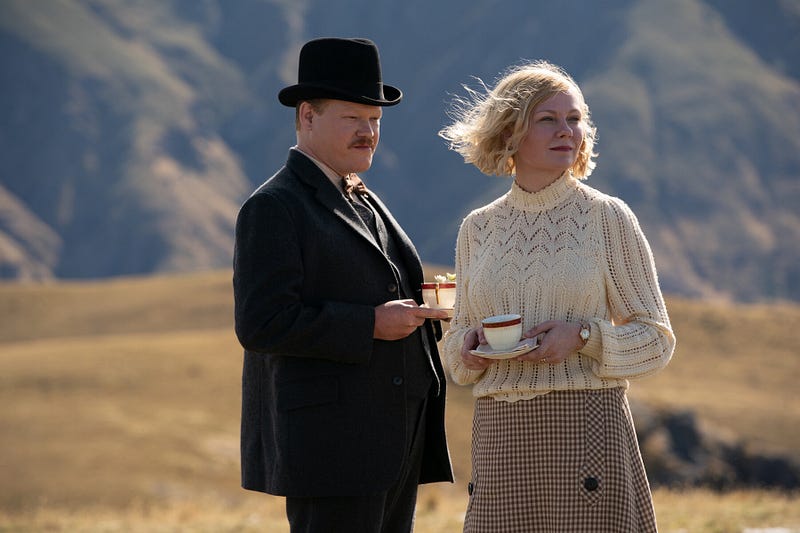
Against Phil’s protestations that Rose is just after his money, George marries her. She sells her property and comes to live with him in the ranch house while Peter goes off to study medicine at a nearby school. Phil preys on Rose’s insecurities and humiliates her, instigating her to descend into alcoholism. (Interestingly, alcoholism is also revealed to be the catalyst for her late husband’s death by suicide.)
Throughout the film, Phil makes numerous references to his mentor and idol, the cowboy Bronco Henry. The film’s initial scenes depict Phil as visibly frustrated that his brother nor the ranch hands seem to understand the importance of the now-deceased Henry, who took George and him under his wing 25 years ago. It is heavily implied, although never explicitly stated, that Phil and Bronco had a passionate sexual relationship that was formative in Phil’s development.
When Peter comes to the ranch during his break from school, he is deeply troubled by what has become of his mother and continues to be bullied and harassed by Phil and the other ranch hands. Rather unexpectedly and abruptly, Phil begins to show kindness toward Peter. He memorably says to Peter: “Sort of a lonesome place out here, Pete, unless you get into the swing of things.” He teaches to get him into the swing of things by showing him how to ride a horse and offering to make a lasso for him out of rawhide, which takes painstaking patience and immense skill. As Peter and Phil bond, Rose’s emotional state worsens.
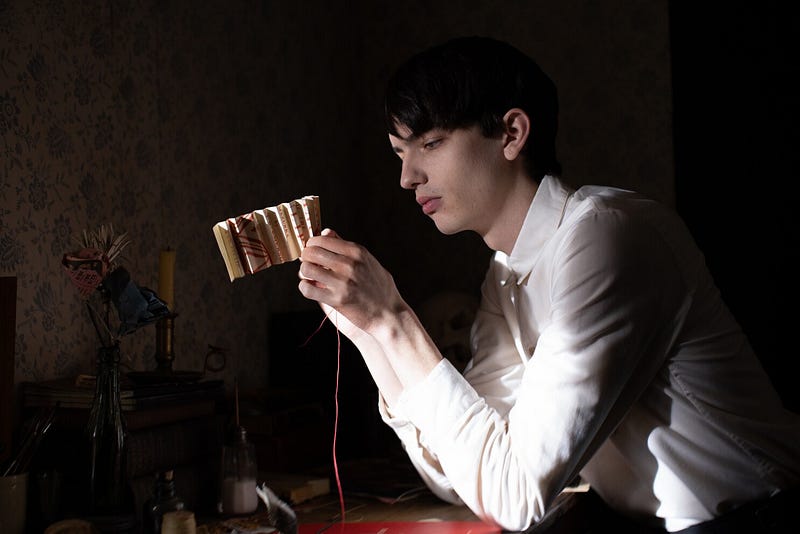
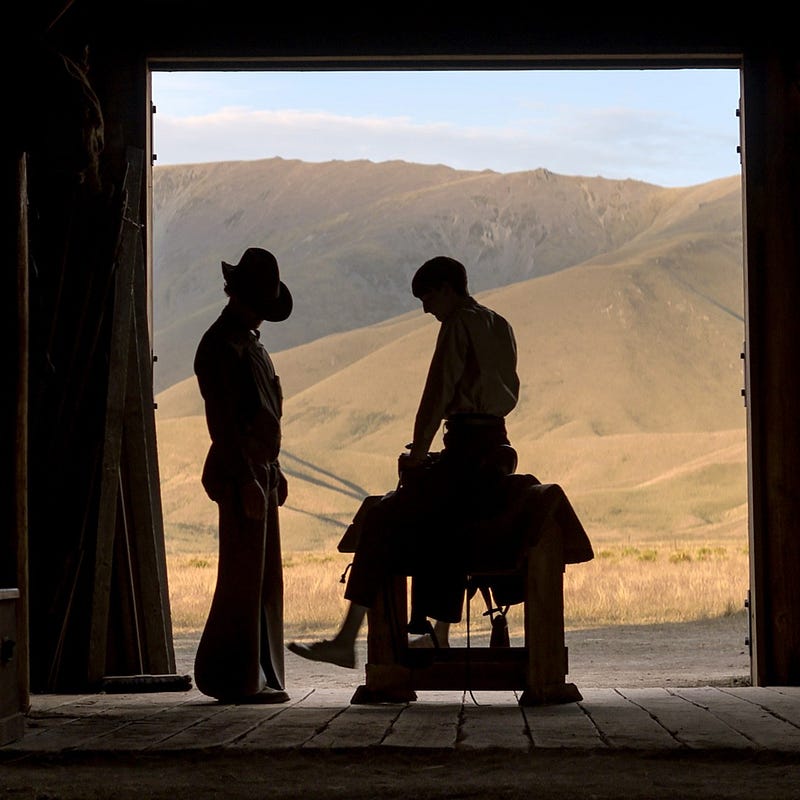
It is clear from the opening strains of Johnny Greenwood’s haunting minimalist score that the film is not progressing toward a happy ending, but the uncertainty of where it is heading is both captivating and unnerving. The film’s dramatic climax comes in a remarkably tense and undeniably sensual scene when Phil and Peter appear to share a deep emotional connection in the barn while Phil is finishing the lasso he is weaving for Peter. This scene defies expectations by not building to an explosive confrontation or a passionate romantic embrace between the characters, but rather ending abruptly. It is only in the subsequent scenes that wrap up the film that the viewer fully pieces together what happened and how and why it happened.
The next morning, George goes looking for Phil after he fails to come down for breakfast and finds him gravely ill. He drives Phil to town for medical attention but the scene of the car heading away from the ranch jarringly transitions into a scene in which George picks out Phil’s casket. At Phil’s funeral, the doctor tells George that he believes Phil died from anthrax exposure. The final scene shows Peter (who did not attend the funeral), reading the Bible passage that gives the film its name (“Deliver my soul from the sword, my darling from the power of the dog”) and smiling as he gazes out the window and sees his mother happy (and presumably sober).
For me — and many viewers — it is only in this very final moment before the credits roll that the plot and themes of the film truly come into focus. This is not a story about how a man’s stigmatized and repressed sexuality leads him down a path of self-loathing and destruction that claims as its victim a kind widow and her gentle son. Rather, it is the story of how a young man exploits the weaknesses of an emotionally damaged older man to free his mother from his cruelty.
All of the sudden, details that seemed undoubtedly important but strange and ambiguous come to light. Peter’s visit to the diseased cow was not about his interest in animal dissection, but rather a key component of his plot to kill Phil. (Peter gave the diseased hide of the cattle to Phil so that he could finish making his lasso.) But at what point did Peter develop his plan? Was it premeditated from the moment he was surprisingly receptive to Phil’s uncharacteristic kindness? Or did it develop later when Peter realized that circumstances were unfolding to give him a perfect opportunity? Was any of Peter’s warmth toward Phil genuine or was it all part of an elaborate plot?
One of the most fascinating and thought-provoking aspects of the film is its moral ambiguity. Did Peter murder Phil out of revenge and malice or because he genuinely believes it is the only way to save his mother? Is Phil cruel by his very nature or does he act that way due to crippling internalized homophobia, unprocessed grief, and jealousy? In both her script and direction, Campion remarkably and refreshingly resists telling the viewer how to interpret it. She lays it all out for the viewer to sift through the pieces and decide for themselves. Particular restraint goes into the characters of George and Rose, who are kind and sympathetic but fairly passive throughout the film (at least with respect to the central plot). This is a film intentionally without heroes.
Watching the film a second time, I realized that during my initial viewing I was so preoccupied with understanding the psyche of Phil and the nature of his relationship with Bronco Henry that I overlooked some fairly obvious foreshadowing that Peter is capable of dark deeds. For example, in a pivotal scene where Peter and Phil bond, he reveals that his late father often expressed concern that Peter was callous and unkind. And the film starts with the following voiceover from Peter: “When my father passed, I wanted nothing more than my mother’s happiness. For what kind of man would I be if I did not help my mother? If I did not save her?”
A large part of the reason it was so easy to overlook these clues about how things would play out is that the film presents fairly familiar characters and setups that lull you into thinking you have a sense of where things are going before taking them in directions that defy your expectations. By the end of the film, the purported villain has become sympathetic (or at least pitiable) and the seemingly innocent young boy has turned out to be a cold-blooded killer. Meanwhile, the two genuinely good people remain largely oblivious, failing to come to the rescue.
The moral ambiguity about who is the hero and who is the villain is one of several things that make this film a classic example of a revisionist Western (sometimes called an anti-Western). But this sub-genre has existed for decades and rarely riles folks up so much. So why did The Power of the Dog evoke so much negativity by a small but vocal group of naysayers?
Well, as is too often the case, it likely comes down to misogyny and homophobia. In his expletive-laden rant about the film, recent Oscar nominee Sam Elliott disparagingly referred to the film’s Oscar-winning director and decried its portrayal of both male sexuality and homosexuality in a Western. (He also complained that a film set in Montana was filmed largely in New Zealand, which — although it didn’t bother me in the slightest — is the closest thing to a valid argument he made.)
One of the most interesting things about Elliott’s well-publicized comments are that they are almost identical to the criticism of the 2005 masterpiece Brokeback Mountain, a film that also provoked many by telling a bold and transgressive story about queer identity and relationships within the masculine, heterosexual, and traditional auspices of a Western. Only time will tell if The Power of the Dog will will suffer the same fate as Brokeback Mountain and will find the top Oscar be taken by a lesser film (Brokeback Mountain infamously lost to Crash in a shocking upset).
This is not to say that the only reason one could dislike The Power of the Dog is because they are misogynistic or homophobic. The film is certainly not a crowd-pleaser — it can be deeply uncomfortable to watch at times, its plot is often opaque, and it lacks action, romance, or laughs. It just seems to me that many viewers and older film industry icons are far more willing to tolerate opaque plots, moral ambiguity, and a deadly serious tone in films that are not directed by a woman or about LGBT people.
There is a special vitriol that many viewers reserve for films where LGBTQ characters stray from the narrow path that they have traditionally been allowed in (e.g., the sassy best friend, the tragic victim). Similar antipathy is leveraged at films directed by women, especially when women dare to enter traditionally male-dominated territory (e.g., Westerns, superhero films). Come to think of it, I am surprised that there has not been more blowback from the fact that Campion, one of the few widely revered female directors working, made a queer Western that seems poised to dominate the Oscars.
One of the many things I find perplexing about the criticisms I have heard about The Power of the Dog is how I have the same response to almost all of them: Yes, that is the point! For example, some have complained that Benedict Cumberbatch comes off as awkward and inauthentic as Phil. Well, yes, that is the point! Phil is a wealthy, Yale-educated scholar who fell in love with a rough-and-tumble cowboy and has been essentially cosplaying as a hyper-masculine cowboy ever since. Whether he does this primarily to hide his queerness and prove his masculinity or to pay homage to Bronco is never entirely clear, but Cumberbatch’s inauthenticity is a very deliberate and very effective choice. (And George’s subtle mixture of disgust, distress, and bewilderment about it is expertly underplayed by Jesse Plemons.)
The supporting cast is just as good as Cumberbatch. It is wonderful to see Kirsten Dunst and Plemmons get meaty roles after so many years of turning in top-notch work but never quite getting the recognition they deserve. They imbue Rose and George with an air of loneliness and deep sadness that is truly affecting. (Fun fact: They are a couple in real life.) And relative newcomer Kodi Smit-McPhee is a revelation. He delivers a multi-layered performance that becomes only more impressive on repeat viewing. Of note, even the smallest roles in the film are exquisitely cast with great character actors such as Thomasin McKenzie (Jojo Rabbit), Keith Carradine (Deadwood), and Frances Conroy (Six Feet Under).
But, The Power of the Dog is not just an actors’ showcase. It is a filmmaking masterwork at every level. Particularly memorable elements including the haunting vistas captured by cinematographer Ari Wegner (who became only the second female cinematographer to receive an Oscar nomination in the award’s 94 year history), Johnny Greenwood’s sparse but unnerving score, Peter Scibarris’s clever editing, and the authentic and detailed production and costume design. Director Jane Campion pulls it all together masterfully and — if there is justice — will become the third woman to ever win the Best Director Oscar on March 27.
But even if the film comes up short of expectations at the Academy Awards, I have no doubt that the film will stand the test of time and be studied as a masterpiece of queer cinema and the revisionist Western sub-genre, as well as perhaps the finest film of one the medium’s greatest directors.
Rating for The Power of the Dog: 5/5 stars
Follow the author of this article on Medium and Twitter.
Read recent articles about movies written by this author:


