
The 94th Academy Awards Was… Certainly Not Boring
Tonight, the 94th Academy Awards ceremony was held live from the Dolby Theater in Los Angeles. The winners played out largely as expected, but the ceremony was a wild ride that featured a lot of musical performances, classic cast reunions, shameless attempts to appeal to the masses, and a jaw-dropping altercation between Will Smith and Chris Rock that will certainly go down as one of the most bizarre and memorable moments in Oscar history.
Reflections on the Winners
Before I delve into the utterly wild telecast, let me first discuss the winners.
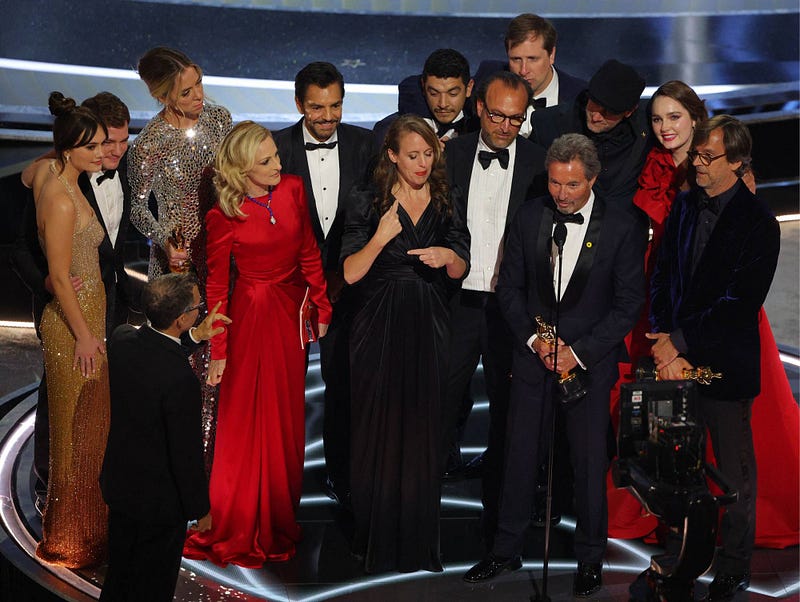
After a late surge that started when it won the top Screen Actors Guild (SAG) Award (for Best Ensemble), CODA won all 3 of the Oscars it was nominated for — Best Adapted Screenplay (for Sian Heder, who also directed), Best Supporting Actor for Troy Kotsur (who became the first deaf man to win an Oscar), and Best Picture. The win was extraordinary for several reasons including that it is the least nominated film to win the top award since 1932, its the first film to premiere on a streaming service to win an Oscar, it had its world premiere over 14 months ago, and its only the third film directed by a woman ever to win Best Picture. The coming-of-age comedy-drama about the only hearing member of a culturally deaf family is an emotionally powerful and deeply heartfelt film that is easy to fall under the spell of. Was it my choice for the top award? No. I ranked it at the middle of the pack. Do I begrudge it its win? Also no. Far worse films have won the top award.
My pick was The Power of the Dog, which won only 1 award (Best Director for Jane Campion) despite leading the pack with a whopping 12 nominations. It is unsurprising that Campion won given how she steamrolled through the season racking up win after win. (She won previously for writing 1993’s The Piano and made history this year as the first woman ever to be nominated for Best Director twice.) It is also sadly unsurprising that The Power of the Dog didn’t take home more trophies. Despite its extraordinary reviews, it left many voters cold. Most of these voters would likely say that they were turned off by what they saw as a slow pace or confusing ending. But I have trouble believing that the film didn’t fall victim to the same mentality that resulted in Brokeback Mountain famously losing to Crash — the idea of a Western that explores queer themes is simply anathema to many conservative voters.
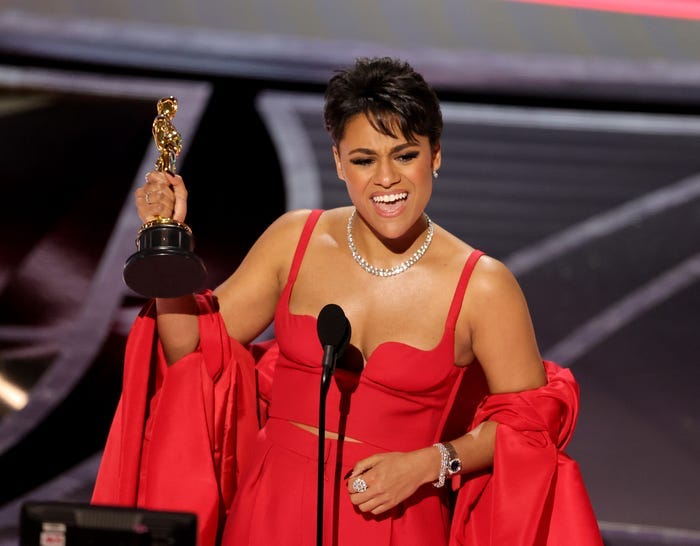
As opposed to last year when Best Actor and Best Actress were genuine surprises, this year things went just as expected. Will Smith followed up his Screen Actors Guild (SAG), Golden Globe, Critics Choice, and BAFTA wins with an Oscar for his role as tennis legends Venus and Serena Williams’s father Richard in King Richard. (More on him later.) Jessica Chastain continued her late-breaking frontrunner status that began with her SAG win and continued with her Critics’ Choice win for her turn as televangelist Tammy Faye Bakker in her passion project The Eyes of Tammy Faye. Troy Kotsur’s Best Supporting Actor win for his role as a Gloucester fisherman in CODA and Ariana DeBose’s win for her role as a tragedy-stricken Puerto Rican in West Side Story were universally predicted, but nevertheless rousing and deserving wins.
The Best Original Screenplay Oscar went to Kenneth Branagh for his semi-autobiographical film Belfast. His win brought him his first Oscar despite having the distinction of being nominated in more categories than any other individual in history. (He has now been nominated in Best Picture, Best Director, Best Actor, Best Supporting Actor, Best Original Screenplay, Best Adapted Screenplay, and Best Live Action Short.)
The grand sci-fi epic Dune went 6-for-10, winning Best Original Score, Best Film Editing, Best Production Design, Best Sound Design, Best Cinematography, and Best Visual Effects. The Eyes of Tammy Faye won Best Makeup and Hairstyling, making it the only film outside of CODA and Dune to take home multiple Oscars this year. Billie Eilish and FINNEAS won Best Original Song for their title track from the latest James Bond film No Time to Die. Best Costume Design went to Cruella, the Disney live action film about 101 Dalmatians villain Cruella De Vil. Best Documentary Feature went to QuestLove’s Summer of Soul (…Or, When the Revolution Could Not Be Televised) about the 1969 Harlem Cultural Festival. Best International Feature went to Drive My Car, Ryusuke Hamaguchi’s poetic meditation on grief and loss. Finally, Best Animated Feature went to Disney’s smash musical Encanto, about a Colombian family with magical powers.
I previously ranked the nominees in the four acting categories and the contenders in the screenplay, directing, and Best Picture categories. Only 3 of the 8 winners in the major categories overlapped with my personal preference. I would have given Best Original Screenplay to Eskil Vogt and Joachim Trier for The Worst Person in the World and I would have given The Power of the Dog Best Picture, Best Actor (Benedict Cumberbatch), Best Supporting Actor (Kodi Smit-McPhee), and Best Adapted Screenplay (Jane Campion). The only winner I am not pleased with is Smith. It was inevitable and I have nothing against him personally, but I thought his performance and the film were problematic.
As for the accuracy of my predictions, I correctly guessed 20 out of the 23 categories (87%). I only missed Best Documentary Short Subject, Best Animated Short, and Best Picture. This is a big step up from the 16/23 (70%) I scored last year.
Click here to read my preview of the ceremony and my predictions in all 23 categories.
14 Interesting Facts and Figures about the Winners (and non-winners)
- CODA became only the third film ever directed by a woman to win the Best Picture Oscar (after Kathryn Bigelow’s The Hurt Locker and Chloe Zhao’s Nomadland, which won just last year).
- CODA became the first film to debut on a streaming service to win Best Picture. The film was purchased by AppleTV after its rapturous reception at the Sundance Film Festival and premiered on the streamer in August.
- CODA became the first film to win Best Picture with fewer than 4 nominations since 1932’s Grand Hotel.
- CODA won all of the categories in which it was nominated, a feat not accomplished by a Best Picture winner since 2003’s Lord of the Rings: The Return of the King.
- Jane Campion became the third woman to win the Best Director Oscar after she made history by becoming the first woman to be nominated in the category twice.
- The Power of the Dog became the first film since 1967’s The Graduate to win Best Director as its only trophy.
- Will Smith became the 5th black man to win Best Actor after Sidney Poitier (1963), Denzel Washington (2001), Jamie Foxx (2004), and Forest Whitaker (2006).
- As a queer Afro-Latina woman, Ariana DeBose set several records with her Best Supporting Actress win, including being the first Afro-Latina to win an acting Oscar, the 9th black woman to win in the category, and 3rd Latina women to win in the category. Most shockingly, she is the first openly LGBTQ performer ever to win an acting Oscar. (Several LGBTQ actors have won Oscars, but none were publicly “out” at the time of their win.)
- DeBose also made history by winning her Oscar for a role that won Rita Moreno an Oscar 60 years earlier. There are only two other roles that have earned Oscars for two different actors — Vito Corleone (Marlon Brando won Best Actor for 1972’s The Godfather and Robert DeNiro won Best Supporting Actor for 1974’s The Godfather Part Two) and the Joker (Heath Ledger won Best Supporting Actor for 2008’s The Dark Knight and Joaquin Phoenix won Best Actor for 2019’s Joker).
- Troy Kotsur became the first deaf man to win an acting Oscar and the second deaf performer to win an acting Oscar after Marlee Matlin (1986). (Fun fact: Marlee Matlin played Kotsur’s wife in CODA.)
- With its 6 wins, Dune became the most awarded film in history to fail to get a Best Director nomination.
- Billie Eilish and FINNEAS’s win for Best Original Song for the title track from the 25th James Bond film marks the third consecutive win in this category for a James Bond theme song following Adele’s title track from Skyfall and Sam Smith’s “The Writing’s on the Wall” from Spectre.
- Dianne Warren continued her extraordinary losing streak when she lost her 13th bid in the Best Original Song category.
- Of the 10 Best Picture nominees, 7 took home a trophy. Dune won 6 and CODA won 3, while The Power of the Dog, King Richard, West Side Story, Belfast, and Drive My Car each won one. Don’t Look Up, Licorice Pizza, and Nightmare Alley went home empty handed.
The Telecast That Will Live in Infamy
Last year’s Oscar telecast was an unmitigated disaster and unsurprisingly became the lowest rated telecast in history. The producers made several ill-advised choices, including allowing long-winded speeches, opting not to have a notable opening of any kind, and disastrously switching up the order of the awards. (Particularly cringe-inducing was how they put Best Actor last in a shameless bid to end the ceremony on an emotional high note as Chadwick Boseman’s widow accepted the award on his behalf, only for the award to go to Anthony Hopkins, who couldn’t attend due to COVID.)
This year, the Academy and ABC were determined to get ratings up at all costs. It remains to be seen whether it worked, but I can say with certainty that the four things they did to boost ratings were a mixed bag in terms of the quality of their execution.
By far the worst of the changes was the showcasing of 2 fan awards voted on by Twitter users. It was bound to be disastrous from the moment it was first announced and it turned out to be every bit as bad as was feared. The #OscarsCheerMoment bizarrely included films from the last 25 years and the winner was the Flash reaching Speed Force (?) in Zack Snyder’s Justice League. The #OscarsFanFavorite was Zack Snyder’s Army of the Dead, with Johnny Depp’s virtually unseen Minamata and Camilla Cabello’s disastrous retread of Cinderella coming in as runners up. The “winners” were embarrassing, their presentation was bizarrely shoe-horned into the ceremony, and all they really celebrated was that Zack Snyder apparently has a lot of rabid fans on Twitter.
Not faring much better was the decision to give out 8 of the 23 awards in the hour prior to the telecast and then edit them into the main show. In addition to being a major insult to all of the people who poured their blood, sweat, and tears into those projects, it was also confusingly and jarringly edited. The Academy’s argument that it would be unnoticeable proved to be decidedly untrue. It also did not succeed at all in making the show shorter as it still ran an astounding 3 hours and 40 minutes — nearly 30 minutes longer than last year’s ceremony. (I couldn’t help but keep wondering how much time could have been saved if there wasn’t a wildly unnecessary and seemingly interminable zoom-out that occurred before each commercial break.)
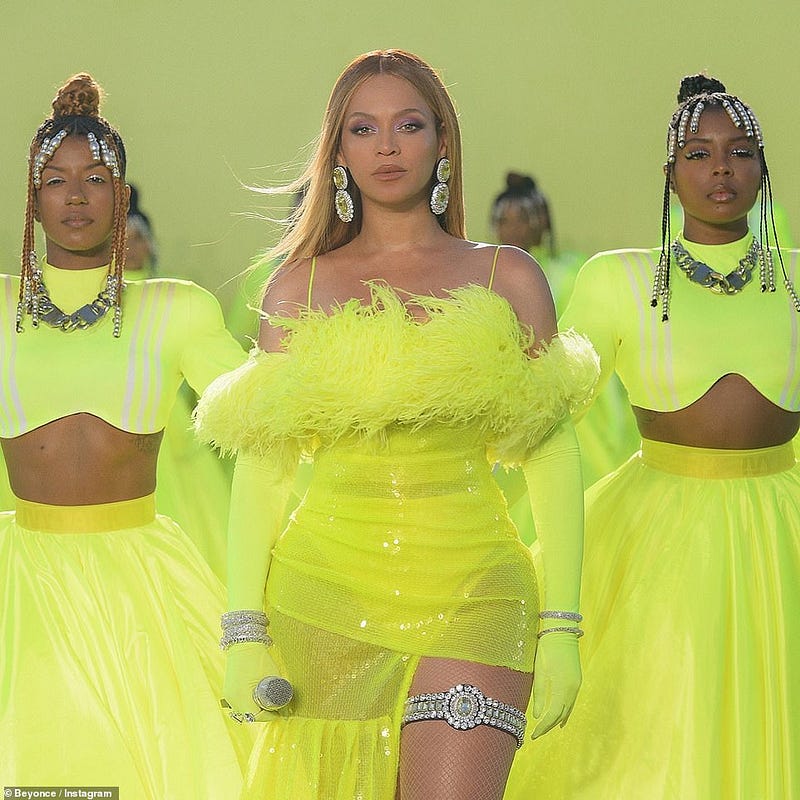
A somewhat better change was bringing back musical numbers. Beyonce’s visually striking and vocally impressive performance of “Be Alive” (her nominated song from King Richard) opened the show from the Compton tennis courts where Venus and Serena Williams got their start. Despite going on a bit long and somewhat awkwardly dedicating the opening of the ceremony to the celebration of a single nominee, it was a rousing opening. The two performance of Encanto were strong, but Megan Thee Stallion’s rap verse on “We Don’t Talk About Bruno” was unnecessary and distracting (and also awkward as the lyrics suggest that it planned for the opening of the show and then moved later to accommodate Beyonce). And Reba McEntire and Billie Eilish turned in elegant and vocally strong performance of their nominated songs.
The only musical number that did not work for me was the bizarre “In Memoriam” segment, which started with an a cappella rendition of Sarah MacLachlan’s “I Will Remember You” before turning into a boisterous gospel number with a closing speech by Jill Scott. The segment also included Tyler Perry, Bill Murray, and Jamie Lee Curtis doing spoken word tributes to the late, great Sidney Poitier, Ivan Reitman, and Betty White (respectively). There were some lovely moments, but it was all rather chaotic.
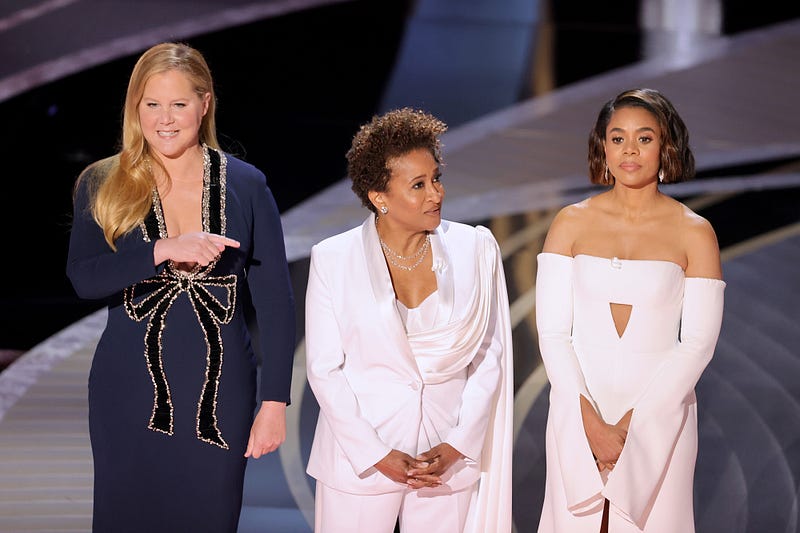
The fourth change that the Academy and ABC made was to bring back hosts. The last 3 ceremonies famously eschewed the traditional hosting format to mixed (mostly bad) results. This year, the show had not one but three hosts — Amy Schumer, Wanda Sykes, and Regina Hall. To my surprise, the talented but sometimes abrasive Schumer came off the best, nailing some sharp one-liners, selling some physical comedy, and swooping in with some clever comments as the show spun wildly out of control toward the end. Unfortunately, Sykes and Hall did not fare as well. Both were saddled with lame bits (particularly Sykes filmed bit with the shameless promotion of the new Academy Museum of Motion Pictures in Los Angeles and Hall’s racy bit where she pulled sexy actors out of the crowd to give them COVID tests by “swab[ing] the back of [their] throats with [her] tongue”). The jokes throughout the show were generally racy and cynical and only landed well about 50% of the time. Memorable targets included the fall of the Golden Globes and Hollywood pay disparities.
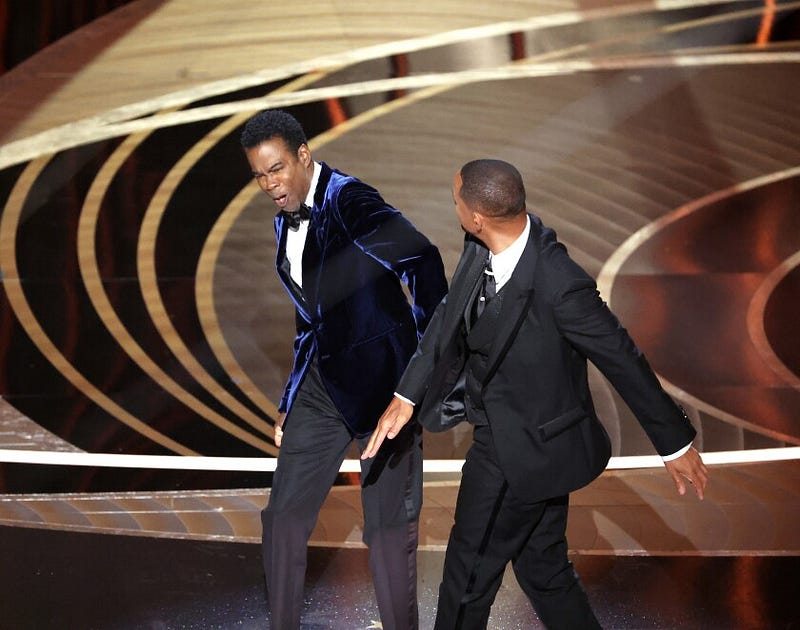
By far the biggest attention-getter of the night was something that ABC nor the Academy could have seen coming. In one of the most shocking moments in Oscar history, Chris Rock came out to the stage and delivered some typically acidic zingers. One of them was about the fact that Will Smith’s wife Jada should star in GI Jane 2 (a reference to the 1997 Demi Moore film in which she shaved her head to play a Navy SEAL). In what at first appeared to be a staged bit but was quickly revealed to be unrehearsed, Will Smith walked up to Chris Rock and aggressively slapped him. He repeatedly yelled something along the lines of, “Keep my wife’s name out of your f***ing mouth” as the audio and video feed cut.
Rock’s joke was in extremely poor taste, especially given that Jada suffers from the hair-loss condition alopecia. But Smith’s act of aggression was utterly jarring and wildly out of place for a formal, joyous affair. Smith was allowed to return to accept his Best Actor trophy and he gave a tearful speech, in which he doubled down on the need to protect his family but eventually apologized to the Academy and said that he hopes they invite him back in the future. The whole thing was very long and deeply uncomfortable. It was utterly fascinating to watch him preach about love after assaulting another man on camera and absolutely cringe-inducing to hear him repeatedly talk about his desperate need to “protect” the women in his family and on his film sets. To me, it felt like he was using the fact that he perceives women to be delicate and vulnerable as an excuse for a public display of violence. Had he simply apologized and moved on, it would have been so much better for everyone.
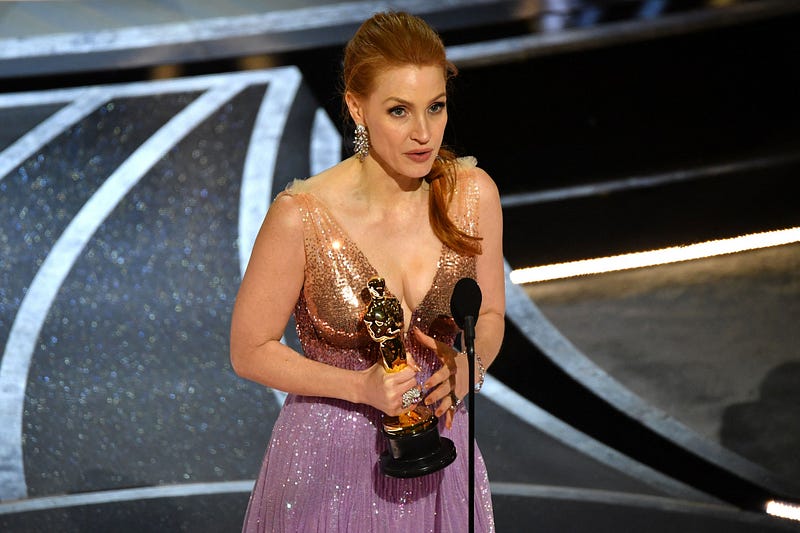
Although Smith’s speech will understandably get the lion’s share of the attention, there were several others that were far better. Ariana DeBose gave a stirring speech that she used to empower the marginalized, while Troy Kotsur gave a lovely speech that paid tribute to his dad. Jessica Chastain did a hybrid of both, balancing the personal and universal in a well-articulated speech. Other memorable moments came from Jane Campion, Sian Heder, QuestLove, and costume designer Jenny Beavan.
There were some truly bizarre presenter selections throughout the evening. Why did “extreme sports stars” Tony Hawk, Kelly Slater, and Shaun White present the James Bond tribute when Bond-affiliated Judi Dench, Rami Malek, Billie Eilish, and Javier Bardem were literally feet away from the microphone? Why did confused-looking young pop star Shawn Mendes and cleavage-bearing sitcom star Tracie Ellis Ross join up to present Best Adapted Screenplay? Why, of literally all the people in the world, did Sean Combs (aka Puff Daddy aka P Diddy) introduce the tribute to The Godfather? And, even though his selection to bestow Best Director made perfect sense considering he won the award previously, who on earth wrote that long-winded meandering speech for Kevin Costner? I doubt these questions will ever be answered.
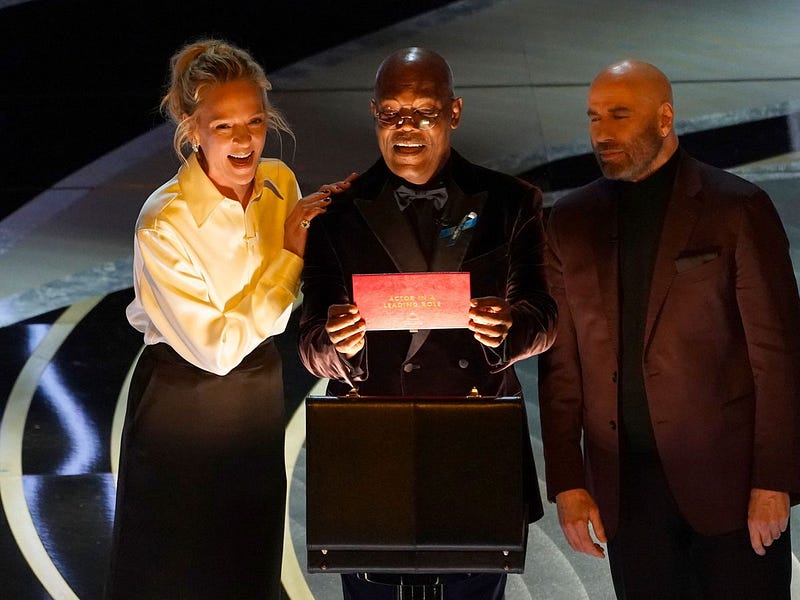
As promised, the Academy staged a handful reunions throughout the evening. Woody Harrelson, Wesley Snipes, and Rosie Perez somewhat amusingly reunited in honor of the 30th anniversary of White Men Can’t Jump. John Travolta, Uma Thurman, and Samuel L. Jackson awkwardly reunited in honor of the 28th (?) anniversary of Pulp Fiction. Jeninfer Garner, Eliot Page, and JK Simmons had a somewhat head-scratching reunion in honor of the 15th anniversary of Juno. Francis Ford Coppola, Al Pacino, and Robert DeNiro took the stage in honor of The Godfather’s 50th anniversary. (I remain very confused as to why the other living cast members like Diane Keaton, Robert Duvall, James Caan, and Talia Shire didn’t appear).
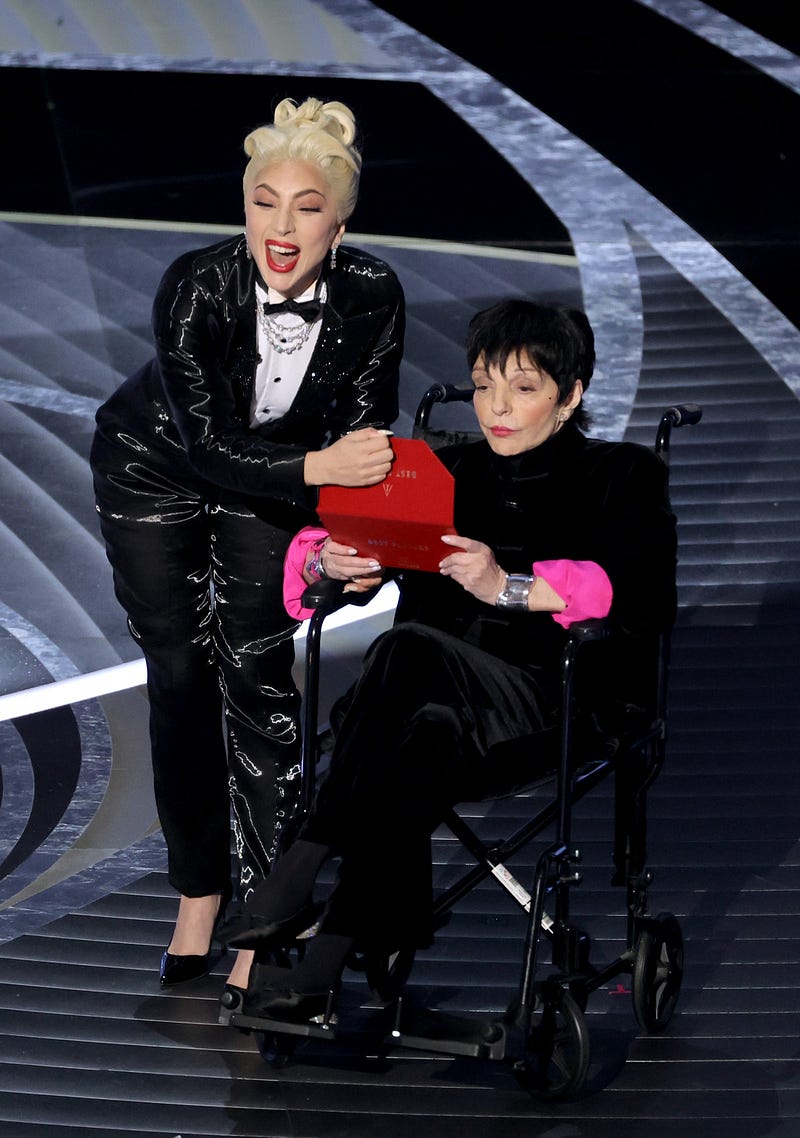
For me, though, the most moving celebration of Hollywood History (something this show was sorely lacking) was Lady Gaga bringing out the legendary Liza Minnelli to present Best Picture in honor of the 50th anniversary of Cabaret. The 76-year-old is clearly struggling with notable health issues (presumably related to her diagnosis of viral encephalitis earlier this year), but it was a joy to see her on stage and the support and care Gaga gave her as she fumbled through her appearance was genuinely heartwarming.
Final Thoughts. Objectively speaking, the Academy and ABC’s efforts to shorten the telecast failed abysmally. Subjectively speaking, their efforts to make the ceremony more entertaining were only partially successful. The return to having hosts and musical numbers worked well enough, but the fan-voted awards were a disaster and the most entertaining thing that did happen (the whole Smith-Rock debacle) was something they didn’t even stage.
It is inevitable that the altercation on the Oscars stage will live in infamy and dominate everyone’s memory of the 94th Academy Awards. That’s a shame. It was an ugly moment that never should have happened and one that was improperly handled. It distracted from what should have been a joyous celebration of heartfelt films, record-setting wins, and the reunion of classic casts.
Ultimately, the telecast was shameless and pandering, poorly paced and edited, and overly long. But it was certainly not boring. And, well, I guess that’s all the Academy and ABC really wanted, isn’t it?
The Winners of the 94th Academy Awards
The Specialty Film Categories:
- Best Animated Feature: Encanto
- Best International Film: Drive My Car
- Best Documentary Feature: Summer of Soul (…Or, When the Revolution Could Not Be Televised)
- Best Documentary Short Subject: The Queen of Basketball
- Best Animated Short Film: The Windshield Wiper
- Best Live Action Short Film: The Long Goodbye
The Technical/Craft Categories:
- Best Original Score: Dune
- Best Original Song: “No Time To Die,” No Time To Die
- Best Cinematography: Dune
- Best Costume Design: Cruella
- Best Sound Design: Dune
- Best Production Design: Dune
- Best Film Editing: Dune
- Best Makeup and Hairstyling: The Eyes of Tammy Faye
- Best Visual Effects: Dune
The Top 8:
- Best Adapted Screenplay: Sian Heder, CODA
- Best Original Screenplay: Kenneth Branagh, Belfast
- Best Supporting Actor: Troy Kotsur, CODA
- Best Supporting Actress: Ariana DeBose, West Side Story
- Best Actor: Will Smith, King Richard
- Best Actress: Jessica Chastain, The Eyes of Tammy Faye
- Best Director: Jane Campion, The Power of the Dog
- Best Picture: CODA
Follow the author of this article on Medium and Twitter.
Read recent articles about movies written by this author:


