The Problem With “Ted Lasso’s” Sam Is That He Allows Silence Toward Racism
The show openly discusses many -isms except for racism to the narrative detriment of the show.
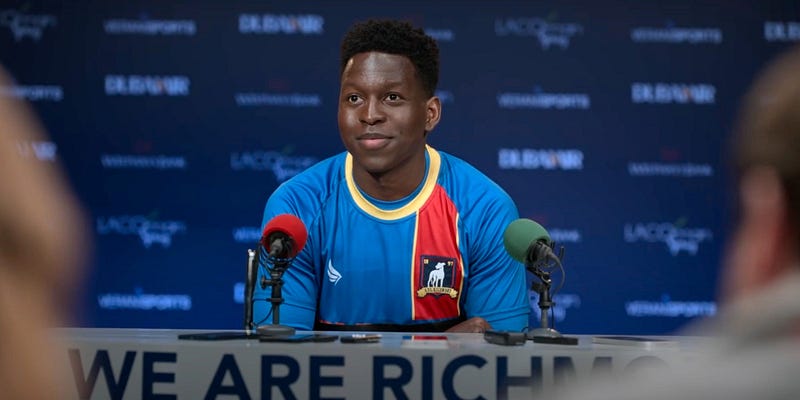
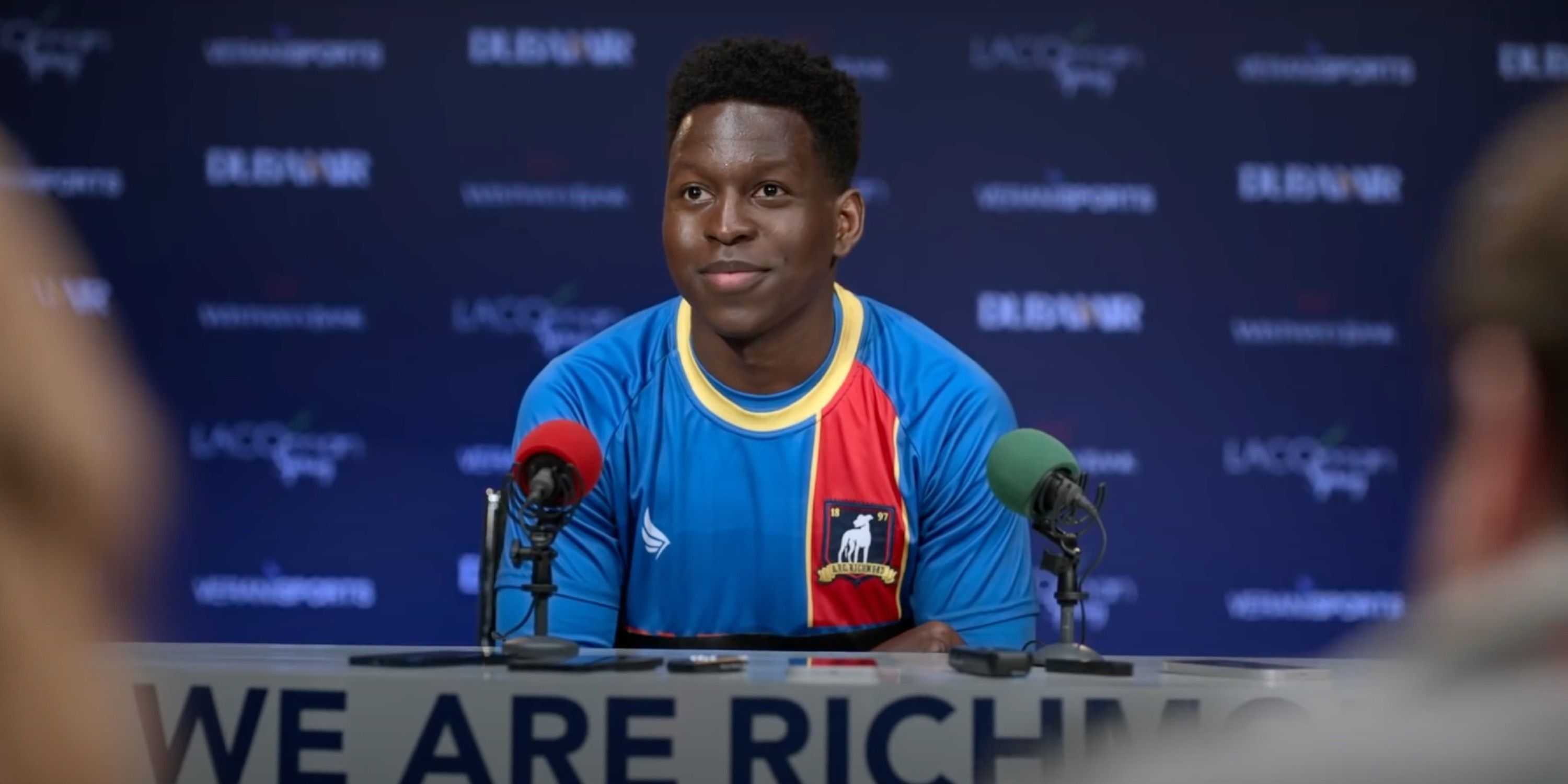
In Ted Lasso’s Christmas episode, a substitution of goat for a more palatable white meat encapsulates the show’s attitudes toward Blackness.
In “Carol of the Bells”, one of AFC Richmond’s defenders Sam Obisanya (Toheeb Jimoh) takes up the invitation of the soccer team’s director of communications, Leslie Higgins, to join his family for Christmas. He brings a dish of jollof rice for the potluck meal but mentions that he substituted chicken for the goat meat he usually uses to satisfy the palette of the hosting white family. Rather than have his White hosts enjoy a novel culinary experience, Sam does what he can to make them comfortable.
Ted Lasso made the decision to assert Sam’s kindness. Kindness is quiet. But there is a cost. Over its two seasons, the show is silent toward race as it explores its central theme on the hardness of being good. Goodness, the show silently argues, does not require any consideration regarding racism, the great division of the West. This embedded argument is the connective tissue throughout the entire series. Though the other Black characters evidence this silence, it appears most prominently in Sam.
The creators Jason Sudeikis, Bill Lawrence, Brendan Hunt, and Joe Kelly know enough about the intimacies and nuances of Black personhood to know better. The prominence of Black issues drives the B-stories of season two. An episode of the former in season two, for example, revolved around Sam’s ethics concerning the Continent. He led the team in protesting their sponsor Dubai Air due to an oil company responsible for polluting his nation owning the airline. Consequently, Ghanaian tech billionaire Edwin Akufo lands his helicopter on Richmond’s pitch during training to seduce Sam with the Pan-African dream later in the season. He has recently bought Raja Casablanca and is seeking Sam to help fill out his roster. He spends an episode bringing Africa to Britain. Edwin rents a museum for a day and fills it up with actors who mill around as he and Sam look at African art. He rents out a restaurant where he engages Sam in the latest iteration of the jollof rice wars. And when Sam rejects his offer to leave Richmond after they earn their way back into the Premier League, Sam tribally insults him by calling him “Yoruba trash.”
The white (and in Nick’s case, non-Black) cast get these dramatic stories of transformation that provide the bulk of the show’s conflict and critical praise.Could it be that Sam could also get a similar shot.
The signaling toward Black personhood continued with Sam’s interaction with Isaac McAdoo, the newly appointed team captain. A Londoner, Isaac was appointed by former captain Roy Kent due to his aggression. When Sam finally commits to meeting Rebecca, he calls in the team favor with Isaac for the best haircut on their side of the pond. The writers and directors treat the scene with deep reverence toward Black personhood. The director dimmed the lighting. Sam is on an elevated platform. Isaac slices away all geometric unevenness from Sam’s dome until, as Nas rapped once, his haircut looked airbrushed for Sam’s blind date with his white boss.
The show’s creators consistently wink at Black personhood, communicating to viewers that they would be competitive in a game of Black Card Revoked. Ted makes jokes about Biz Markie and the changing of Aunt Vivs on the Fresh Prince in the first season. Issac is given a background in the working class estates of London. Along with the beforementioned Black relationships, the writers of the show communicate through both references of African-American and African knowledge and evince a deep awareness of our culture.

When the writers place Black folk in proximity, they show deep awareness of the intimacies within the diaspora. The jollof rice wars, which is a substitute for the Continental rivalries; the importance of haircuts in the Black community; these were displays of how Black people connect with each other in safe spaces. Sam and Edwin, and Sam and Isaac, can exist in an intimate state of being with each other. Even Edwin’s meltdown over Sam choosing to stay with Richmond represented that state of being, as he expresses his displeasure in starkly Black and tribal terms. His dream of a Pan-African team — dominant Blackness on an international scale — is also worth losing his cool over when taken in the context of the Black imagination. Pan-Africanism is a dream that many Black people have of finally gaining liberation in the white world. To have a team of literal all-Blacks playing soccer in the highest league is a vision my soccer-loving brethren talk about all the time.
White people generally do not write about Black intimacies well. Even the most well-intentioned ones fall into the traps birthed from the slave story. For whiteness, the question of the West is, “what shall we do with our Black people?” The response to this question impacts white portrayals of Black personhood. Black people’s relationships with each other only serve to soften them in service of white comfort and growth. This can happen even when there are Black creators present, as it is the default storytelling mode of Western fiction. Despite the attention the creators show to Black personhood, we see this subordination occur, and how Sam represents this thoroughly, in his relationships with the show’s white characters. Despite Sam’s consciousness about his race and nationality coming through, it generally serves to lead the personal development of white characters in directions severed from race.
Sam’s relationship with Jamie Tartt, one of the team’s all-star strikers, shows this disconnection. In the first season, Jamie placed chewed gum into a box of money that Ted passed around to buy Sam a gift to ease his homesickness. After leaving for a rival team and a failed reality TV bid, Jamie returned to Richmond humbled. The humbling continued when Sam, in his only show of aggression, tripped up Jamie during a practice. Sam also becomes the vehicle where Jamie begins to earn his redemption. When Sam rejected the endorsement of Dubai Air, Jamie was the first teammate to support him by putting black tape over the airline’s logo on his jersey. His act of support was instrumental in having the rest of his teammates integrate him back into their social fabric. Sam’s protest could not stand on its own. Instead, it kicked off Jamie’s redemption arc — Blackness in service to white redemption and character growth.
The Dubai Air boycott led the team to take up a new sponsor, leading to Sam sparking development from another white character. Rather than drop Sam from the team at the demand of the airline, team owner Rebecca Welton told him off and instead went to the blind-dating app Bantr . Seeking to move on from her divorce, Rebecca connects with a Ratatouille-loving, philosophical man. Rebecca finally finds the courage to meet her suitor at a restaurant, who ends up being Sam. They spend a wonderful evening together that ends in a mutually satisfying, physical affair. Once again, Sam’s actions rooted in countering the injustices of white supremacy — colonialism and environment to the Continent — serve as a pathway, stripped of all racial connotations, toward white personal growth.
The show’s creators consistently wink at Black personhood, communicating to viewers that they would be competitive in a game of Black Card Revoked.
The absence of racial consideration led to the creators greenlighting the crassest joke of the show. Flo “Sassy” Collins is the giggle at the funeral for the father of Rebecca Welton, owner of the AFC Richmond soccer team, in the tenth episode of the show’s second season. Rebecca’s closest friends all found out that she has been secretly dating Sam. At the repast, Rebecca lets Sassy know she is going to stop dating Sam. Sassy acts as if she is completely understanding. “I know,” Sassy says as she reaches out to touch Rebecca’s hand. “Penis is too big. Hurts your tiny little vagina.” Sassy’s comment caused my wife to pick up her iPhone to pause the show and look at me, mouth agape. We both felt all the history of Black sexual stereotypes in Sassy’s words. The creator’s awareness of the beforementioned intimacies of Black personhood made the joke’s inclusion puzzling. Did they not know that it would be gauche for a white woman to say something like in reference to a Black body?
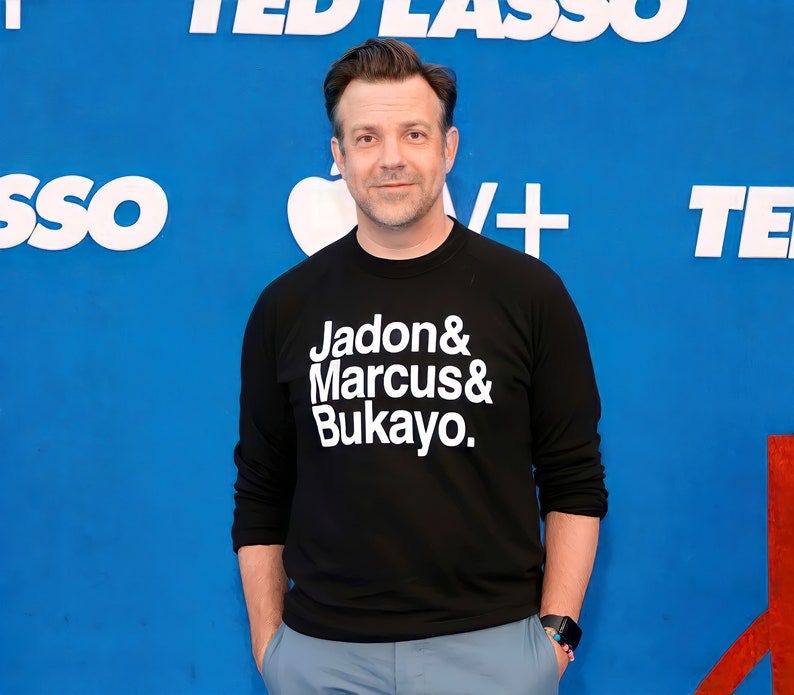
“Ted Lasso starts with an American who has failed upward — a handsome, straight white dude, brought in to be a leader in a sport he knows nothing about,” Megan Garber wrote for the Atlantic in a December 2020 article titled The New Comedy of American Decline. “Every main character in Ted Lasso begins as a tired trope that warms into something else.” The white characters shake off the fatigued dramatic robes and become better humans. Ted morphs from the folksy American to a leader who embraces his mental health struggles. Jamie is the arrogant jock, turned prodigal son, redeemed as the abused child of one of the most irredeemable blokes the show has portrayed. Rebecca starts as a scored ex-wife bent on destroying the team her philandering husband loves and becomes a leader who commands the respect and caring of nearly the organization’s entire staff. The white (and in Nick’s case, non-Black) cast get these dramatic stories of transformation that provide the bulk of the show’s conflict and critical praise.
Could it be that Sam could also get a similar shot.
Black characters, and Sam especially, serve to educate and relax whiteness so they can focus on the conflicts they feel they can resolve. The show’s tendency toward this begins in season one. One scene has Ted giving Sam a green Army figurine as a gift. Sam, though flattered, rejects the offering because he does not “have the same fondness for the American military that you do.” Ted quickly catches himself: “Right. Imperialism.” Garber notes that “this is not an exchange you’d likely expect from a cheerful sitcom. But the dissonance gives it even more weight. Imperialism punctures the comedy. The show’s writers give it the space to do that.” Garber was right to note the way the show’s creators handled the imperialism joke. Race, however, shows the absence of courage in making it. It substitutes one -ism that is easier for white people to joke about in exchange for the other -ism that continues to dog the West. It also ignores who the imperialists were and the racial history they have with the colonized.
Sam’s and Rebecca’s very first interaction also shows how he goes out of his way to calm whiteness. He comes to enlist her help in banishing a spirit from World War I that they believe is haunting a portion of the locker room. However, he is quick to dismiss that his interest in the supernatural comes from his nationality, but from his love of Harry Potter. Before Rebecca could say anything, Sam offered all of this, preempting any stereotyping his white boss could have toward him. As his role is on the pitch, Sam lives on defense.
The problem with Sam is that whiteness is his anchor into the West. His growth is tied to the whiteness that surrounds him. He is the realization to Ted that American expressions of camaraderie will not work in Richmond. He is the vessel Jamie uses to reenter the team he rejected. He is the contortion that prevents the Higgins family from experiencing Yuletide discomfort by eating goat meat. He is the big Black cock that allowed Rebecca to get her groove back.
Garber argued that “Ted Lasso is breezy and fun and full of heart, but its easy escapisms are also uneasy ones.” The series deftly deals with many of the political products of the West that causes unease. Keely mines feminism in her continued ascendency to girlbossdom; Rebecca, the ageism of her dating life; the legacies of imperialism and colonialism inherent in holding together a team made up of both Europeans and the folk of the nations their countries conquered. But racism remains the silence in the room. No Black actor calls out a white one on the racial history that makes AFC Richmond possible.
Over its two seasons, the show is silent toward race as it explores its central theme on the hardness of being good.
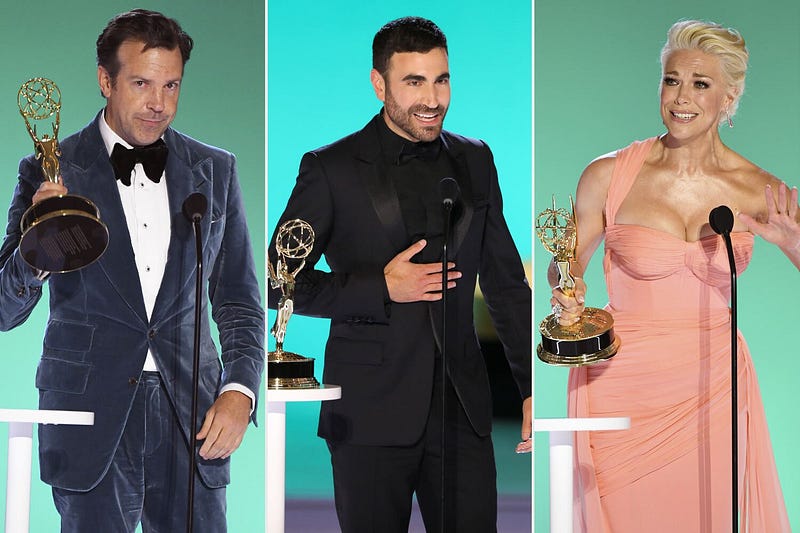
Narratively and meta-contextually, Sam and the other Black characters, experience no growth unless it serves the development of the white characters. They work within an organization with no Black people in senior leadership, where the juiciest dramatic acting live. Because of that, there is a limit in the attention that Toheeb Jimoh’s acting gets. The show racked up seven wins in the 2021 Emmys. Seven out of the show’s twenty nominations went to the show’s actors and actresses. All were for members on AFC Richmond’s leadership team. None of them were Black. Hannah Waddingham won for her portray of Rebecca; Sudeikis for Ted and Brett Goldstein for Roy Kent. All three had their leadership challenged and improved by their interactions with the show’s Black characters. They earned those awards. In future seasons, I hope Sam can earn one too by challenging Ted Lasso’s avoidance of race.
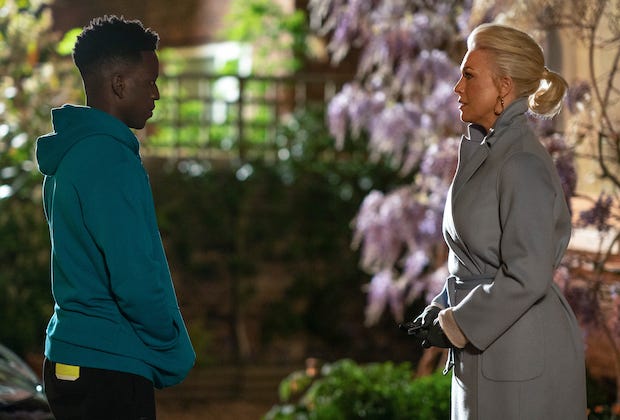

Sam serves as a vehicle for white success and discovery both within and outside the story. He cannot rise if the white folks do not rise, and they must rise first. That this emerged from a writer’s room that works so hard to communicate they understand Black personhood makes the problem of Sam even more tragic. The story separates Sam from his intimacies with Edwin and Isaac, thereby depriving the white characters of the opportunity to know him honestly.
In the final episode of the second season, Sam purchases a property. He decides to put down roots and open a Nigerian restaurant in the community, encouraged by Edwin’s professional flirtations. To set up the third and perhaps final season of the show, Sam decided to bring his home to his work. In service to white people and their narratives, he would have to carve out his small space in the West. Perhaps later we will see Blackness and its persistence in the West influence the white characters in a show that services Sam and not themselves.
Hal H. Harris is an award-winning writer on Black personhood. Please support his work by subscribing. You can also read more of his work on the intersection of Black personhood and entertainment below: