avatarCasey Botticello

Summary

Free AI web copilot to create summaries, insights and extended knowledge, download it at here

10933

Abstract

writing on Substack.</p><h2 id="7892">Substack:</h2><p id="aa01">Successful Substack writers typically write about a very specific niche and are sometimes quasi-subject matter experts on a topic.</p><p id="1f25">Take Bill Bishop. One of Substack’s most successful newsletters is <a href="https://sinocism.com/">Sinocism</a>. The <i>Sinocism</i> China Newsletter is an email newsletter written by Bill Bishop that helps readers better understand China.</p><figure id="e14b"><img src="https://cdn-images-1.readmedium.com/v2/resize:fit:800/1*GwtkTOgeWDuFwW2cr4T3_w.jpeg"><figcaption></figcaption></figure><p id="6f9a"><i>Sinocism</i> offers content promising to “make you smarter about China.” The newsletter is considered a must read by diplomats, policymakers, investors, executives, journalists, and academics who want to better understand China and get regular commentary on Chinese and English language news.</p><p id="e164">Before writing Sinocism, Bill Bishop was a media executive with more than a decade’s experience living in and decoding China. He previously wrote the Axios China weekly newsletter and the China Insider column for the New York Times Dealbook.</p><p id="cf04">While you do not need to be an industry veteran to publish a newsletter on a topic, obviously it goes a long way toward establishing credibility on a certain subject.</p><p id="92b2">Substack publications can consist of an even smaller niche. <a href="https://joeposnanski.substack.com/">JoeBlogs</a> is a popular blog focusing on baseball.</p><p id="8225">This type of publication works well on Substack because it unites true baseball fans around a hyper specific topic.</p><p id="d36a">In contrast, it would be hard to run a successful sports publication on Medium, covering many sports. A baseball specific publication on Medium might generate some traffic due to Medium's high Domain authority but unless their is a mass appeal to Medium's paying readers, it is unlikely to generate many views from the readers whose views actually count toward Partner Program earnings (paying readers).</p><figure id="6fcf"><img src="https://cdn-images-1.readmedium.com/v2/resize:fit:800/1*ij_nosbzLr06F4Gf7iVQAQ.jpeg"><figcaption></figcaption></figure><h1 id="a0b9">Writer Monetization Methods</h1><ul><li><b>Note</b>: both platforms rely upon Stripe for writer payments, meaning that from a global perspective, if you are not in a country supported by stripe, neither of these are currently an option. Both seem to have formed exclusive relationships with Stripe:</li></ul><h2 id="a3fa">Medium:</h2><figure id="0685"><img src="https://cdn-images-1.readmedium.com/v2/resize:fit:800/1*0of9oxwGXhQF311-FmfY1w.jpeg"><figcaption></figcaption></figure><h2 id="6e9c">Substack:</h2><figure id="7570"><img src="https://cdn-images-1.readmedium.com/v2/resize:fit:800/1*v3ea8OR7DXb3L5ulOcmoPA.png"><figcaption></figcaption></figure><h2 id="847b">Medium:</h2><p id="c94c">Medium has a clear monetization method, that can be easily used by any writer — The Medium Partner Program.</p><p id="7db3">The Medium Partner Program is Medium’s program that allows writers to earn money from articles they submit.</p><p id="0b2b">The Medium Partner Program is open to anyone, and it even allows the re-posting of content first posted on other platforms (such as a blog post on your self-hosted blog).</p><p id="0f3d">Medium pays writers based on Member Reading Time — which is a measure of the total time paying subscribers spend reading your articles.</p><p id="029d">As Medium described in their <a href="https://blog.medium.com/improving-how-we-calculate-writer-earnings-d2d3f4329b26">post on the earnings update</a>:</p><blockquote id="b8f3"><p><b>As a user reads, we measure their scrolls and take care to differentiate between short pauses</b> (like lingering over a particularly great passage) <b>and longer breaks</b> (like stepping away to grab a cup of coffee). Reading time incorporates signal from your readers without hurdles. You don’t need to ask your readers to remember to clap, or click, or do anything <i>other than read</i>.</p></blockquote><p id="06df">This process can feel a bit opaque because Medium is (theoretically) dividing up some pot of money based on subscriptions and distributing it to writers based on several propriety factors.</p><p id="0c0b">But the Medium Partner Program has proven itself to be a reliable stream of income for thousands of writers (myself included).</p><p id="1d93">While many successful Medium writers promote their stories on social media or through their mailing lists, many focus their attention on writing and rely upon Medium’s large built in audience and the platform’s content discovery tools to drive traffic.</p><p id="e9c9">This combination has made Medium a popular choice among writers who want exposure while still being compensated for their effort.</p><p id="5ae9">Medium is 100% free for writers.</p><h2 id="3037">Substack:</h2><p id="beb0">Substack is similar to Medium in that anyone can set up a subscription newsletter easily using Substack’s free tools.</p><p id="4305">However, it is different in several ways, when it comes to how writer’s are compensated.</p><p id="a3c9">Substack offers little in the way of content discovery or assistance driving traffic. Rather, they focus on providing a more complex suite of tools then Medium, but then the writer is responsible for driving traffic/subscribers to their newsletter.</p><p id="e4c0">Substack gives writers:</p><ul><li>A free Substack domain/website</li><li>A landing page, which can collect emails of potential subscribers or process the payments of readers ready to subscribe</li><li>An email marketing system which allows writer to simultaneously post content to their blog and to send readers on their email lists preformatted emails containing their posts.</li></ul><p id="0b72">This third point is the main difference between Medium and Substack.</p><p id="9b33">As a writer on Medium, you do not have direct access to your readers’ emails. You instead rely upon Medium's curation system and content distribution system to feature you work among willing readers.</p><p id="8249">Many writers on Medium get around this by using an email marketing system (such as Mailchimp) and they insert a CTA or sign up form at the end of their articles. This functions as a hedge against being disconnected from their readers if the author decides to leave Medium or if Medium (right or wrong) decides to suspend their account.</p><p id="e922">Substack essentially cuts out the middleman. You do not need a separate email marketing sytem with Substack since al your posts are already sent to your subscribers.</p><p id="dca8">Email marketing systems typically increase in price as your email list grows, so this can become a large cost for many writers on Medium. Substack currently offers this same functionality essentially for free.</p><p id="74a1">Substack also lets writer’s determine the price they charge subscribers for access to their newsletter. Many writers feel they are not adequately compensated for their writing, and Substack allows them to charge whatever they want to a core group of subscribers.</p><p id="6428">Substack does have monthly minimums that author scan charge (5 per month or 30 per year) but these threshold are generally below or at what most writers would charge for their work anyway. If you really want to charge less, you can use the promotion code hack and set an indefinite discount. For example, a 50% discount off of a 5 per month/ 30 per year plan would only cost 2.50 per month or 15 per year. I currently am running <a href="https://bloggingguide.substack.com/">this exact promotion</a> on my Blogging Guide newsletter:</p><div id="031d" class="link-block"> <a href="https://bloggingguide.substack.com"> <div> <div> <h2>Blogging Guide's Newsletter</h2> <div><h3>Learn How to Make Money Writing Online | Medium · Substack · WordPress</h3></div> <div><p>bloggingguide.substack.com</p></div> </div> <div> <div style="background-image: url(https://miro.readmedium.com/v2/resize:fit:320/0*LhihvhUKS2I2aU15)"></div> </div> </div> </a> </div><figure id="ce4b"><img src="https://cdn-images-1.readmedium.com/v2/resize:fit:800/1*ij_nosbzLr06F4Gf7iVQAQ.jpeg"><figcaption></figcaption></figure><h1 id="d458">Content Discovery</h1><h2 id="b41b">Medium:</h2><p id="b40e">One of the few advantages that Medium has over Substack is its robust content discovery tools. In other words, readers come to Medium for reading material, they use the search function or read content recommended to them based on their interests.</p><figure id="9d76"><img src="https://cdn-images-1.readmedium.com/v2/resize:fit:800/1*djSQRrxMS6yut_1cHK3Yug.png"><figcaption></figcaption></figure><h2 id="a860">Substack:</h2><p id="686b">Substack does not have a content discovery tool (or at least not <i>yet</i>). They do have a leader board page which displays top posts and newsletters, both paid and free:</p><figure id="b733"><img src="https://cdn-images-1.readmedium.com/v2/resize:fit:800/1*5wtYMuhnnwKWk3hTsBYKfg.jpeg"><figcaption></figcaption></figure><figure id="26ec"><img src="https://cdn-images-1.readmedium.com/v2/resize:fit:800/1*Xllmq5y7VllnSFj1zrF5dg.jpeg"><figcaption></figcaption></figure><h1 id="d3ba">Platform Tools</h1><h2 id="5132">Medium:</h2><p id="6341">Both Medium and Substack make it easy to create stylish and professional looking posts:</p><figure id="f47c"><img src="https://cdn-images-1.readmedium.com/v2/resize:fit:800/1*BhQFWt0mSlyeC4kNJdFDRA.png"><figcaption></figcaption></figure><p id="93ce">They also both have fantastic article editors:</p><h2 id="03df">Medium:</h2><figure id="48d2"><img src="https://cdn-images-1.readmedium.com/v2/resize:fit:800/1*DkcB-dC7Iu5Ur8SIcURK3g.png"><figcaption></figcaption></figure><h2 id="d290">Substack:</h2><figure id="1be2"><img src="https://cdn-images-1.readmedium.com/v2/resize:fit:800/1*QAaJgBxNgRH_c49uY6roLg.png"><figcaption></figcaption></figure><p id="4c6c">However, Medium does allow for better organization of articles with their publication tool, which includes features like <a href="https://readmedium.com/medium-publication-feature-pages-aed9e2395b02">feature pages</a> which can be prominently displayed at the <a href="https://readmedium.com/medium-publication-navigation-bar-40c3713100b8">top navigation bar</a> of your publication:</p><figure id="38d1"><img src="https://cdn-images-1.readmedium.com/v2/resize:fit:800/1*wbdZfrD9vTUvrWO-g-_iQg.png"><figcaption></figcaption></figure><figure id="1ac0"><img src="https://cdn-images-1.readmedium.com/v2/resize:fit:800/1*XDmXQ79dwKAb85nCHHWViA.png"><figcaption></figcaption></figure><h2 id="6ee6">Substack:</h2><p id="d3b4">In general Subs

Options

tack offers writers more tools than Medium.</p><p id="076c">As previosuly mentioned, the built in email marketing function is probably the most useful. This ability to automatically email your readers is not only cost effective, but the data analytics are quite useful.</p><p id="c6bc">You can see how an email performed in terms of how many recipients it reached, how many opened it, and how many of those readers subscribed:</p><figure id="c4a9"><img src="https://cdn-images-1.readmedium.com/v2/resize:fit:800/1*RK14_TW5Z-1VN6RgrlJEIQ.jpeg"><figcaption></figcaption></figure><p id="27d6">You can also see a breakdown of all the links clicked in your newsletter — a feature of most email marketing systems which Medium noticeably lacks:</p><figure id="6966"><img src="https://cdn-images-1.readmedium.com/v2/resize:fit:800/1*qlZT9ZbVhVxUKqaLMJk1yg.png"><figcaption></figcaption></figure><p id="0016">This an extremely valuable feature. For those <a href="https://readmedium.com/medium-data-analytics-tools-fcb390edf366">familiar with my analysis of Medium data analytics</a>, Substack’s data analytics may <i>appear </i>a bit more sparse than Medium’s. But Substack’s data analytics includes conversion rates, which from a content creator’s perspective, is of the utmost importance.</p><p id="1a24">If you want to see the activity of an individual subscriber (free or paid), click on the <b>“Subscribers” button in the upper right hand corner of the page:</b></p><figure id="88cf"><img src="https://cdn-images-1.readmedium.com/v2/resize:fit:800/0*Z88tm5WpwWM35lvU.png"><figcaption></figcaption></figure><p id="e02e"><b>If you scroll down the page, you will see a list of your email subscribers:</b></p><figure id="db9b"><img src="https://cdn-images-1.readmedium.com/v2/resize:fit:800/0*781Vp8ytbAO3bXuC.png"><figcaption></figcaption></figure><p id="0e65">If you click on a specific email, you can see the detailed activity of each subscriber:</p><figure id="2e1b"><img src="https://cdn-images-1.readmedium.com/v2/resize:fit:800/0*ww0kLnP8Lqysr4bT.png"><figcaption></figcaption></figure><p id="a6c2">For example, in the screenshot above, you can see that the user:</p><blockquote id="74c1"><p><i>— First signed up for <a href="https://mediumbloggingguide.substack.com">Medium Blogging Guide</a> on March 11th.</i></p></blockquote><blockquote id="a93b"><p><i>— Next, they received an email with my post on March 13th (<a href="https://mediumbloggingguide.substack.com/p/gumroad-and-medium">Gumroad & Medium</a>).</i></p></blockquote><blockquote id="d570"><p><i>— A few days later, they received another email, on March 16th (<a href="https://mediumbloggingguide.substack.com/p/platforms-to-write-on-besides-medium">Platforms to Write on Besides Medium</a>)</i></p></blockquote><blockquote id="110b"><p><i>They opened first email twice on March 17th (<a href="https://mediumbloggingguide.substack.com/p/gumroad-and-medium">Gumroad & Medium</a>).</i></p></blockquote><blockquote id="802c"><p><i>They upgraded to become a paid subscriber on March 21st</i></p></blockquote><p id="dfce">Substack’s subscriber-specific analytics provide enormous insight into the patterns of your subscribers.</p><p id="433a">You can use this data to:</p><ul><li>Determine what posts lead to a higher subscriber sign up rate</li><li>See whether a specific user opened your latest email</li><li>Establish the proper ratio of free to paid content in order to optimize paying subscribers</li></ul><figure id="4e66"><img src="https://cdn-images-1.readmedium.com/v2/resize:fit:800/1*EcjTpMUyLikZXIVlgoulmg.jpeg"><figcaption></figcaption></figure><h1 id="effa">Conclusion</h1><p id="87c1">Medium and Substack are both amazing free tools, and there is no reason you have to use just one of them.</p><p id="ecd9">The platforms broadly serve the same purpose (to help writers connect with an audience and make money from their content), and their differentiating factors, largely are indicative of their different functions (Medium — easy blogging, Substack — easy subscription newsletter).</p><p id="80db">If you were to choose between the two platforms, I would suggest you pick based on the following questions:</p><ul><li><b>How much time do you plan to invest? </b>— if you are looking to make money by writing the occasional article (1–2 articles per month), Medium may be the better platform. Substack subscribers generally expect several high quality/useful posts per week. <b>Note</b>: even though Medium may be the better platform in this scenario, that does not mean it is <i>ideal</i> to post once or twice per month on Medium. In order for most new writers to be successful, they should also publish a few times per week. On the other end of the spectrum if you are a prolific writer cranking out 2–3 posts per day, Medium may be the best option since there is a larger audience, and each post increases tour general reach on Medium by expanding your fan base. Substack subscribers might actually get annoyed with multiple posts per day, as you are flooding their inbox with direct emails.</li><li><b>Do you have an existing following or fan base?</b> — if you have an existing fan base, Substack is a great way to provide value to this audience. Medium is generally better for those who are trying to build a following. That said, building a following on Medium is not easy, but your content is much more likely to be featured or reach new readers on Medium.</li><li><b>Are you writing about a really niche topic?</b> — if you plan to write about the migration patterns of a specific type of animal or cover breaking news from Azerbaijan, Substack is probably a better bet. There is little chance that either of those topics would earn any money of Medium. However, if you are writing about multiple topics or topics that are more broad (personal finance, health, relationships, etc.) Medium will likely be an easier platform to monetize your writing.</li><li><b>Are you comfortable advertising your writing?</b> — If you absolutely refuse to market your writing, than Medium is probably a better platform, as it does have a large built in audience. Substack cuts through the noise by leveraging the enormity of the internet and connecting you with potential fans, but you must identify and convert these fans to subscribers in order to make any money.</li><li><b>Are you hoping to benefit from organic search engine traffic? </b>— While Substack does better than most platforms SEO-wise, it is hard to beat Medium if your goal is to drive visitors through organic search traffic. There are very few platforms on the internet that have higher Domain Authority than Medium. And almost none of those that do rank higher allow guest posts from any person.</li></ul><p id="1b48">I hope this has been a helpful overview of some of the similarities and differences between Substack and Medium. If you have any questions, just leave a comment and I’ll be sure to respond!</p><p id="695c"><a href="undefined">Casey Botticello</a></p><p id="5ece"><i>Thanks for reading this article! Leave a comment below if you have any questions, and if you want to learn more about blogging, content marketing, or subscription newsletter strategy, be sure to sign up for the <a href="https://bloggingguide.substack.com"><b>Blogging Guide Newsletter</b></a>!</i></p><div id="6c7e" class="link-block"> <a href="https://bloggingguide.substack.com"> <div> <div> <h2>Blogging Guide</h2> <div><h3>Learn how to make money writing online and navigate the digital publishing landscape! ✔️ Medium ✔️ Substack ✔️ Amazon…</h3></div> <div><p>bloggingguide.substack.com</p></div> </div> <div> <div style="background-image: url(https://miro.readmedium.com/v2/resize:fit:320/0*AAcjK3UII8QUo4u9)"></div> </div> </div> </a> </div><h2 id="f68a">If you liked this article, here are some other articles you may enjoy:</h2><div id="5b3f" class="link-block"> <a href="https://bloggingguide.com/substack-seo/"> <div> <div> <h2>Substack SEO: How to Improve The Search Engine Rank of Your Substack Posts — Blogging Guide</h2> <div><h3>Learn how to improve the search engine ranking of your substack newsletter.</h3></div> <div><p>bloggingguide.com</p></div> </div> <div> <div style="background-image: url(https://miro.readmedium.com/v2/resize:fit:320/0*_0f_axQ8PKZ4QHqE)"></div> </div> </div> </a> </div><div id="9eeb" class="link-block"> <a href="https://bloggingguide.com/top-substack-newsletters/"> <div> <div> <h2>Top Substack Newsletters (Substack Leaderboard) — Blogging Guide</h2> <div><h3>The algorithm for landing on the Substack Leaderboard is difficult to discern when filtering by “All” or “Featured”…</h3></div> <div><p>bloggingguide.com</p></div> </div> <div> <div style="background-image: url(https://miro.readmedium.com/v2/resize:fit:320/0*RMN5B6sVDcpr66K-)"></div> </div> </div> </a> </div><figure id="04d0"><img src="https://cdn-images-1.readmedium.com/v2/resize:fit:800/0*jxGUDN_JEbAGoOsa.png"><figcaption></figcaption></figure><p id="1c21"><a href="http://www.caseybotticello.com"><b>Casey Botticello</b></a> is an internet entrepreneur and the founder of <a href="https://bloggingguide.com"><b>Blogging Guide</b></a>, an online community of writers with an<b> <a href="https://bloggingguide.substack.com">award-winning newsletter</a></b>. He is also the creator of the popular <a href="https://gumroad.com/l/medium-course"><b>Medium Writing Course</b></a><b> and the <a href="https://bloggingguide.gumroad.com/l/substack-course">Substack Newsletter Course</a>.</b></p><p id="2a73">Casey previously worked at several tech startups, a lobbying & strategic communications firm, and has created several businesses of his own. He is a graduate of The University of Pennsylvania, where he received his B.A. in Urban Studies.</p><blockquote id="38a0"><p><i>You can connect with him on <a href="https://www.linkedin.com/in/caseybotticello/"><b>LinkedIn</b></a>, <a href="https://twitter.com/blogging__guide"><b>Twitter</b></a>, <a href="https://www.facebook.com/groups/mediumwriting"><b>Facebook</b></a>, follow his Medium publications, <a href="https://medium.com/digital-marketing-lab"><b>Digital Marketing Lab</b></a><b> </b>and <a href="https://medium.com/blogging-guide"><b>Medium Blogging Guide</b></a><b>, </b>or reach out to him directly on his<b> <a href="http://www.caseybotticello.com">personal website</a>.</b></i></p></blockquote></article></body>

Blogging Guide Presents:

Substack vs Medium

Comparing Medium and Substack as online publishing platforms
Source: Casey Botticello of Blogging Guide

There are currently a few dozen online publishing platforms that allow writers to easily create and distribute content to readers. Two of the more prominent players in this space are Medium and Substack.

Medium is a social publishing platform that allows anyone to easily produce long form blog posts.

Medium describes itself as:

Medium is a publishing platform where people can read important, insightful stories on the topics that matter most to them and share ideas with the world. As a writer on Medium, you can share your stories with the world with our easy-to-use editor. Publishing on Medium is free and stories you publish may be distributed to your followers, as well as millions of readers who follow relevant topics.

Substack is an email newsletter platform designed for small publishers hoping to turn their subscribers into paying customers. Writers get a content management system (CMS) built for publishing email newsletters, integrated payments through Stripe, and a website that can host free and subscriber-only content.

Substack describes itself as:

A platform that empowers any individual to launch their email newsletters and to make money from subscriptions of super true readers. Substack reimagines content creation and distribution by empowering any individual to launch email newsletters that make money from subscriptions.

While there are a number of common features between the two platforms, there are also many differences. This article will examine the two platforms in-depth and help writers determine which platform is best for their writing (if not both).

What Are The Similarities and Differences Between Medium and Substack

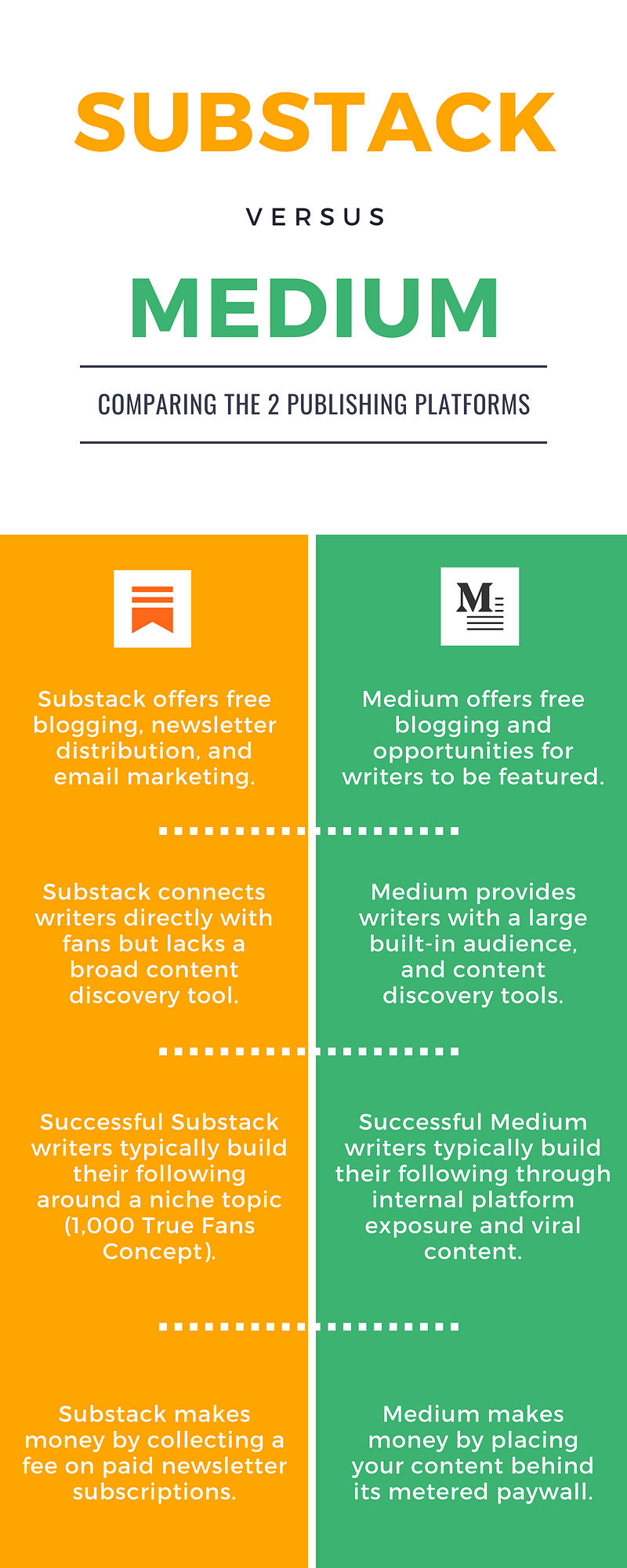
The infographic below details some of the high level differences between Substack and Medium.
Source: Substack Writing

Substack vs. Medium In Depth Comparison

While the infographic above helps quickly differentiate between the two platforms, it does not discuss the various subtleties and nuances which writers may be interested in when committing significant time and resources to a single platform. The content below offers an in depth comparison of the two platforms.

Platform Purpose and Intended Function

Medium:

Medium was created by Ev Williams, previously co-founder of Blogger and Twitter. He initially developed Medium as a way to publish writings and documents longer than Twitter’s 140-character (now 280-character) maximum. Basically a long-form version of Twitter that would encourage more substantive discourse. In 2017, Medium introduced its Partner Program which was implemented to help persuade writers to put their content behind Medium’s metered paywall. All of this is part of a larger attempt to make Medium a central hub of content, regardless if it is written by little known writers or by staff at one of Medium's in house publications.

Substack:

A Substack publication is an email newsletter that you can charge money for. You write it, readers pay you. Substack’s focus is on helping Substack writers maximize their earning potential under this model.

To help writers, Substack offers the following tools (for free) to all accounts:

  • A content management system that has been purpose-built for publishing paid newsletters.
  • Connection to a Stripe account to manage payments and receive money in your bank account.
  • A website built with mobile in mind that looks great and loads fast on any device and in any browser.
  • Analytics that show your email open rates, website pageviews, and subscriber counts.
  • Access to a growing knowledge database of best practices for running a paid newsletter business.

Platform Business Model

Medium:

Medium makes money by charging readers $5 per month (or $50 per year) to access its content, which is hosted behind a metered paywall. In the past, Medium had attempted to monetize content by allowing publications to charge subscriptions (similar to the current Substack model) but it has since pivoted away from this model.

Medium’s paywall is unique in that it is metered and not a firm paywall. Readers can read 3 articles per month, even if they are not paying subscribers. This is an important part of the Medium marketing strategy, as it entices regular readers to become subscribers.

This method is successfully used by Medium, but not many other digital media companies, because Medium has amassed a tremendous audience and they continue to build this audience through their high domain authority.

For example, if I Google:

guerilla marketing tactics

The first result (which is actually a Google featured snippet), is an article I published on Medium, 10 Creative Guerilla Marketing Tactics to Boost Your Brand, Company, or Cause.
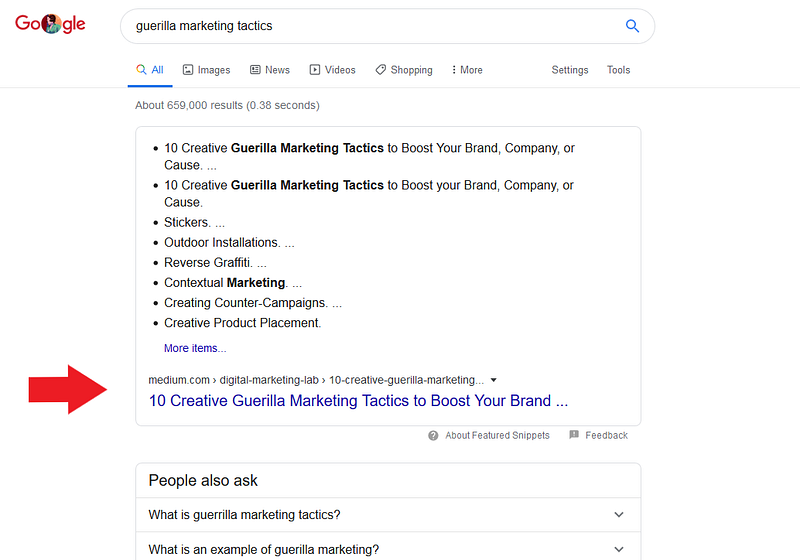
Had I posted this on my own blog or any other site with lower Domain Authority, this article would have likely been buried 5+ pages deep in the Google search results.

This obviously encourages me to use Medium, but it also serves as a gateway for people who have never heard of Medium, to look into the platform. This is essential to Medium building their subscriber base.

Substack:

Publishing on Substack is completely free, if you choose to not charge for your content. Once you start charging, they take a 10% fee on top of credit card fees, from all of your paid subscriptions.

On one hand this is a good model because it aligns incentives for both publishers and writers — Substack writers must succeed in order for Substack the company to succeed.

That said, Substack’s fees do add up and are something worth considering if you have a large and engaged fan base.

If you are able to set up your own email marketing funnel and promote your content effectively, you may be able to earn more on Medium.

Substack’s business model relies partially upon writers utilizing the WYSIWYG tools effectively, to reach new readers, and develop a fanbase.

It’s worth noting that Substack gives you direct access to customer subscription info (emails), meaning you could theoretically walk away from the platform at some point in the future. On Medium, you do not receive reader contact info, establishing a heavier dependence on the platform and some loss of autonomy.

Successful User Profile

Medium:

It is hard to define the “profile” of the typical successful Medium writer because Medium only releases very limited earnings information.

But based on my research into top writers, generally speaking, are those who can create semi-viral content. This is largely due to the Medium writer compensation system which rewards writers financially, only for the engagement of paying readers. So in order to make significant money on Medium you must be able to draw in readers who are a part of the Medium platform itself.

There are definitely exceptions to this, but the above characterization cover probably 85%+ of top earning Medium writers.

Top Medium writers (much like Substack), do generally need to develop a niche, but the niche needs to be a semi popular niche that exists on Medium. Some examples of these niches are:

  • Personal development
  • Technology
  • Programming
  • Marketing
  • Gender and Social Issues
  • Personal Finance
  • Self-Help
  • Productivity
  • Entrepreneurship

Notice that while these are considered “niches” within the Medium platform, these categories are still fairly broad and would not necessarily constitute a “niche” when writing on Substack.

Substack:

Successful Substack writers typically write about a very specific niche and are sometimes quasi-subject matter experts on a topic.

Take Bill Bishop. One of Substack’s most successful newsletters is Sinocism. The Sinocism China Newsletter is an email newsletter written by Bill Bishop that helps readers better understand China.
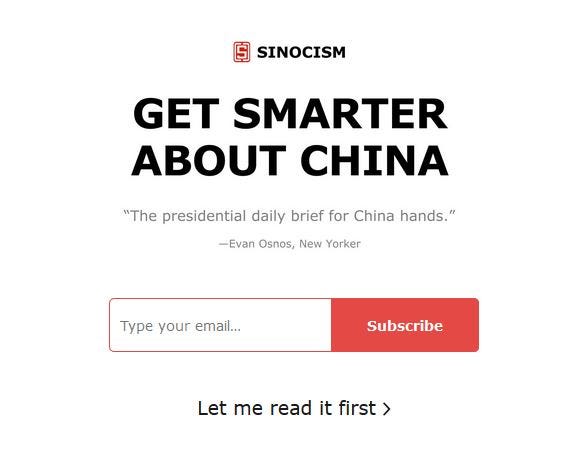
Sinocism offers content promising to “make you smarter about China.” The newsletter is considered a must read by diplomats, policymakers, investors, executives, journalists, and academics who want to better understand China and get regular commentary on Chinese and English language news.

Before writing Sinocism, Bill Bishop was a media executive with more than a decade’s experience living in and decoding China. He previously wrote the Axios China weekly newsletter and the China Insider column for the New York Times Dealbook.

While you do not need to be an industry veteran to publish a newsletter on a topic, obviously it goes a long way toward establishing credibility on a certain subject.

Substack publications can consist of an even smaller niche. JoeBlogs is a popular blog focusing on baseball.

This type of publication works well on Substack because it unites true baseball fans around a hyper specific topic.

In contrast, it would be hard to run a successful sports publication on Medium, covering many sports. A baseball specific publication on Medium might generate some traffic due to Medium's high Domain authority but unless their is a mass appeal to Medium's paying readers, it is unlikely to generate many views from the readers whose views actually count toward Partner Program earnings (paying readers).

Writer Monetization Methods

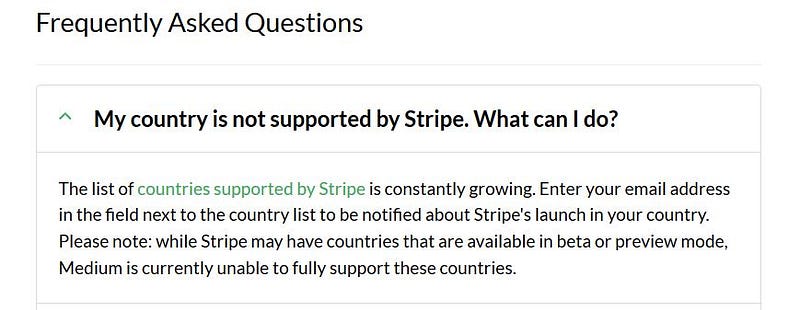
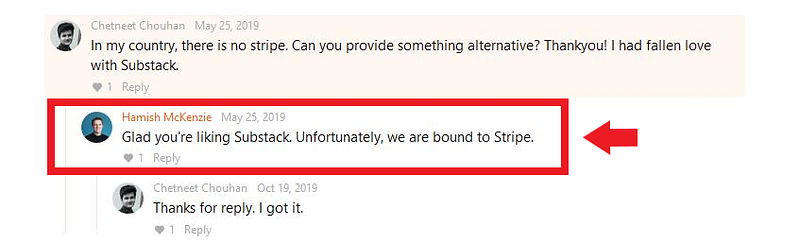
  • Note: both platforms rely upon Stripe for writer payments, meaning that from a global perspective, if you are not in a country supported by stripe, neither of these are currently an option. Both seem to have formed exclusive relationships with Stripe:

Medium:
Substack:
Medium:

Medium has a clear monetization method, that can be easily used by any writer — The Medium Partner Program.

The Medium Partner Program is Medium’s program that allows writers to earn money from articles they submit.

The Medium Partner Program is open to anyone, and it even allows the re-posting of content first posted on other platforms (such as a blog post on your self-hosted blog).

Medium pays writers based on Member Reading Time — which is a measure of the total time paying subscribers spend reading your articles.

As Medium described in their post on the earnings update:

As a user reads, we measure their scrolls and take care to differentiate between short pauses (like lingering over a particularly great passage) and longer breaks (like stepping away to grab a cup of coffee). Reading time incorporates signal from your readers without hurdles. You don’t need to ask your readers to remember to clap, or click, or do anything other than read.

This process can feel a bit opaque because Medium is (theoretically) dividing up some pot of money based on subscriptions and distributing it to writers based on several propriety factors.

But the Medium Partner Program has proven itself to be a reliable stream of income for thousands of writers (myself included).

While many successful Medium writers promote their stories on social media or through their mailing lists, many focus their attention on writing and rely upon Medium’s large built in audience and the platform’s content discovery tools to drive traffic.

This combination has made Medium a popular choice among writers who want exposure while still being compensated for their effort.

Medium is 100% free for writers.

Substack:

Substack is similar to Medium in that anyone can set up a subscription newsletter easily using Substack’s free tools.

However, it is different in several ways, when it comes to how writer’s are compensated.

Substack offers little in the way of content discovery or assistance driving traffic. Rather, they focus on providing a more complex suite of tools then Medium, but then the writer is responsible for driving traffic/subscribers to their newsletter.

Substack gives writers:

  • A free Substack domain/website
  • A landing page, which can collect emails of potential subscribers or process the payments of readers ready to subscribe
  • An email marketing system which allows writer to simultaneously post content to their blog and to send readers on their email lists preformatted emails containing their posts.

This third point is the main difference between Medium and Substack.

As a writer on Medium, you do not have direct access to your readers’ emails. You instead rely upon Medium's curation system and content distribution system to feature you work among willing readers.

Many writers on Medium get around this by using an email marketing system (such as Mailchimp) and they insert a CTA or sign up form at the end of their articles. This functions as a hedge against being disconnected from their readers if the author decides to leave Medium or if Medium (right or wrong) decides to suspend their account.

Substack essentially cuts out the middleman. You do not need a separate email marketing sytem with Substack since al your posts are already sent to your subscribers.

Email marketing systems typically increase in price as your email list grows, so this can become a large cost for many writers on Medium. Substack currently offers this same functionality essentially for free.

Substack also lets writer’s determine the price they charge subscribers for access to their newsletter. Many writers feel they are not adequately compensated for their writing, and Substack allows them to charge whatever they want to a core group of subscribers.

Substack does have monthly minimums that author scan charge ($5 per month or $30 per year) but these threshold are generally below or at what most writers would charge for their work anyway. If you really want to charge less, you can use the promotion code hack and set an indefinite discount. For example, a 50% discount off of a $5 per month/ $30 per year plan would only cost $2.50 per month or $15 per year. I currently am running this exact promotion on my Blogging Guide newsletter:

Content Discovery

Medium:

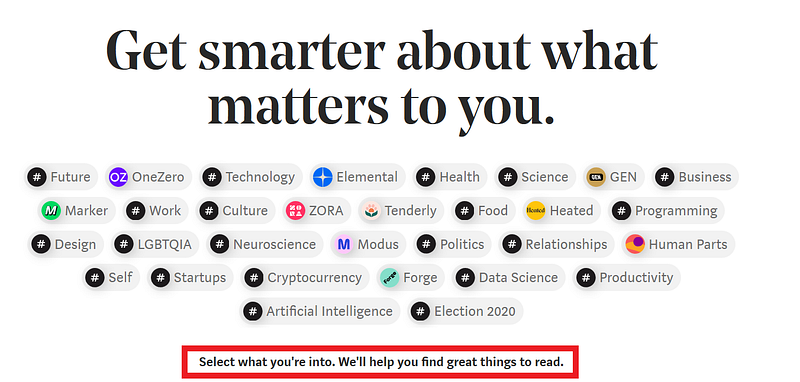
One of the few advantages that Medium has over Substack is its robust content discovery tools. In other words, readers come to Medium for reading material, they use the search function or read content recommended to them based on their interests.
Substack:

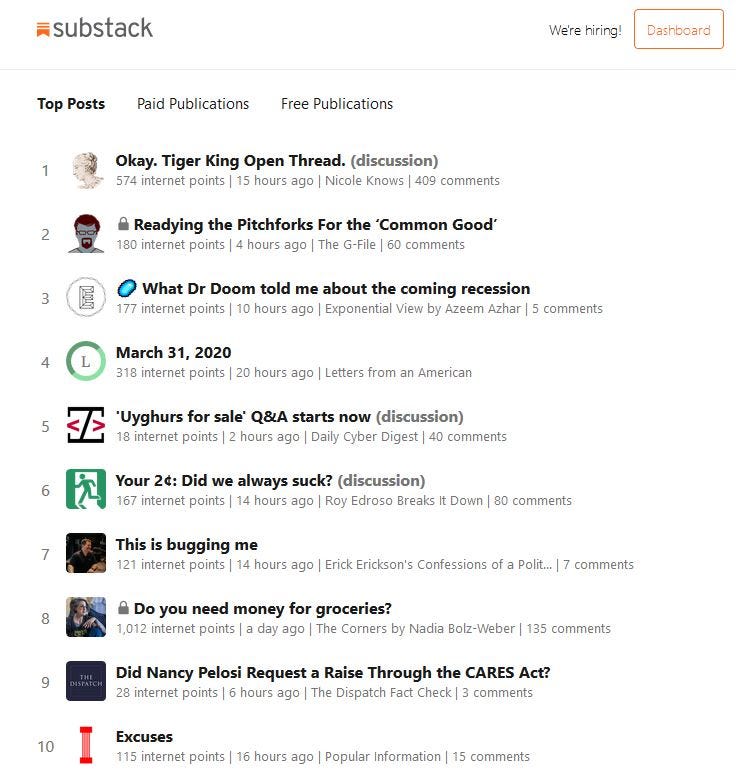
Substack does not have a content discovery tool (or at least not yet). They do have a leader board page which displays top posts and newsletters, both paid and free:

Platform Tools

Medium:

Both Medium and Substack make it easy to create stylish and professional looking posts:
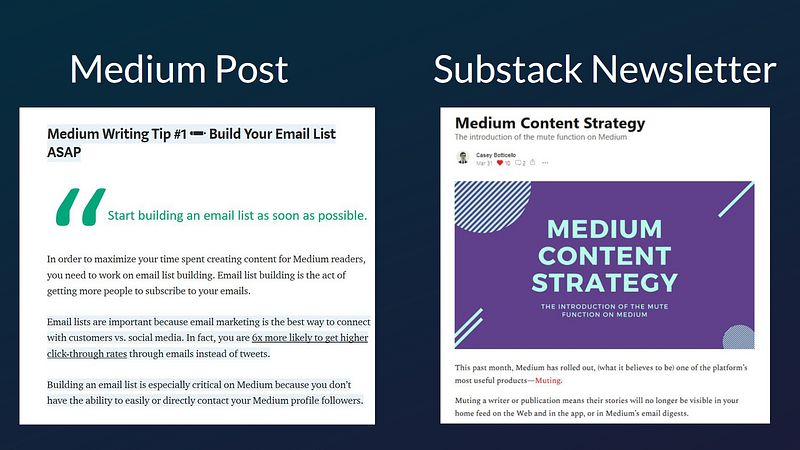
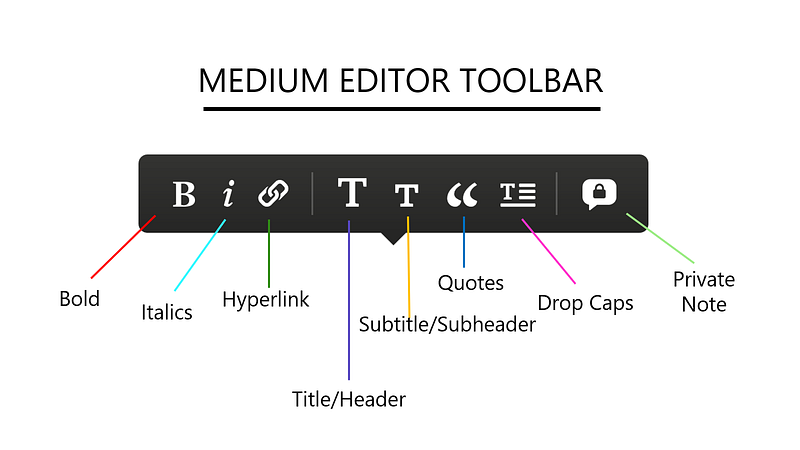
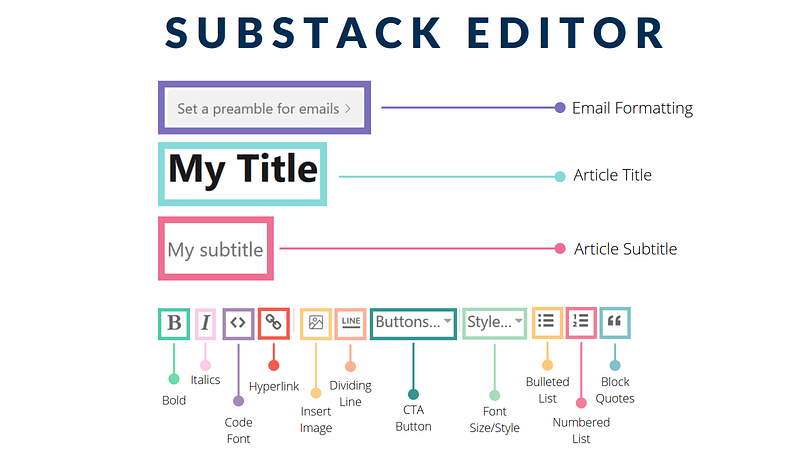
They also both have fantastic article editors:

Medium:
Substack:
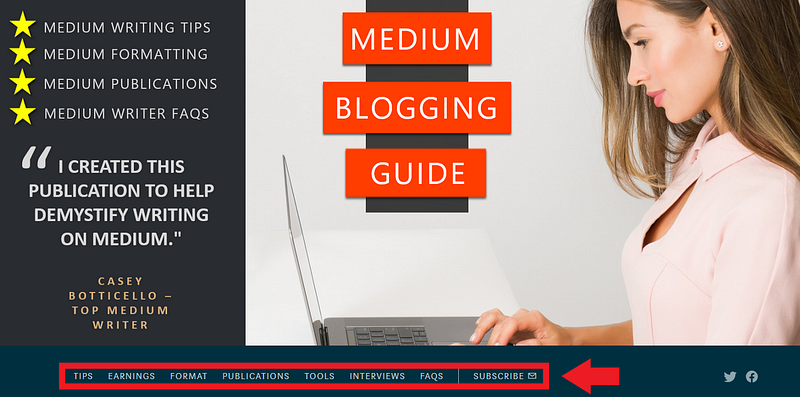
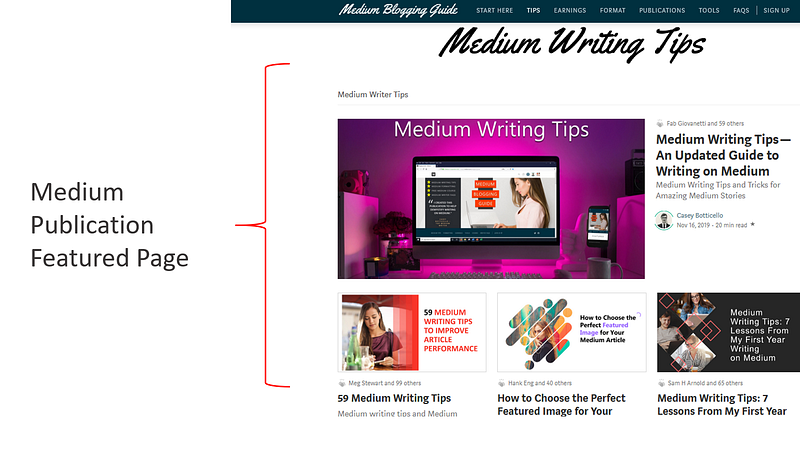
However, Medium does allow for better organization of articles with their publication tool, which includes features like feature pages which can be prominently displayed at the top navigation bar of your publication:
Substack:

In general Substack offers writers more tools than Medium.

As previosuly mentioned, the built in email marketing function is probably the most useful. This ability to automatically email your readers is not only cost effective, but the data analytics are quite useful.

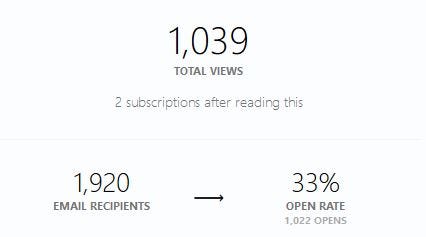
You can see how an email performed in terms of how many recipients it reached, how many opened it, and how many of those readers subscribed:
You can also see a breakdown of all the links clicked in your newsletter — a feature of most email marketing systems which Medium noticeably lacks:
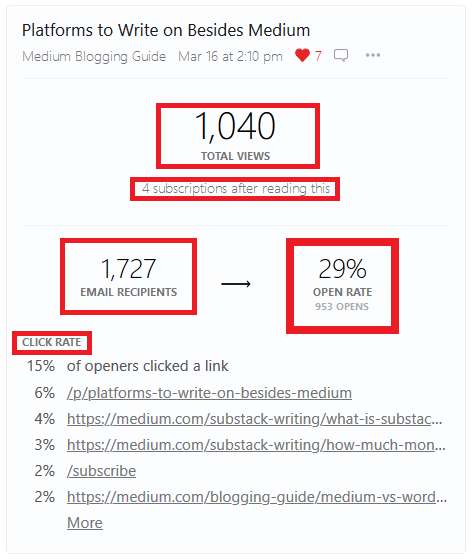
This an extremely valuable feature. For those familiar with my analysis of Medium data analytics, Substack’s data analytics may appear a bit more sparse than Medium’s. But Substack’s data analytics includes conversion rates, which from a content creator’s perspective, is of the utmost importance.

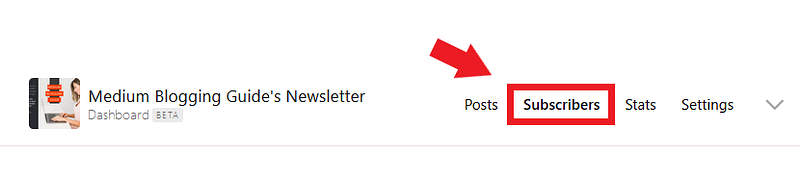
If you want to see the activity of an individual subscriber (free or paid), click on the “Subscribers” button in the upper right hand corner of the page:
If you scroll down the page, you will see a list of your email subscribers:

If you click on a specific email, you can see the detailed activity of each subscriber:
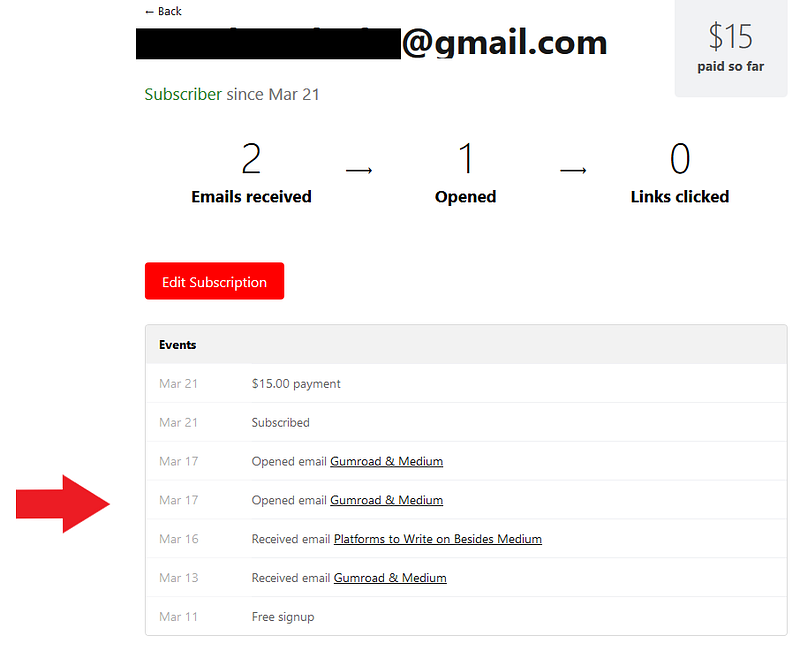
For example, in the screenshot above, you can see that the user:

— First signed up for Medium Blogging Guide on March 11th.

— Next, they received an email with my post on March 13th (Gumroad & Medium).

— A few days later, they received another email, on March 16th (Platforms to Write on Besides Medium)

They opened first email twice on March 17th (Gumroad & Medium).

They upgraded to become a paid subscriber on March 21st

Substack’s subscriber-specific analytics provide enormous insight into the patterns of your subscribers.

You can use this data to:

  • Determine what posts lead to a higher subscriber sign up rate
  • See whether a specific user opened your latest email
  • Establish the proper ratio of free to paid content in order to optimize paying subscribers

Conclusion

Medium and Substack are both amazing free tools, and there is no reason you have to use just one of them.

The platforms broadly serve the same purpose (to help writers connect with an audience and make money from their content), and their differentiating factors, largely are indicative of their different functions (Medium — easy blogging, Substack — easy subscription newsletter).

If you were to choose between the two platforms, I would suggest you pick based on the following questions:

  • How much time do you plan to invest? — if you are looking to make money by writing the occasional article (1–2 articles per month), Medium may be the better platform. Substack subscribers generally expect several high quality/useful posts per week. Note: even though Medium may be the better platform in this scenario, that does not mean it is ideal to post once or twice per month on Medium. In order for most new writers to be successful, they should also publish a few times per week. On the other end of the spectrum if you are a prolific writer cranking out 2–3 posts per day, Medium may be the best option since there is a larger audience, and each post increases tour general reach on Medium by expanding your fan base. Substack subscribers might actually get annoyed with multiple posts per day, as you are flooding their inbox with direct emails.
  • Do you have an existing following or fan base? — if you have an existing fan base, Substack is a great way to provide value to this audience. Medium is generally better for those who are trying to build a following. That said, building a following on Medium is not easy, but your content is much more likely to be featured or reach new readers on Medium.
  • Are you writing about a really niche topic? — if you plan to write about the migration patterns of a specific type of animal or cover breaking news from Azerbaijan, Substack is probably a better bet. There is little chance that either of those topics would earn any money of Medium. However, if you are writing about multiple topics or topics that are more broad (personal finance, health, relationships, etc.) Medium will likely be an easier platform to monetize your writing.
  • Are you comfortable advertising your writing? — If you absolutely refuse to market your writing, than Medium is probably a better platform, as it does have a large built in audience. Substack cuts through the noise by leveraging the enormity of the internet and connecting you with potential fans, but you must identify and convert these fans to subscribers in order to make any money.
  • Are you hoping to benefit from organic search engine traffic? — While Substack does better than most platforms SEO-wise, it is hard to beat Medium if your goal is to drive visitors through organic search traffic. There are very few platforms on the internet that have higher Domain Authority than Medium. And almost none of those that do rank higher allow guest posts from any person.

I hope this has been a helpful overview of some of the similarities and differences between Substack and Medium. If you have any questions, just leave a comment and I’ll be sure to respond!

Casey Botticello

Thanks for reading this article! Leave a comment below if you have any questions, and if you want to learn more about blogging, content marketing, or subscription newsletter strategy, be sure to sign up for the Blogging Guide Newsletter!

If you liked this article, here are some other articles you may enjoy:

Casey Botticello is an internet entrepreneur and the founder of Blogging Guide, an online community of writers with an award-winning newsletter. He is also the creator of the popular Medium Writing Course and the Substack Newsletter Course.

Casey previously worked at several tech startups, a lobbying & strategic communications firm, and has created several businesses of his own. He is a graduate of The University of Pennsylvania, where he received his B.A. in Urban Studies.

You can connect with him on LinkedIn, Twitter, Facebook, follow his Medium publications, Digital Marketing Lab and Medium Blogging Guide, or reach out to him directly on his personal website.

Writing
Technology
Entrepreneurship
Social Media
Journalism
Recommended from ReadMedium