Artificial Intelligence, Art, and Ethics
Stealing in the AI Artist Community? AI Art and the shared imagination
Responsible practices for maintaining creativity and originality
If you’ve heard anything about AI art, it’s probably the controversy over the training data, and that it steals from traditional artists. But there’s another complex issue at stake: how do we protect our AI images from imposters?
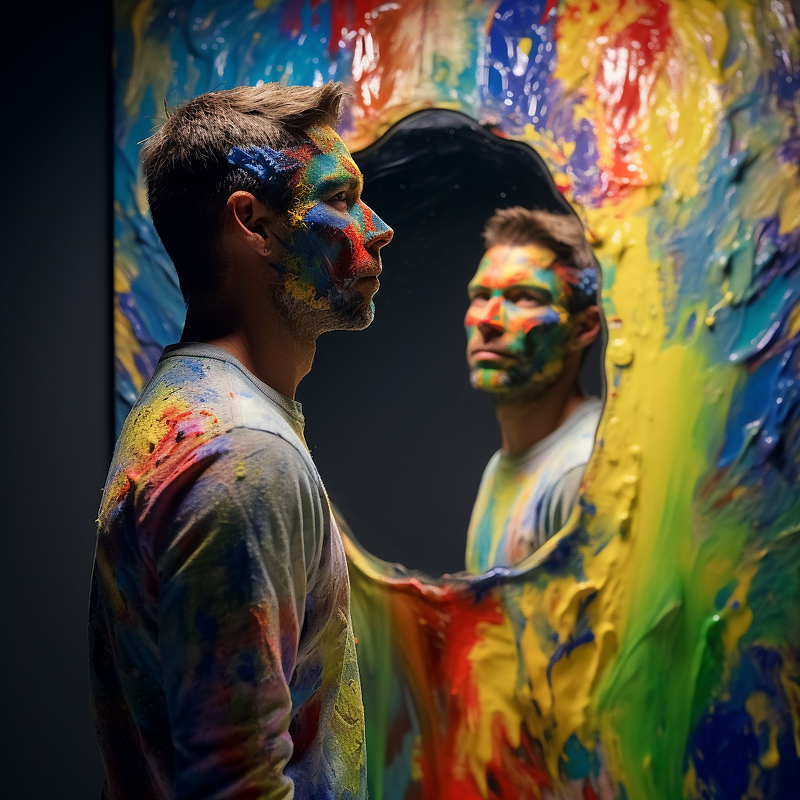
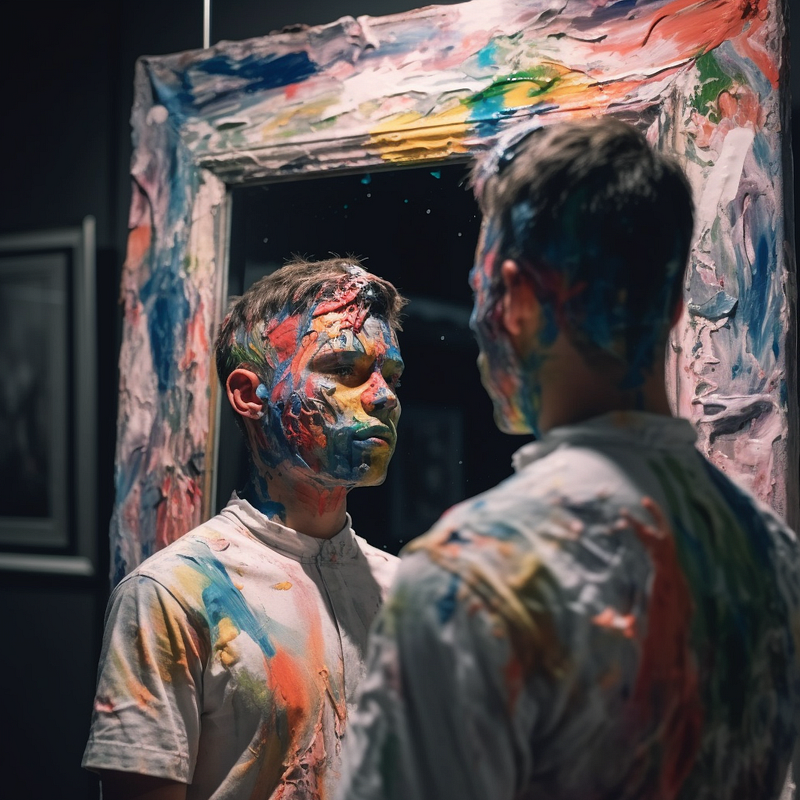
As long as we don’t have copyright over AI images (and maybe we never should?), it’s hard to claim your efforts as your own. The same output can be easily mimicked by anyone. The sheer deluge of images, the topicality, and the speed with which everyone can generate images every day mean there’s also a lot of coincidence and overlap. For example, who’s really behind the trend of making AI images of “selfies with historical figures?”
How do AI artists protect their work?
Many AI artists hoard their prompts; other artists are more open about the prompts used to generate certain images, but won’t reveal the Seeds (Seeds are random static that is used as a base for generating AI art images. Think of it like yeast; it’s an essential catalyst. While the images are random, they are numbered, so you can reuse the same seed to get similar images again).
Others might watermark their images. But the art can still be emulated, especially if you use an image-to-prompt extractor like the hugging-face CLIP-Interrogator, or Lexica (the Stable Diffusion image search engine).
It’s a terrible feeling when you see your art knocked off and staring at you out of the screen; it’s like catching your spouse out on a date. I can only imagine it’s 1000x worse for traditional artists seeing uncanny copies of their style; something we AI artists should be more caring about, and try to use AI generators more responsibly and ethically by not prompting artists.
I’ve had copycats happen twice to me. Here are those stories:
1) Impersonation of AI Artists: Scamming customers
The worst instance was when the stealing affected not just me, but conned the public. I found my art was being used to sell a subpar art generator. My images—along with some from colleagues—had been copied verbatim from a Facebook group. Worse, they were selling courses supposedly teaching conned customers how to “get results like these. We did these images”.
They were pretending to be me.
That really got my goat; I reported them to the Fraud Office. It wasn’t so much the copying of the art, but the misleading business practices. Not only had the knock-off generator not been able to produce those images, but they were also selling expertise they didn’t have, based on my work.
I guess you could call those guys the “Scam artist-artists”.
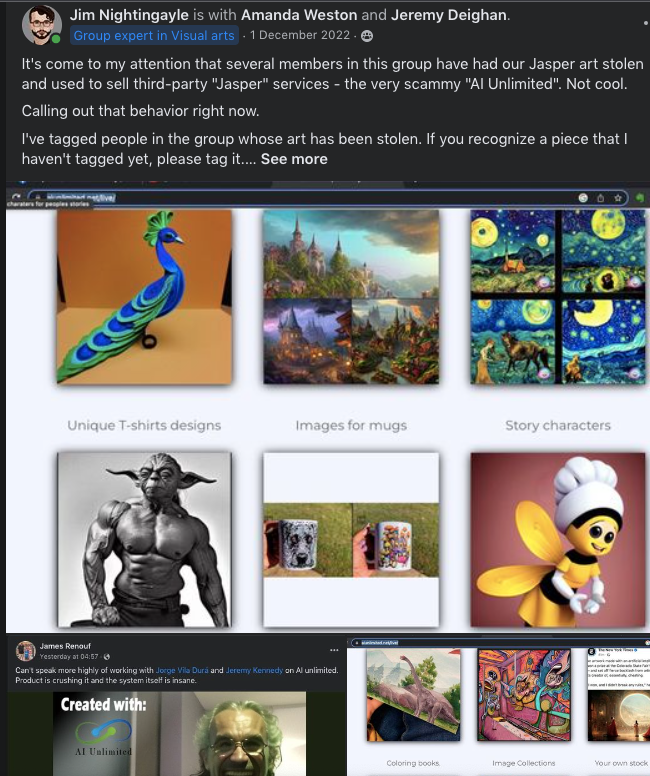
In this case, it wasn’t so much stolen art, as impersonation of an artist.
2) Which came first? Plagiarism and the Collective Imagination
Now, this is one I’ve been both a culprit of and a victim. There’s nothing worse than posting something online only to find a near-exact lookalike. Which is the fake? Or have two artists hit on the same idea simultaneously?
Sometimes it’s just people tuned into the Zeitgeist. When a major public event happens, like Pope Francis or Trump being in the news, it’s hard for everyone’s collective imaginations not to arrive at the same point together.
If something is trending, you can bet other people are also remixing it.
At other times, it’s honest forgetfulness — I once pinched a friend’s dog’s name for an AI-written story (sorry, Noodlepup!). That was a case of “cryptomnesia”, which is what psychologists call inadvertent plagiarism when you forget the source of inspiration and mistakenly think it was you.
Skydiving babies AI Art
And then there’s a direct influence, where you have a copycat. I had that happen to me yesterday! I posted an April Fools’ Day prank that I’d been preparing since February: putting babies in dangerous jumping scenes.
My goal was to set up a fake business in NZ and then wait for the outrage:
The prank went off without a hitch—people in NZ loved it. Kiwis had the gut reaction of “What’s the world coming to!?!” and then a giggle (many said the joke dawned on them when they were whinging to a loved one).
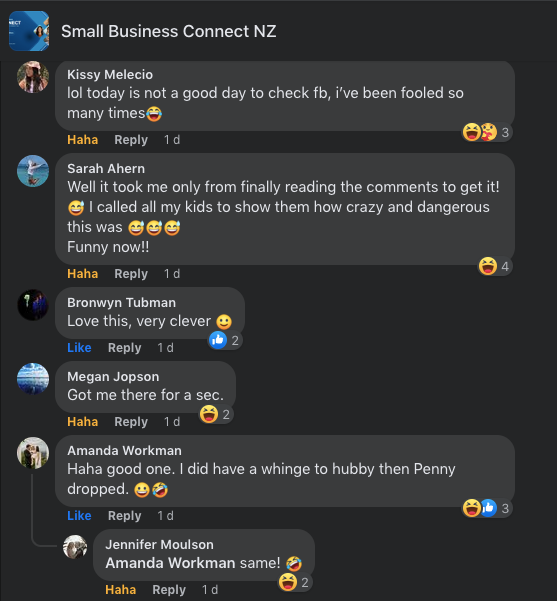
But the final joke was on me. A friend contacted me to say my idea was trending. Thousands of shares, TikToks, you name it. But not my images.
Why did it happen? It turned out that when I rerolled the images in Midjourney last week to update them to V5 photorealism (to keep the images current), I mistakenly left public settings on, and flooded Discord.
Within hours, the images were out. And here I was, waiting until April 1st.
Concessions, compromises, and giving credit where it’s due
Ironically, I wasn't so much worried that there were imitators out there, as I was concerned that I would be seen as unimaginative. “Unimaginative” is the worst criticism. And yes, I did have one or two people think I was the imitator (because mine came out several hours afterward, on April 1st).
This story has a somewhat happy ending. Today, I saw that one of the main imitators of the “skydiving babies” magnanimously respond to feedback by saying that he couldn’t take full credit for the images. I felt that was big of him, and exactly how we should all be dealing with the creative overlaps:
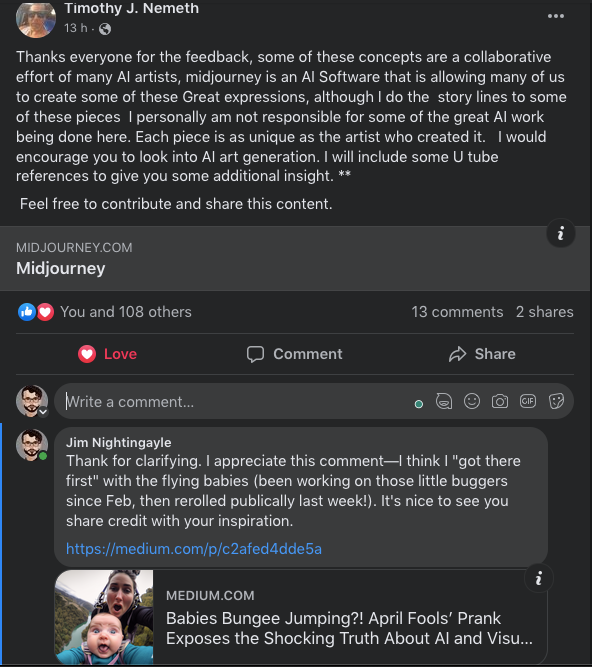
these concepts are a collaborative effort of many AI artists… I personally am not responsible for some of the great AI work being done here. Each piece is as unique as the artist who created it. I would encourage you to look into AI art generation.
Even better was the advice from my friend and mentor, Amanda Weston:
Take a breath, centre yourself, and let the knowledge that you were the originator warm your heart.
3 Guidelines to Protect Creativity, Embrace Originality, and Foster a Respectful Community
The first is practical. If you’re not ready to share your AI art project with the world: check that Stealth Mode is switched ON in Midjourney. You’ll need a premium account. Just type “/settings” in the Discord interface to see your options. Be aware if you’re in public mode, you might be copied.
The second is creative. We have a wealth of resources for originality. With AI art generators, we can picture anything. Challenge yourself to never copy again! If you take an idea, switch it up. Remix it. I’ve said it before “Why copy art when you can create something just as good yourself?”
The third is mindful. Perhaps the hardest lesson. Be generous in your art. But know that you are effectively giving it away. Likewise, be generous in giving credit to your influences and inspirations. We all borrow and steal, making art. Show grace and acknowledge the shared social imagination.
Ready to join Medium?
Gain unlimited access to the entire Medium catalog with my referral link, and you’ll also be supporting my ongoing writing at no extra cost to you:
Who is Jim the AI Whisperer?
Jim the AI Whisperer offers advanced training in using AI generators to create stunning visuals and how to write original and compelling content. If you’re interested in discovering more, feel free to contact me.
I’m also available for journalism opportunities, podcasts, and interviews.


