avatarJim the AI Whisperer

Free AI web copilot to create summaries, insights and extended knowledge, download it at here

6846

Abstract

ses reimagined by A.I. with more diversity and representation</h2> <div><h3>Using AI to create inclusive images of classic Disney characters</h3></div> <div><p>bootcamp.uxdesign.cc</p></div> </div> <div> <div style="background-image: url(https://miro.readmedium.com/v2/resize:fit:320/1*NUF-o4KDBntu0mckgFjaSw.png)"></div> </div> </div> </a> </div><p id="dc9d">“How would the animated Disney Princesses look if they were reimagined with more diversity? Or if they were designed by <a href="https://readmedium.com/79f6c8870d67">Tim Burton</a>? (I did that for Halloween). I also like to make what I call “digital ephemera” — visualizing my passing thoughts and fancies, like <a href="https://bootcamp.uxdesign.cc/i-asked-chatgpt-to-dream-of-electric-sheep-heres-what-the-a-i-visualized-e7d0dc022f05">what would an android’s dream of electric sheep</a> look like? These aren’t things I’d commission an artist to do: they’re quick, instant visualizations, and often time-critical.</p><p id="758a">“For instance, I wanted to make Christmas homages of <b>Meghan Markle and Prince Harry</b>, following their Netflix special. It was on the spur of the moment, but people really enjoyed them; it racked up 60K views.”</p><div id="96af" class="link-block"> <a href="https://readmedium.com/meghan-markle-stuns-in-festive-ai-generated-images-just-in-time-for-christmas-and-her-netflix-6d36114a9f7c"> <div> <div> <h2>Meghan Markle Stuns in Festive AI-Generated Images Just in Time for Christmas and Her Netflix…</h2> <div><h3>Jasper Art Creates Beautiful AI Images of the Duchess of Sussex</h3></div> <div><p>medium.com</p></div> </div> <div> <div style="background-image: url(https://miro.readmedium.com/v2/resize:fit:320/1*EehE5GPOUahQqupvNb46wA.jpeg)"></div> </div> </div> </a> </div><h2 id="f3b2">Why are AI tools so bad at generating hands? Do you think it’s a lack of specific data in the training sets or another technical problem?</h2><p id="b3ac">“I’m not privy to the propriety side of the specific data, but I have a sense it’s not a lack in the training sets <i>per se</i>, but in the differentiation of their descriptors. Basically, text-to-image generators aren’t just visual; they’re also about language. That’s why prompt engineering is so important.</p><div id="f830" class="link-block"> <a href="https://bootcamp.uxdesign.cc/name-that-color-how-to-prompt-ai-image-generators-with-better-color-and-palette-descriptions-91b103f56212"> <div> <div> <h2>“Name that color!” How to prompt AI image generators with better color and palette descriptions</h2> <div><h3>Generate specific colors in your AI artwork with these tips</h3></div> <div><p>bootcamp.uxdesign.cc</p></div> </div> <div> <div style="background-image: url(https://miro.readmedium.com/v2/resize:fit:320/1*MypcOINUpqyJ3RyGWTTKGg.png)"></div> </div> </div> </a> </div><p id="0eb3">“The image classification is limited by how it was labeled. I doubt the hands in the training sets have been described in orthopedic-level terms. I mean, think of all the possible permutations your hands and fingers can make. Collectively, there are over 300 sign languages! Is it any wonder that when AI is asked to produce “hands”, it can’t decide on any single configuration?</p><p id="b3e8">“And hands are such incredibly complex objects. They’re almost the original computers; they’re abacuses. It’s not hyperbole to say that the dexterity of hands has shaped human intelligence.”</p><h2 id="6544">Have you seen any improvement in the hand problem over time, or new tools emerge to solve it?</h2><p id="20bf">“Yes! Incremental improvements. <b>Midjourney V5</b>, according to the weekly Office Hours with David Holz, is going to be much better at generating AI hands. That’s a few weeks away; the update is expected at the end of March.</p><p id="0d76">“In terms of new tools, I’ve been reading up onPoint-E technology, which <a href="https://www.sciencefocus.com/future-technology/why-ai-generated-hands-are-the-stuff-of-nightmares-explained-by-a-scientist/">Dr Peter Bentley</a> says will generate 3D models from text prompts. This might better realize the complex geometry of hands. However, that’s a long way off and I imagine means rendering in 3D first and then back down to 2D.</p><p id="5e89">“Another option <i>might</i> be a dedicated model that is specifically trained to corrective hands. A hand version of what’s called a GFP-GAN (generative facial prior-generative adversarial network). These are AI models that are used to restore old photographs and can be used to improve AI faces:</p><div id="95c0" class="link-block"> <a href="https://readmedium.com/you-can-download-a-free-gfp-gan-to-improve-your-ai-generated-faces-6d509f10085b"> <div> <div> <h2>You can download a free GFP-GAN to improve your AI-generated faces</h2> <div><h3>Using BaseTen and the Google Colab version of GFP-GAN</h3></div> <div><p>medium.com</p></div> </div> <div> <div style="background-image: url(https://miro.readmedium.com/v2/resize:fit:320/1*uy4XLuYaTrZqG1CnzcFN5g.png)"></div> </div> </div> </a> </div><p id="87db">“GANs leverage two networks in opposition to each other to improve fidelity and realness. I often wonder why nobody has developed a “generative <i>dextrous</i> prior-generative adversarial network” that’s solely trained to degrade wonky hands and reconstruct them as more realistic ones.</p><p id="a263">“There’s a million-dollar idea!”</p><h2 id="2585">What are some tips for encouraging AI tools to draw better hands?</h2><p id="7f1c">“I wrote a guide some months ago. I’ll have to update it with new techniques as it’s always rapidly changing. The main solution still: mindful prompting always helps. Always imagine how the training images might’ve been labeled and try to reverse-engineer your prompt from there.</p><div id="3f55" class="link-block"> <a href="https://bootcamp.uxdesign.cc/how-to-draw-hands-with-an-ai-image-generator-776ce3a814fe"> <div> <div> <h2>How to fix prompts for AI-generated images of hands</h2> <div><h3>And why AI art generators struggle with fingers and hands</h3></div> <div><p>bootcamp.uxdesign.cc</p></div> </div>

Options

      <div>
            <div style="background-image: url(https://miro.readmedium.com/v2/resize:fit:320/1*roCBSNgFoLG8QAHD87axag.png)"></div>
          </div>
        </div>
      </a>
    </div><p id="757f">“For instance, when you think of a picture of hands, the caption probably doesn’t describe the number of visible fingers or the positions. It just says “hands”. But if you give it recognizable gestures to draw upon, or give it a simple situational context, i.e. something to do — like holding an apple, or a clenched fist — you improve the chances that it will recreate a better hand.</p><figure id="2d27"><img src="https://cdn-images-1.readmedium.com/v2/resize:fit:800/1*IBMzcPiBSNT613kdV0hq8A.png"><figcaption></figcaption></figure><p id="baca">“Just don’t expect it to execute something intricately contextual, like a cat’s cradle or playing real notes on a violin, where accurate dexterity matters.”</p><h2 id="9174">Are there specific prompts you can use to generate better hands?</h2><p id="a78e">“I recommend adding texture and details to prompts, like wrinkles, rings, freckles, and hairy knuckles. I infer this method narrows down the categories of “generic hand” training data. The more specific the better.</p><p id="2095">“However, I have seen people overcompensate. Prompting “a regular hand, five fingers, 14 knuckles, five fingernails” isn’t going to work because it’s not how we would caption images of hands. The same goes for requesting “not nightmare hands” or other varieties of negative prompts (“ — no”).</p><p id="ff83">“Instead of trying to undo mistakes, you have to reverse engineer how similar images of what you want may have been tagged. No one takes a picture of a real hand and says “I’m going to caption this as <i>not uncanny</i>”.</p><p id="d661">[side note: some people use ableist terms when negative prompting, like “ — no deformed hands”. or worse. That should always be avoided]</p><p id="168b">“Other actionable guidance: Many generators like <b>Midjourney </b>and<b> Jasper Art</b> will allow you to use an image as a prompt. Uploading an image of a hand can keep it on track. You can also merge images.</p><p id="7fff">“<b>ControlNet</b> allows you fine control over model posing with a framework.</p><p id="3b5e">“In <b>Midjourney</b> you can also reroll and generate variations; with some mix-and-match and Photoshop editing skills, you can combine the best results.</p><p id="096f">“And <b>DALL-E 2 </b>will allow you to “inpaint”, so you can take an image you’ve generated elsewhere and regenerate the hand area (mixed results). <b>Playground AI</b> also allows for the isolated AI editing of images.”</p><h2 id="ff70">What are your thoughts on the NO AI ART backlash?</h2><p id="0d93"><b>“</b>There’s a lot of cyberbullying on this frontier, on all sides. I have enormous empathy for artists, as a copywriter myself who initially feared I was going to be “replaced” (by Jasper no less, at a copywriting business where I worked before branching out into AI). But I feel there is an ethical way forward if we can all have an open discussion. I’m hopeful about it.</p><p id="961b">“There’s a misconception that AI Art is tech bros and nefarious people out to steal jobs. In my experience, everyone I’ve encountered personally is just a kind, caring, and creative person seeking to expand their own capacity.”</p><h2 id="ee25">Ready to join Medium?</h2><p id="0575">Gain unlimited access to the entire Medium catalog with my referral link, and you’ll also be supporting my ongoing writing at no extra cost to you:</p><div id="f446" class="link-block">
      <a href="https://medium.com/@JimTheAIWhisperer/membership">
        <div>
          <div>
            <h2>Join Medium with my referral link - Jim the AI Whisperer</h2>
            <div><h3>As a Medium member, a portion of your membership fee goes to writers you read, and you get full access to every story…</h3></div>
            <div><p>medium.com</p></div>
          </div>
          <div>
            <div style="background-image: url(https://miro.readmedium.com/v2/resize:fit:320/0*fHpReXhL6qL7KtYr)"></div>
          </div>
        </div>
      </a>
    </div><h2 id="a75d">Who is Jim the AI Whisperer?</h2><p id="3271"><b>Jim the AI Whisperer </b>offers <a href="https://thejasperwhisperer.com/jasper-art">advanced training in how to use AI generators</a> to create stunning visuals, as well as <a href="https://www.thejasperwhisperer.com/">how to write original and compelling content</a>. If you’re interested in discovering more, feel free to <a href="https://thejasperwhisperer.com/contact">contact me</a>.</p><p id="78da">I’m also available for journalism opportunities, podcasts, and interviews.</p><h2 id="b8d8">You might enjoy these related articles from Jim the AI Whisperer:</h2><div id="b3c3" class="link-block">
      <a href="https://readmedium.com/an-ai-reflects-on-the-end-of-the-art-world-as-we-know-it-a71d1a688935">
        <div>
          <div>
            <h2>An AI Artist Reflects on the End of the World as We Know It</h2>
            <div><h3>By Jim Nightingale (with added material by Jasper AI)</h3></div>
            <div><p>medium.com</p></div>
          </div>
          <div>
            <div style="background-image: url(https://miro.readmedium.com/v2/resize:fit:320/1*9Y75ckGnO5GKsmIkKR63XA.png)"></div>
          </div>
        </div>
      </a>
    </div><div id="48fd" class="link-block">
      <a href="https://readmedium.com/how-to-get-your-ai-art-generator-to-stop-cropping-off-peoples-heads-ae3183e79981">
        <div>
          <div>
            <h2>How to get your AI art generator to stop cropping off people’s heads</h2>
            <div><h3>An AI Prompt Engineer shows you how to get full body shots</h3></div>
            <div><p>medium.com</p></div>
          </div>
          <div>
            <div style="background-image: url(https://miro.readmedium.com/v2/resize:fit:320/1*kwBjzPgKqS1cKWya6Uw4qg.png)"></div>
          </div>
        </div>
      </a>
    </div><div id="2ed5" class="link-block">
      <a href="https://bootcamp.uxdesign.cc/what-if-all-art-is-actually-a-i-art-a80a3ececc1b">
        <div>
          <div>
            <h2>What if all art is actually A.I. art?</h2>
            <div><h3>If we live in a simulation, then all artists are AI</h3></div>
            <div><p>bootcamp.uxdesign.cc</p></div>
          </div>
          <div>
            <div style="background-image: url(https://miro.readmedium.com/v2/resize:fit:320/1*88PNRFVDD0f9aTkdz34WYA.png)"></div>
          </div>
        </div>
      </a>
    </div></article></body>

About Me — How I give AI artists a hand

Recently I was interviewed by The New Yorker to give advice on AI art and the well-known problems with generating hands. Why does this happen? How can we better prompt AI image-generators to create realistic hands?
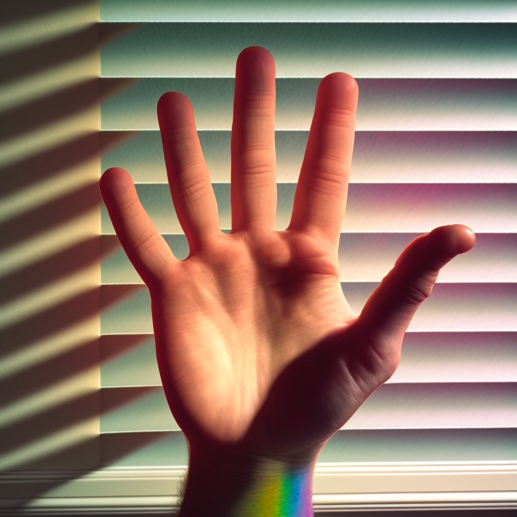
“Hello world!”

It was a great experience, and I loved being able to offer my expertise in AI prompt engineering. AI art is something I’m passionate about and have thousands of hours of experience to share with others. I realized that my contribution to the article couldn’t encapsulate such a huge discussion, so I decided to reintroduce myself to you all using the full interview transcript.

I hope this tells you a bit more about me and why I love AI art, and more importantly, I hope it gives AI enthusiasts and beginners a helping hand!

What do you do as an AI consultant?

“In this emerging field, it takes an active interest and hundreds of hours of investment to stay up-to-date and informed. I offer my experience in AI to help everyone from individuals to companies grasp the potential of LLMs and image generation models, and to get better results from prompts.

“As the name The Jasper Whisperer suggests, I originally gave guidance on Jasper AI, but I’m also approached for insights on ChatGPT, Midjourney, and others. I’m available through AlphaInsights for high-level consulting calls with decision-makers and stakeholders, but to be honest: I prefer my more hands-on, private coaching sessions. Yes, AI has a human side!
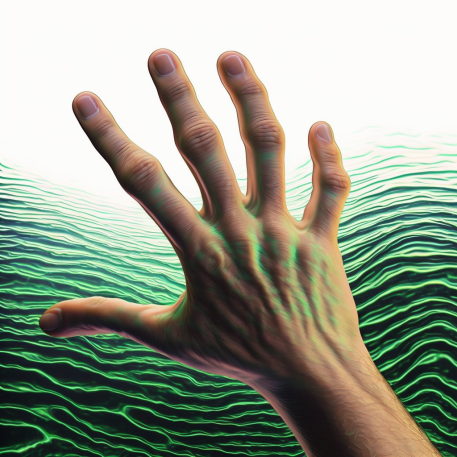
Don’t drown in AI — reach out for help!

“For these clients, I work as a tutor, a prompt engineer, and a librarian. I sit down with them (virtually) and work out custom prompts for their SOPs and tasks, and find the best methods to prompt what they want from AI.

“These documents are “prompt chains” (or “recipes”, as we call them at Jasper). I’ve coached AI practices to agriculture researchers, academics, marketers, entrepreneurs, college admissions services, and ghostwriters.

“But what I love the most is where the use of this technology is going to be societally beneficial.

“For example, I’m currently consulting with Anashay “Teach Em” Wright, founder of www.disruptivepartners.org. We instantly clicked. Disruptive Partners is a Black-female-led organization on a mission to address inequities in the K12 sector. Anashay aims to make it easier for parents by using tech-savvy approaches to partner with schools, education leaders, and service providers to change the education landscape. Check it out here:

Now that’s using AI right.”

You’re The Jasper Whisperer. Could you tell us what Jasper is?

“Jasper AI does everything ChatGPT does and more. It’s an AI copywriter but also an art generator. Unlike ChatGPT, Jasper is geared toward businesses, copywriters, and marketers, and has ready-made templates and workflows.

“It’s also less detectable as AI content, because Jasper uses a combination of large language models, including OpenAI’s GPT 3.5, Neo X, T5, and Bloom. So the output is more original, less robotic, and sounds more professional.

“Jasper came out earlier than ChatGPT, so Jaspernauts (as I first dubbed our community in the official Facebook group — the nickname caught on! Feel free to join us here) weren’t surprised by ChatGPT: we’d already been doing this since 2021. Jasper initially generated text in a Google Docs-style editor but has since expanded to include a friendly chat interface, an AI art generator, and an extension that puts Jasper everywhere you go online.”

What do your clients use AI image generators for?

“My clients have an amazing range of things they are doing! My favorite was advising on oracle cards, but there are also novelists who want to be hands-on with their own cover images so they match the author’s imagination.

“There are people making images of themselves or their kids in aspirational settings. Again, societally beneficial, and incredibly personal. If we can see what we imagine, it becomes more real.

“For myself — beyond testing the limits of the generators and solving puzzles (like the hand conundrum) — I personally use AI to visualize “what-ifs”.

“How would the animated Disney Princesses look if they were reimagined with more diversity? Or if they were designed by Tim Burton? (I did that for Halloween). I also like to make what I call “digital ephemera” — visualizing my passing thoughts and fancies, like what would an android’s dream of electric sheep look like? These aren’t things I’d commission an artist to do: they’re quick, instant visualizations, and often time-critical.

“For instance, I wanted to make Christmas homages of Meghan Markle and Prince Harry, following their Netflix special. It was on the spur of the moment, but people really enjoyed them; it racked up 60K views.”

Why are AI tools so bad at generating hands? Do you think it’s a lack of specific data in the training sets or another technical problem?

“I’m not privy to the propriety side of the specific data, but I have a sense it’s not a lack in the training sets per se, but in the differentiation of their descriptors. Basically, text-to-image generators aren’t just visual; they’re also about language. That’s why prompt engineering is so important.

“The image classification is limited by how it was labeled. I doubt the hands in the training sets have been described in orthopedic-level terms. I mean, think of all the possible permutations your hands and fingers can make. Collectively, there are over 300 sign languages! Is it any wonder that when AI is asked to produce “hands”, it can’t decide on any single configuration?

“And hands are such incredibly complex objects. They’re almost the original computers; they’re abacuses. It’s not hyperbole to say that the dexterity of hands has shaped human intelligence.”

Have you seen any improvement in the hand problem over time, or new tools emerge to solve it?

“Yes! Incremental improvements. Midjourney V5, according to the weekly Office Hours with David Holz, is going to be much better at generating AI hands. That’s a few weeks away; the update is expected at the end of March.

“In terms of new tools, I’ve been reading up onPoint-E technology, which Dr Peter Bentley says will generate 3D models from text prompts. This might better realize the complex geometry of hands. However, that’s a long way off and I imagine means rendering in 3D first and then back down to 2D.

“Another option might be a dedicated model that is specifically trained to corrective hands. A hand version of what’s called a GFP-GAN (generative facial prior-generative adversarial network). These are AI models that are used to restore old photographs and can be used to improve AI faces:

“GANs leverage two networks in opposition to each other to improve fidelity and realness. I often wonder why nobody has developed a “generative dextrous prior-generative adversarial network” that’s solely trained to degrade wonky hands and reconstruct them as more realistic ones.

“There’s a million-dollar idea!”

What are some tips for encouraging AI tools to draw better hands?

“I wrote a guide some months ago. I’ll have to update it with new techniques as it’s always rapidly changing. The main solution still: mindful prompting always helps. Always imagine how the training images might’ve been labeled and try to reverse-engineer your prompt from there.

“For instance, when you think of a picture of hands, the caption probably doesn’t describe the number of visible fingers or the positions. It just says “hands”. But if you give it recognizable gestures to draw upon, or give it a simple situational context, i.e. something to do — like holding an apple, or a clenched fist — you improve the chances that it will recreate a better hand.
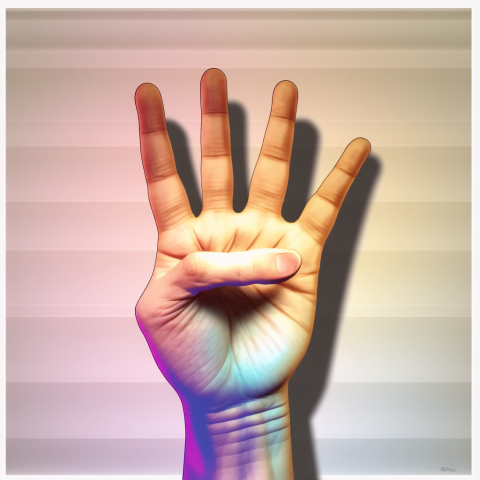
“Just don’t expect it to execute something intricately contextual, like a cat’s cradle or playing real notes on a violin, where accurate dexterity matters.”

Are there specific prompts you can use to generate better hands?

“I recommend adding texture and details to prompts, like wrinkles, rings, freckles, and hairy knuckles. I infer this method narrows down the categories of “generic hand” training data. The more specific the better.

“However, I have seen people overcompensate. Prompting “a regular hand, five fingers, 14 knuckles, five fingernails” isn’t going to work because it’s not how we would caption images of hands. The same goes for requesting “not nightmare hands” or other varieties of negative prompts (“ — no”).

“Instead of trying to undo mistakes, you have to reverse engineer how similar images of what you want may have been tagged. No one takes a picture of a real hand and says “I’m going to caption this as not uncanny”.

[side note: some people use ableist terms when negative prompting, like “ — no deformed hands”. or worse. That should always be avoided]

“Other actionable guidance: Many generators like Midjourney and Jasper Art will allow you to use an image as a prompt. Uploading an image of a hand can keep it on track. You can also merge images.

ControlNet allows you fine control over model posing with a framework.

“In Midjourney you can also reroll and generate variations; with some mix-and-match and Photoshop editing skills, you can combine the best results.

“And DALL-E 2 will allow you to “inpaint”, so you can take an image you’ve generated elsewhere and regenerate the hand area (mixed results). Playground AI also allows for the isolated AI editing of images.”

What are your thoughts on the NO AI ART backlash?

There’s a lot of cyberbullying on this frontier, on all sides. I have enormous empathy for artists, as a copywriter myself who initially feared I was going to be “replaced” (by Jasper no less, at a copywriting business where I worked before branching out into AI). But I feel there is an ethical way forward if we can all have an open discussion. I’m hopeful about it.

“There’s a misconception that AI Art is tech bros and nefarious people out to steal jobs. In my experience, everyone I’ve encountered personally is just a kind, caring, and creative person seeking to expand their own capacity.”

Ready to join Medium?

Gain unlimited access to the entire Medium catalog with my referral link, and you’ll also be supporting my ongoing writing at no extra cost to you:

Who is Jim the AI Whisperer?

Jim the AI Whisperer offers advanced training in how to use AI generators to create stunning visuals, as well as how to write original and compelling content. If you’re interested in discovering more, feel free to contact me.

I’m also available for journalism opportunities, podcasts, and interviews.

You might enjoy these related articles from Jim the AI Whisperer:

Artificial Intelligence
Design
Creativity
Art
About Me
Recommended from ReadMedium
avatarNick: The AI Guru
Midjourney is Leaving Discord

Finally!

3 min read