
Some of the Best Psychology Books to Read in 2023

Ever wonder why people do what they do? How others can be just so damn stubborn or incessant? Why do our bosses always suck or our loved ones always argue? This curated list of psychology books can help answer those questions, and thousands more.
These books on psychology aren’t the normal dry textbooks you’d find in college classes. Each one of these has a unique style, a specific angle, and are at the very least an absolutely enthralling read.
The Best Psychology Books to Read in 2023
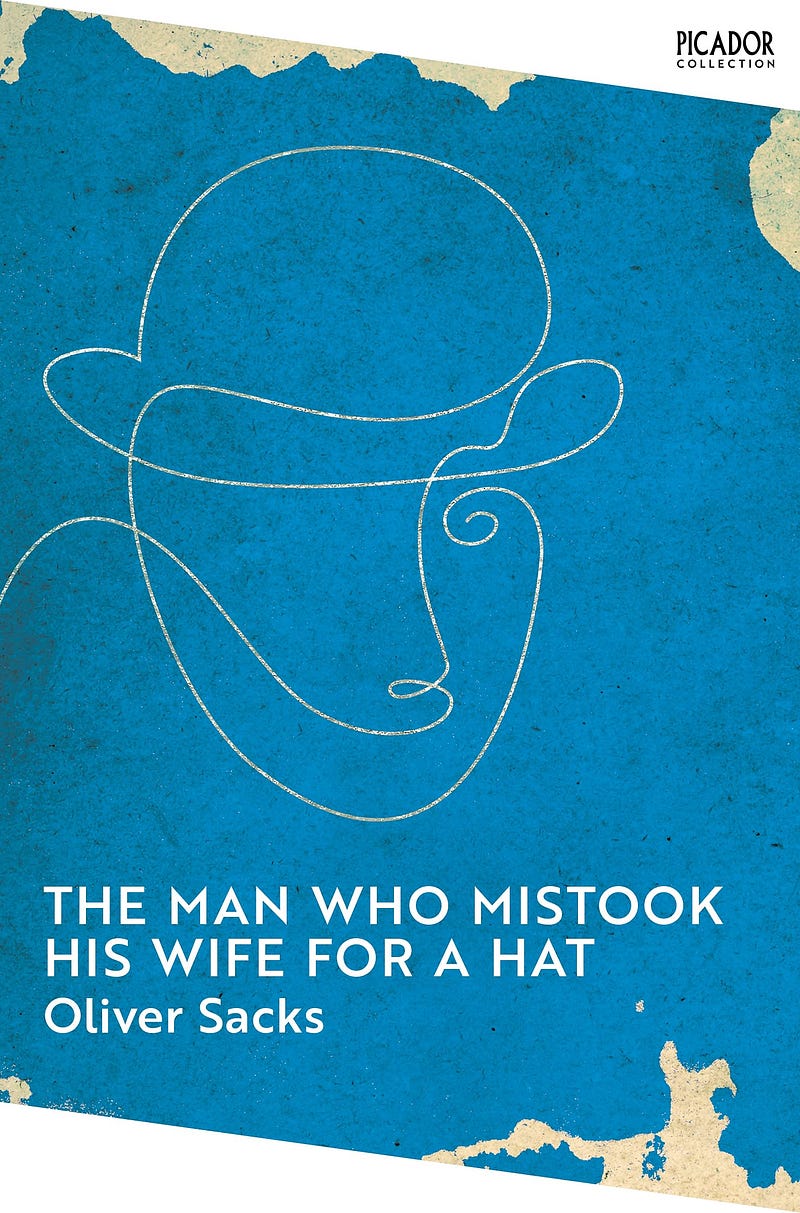
#1. The Man Who Mistook His Wife for a Hat and Other Clinical Tales
by Oliver Sacks
Book Summary:
In The Man Who Mistook His Wife for a Hat and Other Clinical Tales, Oliver Sacks takes us on a deeply engrossing journey through the convoluted corridors of the human mind. The book is a compendium of case studies that involve patients with an array of neurological disorders that disrupt their perceptions, memories, and even their very identities. From a man who literally mistakes his wife for a hat to a musician who can’t recognize everyday objects, these tales are at once heartbreaking, enlightening, and often outright bizarre. Yet, they are suffused with Sacks’ empathy and keen observations, making them more than just clinical reports — they become narratives of the human condition, redolent with existential questions.
Though these tales may sound like snippets from a science fiction anthology, they are deeply rooted in the vulnerabilities and idiosyncrasies that make us fundamentally human. Oliver Sacks doesn’t just catalog disorders; he delves into the indomitable spirit of his patients and the complexities of a brain gone awry.
By the end, you’re left wondering: if the brain is the seat of the self, then what happens when it malfunctions? The book leaves that query tantalizingly open, urging you to ponder the fragility and resilience of your own cognitive machinery.
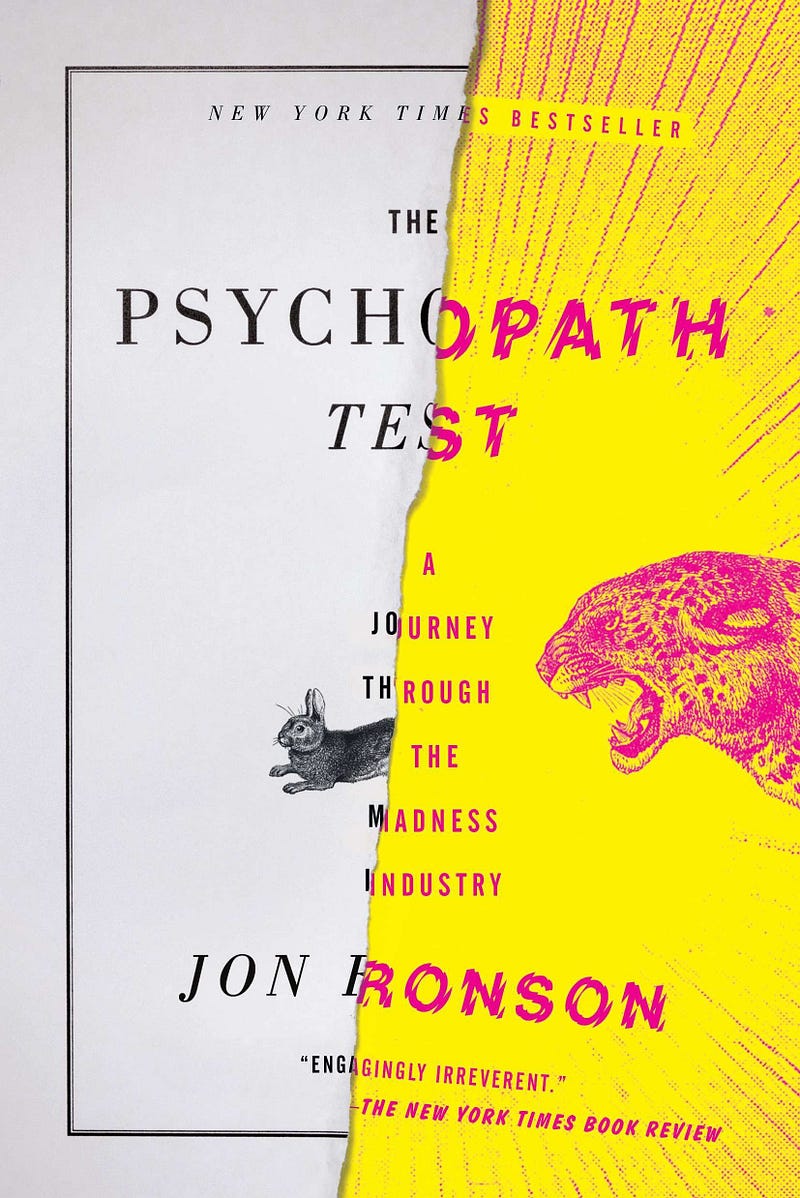
#2. The Psychopath Test: A Journey Through the Madness Industry
by Jon Ronson
Book Summary:
In The Psychopath Test: A Journey Through the Madness Industry, Jon Ronson delves into the enigmatic world of psychopathy, revealing not just the characteristics of those diagnosed as psychopaths, but also casting a critical eye on the experts who diagnose them. The journey is as wild as it is enlightening, taking the reader from high-security psychiatric units to the boardrooms of powerful corporations.
Ronson employs his trademark wit and journalistic prowess to unearth unexpected connections, encountering a slew of memorable characters along the way, from a former death-squad leader turned mortgage fraudster to CEOs whose behavior raises some very disturbing questions.
What makes the book a true page-turner is its unsettling implication: the line between sanity and madness is blurrier than you’d think. Are psychopaths the deranged outliers of society, or could they actually be running the show in some of our most respected institutions? Ronson’s journey into this disquieting territory leaves you contemplating where normalcy ends and madness begins.
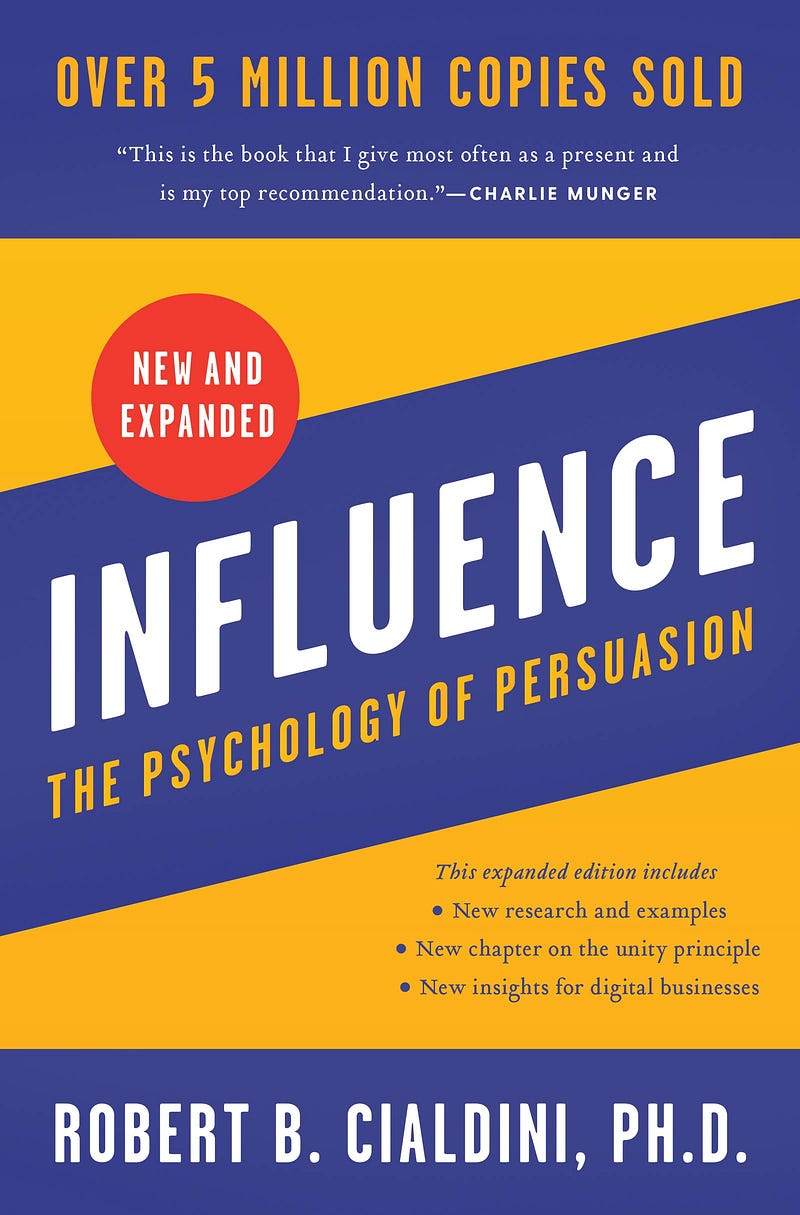
#3. Influence, New and Expanded: The Psychology of Persuasion
by Robert Cialdini
Book Summary:
In Influence, New and Expanded: The Psychology of Persuasion, Robert Cialdini breaks down the intricate mechanics of how and why people say “yes.” This isn’t just academic fodder; Cialdini crafts a highly accessible guide that applies rigorous psychological research to everyday situations. From dinner-table debates to corporate boardrooms, the book’s Universal Principles of Influence — now updated with new research and the latest principle, Unity — serve as a toolkit for ethical persuasion.
The real-world examples and engaging stories make the science behind influence palpable, relevant, and surprisingly simple to grasp.
While the book equips you with the skills to become a more persuasive individual, it also arms you against the myriad ways these same principles can be used unethically against you. It’s a double-edged sword; knowledge of these principles can empower you, but ignorance could leave you vulnerable.
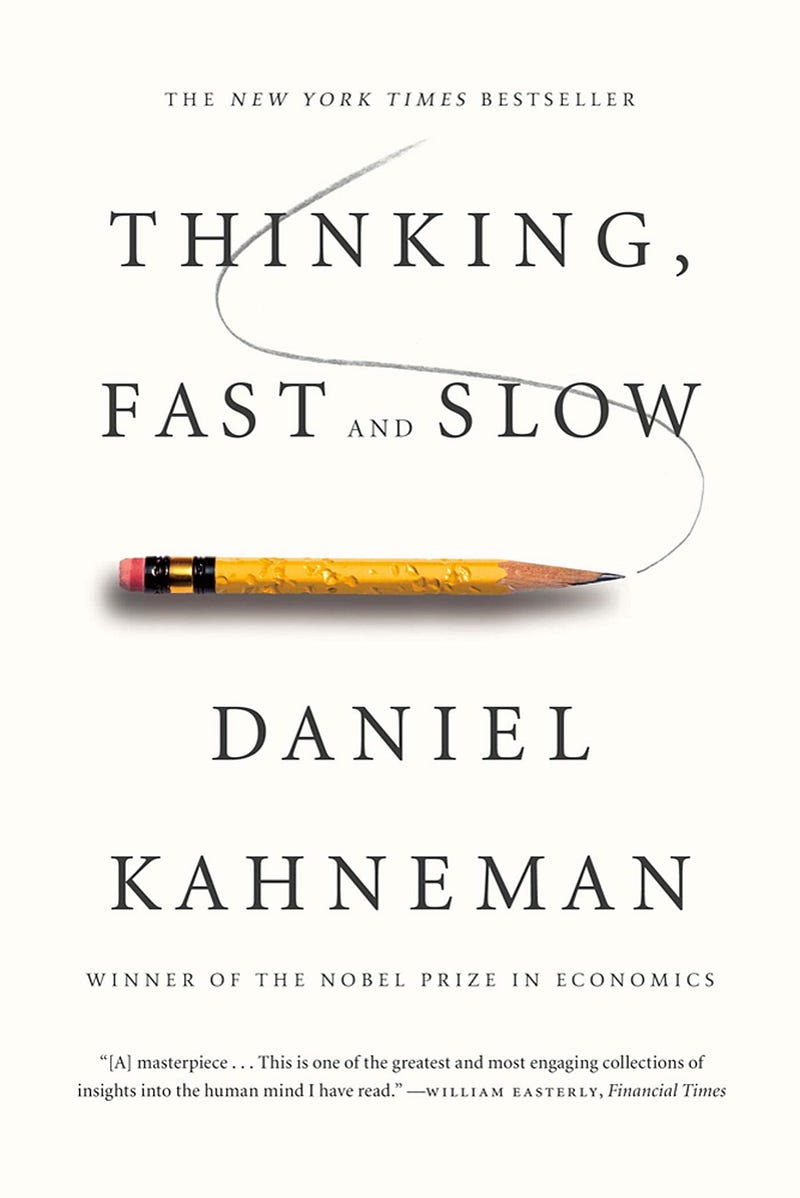
#4. Thinking, Fast and Slow
by Daniel Kahneman
Book Summary:
In Thinking, Fast and Slow, Nobel laureate Daniel Kahneman dissects the dichotomy of human cognition into two systems: the quick and intuitive System 1, and the deliberate and rational System 2. From why we buy more when told an offer is “limited-time only” to the corporate blunders that stem from overconfidence, Kahneman employs a wealth of examples to illuminate how these two systems guide our judgments, sometimes leading us astray.
While the book engages you in a captivating dialogue about cognitive biases and human errors, it also provides practical tools to improve decision-making. Kahneman’s insights allow you to harness the benefits of slow thinking, giving you the analytical edge in a world that often values speed over accuracy.
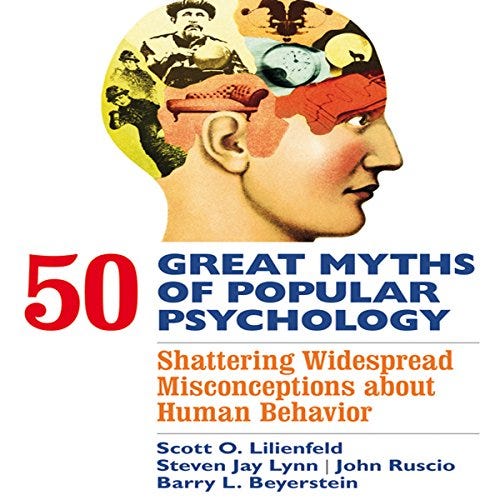
#5. 50 Great Myths of Popular Psychology: Shattering Widespread Misconceptions About Human Behavior
by Scott O. Lilienfeld, Steven Jay Lynn, and Barry L. Beyerstein
Book Summary:
50 Great Myths of Popular Psychology serves as a myth-busting manual that dives into widespread misconceptions about human behavior. From the oft-repeated claim that “people use only 10% of their brains” to the idea that “handwriting reveals your personality,” authors Scott O. Lilienfeld, Steven Jay Lynn, and Barry L. Beyerstein systematically dismantle such notions.
The book isn’t merely an exercise in debunking; it’s a tour through the landscape of psychological science, illuminating the difference between empirical evidence and mere anecdote.
What sets this book apart is its “mythbusting kit,” a set of critical-thinking tools that empower readers to scrutinize various claims they encounter in daily life. Through an engaging and accessible writing style, the authors not only shatter illusions but arm you with the intellectual tools to dissect, question, and understand human behavior more deeply.
#6. The Psychology Book: Big Ideas Simply Explained
by DK
Book Summary:
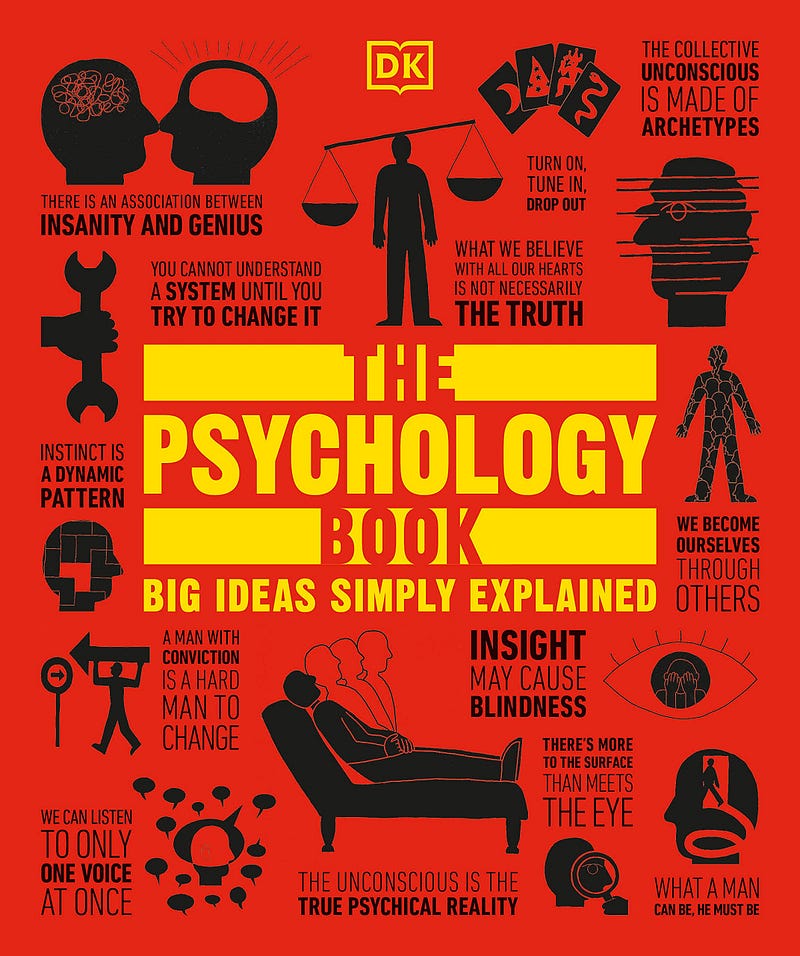
The Psychology Book: Big Ideas Simply Explained by DK is an inviting visual feast that serves as a comprehensive introduction to psychology. While the subject can often be dense and intimidating, this book unravels complex theories with the aid of stunning graphics, timelines, and charts. It covers over 100 groundbreaking ideas in psychology, giving you a panoramic view of everything from ancient philosophies to the latest scientific research.
The visually-rich format makes it a go-to guide for both the psychology novice and those wishing to refresh their knowledge.
What truly elevates this book is its commitment to clarity. It has a way of simplifying even the most convoluted of psychological theories, making them accessible to a broad audience. It’s not just about what psychologists think, but how their ideas have shaped our understanding of human behavior. With this in hand, you’re not just reading about psychology; you’re experiencing it in a format as engaging as the subject itself.
#7. The Language Instinct: How the Mind Creates Language
by Steven Pinker
Book Summary:
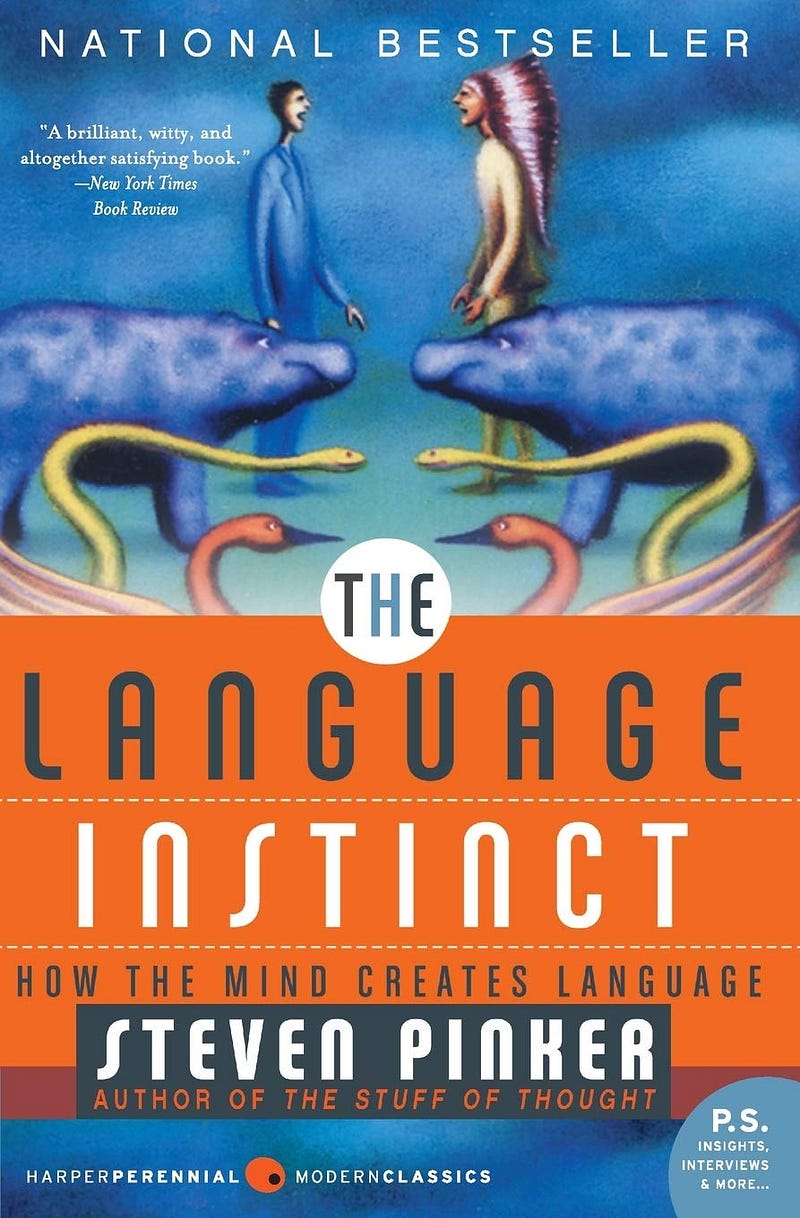
In The Language Instinct: How the Mind Creates Language, Steven Pinker takes readers on a riveting journey into the world of linguistics, arguing that language is not a mere cultural artifact but rather a fundamental human instinct. With a narrative threaded with humor and wordplay, Pinker demonstrates how language is hardwired into our brains through the process of evolution. The book doesn’t just explore the mechanics of language; it delves into how children acquire it, how it changes over time, and how the brain processes it.
What sets this book apart is its ability to convey complex scientific ideas in an accessible manner.
Pinker’s adept storytelling synthesizes years of research into a cohesive and compelling argument. From understanding linguistic quirks to decoding the evolution of communication, this book gives you the tools to appreciate the rich tapestry of human language in a whole new light.
#8. Blink: The Power of Thinking Without Thinking
by Malcolm Gladwell
Book Summary:
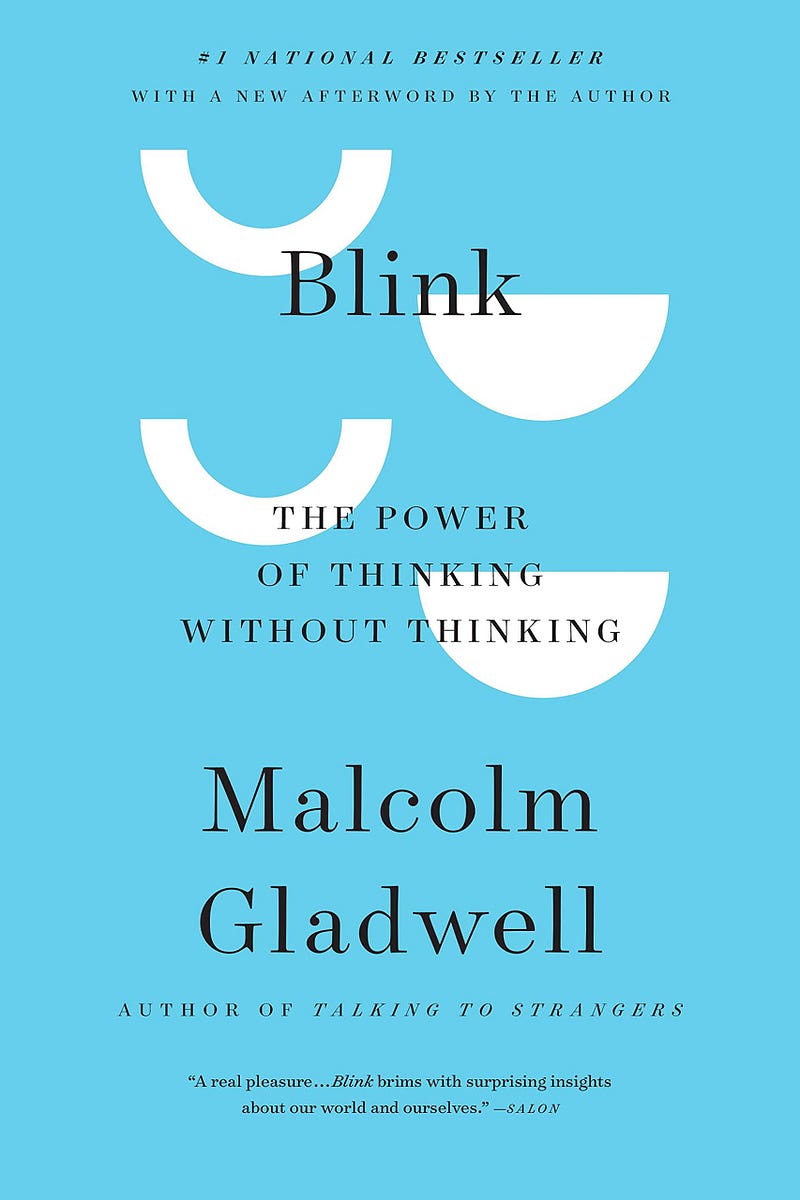
In Blink: The Power of Thinking Without Thinking, Malcolm Gladwell plunges into the intricacies of subconscious decision-making, dissecting the split-second choices we make and why they matter. Forget what you thought you knew about careful deliberation; Gladwell introduces the concept of “thin-slicing,” the art of making reliable judgments based on only a sliver of information.
The book profiles experts who excel at this — be it a psychologist who can predict the success of marriages in mere minutes, or a tennis coach who senses a player’s impending mistake before it happens.
While you might expect deep thinkers to be the best decision-makers, Gladwell upends that assumption, showing that our best choices often come from trusting our gut instincts. However, this isn’t an infallible system; the book also delves into instances where “blink” thinking can go terribly wrong. By revealing the balancing act between intuition and rationality, Gladwell invites us to reevaluate how we navigate the world, both within and around us.
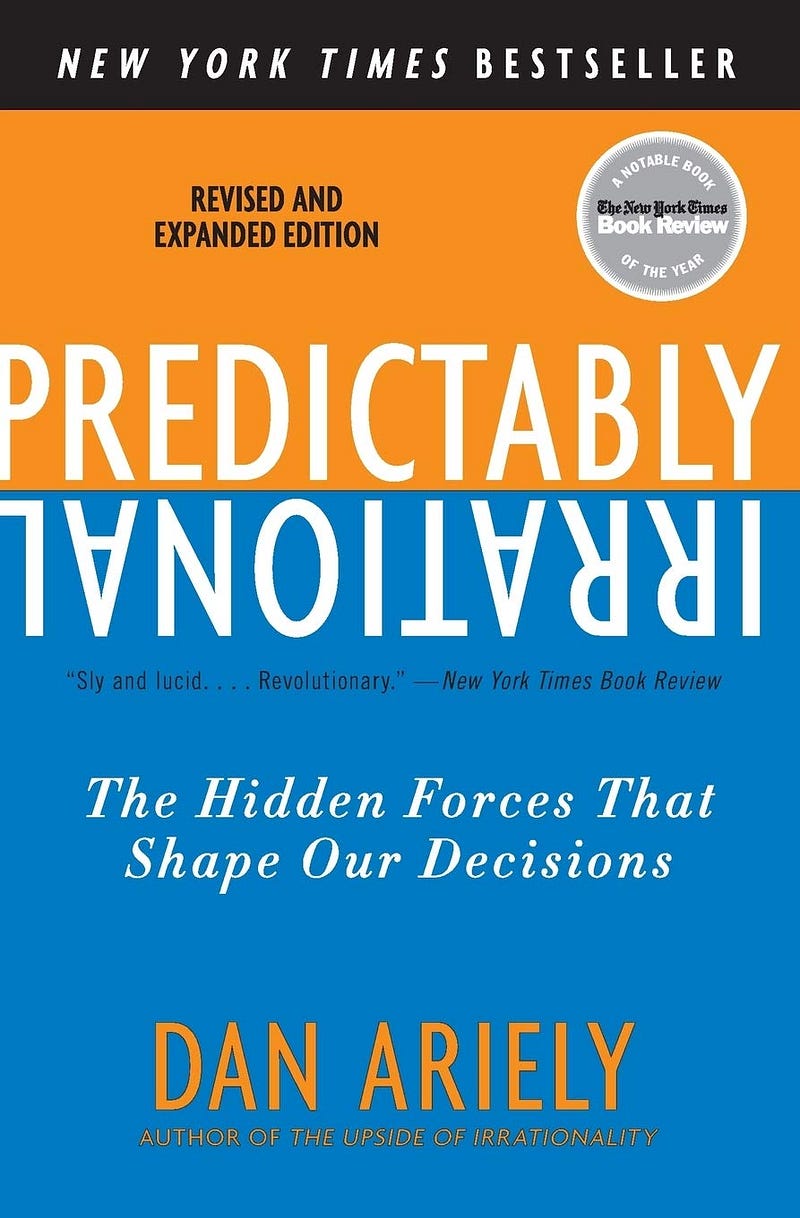
#9. Predictably Irrational
by Dan Ariely
Book Summary:
In Predictably Irrational, behavioral economist Dan Ariely topples the notion of humans as rational agents, opting instead to showcase how we are, indeed, predictably irrational. Through a series of captivating experiments and anecdotes, Ariely reveals the invisible forces that often guide our choices, making us spend more, underestimate, or procrastinate without reason. It’s not a story of human folly but a revelation of the underlying patterns in our seemingly irrational behaviors.
But here’s the twist: Our irrationality isn’t a mere lapse in judgment — it’s hardwired, predictable, and therefore, to some extent, manageable.
Ariely’s uncovering of these systematic quirks in human reasoning doesn’t just spotlight our flaws; it offers a roadmap to better decision-making. After reading, you’ll look at every choice you make through a new, enlightening lens.
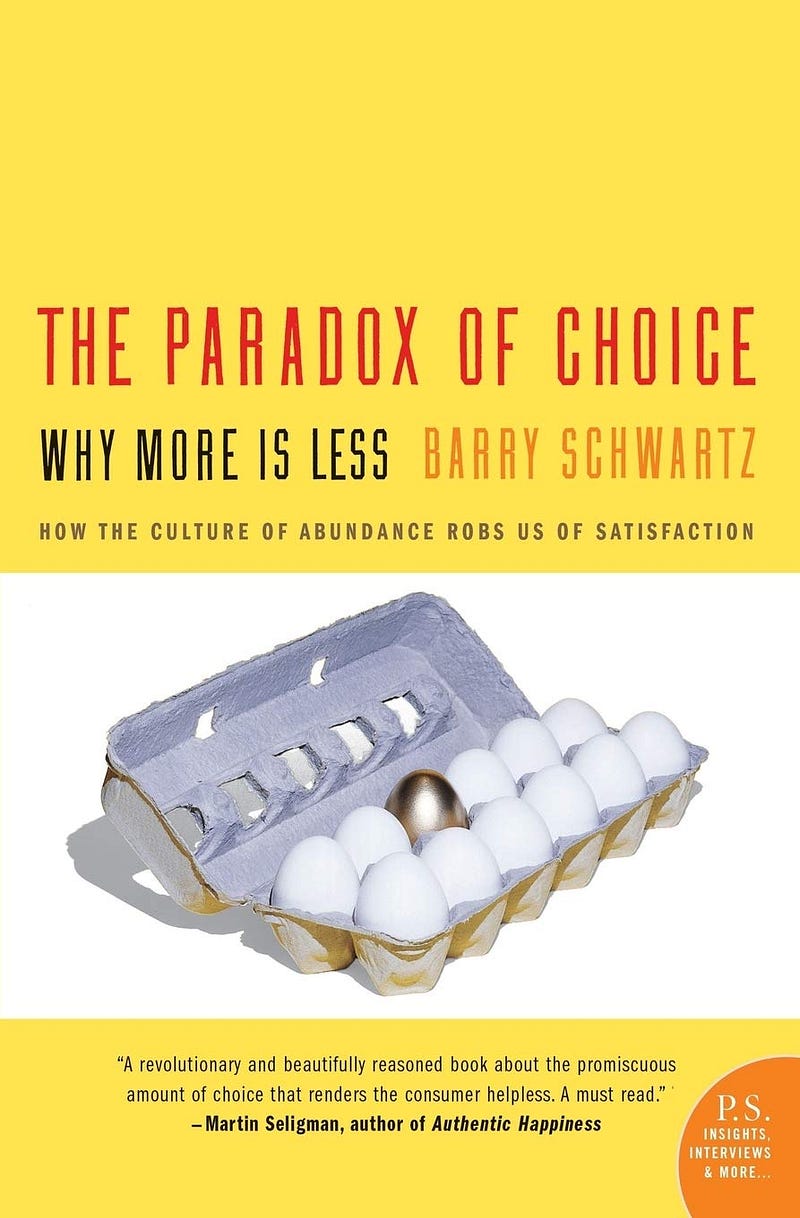
#10. The Paradox of Choice: Why More Is Less
by Barry Schwartz
Book Summary:
In The Paradox of Choice: Why More Is Less, Barry Schwartz takes the reader on an eye-opening journey into the downsides of living in a world abundant with choice. The book explores how, contrary to popular belief, the plethora of options available in every facet of our lives — be it for jeans, coffee, or life partners — can actually stymie our happiness, leading to anxiety, depression, and even paralysis of choice.
With engaging prose, Schwartz backs up his argument with a myriad of social science research, presenting a compelling case that too much choice is not just overwhelming but psychologically destructive.
Schwartz doesn’t just diagnose the issue; he offers a path forward. By condensing his findings into eleven actionable steps, the book serves as a guide to a simpler, more focused life. His practical suggestions aim to help the reader navigate the sea of choices by honing in on what truly matters. The outcome? A life marked by fewer regrets, less stress, and a renewed sense of satisfaction.
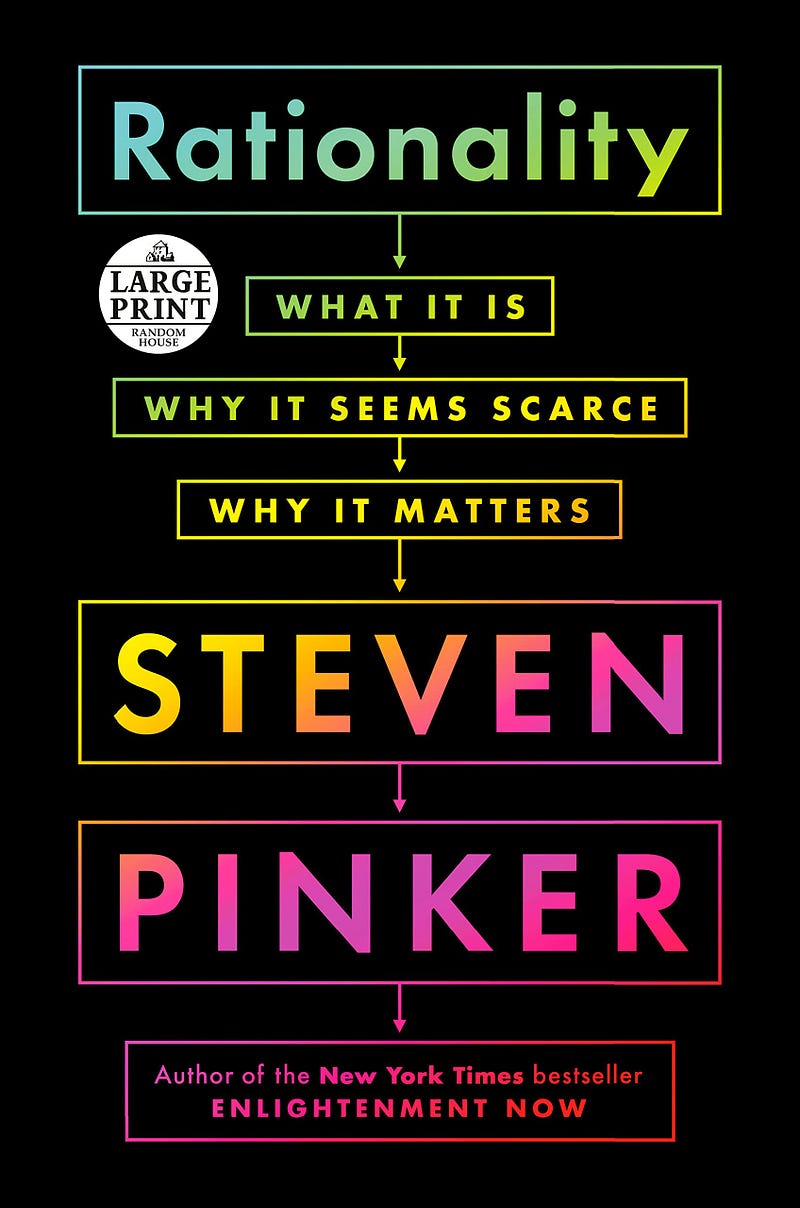
#11. Rationality: What It Is, Why It Seems Scarce, Why It Matters
by Steven Pinker
Book Summary:
In Rationality: What It Is, Why It Seems Scarce, Why It Matters, Steven Pinker grapples with a compelling paradox of our time: despite unprecedented advances in science and technology, society is awash in disinformation, conspiracy theories, and illogical reasoning. Pinker takes a detour from cynicism and dismisses the notion that humans are innately irrational. Instead, he argues that our cognitive faculties are products of evolution, designed for a world far less complex than the one we have engineered. The problem isn’t so much that humans are irrational, but that they aren’t using the tools of rationality — logic, probability, and critical thinking — to their full potential.
The book is not just an exposition but also a toolkit. As Pinker delves into the mechanisms of rational and irrational thought, he also offers a “manual” on applying rationality in our daily lives and societal decisions.
From dissecting fallacies and biases to emphasizing the importance of objectivity and truth, Pinker’s narrative aims to arm the reader with mental tools to navigate an increasingly complex world. And in doing so, he makes a compelling case that rationality isn’t merely a cognitive luxury but a prerequisite for societal and moral progress.
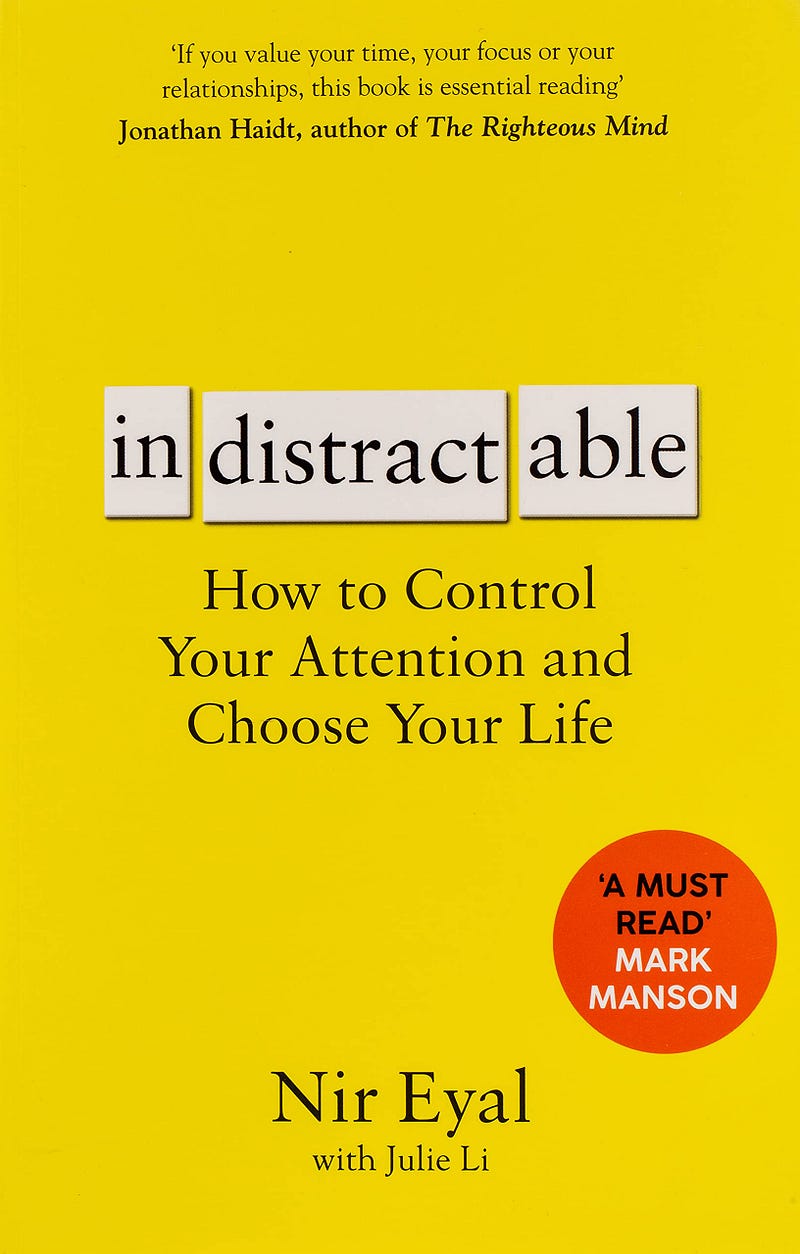
#12. Indistractable: How to Control Your Attention and Choose Your Life
by Nir Eyal and Julie Li
Book Summary:
In Indistractable: How to Control Your Attention and Choose Your Life, Nir Eyal dives deep into the labyrinth of distractions that plague our daily existence. From the ever-pinging phone notifications to intrusive co-workers, Eyal diagnoses our societal attention-deficit not as a personal failing but as a pervasive condition influenced by modern tech and culture.
But far from suggesting a luddite retreat, he argues that the solution isn’t to throw away your smartphone or delete social media; instead, he offers a nuanced understanding of the psychology behind our distractibility. In doing so, he lays down a four-step, research-backed model to break free from the shackles of distraction and achieve laser-like focus.
Eyal doesn’t stop at merely diagnosing the issue; he offers a toolbox of practical techniques designed to reclaim your life from the jaws of distraction.
The book challenges the reader to look beyond conventional time management advice, tying the need for focus to broader aspects of life — work culture, relationships, and even parenting. In essence, Indistractable isn’t just about increasing your productivity; it’s about empowering you to live the life you truly desire. And that, in itself, is a feat worth your undivided attention.
Related Reading
- 31 Best-Selling Books of All Time
- Banned Books You Should Definitely Read Because Screw Censorship
- Best Memoirs
- Best Leadership Books
- Best Autobiographies
- Best Biographies
- Best Philosophy Books
- Best History Books
- Best Art Books
- Best Science Books
Or, click here to see all book recommendations
For more of my collections, deep dives, and essays, come check out Pryor Thoughts. You can also join Medium through my referral link (no extra cost to you) and get access to millions of stories for one low price every month.
This article contains some affiliate links. That means I may get a small commission if you buy something, but the price is no different for you.


