
Solastalgia: A New Word For Our Climate Homesickness
‘Solastalgia is a new concept developed to give greater meaning and clarity to environmentally induced distress’
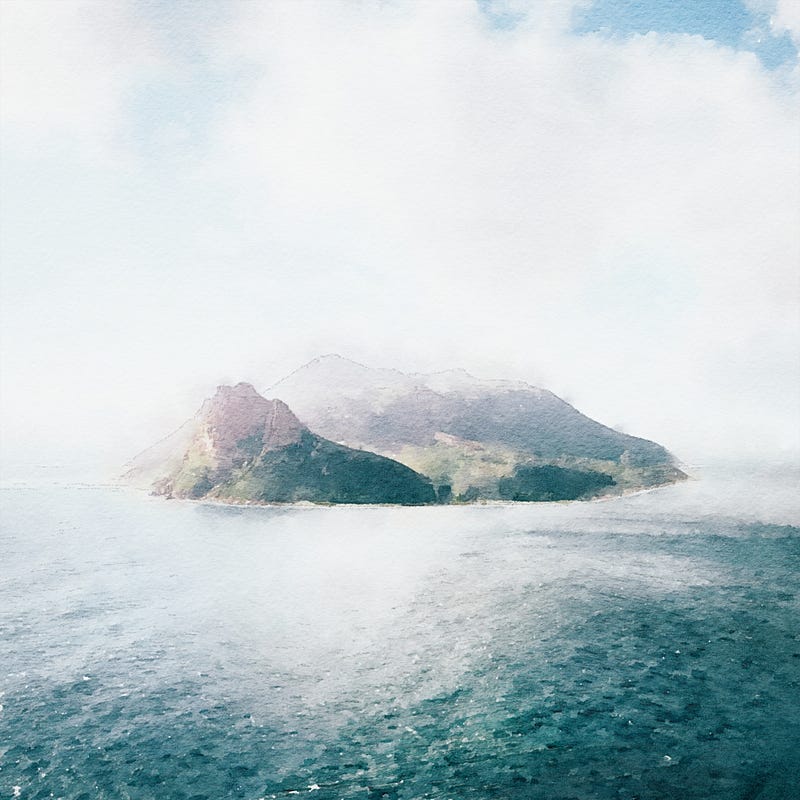
“Solastalgia is a new concept developed to give greater meaning and clarity to environmentally induced distress. As opposed to nostalgia — the melancholia or homesickness experienced by individuals when separated from a loved home –solastalgia is the distress that is produced by environmental change impacting on people while they are directly connected to their home environment.”
Overview
1. What happens when words fail us?
2. What is solastalgia?
3. From 'local solastalgia' to 'global solastalgia'
4. The takeaway
1. What happens when words fail us?
Do we have a word in English to describe the intersecting social, ecological, and psychological crises we are experiencing simultaneously?
There seems to be a sense among many of us who are awake to climate truth that 1) there is not only a new kind of psychological distress caused by our global ecological breakdown. But 2) we seem to lack the words to describe this uncanny gut feeling of dread. It’s usually a contradictory, messy feeling, something like being at the intersection of dread and hope.
Much more adept writers than I have tried to capture this uncanny gut feeling of dread in the right words, but recognize it as a challenge.
For instance, the poet Camille T. Dungy, in her mesmerizing essay “Losing Language,” writes:
“What I’m trying to say is that most of the time, I am overwhelmed by the feebleness of language. Some current experts suggest that we lose a species every five minutes. Earthday.org estimates that, at our present rate of extinction, each year between 10,000 and 50,000 species will disappear from the planet forever. Trying to find a way to speak to all these losses feels like walking around a denuded arboretum disappointed in myself — and a little panicked — for not being able to picture the trees in full leaf.”
Or consider what novelist Zaide Smith says in her gut-wrenching essay, An Elegy for The Seasons. She says we lack the ‘intimate’ language needed to describe these disturbing experiences of ecological breakdown. But this lack, she suggests, stems from a fear of naming what haunts us:
“There is the scientific and ideological language for what is happening to the weather, but there are hardly any intimate words. Is that surprising? People in mourning tend to use euphemism; likewise the guilty and ashamed. The most melancholy of all the euphemisms: “The new normal.” “It’s the new normal,” I think, as a beloved pear tree, half-drowned, loses its grip on the earth and falls over. The train line to Cornwall washes away — the new normal. We can’t even say the word “abnormal” to each other out loud: it reminds us of what came before. Better to forget what once was normal, the way season followed season, with a temperate charm only the poets appreciated.”
I believe as environmental writers and storytellers, one of the most important things we can do is develop a toolkit of environmental keywords.
This toolkit will be important in helping us tell new stories about environmental problems and their solutions — improving stories we already tell, but also helping us tell better stories, and shine a light on the stories that go untold.
And if it’s the case that we don’t have the words to build these stories, then we should invent them.
As one of the most powerful climate writers today, Mary Annaïse Heglar, succinctly puts it,
“I don’t want a fact-finding mission. I want a truth-telling movement…As a lifelong lover of language, I will never believe that “words fail us.” I believe we fail to find the words. And if we don’t have the words, let’s create them. As an avid daydreamer, I will never lose faith in the power of the human imagination. If we can drill deep into the rocks beneath us for coal and oil, there’s no reason we can’t reach even deeper into ourselves to pull out the language to name our crisis.”
2. What is Solastalgia?
One word we might consider adding to our repertoire as an environmental keyword is solastalgia. popping up more often in media on environmental affairs over the past year. I thought it might be worth exploring how writers, journalists, and researchers are using the term to talk about environmental issues.
The philosopher Glenn Albrecht writes how his wife Jill Albrecht helped him conceive of the term over conversations about the interconnected social and ecological crises they were witnessing in their home region of Upper Hunter Valley, New South Wales, Australia.
There, open-pit coal mining and power plant pollution destroying the environment in the area threaten people’s physical and mental well-being. Alebrecht writes, “In the Upper Hunter, people were suffering from both imposed place transition (place pathology) and powerlessness (environmental injustice).”
One night sitting at their dining room table, and thinking about the connection between ecological distress and human distress, Jill and Glenn began searching for new words. How to describe this uncanny feeling of ecologically-induced distress overtaking their community like a wave of dread.
This distress manifested in the psychological fallout experienced by Indigenous people, in particular, faced with centuries of colonial violence and decades of greed-driven resource extraction inflicting harm on their bodies, cultures, and environments.
As Glenn writes,
“for Indigenous people who have been dispossessed of their lands and culture, the nostalgia for a past where former geographical and cultural integration was both highly valued and sustainable is an ongoing painful experience…Both the loss of country and the disintegration of cultural ties between humans and the land (their roots) are implicated in all aspects of the ‘crisis’ within many Indigenous communities in contemporary Australia.”
The word that first came to mind for the Albrechts was nostalgia. But this wasn’t right. People experiencing ecological distress weren’t longing for returning to a place or home in the past; they were unable to find solace in being ‘home’ in the present. More so, this distress was suffused with a profound sense of powerlessness, a sense of being unable to ever improve the ecocultural conditions fueling growing psychological turmoil.
With these concerns in mind, Glenn Albrecht came to this equation to explain the eco-distress he was witnessing: nostalgia + solace + desolation = solastalgia. Zoë Schlanger writes more on this etymological alchemy of the word solastalgia:
“Solastalgia is a combination of three elements: “Solas” references the English word “solace,” which comes from the Latin root solari meaning comfort in the face of distressing forces. But it is also a reference to “desolation,” which has its origins in the Latin solus and desolare, which both connote ideas of abandonment and loneliness. “Algia” comes from the Greek root -algia, which means pain, suffering, or sickness.”
3. From ‘local solastalgia’ to ‘global solastalgia’
“Solastalgia gives expression to those gut feelings by creating a whole new psychoterratic (psyche — earth) typology to describe what sensitive people already feel but could not express in language.”
Overserving his local community, Albrecht saw how ‘local solastalgia’ due to destructive mining, fracking, and industrial agriculture was blending into global solastalgia:
“…as bad as local and regional negative transformation is, it is the big picture, the Whole Earth, which is now a home under assault. A feeling of global dread asserts itself as the planet heats and our climate gets more hostile and unpredictable.”
Albrecht explains:
“One of the reasons for international interest in the concept of solastalgia is that we are in the middle of a pandemic of earth-related distress that will only get worse. Everything that was once familiar and trusted in our environment will be experienced as the “new abnormal” as development and climate pressures continue to build.”
In her fascinating essay on the word solastalgia, the environmental journalist, Zoë Schlanger, writes:
“As climate change reaches its fine tendrils into every ecosystem, reorganizing our corners of the planet and our lives in subtle or brutal ways, a lack of language to describe the sense of dislocation that comes with it is dislocating in itself. We need more “intimate words” for this feeling. Solastalgia is a start.”
4. The takeaway
At its most basic, my academic training in ecolinguistics has helped me better understand two reasons for why we might want new words –like solastalgia-that more accurately capture the meaning of our relationships with the more-than-human world.
#1 Words are cultural tools around which to build shared meaning
First, this act of naming enables us to share our experiences of the world, and provides us with a shared context and system of meanings for collectively confronting the monumental crises of extinction, ecological breakdown, and global warming we face today.
#2 Words help us build stories, and stories help us (re)imagine possible worlds
Second, words are not just a way to represent the world. Words are the building blocks of stories, and stories enable us to construct the roadmaps we need to move the world in better directions.
Simply put, language helps us to imagine possible worlds — better worlds — and mobilize our collective actions to realize those better future worlds. So it’s worth asking from time to time if we have the right tools for the job, or if new tools are needed.
“Solastalgia is not about looking back to some golden past, nor is it about seeking another place as ‘home’… Solastalgia has no necessary connection to the past, it may seek its alleviation in a future that has to be designed and created.”
— Glenn Albrecht, in Solastalgia: The Distress Caused by Environmental Change