
The Climate Crisis as ‘The Great Derangement’
The Star Wars scene that inspires Amitav Ghosh’s climate writing
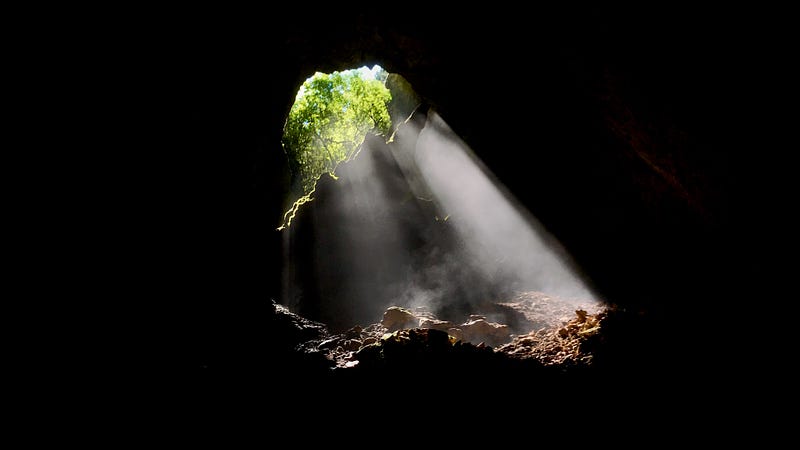
“This is no cave!”
– Han Solo
Climate change, space monsters, and tigers, oh my!
Have you ever had the experience of being next to or touching something you thought was inanimate but turned out to be alive?
When a motionless branch turns out to be a snake? Or a floating log an alligator? I’ve witnessed this when tourists walking along the beach in Hawai‘i stroll right past what seems to be a larger round rock, only to discover moments later the rock is actually alive: startled, they shout, ‘sea turtle!’ in gawking awe.
Amitav Ghosh, the environmental novelist, writes in his recent book The Great Derangement: Climate Change and the Unthinkable: “Who can forget those moments when something that seems inanimate turns out to be vitally, even dangerously alive?”
“Who can forget those moments when something that seems inanimate turns out to be vitally, even dangerously alive?”
Ghosh goes on to write that the filmmakers of The Empire Strikes Back must have been imagining a similar moment in their experience when they made the memorable ‘this is no cave’ scene.
To evade an attack, Han Solo lands the Millenium Falcon inside an asteroid cave. But a few moments after landing, the ground begins to quake. Fearing the cave will crumble, they make their escape.
“The cave is collapsing!” Princess Leia exclaims as the toothy mouth of the ‘cave’ begins to shut. “This is no cave” Han Solo replies, as they barely scrape through the shrinking opening. It soon becomes clear: they’re not escaping from any ordinary cave but from the gut of a sleeping space monster!
The Great Derangement
For Amitav Ghosh, this Star Wars scene reveals a deeper meaning about the place of human beings in a more-than-human world:
“The humans of the future will surely understand, knowing what they presumably will know about the history of their forebears on Earth, that only in one, very brief era, lasting less than three centuries, did a significant number of their kind believe that planets and asteroids are inert.”
People of the future will regard past human beings with astonishment. “There was a strange time,” a future Han Solo might say to a future Leia, “when people actually believed living planets were just inanimate rocks.”
And then, the climate crisis inflicted a sudden shock of recognition, interrupting this strange period of time people of the future will call The Great Derangement. This strange period of human history finally ended when human beings realized they were walking on a living planet, like the cave below Han Solo’s feet when it occurred to him the ground was actually alive, dangerously alive.
“Quite possibly, then, this era, which so congratulates itself on its self-awareness, will come to be known as the time of the Great Derangement”
— Amitav Ghosh
Some say that the climate crisis is something that ‘we’ humans (or rather a specific subset of humans) created. But what if climate change is not of our creation. Instead, what if it’s more like the sleeping monster Han Solo wakes up in the asteroid?
Or, as Amitav Ghosh puts it, the climate crisis is like a sleeping tiger we mistook for a rock in the tall grass. But now that it’s awake, we recognize the rock is not just animate, but dangerously alive: “The tiger has its agency and it’s going to come after you. That’s what you have to recognize. That you have no control over it.”
The Uncanniness of Climate Change
In India, many stories of human-tiger encounters tell about the moment when human eyes and tiger eyes lock together for a brief instant of mutual recognition, writes Ghosh. The human eyes recognize in the eyes of the tiger a nonhuman being aware of your human presence. A little too aware. Dangerously aware in fact.
“This mute exchange of gazes,” Ghosh writes, “is the only communication that is possible between you and this presence — yet communication it undoubtedly is.”
In these moments of human-tiger communication, storytellers describe to their captive audience how the human protagonist is overcome by a deeply mysterious and unsettling feeling when the tiger looks at them. Almost like encountering a ghost.
It’s the feeling of awakening a force that radically reconfigures what you thought you knew and had control over in the world: a mixture of helpless awe and urgent danger.
The word uncanny, Ghosh says, best captures what is felt by the human protagonist in this moment of surreal tiger-danger.
It’s why, he goes onto say, that ‘uncanny’ keeps popping up in books to describe the author’s experience of climate change. “No other word comes close to expressing the strangeness of what is unfolding around us,” Ghosh says.
Nature in the Active Voice
There is growing interest, or urgency, among nature writers, environmental scholars, and eco-storytellers in fiction and nonfiction alike to give words to this uncanny feeling.
To tell a story where the Earth is not just an inanimate stage or backdrop for human dramas to unfold. Instead, writers like Ghosh are asking how to tell stories about the natural world as an active force shaping the lives of people: stories that write nature in the active voice, as the environmental philosopher Val Plumwood puts it.
This isn’t about giving voice to nature, as if we had a choice of whether nature should, or should not have a voice. It’s about moments when we are forced to confront a reality, a voice that has been there all along.
These are the moments when a vine becomes a snake, a floating log becomes an alligator, a rock becomes a sea turtle, a bush becomes a tiger, an asteroid becomes a space monster. Or an inanimate landscape and invisible atmosphere become a living planet. Moments when we are forced to reckon with “an all-encompassing presence that may have its own purposes about which we know nothing,” as Ghosh writes.
Conclusion: This is no cave!
Our current era of finally awakening to ecological collapse will be remembered as a severe discontinuity in history, a period in time when what comes after will not be like what came before.
In writing about the severe lack of serious engagement with the climate crisis in the popular media, fiction, and storytelling of our era, Amitav Ghosh asks
“Is it possible that the arts and literature of this time will one day be remembered not for their daring, nor for their championing of freedom, but rather because of their complicity in the Great Derangement?…When future generations look back upon the Great Derangement they will certainly blame the leaders and politicians of this time for their failure to address the climate crisis. But they may well hold artists and writers to be equally culpable — for the imagining of possibilities is not, after all, the job of politicians and bureaucrats.”
Ghosh convincingly argues that environmental storytelling, whether in fiction or nonfiction, has an important role to play in helping us to avert the worst of the climate crisis, since stories aren’t just about the world, but have consequences for how we act in the world.
Will the future Leias and Han Solos of the world call this strange period in history, not the Great Derangement, but the Great Recognition? That moment in history when we finally recognized our interdependence with a more-than-human world: when we finally remembered that “collaborative survival requires cross-species coordination,” as the environmental anthropologist Anna Tsing puts it.
Who knows what future people will call this time in history: The Great Derangement, the Anthropocene, the Climate Crisis, the Capitalocene, or hopefully just “that time when leaders and politicians didn’t completely f**k up our one shot at saving the planet.”
Whatever those future humans call this chapter of history, our job now is to make this deranged period in history––when many of us forgot the nonhuman world was actually alive, and recognized that ‘this is no cave’––as short as humanly possible.