
An Environmental Keyword For New Nature Writers
How ‘becoming-with’ can shift the emphasis away from anthropocentrism in the environmental stories we tell.
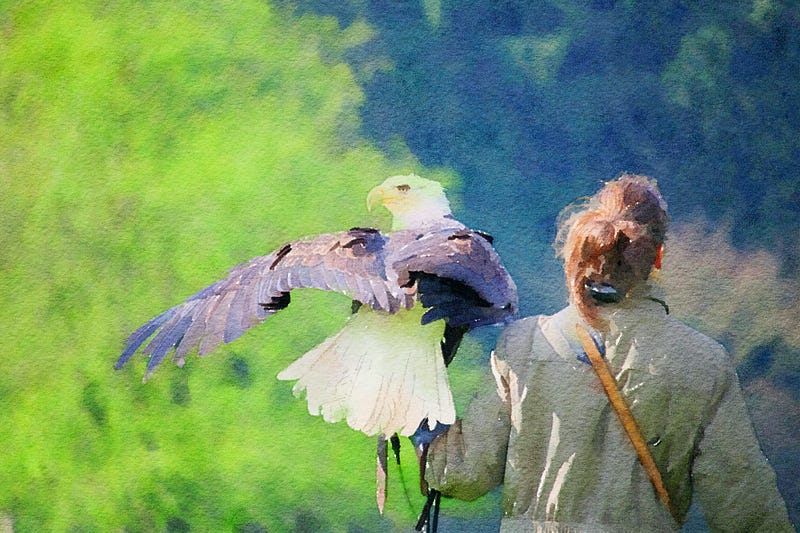
“[i]f we appreciate the foolishness of human exceptionalism then we know that becoming is always becoming with, in a contact zone where the outcome, where who is in the world, is at stake.”
– Donna Haraway
Becoming-with mushrooms, lightning, and hawks
What I find useful about the idea of ‘becoming-with’ is that it nudges us to take inventory of all the ideas about human beings (and being human) inherited from a Western Enlightenment tradition grounded in anthropocentrism, a view which tends to divide humans (culture) from nonhumans (nature).
For example, in an interesting series of blog posts in Engagement (a blog published by the anthropology and environment society), entitled Multi-Species Anthropology: Becoming Human with Others, the editors introduce the series like this:
“The Western notion of “the human” as we know it is unraveling. From fields as diverse as developmental biology, epigenetics, environmental history, science and technology studies, and anthropology, we are learning new ways that the histories and trajectories of humans are bound up with those of other species.”
As a linguist by training, human language is often pointed to as the unique capacity that separates humans from nonhuman animals: language is one key capacity that makes us ‘exceptional,’ separating us from the nonhuman natural world.
But the idea of becoming-with shifts the emphasis on the stories we tell about human-environment relationships away from claims of human exceptionalism, and by extension, human superiority over nature. Instead, it brings focus to the entanglements and mutual co-patternings instead of Western intellectual obsessions with human exceptionalism and anthropocentric viewpoints.
For ecolinguists and environmental communicators, the concept ‘becoming-with’ asks us to tell new stories that move beyond our often unconscious reliance on the dualistic categories ‘humans’ and ‘nature’.¹
But what would such stories look like? And anyway, how would these new stories of ‘becoming-with’ serve us ‘better’ than the stories we already tell as writers and communicators concerned with addressing the ecological crisis?
For me, I need good examples of stories using the environmental keyword ‘becoming-with’, or else philosophical discussions about nature/culture binaries can get very abstract very fast. With this in mind, below are two stories from two anthropologists that use the concept of ‘becoming-with’ in insightful ways. In particular, to tell stories from the perspective of the ‘contact zone’: that space of curiosity (and risk) where human and nonhuman entities, processes, and beings meet.
Becoming-with Matsutake Mushrooms
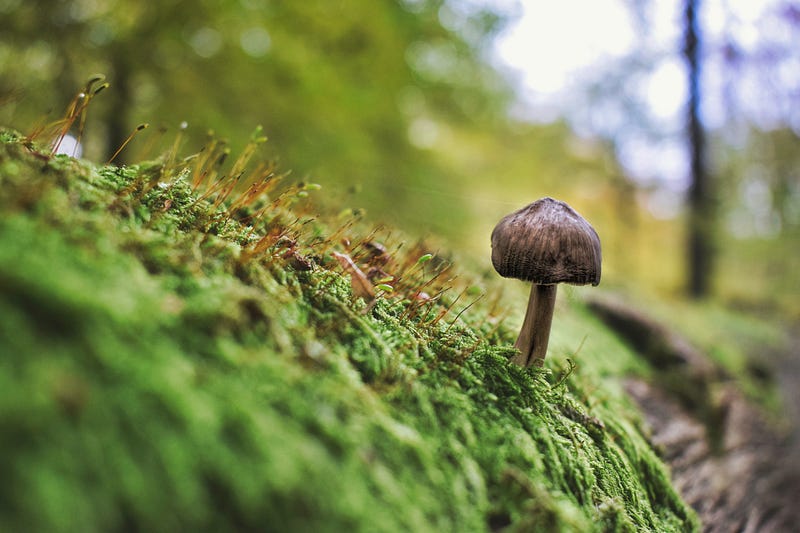
The Mushroom at the End of the World: in her fascinating study, anthropologist Anna Tsing uses the idea of becoming-with to tell novel stories about the lives of people involved in the Matsutake mushroom industry in the Pacific Northwest of the U.S. (and other places with a Matsutake market, like Japan and Finland). Here’s a passage that stuck with me:
“Species are not always the right units for telling the life of the forest. The term “multispecies” is only a stand-in for moving beyond human exceptionalism. Sometimes individual organisms make drastic interventions. And sometimes much larger units are more able to show us historical action.”
Becoming-with lightning
In her thought-provoking essay, Becoming-with, the environmental philosopher Kate Wright tells the story of two boys who went hiking on Moro Rock in California. At the top of the rock, they noticed their hair was standing on end, and their sister took a picture of them. Seconds later, the two boys were struck by lighting. Both survived but suffered severe burns. Through this story, Wright tells their story as a ‘becoming-lightning-storm’:
“Ultimately, this compelling photograph of two young men laughing in the face of powerful planetary forces is a reminder of how tragic and dangerous the cognitive illusion of human exceptionalism can be. We can never disconnect from Earth’s ecological community, because we are always becoming-with, in a living multispecies world composed of phenomena and transitions. But we can terribly damage our ability to respond to that world.”
Afterword: Becoming-with goshawks
I’ve just started reading H is for Hawk by Helen Macdonald (2014), but already I can see why it received so much praise when it came out. In this nature-writing-as-memoir, Macdonald chronicles her effort to cope with the loss of her father by reigniting her childhood fascination with hawks. The book documents her journey training a hawk and becoming a falconer.
Her memoir is compelling, but what really draws me in is the unique way she writes about human-animal relationships; in this case, her challenge to ‘become-with’ a goshawk in training the bird for falconing. In the excerpt below, for example, Macdonald writes about how her everyday perception of the natural world is transformed through training a goshawk named Mabel:
“Of all the lessons I’ve learned in my months with Mabel this is the greatest of all: that there is a world of things out there — rocks and trees and stones and grass and all the things that crawl and run and fly. They are all things in themselves, but we make them sensible to us by giving them meanings that shore up our own views of the world. In my time with Mabel I’ve learned how you feel more human once you have known, even in your imagination, what it is like to be not. And I have learned, too, the danger that comes in mistaking the wildness we give a thing for the wildness that animates it. Goshawks are things of death and blood and gore, but they are not excuses for atrocities. Their inhumanity is to be treasured because what they do has nothing to do with us at all.”
If this book sounds of interest, you might also check out Helen Macdonald’s newest book, Vesper Flights. And If you’re interested in more environmental keywords, and how they can be important communication tools in helping us tell new stories about environmental problems and their solutions, I’ve written more about this idea here in a short piece: The Case for Environmental Keywords.
Notes:
¹ On a side note, for a helpful discussion about the problems with framing humans and nature as separate categories, especially for environmental advocates, check out this interview with environmental geographer Paul Wapner about his 2014 book: Living Through the End of Nature: The Future of American Environmentalism.


